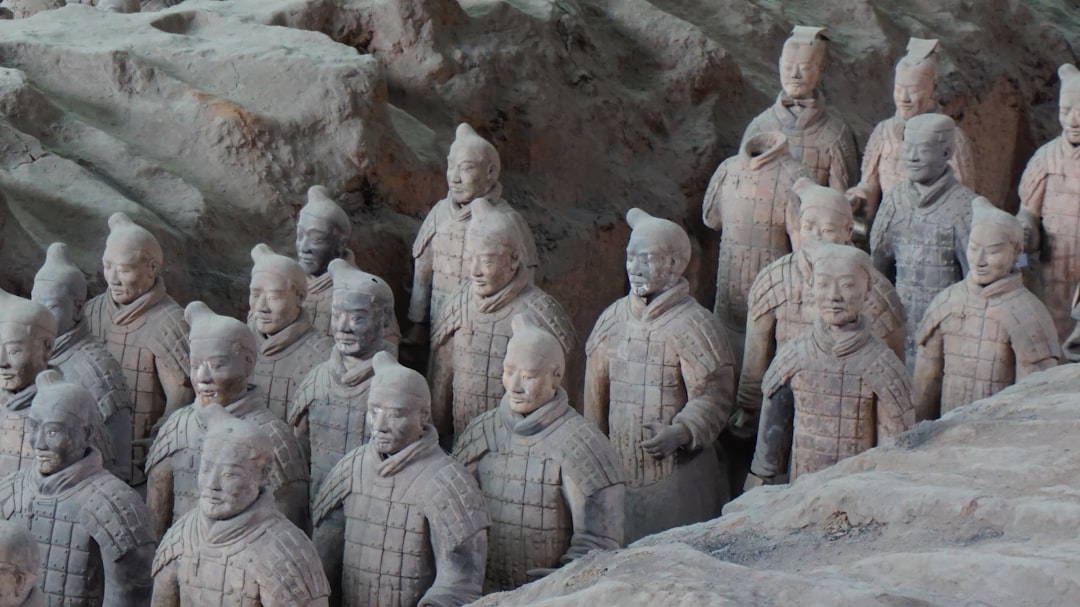
The Terracotta Army, unearthed in Xi’an, China, stands as a remarkable testament to the organizational prowess and ambitious vision of Qin Shi Huang, the first Emperor of unified China. More than just a collection of ancient statues, this vast subterranean army represents compelling evidence of mass production techniques employed over two millennia ago, offering a fascinating glimpse into the industrial capabilities of the Qin Dynasty. While the sheer artistry and scale of the figures are undeniably impressive, a closer examination reveals sophisticated methods of standardization, division of labor, and assembly-line efficiency that predate similar developments in other civilizations by centuries.
Unveiling a Monumental Discovery
The accidental discovery of the Terracotta Army in 1974 by local farmers digging a well near Mount Li was a monumental moment for archaeology. What began as a small find soon revealed a vast complex, an underground necropolis protecting the Emperor’s tomb. The sheer scale was staggering – thousands of life-sized human figures, along with chariots and horses, meticulously arranged in battle formations. This discovery instantly rewrote the understanding of ancient Chinese military organization and its funerary practices. The objective was clear: to equip the Emperor for eternity with a formidable military force, a phantom army to guard him in the afterlife.
The Vision of Qin Shi Huang
Qin Shi Huang, a ruler known for his authoritarian will and unwavering ambition, envisioned a tomb complex that would reflect the grandeur and power of his newly unified empire. The Terracotta Army was not merely a decorative element; it was conceived as a functional apparatus for his eternal reign. This required not just a few skilled artisans but a logistical undertaking of immense proportions, demanding the mobilization of vast resources, manpower, and a systematic approach to creation. The Emperor’s desire for an eternal empire translated directly into the need for an eternal army, and this army, to be truly effective in its symbolic purpose, needed to convey a sense of overwhelming numbers and organized might.
Recent discoveries related to the mass production of the Terracotta Army have shed light on the sophisticated techniques employed by ancient artisans. Evidence suggests that the creation of these life-sized figures was not only a monumental artistic endeavor but also a highly organized industrial process. For further insights into this fascinating topic, you can read the related article on mass production evidence at this link.
The Architecture of Assembly: Evidence of Standardisation
Modular Components and Prefabricated Parts
One of the most striking aspects of the Terracotta Army’s creation is the evidence of standardization in its components. The figures are not monolithic creations; rather, they are constructed from a series of modular parts. This can be observed in the distinct torso, arm, leg, and head sections, each often produced separately. This modular approach allowed for the efficient production of individual elements that could then be assembled. Imagine a modern factory, but instead of plastic or metal, the material was clay, and the assembly line was a vast subterranean workshop. This principle of interchangeable parts, a cornerstone of modern manufacturing, was evidently well understood and applied by Qin Dynasty artisans.
Torso as the Foundation
The torsos of the warriors, for instance, exhibit remarkable uniformity in their basic structure, often presenting a consistent width and depth. While subtle variations exist, the underlying template allowed for rapid creation. This basic form served as the skeletal framework onto which other parts were attached.
Limb Production and Articulation
Similarly, arms and legs were likely produced in standardized molds. The poses of the figures, while appearing diverse, often utilize a limited range of pre-defined arm and leg positions. This suggests a system where artisans would select and attach appropriate limbs to a common torso, streamlining the assembly process.
The Head as an Individualization Point
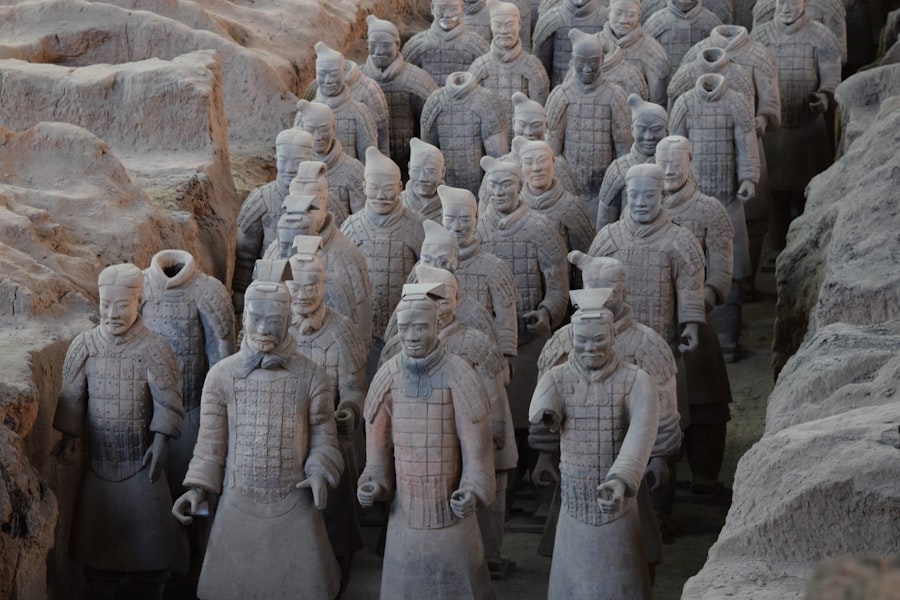
While the body parts were largely standardized, the heads exhibit a striking degree of individuality. This is where the artistry truly shines, with unique facial features, hairstyles, and expressions. This deliberate contrast between standardized bodies and individualized heads speaks to a clear strategy: to create an army that looked like a unified force, yet was composed of distinct individuals. It was an ingenious way to strike a balance between mass production efficiency and the compelling illusion of a living, breathing army.
The Role of Molds and Workshops
The consistent forms of the standardized components strongly suggest the widespread use of molds. These would have been masterfully crafted, likely from wood, fired clay, or even bronze, to create identical or near-identical duplicates of body parts. The existence of numerous workshops dedicated to different stages of production further supports this idea. These workshops, spread across the vast construction site, would have specialized in forging torsos, crafting limbs, or sculpting heads. This division of labor, a fundamental principle of efficiency, ensured that each stage of production could be optimized.
Mold Production and Replication
The creation of the molds themselves would have been a complex undertaking, requiring skilled artisans to meticulously sculpt the desired forms. Once a mold was created, it could be used repeatedly to produce countless identical components, a crucial element in achieving the sheer volume of figures required.
Workshop Specialization: A Proto-Industrial System
Archeological evidence points to the organization of these workshops into specialized units. One group might have been responsible for preparing the clay, another for casting the basic torso shapes, while yet another focused on appending arms and legs. This division of labor allowed for a more efficient workflow, with each group becoming highly proficient in their designated task.
The Assembly Line of Antiquity: Division of Labor in Action
A Symphony of Specialized Craftsmen
The creation of the Terracotta Army was not the work of a few artistic geniuses laboring in isolation. Instead, it was a complex undertaking that relied on a meticulously organized workforce, akin to a modern factory floor. This involved a profound division of labor, where individual craftsmen specialized in specific tasks. Imagine an orchestra where each musician plays a distinct instrument, contributing to a harmonious whole. The artisans of the Terracotta Army were such musicians, each playing their part in the creation of this grand subterranean symphony.
Clay Preparation and Tempering
The initial stages would have involved the skilled preparation of clay. This would have included sourcing the right type of clay, purifying it, and mixing it with tempering materials like sand or grog. This precise tempering was crucial for preventing shrinkage and cracking during the drying and firing processes, ensuring the longevity of the figures.
Sectional Molding and Assembly
As discussed earlier, different sections of the figures were molded separately. This allowed for specialized teams to focus on the production of torsos, limbs, and heads. These parts were then brought together for assembly, a process that itself required specialized skills, ensuring the correct alignment and secure attachment of each component.
The Role of the Assemblers
Once the individual components were ready, a dedicated team of assemblers would have been responsible for joining them. This would have involved carefully fitting the parts together, using clay slip as an adhesive, and then smoothing the joins to create a seamless appearance. This was a critical step in creating the illusion of complete, individual figures.
The Importance of Expertise and Training
The execution of these specialized tasks would have required extensive training and the development of specific expertise. The skill sets needed for molding a torso were different from those required for sculpting a unique face or for the meticulous reassembly of limbs. This suggests a formal system of apprenticeship and knowledge transfer within the Qin Dynasty’s considerable labor force. The transmission of these skills, honed over time, enabled the efficient and consistent production of the vast number of figures.
Master Craftsmen and Apprentices
It is highly probable that master craftsmen, possessing advanced skills in pottery and sculpting, oversaw the work of numerous apprentices. These apprentices would have learned the techniques of mold making, clay preparation, and sectional assembly through hands-on experience, gradually developing their own proficiency.
Interdisciplinary Collaboration
While specialized, the different teams would have needed to collaborate effectively. The dimensions of the molded parts had to be precise to ensure they fit together seamlessly. This implies a level of coordination and communication between the different workshops, a testament to the organizational capacity of the Qin administration.
The Firing Process: A Technological Challenge
Kiln Technology and Capacity
The subsequent firing of these massive clay figures presented a significant technological challenge. The creation of kilns large enough to accommodate the life-sized warriors and capable of maintaining consistent temperatures for extended periods would have required considerable engineering ingenuity. Evidence suggests the use of large, segmented kilns, allowing for the simultaneous firing of multiple figures. The consistency of the firing across such a vast number of pieces points to a sophisticated understanding of heat distribution and control.
Kiln Design and Construction
The construction of such kilns would have been a colossal undertaking, requiring careful selection of materials and skilled builders. The design would have needed to account for effective heat circulation, efficient fuel consumption, and the ability to withstand the immense thermal stress of firing such large objects.
Temperature Control and Firing Duration
Achieving the desired hardness and durability required precise temperature control throughout the firing process. The duration of firing would also have been a critical factor, likely determined by the thickness and density of the clay sections. Inconsistency in firing could lead to cracking or incomplete vitrification, rendering the figures unusable.
The Glazing and Painting Stages
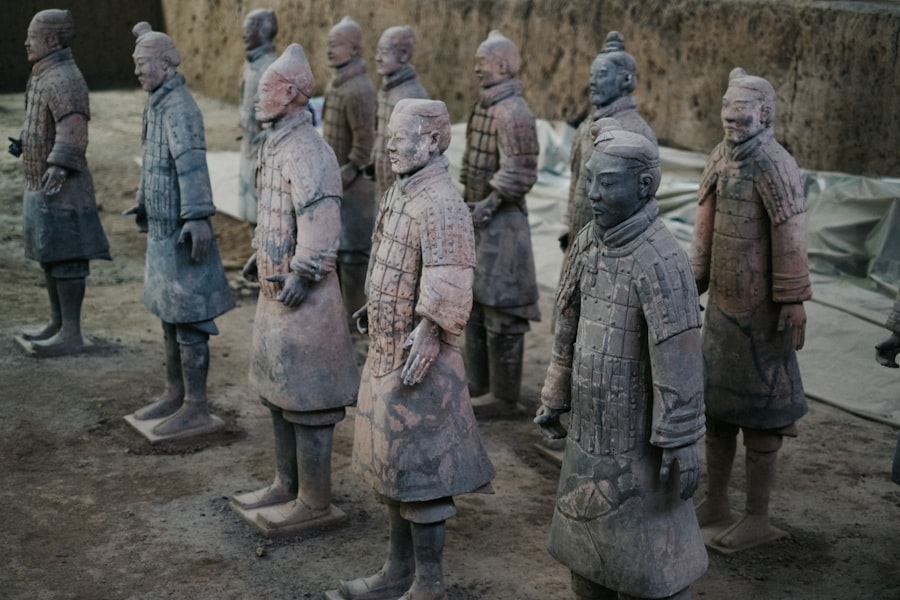
Following firing, the terracotta figures were meticulously painted and, in some cases, partially glazed. This application of color and protective coatings added another layer of complexity to the production process. The vibrant hues, though now faded, would have brought the army to life, further enhancing its visual impact. The use of mineral pigments required specific knowledge of their application and firing properties.
Pigment Sourcing and Preparation
The pigments used would have been sourced from various minerals, requiring specialized knowledge for their extraction, grinding, and preparation. The longevity of some of these pigments, even after millennia, speaks to the quality of their preparation and application.
Artistry in Application
The application of paint was not merely functional but also artistic. The details of uniforms, armor, and facial features were brought to life through careful brushwork. This stage involved painters who, while perhaps not sculptors, possessed their own distinct artistic skills and a deep understanding of color theory.
Recent discoveries regarding the mass production of the Terracotta Army have shed light on the sophisticated techniques employed by ancient artisans. These findings suggest that the creation of the thousands of life-sized figures was not merely a monumental task but rather a well-organized industrial process. For a deeper understanding of this fascinating topic, you can explore a related article that discusses the implications of these discoveries and their impact on our understanding of ancient Chinese craftsmanship. To read more about it, visit this insightful article.
The Scale of Production: A Monumental Undertaking
| Metric | Details | Significance |
|---|---|---|
| Number of Figures | Over 8,000 soldiers, 670 horses, and 130 chariots | Indicates large-scale production capacity |
| Workshop Sites | Multiple workshops discovered near the mausoleum | Supports evidence of organized mass production |
| Assembly Line Techniques | Standardized parts such as heads, arms, and torsos made separately | Shows early use of modular manufacturing |
| Material Used | Local terracotta clay with consistent composition | Facilitated uniformity and mass production |
| Production Timeframe | Estimated 700,000 workers over 36 years | Demonstrates sustained large-scale effort |
| Tool Marks | Evidence of molds and carving tools on figures | Indicates use of repetitive manufacturing processes |
| Variation in Figures | Over 10 different face molds with individualized features | Combines mass production with artistic variation |
Mobilization of Labor and Resources
The sheer number of figures in the Terracotta Army—estimated to be in the tens of thousands—points to a level of mobilization of labor and resources that is staggering for its time. The Qin Dynasty successfully marshaled hundreds of thousands of laborers, including soldiers, convicts, and skilled artisans, to participate in this monumental construction project. This required immense logistical planning, akin to the construction of a modern city or a large-scale infrastructure project. The Emperor’s will acted as the driving force, dictating the allocation of human and material resources on an unprecedented scale.
The Workforce: A Human Engine of Creation
The workforce was likely drawn from across the empire, a testament to the centralized power of the Qin state. These individuals, from the humblest laborer to the most skilled artisan, were all cogs in the immense human engine of creation that built the Terracotta Army. Their labor, though perhaps unwilling in many cases, was crucial to realizing the Emperor’s grand vision.
Resource Management and Supply Chains
The vast quantities of clay, wood for kilns and scaffolding, fuel for firing, and minerals for pigments all had to be sourced, transported, and managed. This suggests the existence of sophisticated supply chains and administrative oversight within the Qin Dynasty, capable of coordinating the flow of resources across significant distances.
The Economics of Eternal Empire
The economic implications of such a project are also noteworthy. The cost in terms of manpower, materials, and organized effort would have been immense. This enterprise can be viewed as an early example of state-sponsored mega-project, where the state invested heavily in a singular, ambitious goal for reasons of ideological, religious, and political significance. The economic output required to sustain such an endeavor speaks volumes about the productive capacity of the Qin empire.
Investment in the Afterlife
The Terracotta Army represents a colossal investment in the afterlife, a tangible manifestation of the Qin Dynasty’s wealth and power. It was not simply a burial but the creation of an entire subterranean world, mirroring the earthly empire.
A Measure of State Power
The ability to conceive and execute such a project is a direct indicator of the state’s power and organizational capacity. It demonstrates the regime’s ability to extract resources, command labor, and coordinate complex undertakings on a national scale. The Terracotta Army is, in essence, a monument built directly from the sinews of the Qin state.
Legacy: A Blueprint for Mass Production
Echoes in Modern Manufacturing
The principles evident in the construction of the Terracotta Army—standardization of parts, division of labor, assembly-line techniques, and the use of molds—are fundamental to modern industrial manufacturing. While the materials and technology differ vastly, the underlying organizational concepts bear a striking resemblance. The terracotta warriors serve as ancient precursors to the assembly lines that would, millennia later, revolutionize global production. They are a testament to the enduring power of systematic organization and efficient production processes.
The Persistence of Principles
The Terracotta Army demonstrates that the core ideas of efficient production are not solely products of the industrial revolution. These concepts, honed and applied with remarkable foresight, laid down a foundation for mass production that would resonate through history.
A Proto-Industrial Marvel
The archaeological evidence suggests that the Qin Dynasty, through the creation of the Terracotta Army, developed a sophisticated form of proto-industrial production. This was not the haphazard creation of individual artworks, but a meticulously planned industrial process designed for maximum efficiency and output.
Enduring Questions and Future Research
Despite decades of study, many aspects of the Terracotta Army’s construction remain subjects of ongoing research and debate. The precise techniques used for certain stages, the complete organization of the workforce, and the exact number of workshops are still being investigated. Future archaeological endeavors and advancements in scientific analysis will undoubtedly continue to shed light on this extraordinary achievement, further revealing the secrets of its mass production. The story of the Terracotta Army is not just about a buried army; it is a continuing narrative about human ingenuity and the profound ability to organize and produce on an unparalleled scale.

SHOCKING: 50 Artifacts That Prove History Was Erased
FAQs
What is the Terracotta Army?
The Terracotta Army is a collection of thousands of life-sized clay soldiers and horses buried with China’s first Emperor, Qin Shi Huang, to protect him in the afterlife. It was discovered in 1974 near Xi’an, Shaanxi Province.
What evidence suggests the Terracotta Army was mass-produced?
Archaeologists have found that many figures share similar facial features and body parts, indicating the use of molds and assembly-line techniques. The soldiers were made in workshops where different parts were created separately and then assembled.
How were the Terracotta soldiers manufactured?
The soldiers were crafted using a combination of molded parts for heads, arms, and legs, which were then assembled and hand-finished to add unique details. This process allowed for efficient production of thousands of figures.
Why was mass production necessary for the Terracotta Army?
Mass production was necessary to create the vast number of figures—estimated to be over 8,000—within a relatively short period during Emperor Qin Shi Huang’s reign, reflecting the scale and ambition of the project.
What materials were used to make the Terracotta Army?
The figures were made primarily from terracotta clay, which was shaped, fired, and then painted. The use of terracotta allowed for detailed sculpting and durability over time.