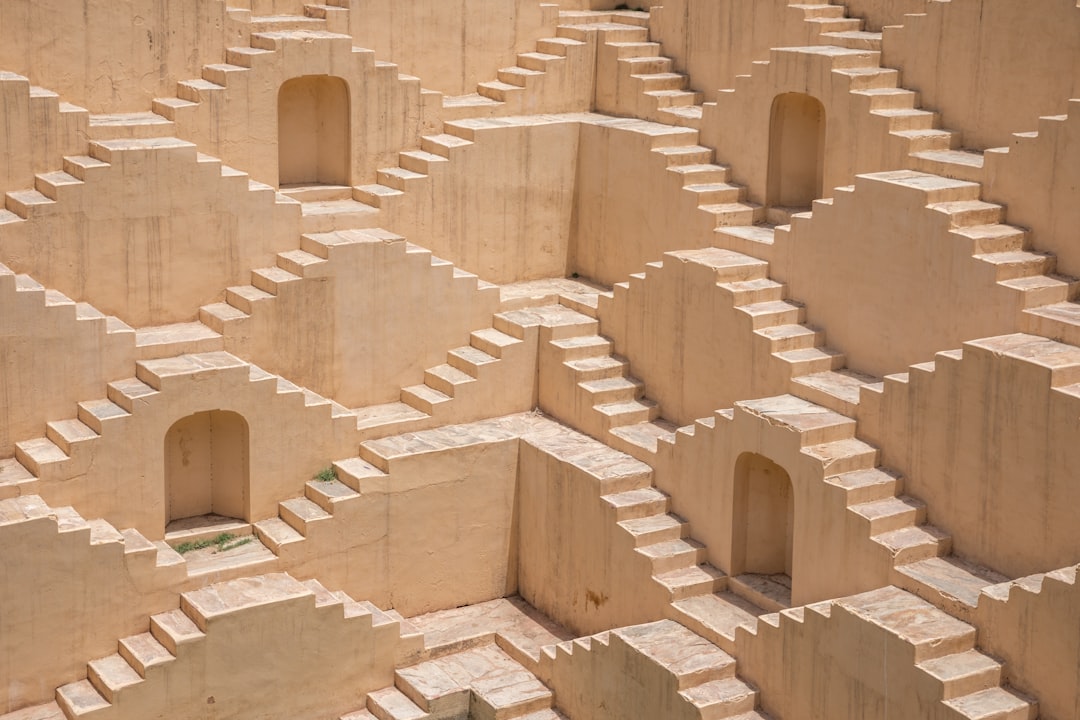
Pyramid passages are the internal corridors and chambers found within ancient pyramid structures. These architectural features provide valuable insights into the engineering capabilities, religious practices, and cultural beliefs of the civilizations that constructed them. The most extensively studied examples are located in Egypt, particularly within the Great Pyramid of Giza, though similar internal passage systems exist in pyramids across different cultures worldwide.
These passages demonstrate the advanced mathematical and astronomical knowledge of ancient builders. Many exhibit precise geometric proportions and alignments with celestial bodies, indicating sophisticated understanding of mathematics and astronomy. The construction techniques required to create these internal spaces represent significant engineering achievements, involving complex planning and execution methods that continue to be studied by researchers.
Archaeological investigation of pyramid passages has revealed important information about ancient burial practices, religious ceremonies, and social hierarchies. The design and orientation of these spaces often reflect specific cultural beliefs about death, the afterlife, and cosmic order. Analysis of passage systems contributes to broader understanding of ancient civilizations’ technological capabilities, organizational structures, and worldviews.
Current research focuses on documenting the mathematical principles underlying passage construction, mapping astronomical alignments, interpreting symbolic elements, analyzing engineering methods, cataloging archaeological findings, examining cultural contexts, and investigating unresolved questions about their construction and purpose.
Key Takeaways
- Pyramid passages demonstrate advanced mathematical and geometric design principles.
- Many passages are precisely aligned with significant astronomical events.
- They hold deep symbolic and spiritual meanings in ancient cultures.
- Engineering techniques used in their construction reveal sophisticated ancient technology.
- Modern research continues to uncover new insights and interpretations about their purpose and significance.
The Mathematical and Geometric Principles of Pyramid Passages
The design of pyramid passages is a remarkable demonstration of mathematical and geometric principles that were well understood by ancient architects. The layout of these passages often reflects a sophisticated grasp of geometry, with angles and proportions meticulously calculated to achieve structural integrity and aesthetic appeal. For instance, the internal passages of the Great Pyramid are aligned with extraordinary precision, showcasing a deep understanding of angles that would later influence architectural practices for centuries.
Moreover, the dimensions of these passages often adhere to specific ratios that resonate with mathematical concepts such as the Golden Ratio. This ratio, which is approximately 1.618, has been revered throughout history for its aesthetic properties and appears in various forms in nature and art. The application of such principles in pyramid construction suggests that ancient builders were not merely craftsmen but also mathematicians who integrated their knowledge into their work.
The geometric intricacies found within these passages continue to inspire modern architects and mathematicians alike, highlighting a legacy that transcends time. Discover the secrets behind the pyramid mystery ancient egypt in this fascinating video.
The Alignment of Pyramid Passages with Astronomical Phenomena

One of the most fascinating aspects of pyramid passages is their alignment with astronomical phenomena. Many pyramids were constructed with specific orientations that corresponded to celestial bodies, such as stars and planets. For example, the shafts within the Great Pyramid are believed to align with the stars in Orion’s Belt, which held significant importance in ancient Egyptian mythology.
This alignment suggests that the builders had a profound understanding of astronomy and its relevance to their spiritual beliefs. The orientation of these passages often served practical purposes as well. By aligning with celestial events such as solstices and equinoxes, ancient civilizations could create calendars that dictated agricultural practices and religious ceremonies.
The precision with which these alignments were executed indicates a level of astronomical knowledge that was advanced for its time. As researchers continue to study these alignments, they uncover new insights into how ancient cultures perceived their place in the cosmos and how they integrated this understanding into their architectural endeavors.
The Symbolic and Spiritual Significance of Pyramid Passages
Pyramid passages are imbued with rich symbolic and spiritual significance that reflects the beliefs of the cultures that constructed them. In ancient Egypt, for instance, these passages were often seen as pathways to the afterlife. The journey through the intricate corridors was believed to facilitate the soul’s transition from the earthly realm to the divine.
This belief is evident in the elaborate burial practices associated with pyramid construction, where tombs were filled with artifacts intended to accompany the deceased on their journey. The symbolism inherent in pyramid passages extends beyond mere functionality; it encompasses themes of rebirth, immortality, and cosmic order. The design elements within these structures often mirror celestial patterns, reinforcing the connection between the earthly and divine realms.
As such, pyramid passages serve as physical manifestations of spiritual beliefs, inviting contemplation on life, death, and existence itself. This profound significance continues to resonate with modern audiences, drawing them into a deeper exploration of humanity’s quest for meaning.
The Engineering and Construction of Pyramid Passages
| Metric | Value | Unit | Description |
|---|---|---|---|
| Passage Length | 105 | meters | Length of the ascending passage from the entrance to the Grand Gallery |
| Passage Height | 1.2 | meters | Average height of the ascending passage |
| Passage Width | 1.05 | meters | Average width of the ascending passage |
| Inclination Angle | 26.5 | degrees | Angle of ascent of the passage relative to horizontal |
| Passage Orientation | North-Northwest | Direction | Directional orientation of the ascending passage |
| Wall Material | Limestone | Material | Primary material used for the passage walls |
| Passage Shape | Rectangular | Shape | Cross-sectional shape of the passage |
The engineering feats involved in constructing pyramid passages are nothing short of extraordinary. Ancient builders employed innovative techniques and tools that allowed them to create complex systems of corridors and chambers within massive stone structures. The precision required for such construction is evident in the seamless joints between stones and the careful planning that went into each passage’s design.
One notable aspect of pyramid construction is the use of large limestone blocks, which were quarried and transported over considerable distances. The logistics involved in moving these heavy stones required not only physical strength but also advanced organizational skills. Workers had to coordinate their efforts meticulously to ensure that each block was placed accurately within the structure.
This level of engineering prowess speaks volumes about the capabilities of ancient civilizations and their commitment to creating enduring monuments.
The Archaeological Discoveries in Pyramid Passages
Archaeological discoveries within pyramid passages have provided invaluable insights into ancient cultures and their practices. Excavations have unearthed a wealth of artifacts, including pottery, tools, and inscriptions that shed light on daily life during the time of pyramid construction. These findings help historians piece together a more comprehensive understanding of the social, economic, and religious dynamics at play within these societies.
In addition to material artifacts, archaeological studies have revealed intricate wall carvings and hieroglyphics that convey stories and beliefs central to ancient cultures. These inscriptions often depict scenes from mythology or rituals associated with death and rebirth, further emphasizing the spiritual significance of pyramid passages. As archaeologists continue to explore these structures, they uncover new layers of history that enrich our understanding of human civilization’s evolution.
The Cultural and Historical Context of Pyramid Passages
The cultural and historical context surrounding pyramid passages is essential for understanding their significance within ancient societies. In Egypt, for example, pyramids were built during a time when pharaohs were considered divine figures who ruled over both the living and the dead. The construction of monumental tombs was a reflection of this belief system, as it demonstrated a ruler’s power and ensured their legacy would endure beyond death.
Moreover, pyramid passages were often part of larger complexes that included temples and mortuary sites, highlighting their role within a broader religious framework. These structures served not only as burial sites but also as places for worship and offerings to deities. The interconnectedness of these elements illustrates how deeply ingrained spirituality was in daily life during this period.
Understanding this cultural context allows modern observers to appreciate the multifaceted nature of pyramid passages as more than mere architectural achievements; they are embodiments of a civilization’s values and aspirations.
The Mysteries and Legends Surrounding Pyramid Passages
Pyramid passages are shrouded in mysteries and legends that have fueled fascination for generations. Tales of hidden chambers filled with treasures or secret knowledge have captured the imagination of explorers and scholars alike. Some legends suggest that these passages were designed with intricate traps or puzzles to deter grave robbers, adding an air of intrigue to their exploration.
Additionally, various theories have emerged regarding the purpose behind certain architectural features within pyramid passages. Some researchers propose that specific chambers may have been used for astronomical observations or rituals tied to celestial events. Others speculate about potential connections between different pyramids across regions or even across cultures.
These mysteries continue to inspire both academic inquiry and popular culture, ensuring that pyramid passages remain a source of wonder and speculation.
The Influence of Pyramid Passages on Architecture and Design
The architectural principles embodied in pyramid passages have had a lasting impact on subsequent design practices throughout history. The use of precise geometry and alignment with celestial bodies has influenced various architectural styles across different cultures. For instance, elements reminiscent of pyramid design can be seen in Gothic cathedrals or even modern skyscrapers that incorporate angular forms.
Furthermore, the concept of creating spaces that resonate with spiritual significance has persisted in architectural philosophy over time. Many contemporary architects draw inspiration from ancient structures like pyramids when designing spaces intended for reflection or meditation. This enduring influence underscores how pyramid passages have transcended their original context to inform modern architectural thought.
The Role of Pyramid Passages in Ancient Civilizations
Pyramid passages played a crucial role in shaping the social fabric of ancient civilizations. They served not only as burial sites but also as focal points for religious practices and community gatherings.
Moreover, these structures often became symbols of national identity and pride. The grandeur associated with pyramids reinforced a sense of belonging among citizens while also projecting power to neighboring regions. As such, pyramid passages were integral to both individual beliefs about the afterlife and collective cultural narratives about civilization itself.
The Modern-Day Study and Interpretation of Pyramid Passages
In contemporary times, scholars continue to study pyramid passages through various lenses—archaeological, astronomical, architectural, and cultural—each contributing unique insights into their significance. Advances in technology have allowed researchers to employ non-invasive methods such as ground-penetrating radar or 3D modeling to explore hidden features without disturbing the original structures. Additionally, interdisciplinary approaches have emerged that combine insights from history, anthropology, engineering, and even art history to create a more holistic understanding of pyramid passages.
This modern-day study not only enriches academic discourse but also invites broader audiences to engage with these ancient wonders through exhibitions, documentaries, and educational programs. In conclusion, pyramid passages represent a remarkable convergence of mathematics, spirituality, engineering prowess, cultural identity, and enduring mystery. Their study offers profound insights into human civilization’s past while continuing to inspire curiosity about our shared heritage.
The geometry of the pyramid’s ascending passage has intrigued researchers for years, revealing insights into the architectural prowess of ancient civilizations. For a deeper exploration of related topics, you can read more in this article on the subject: Pyramid Ascending Passage Geometry. This resource delves into the mathematical principles and historical significance behind the design of these monumental structures.
WATCH THIS! 🔺 THEY LIED ABOUT THE PYRAMIDS — Here’s The Real Truth 🤯
FAQs
What is the ascending passage in a pyramid?
The ascending passage is a narrow corridor inside a pyramid that leads upward from the entrance or lower chambers toward the upper chambers or the burial chamber. It is a key architectural feature in many ancient Egyptian pyramids.
What is the significance of the geometry of the ascending passage?
The geometry of the ascending passage is significant because it reflects the precise engineering and architectural skills of the pyramid builders. The angles, dimensions, and alignment were carefully calculated to ensure structural stability and to align with celestial or symbolic elements.
What are the typical dimensions of an ascending passage?
The dimensions of an ascending passage vary depending on the pyramid, but they are generally narrow and steep. For example, in the Great Pyramid of Giza, the ascending passage is about 1.2 meters high and 1 meter wide, with an incline of approximately 26 to 28 degrees.
How was the ascending passage constructed?
The ascending passage was constructed using large limestone blocks carefully cut and fitted together. Builders used ramps, levers, and precise measurements to create the inclined corridor, ensuring it was stable and aligned with the rest of the pyramid’s internal structure.
Does the ascending passage have any symbolic meaning?
Yes, the ascending passage is often interpreted as symbolizing the pharaoh’s journey to the afterlife, ascending from the earthly realm to the heavens. Its alignment with certain stars or celestial bodies supports this symbolic interpretation.
Are there any unique features in the geometry of the ascending passage?
Unique features can include the precise angle of inclination, the smoothness of the walls, and the alignment with cardinal points or specific stars. Some passages also have corbelled ceilings or other architectural elements to distribute weight and prevent collapse.
How does the ascending passage connect to other parts of the pyramid?
The ascending passage typically connects the lower chambers or entrance to the upper chambers, such as the Queen’s Chamber or the King’s Chamber in the Great Pyramid. It serves as a transitional corridor within the pyramid’s internal layout.
What tools did ancient builders use to achieve the geometry of the ascending passage?
Ancient builders used simple but effective tools such as plumb bobs, leveling instruments, ropes, and sighting rods to measure angles and ensure precise alignment during construction.
Can the geometry of the ascending passage provide insights into ancient Egyptian mathematics?
Yes, studying the geometry of the ascending passage reveals the advanced understanding of geometry, measurement, and engineering possessed by ancient Egyptians. It demonstrates their ability to apply mathematical principles in large-scale construction projects.
Is the ascending passage accessible to tourists today?
In some pyramids, such as the Great Pyramid of Giza, the ascending passage is accessible to tourists, though access may be restricted or limited due to preservation concerns and safety regulations.