Baalbek, an ancient city in present-day Lebanon, contains some of the largest stone blocks ever used in construction. The site features megalithic stones, with the heaviest specimens weighing over 1,000 tons. These massive limestone blocks form part of a complex that includes Roman temples built upon earlier foundations.
The transportation and placement of these enormous stones presents a significant archaeological puzzle. The largest stones, known as the Trilithon, measure approximately 19 meters in length, 4 meters in height, and 3.6 meters in width. Each weighs an estimated 750-800 tons.
An even larger stone block, called the Stone of the Pregnant Woman, remains in a nearby quarry and weighs approximately 1,000 tons. Archaeological evidence indicates that construction at Baalbek spanned multiple periods, beginning in the Hellenistic era and continuing through Roman times. The Romans constructed the Temple of Jupiter, Temple of Bacchus, and Temple of Venus on the site, incorporating the massive foundation stones into their architectural plans.
Current research examines various theories regarding ancient construction methods. Proposed techniques include the use of ramps, levers, rollers, and coordinated human labor. Some scholars suggest the employment of sophisticated engineering knowledge that enabled the precise movement and positioning of these massive blocks.
The engineering achievement represented by Baalbek’s construction demonstrates the advanced technical capabilities of ancient civilizations and continues to inform modern understanding of historical building practices.
Key Takeaways
- Baalbek is renowned for its massive megalithic stones whose origin and transport methods remain a mystery.
- The stones’ enormous size and weight challenge our understanding of ancient engineering capabilities.
- Various theories suggest advanced ancient technology or ingenious techniques were used to move these stones.
- The stones hold significant cultural, religious, and possibly astronomical importance in ancient Baalbek.
- Modern research and experiments continue to explore and attempt to replicate the stone transport methods.
The Ancient City of Baalbek and its Megalithic Stones
Baalbek, often referred to as Heliopolis in antiquity, was a significant religious center dedicated to various deities, including Jupiter, Bacchus, and Venus. The city flourished during the Roman Empire, becoming a hub for worship and pilgrimage. Its temples, particularly the Temple of Jupiter, are monumental testaments to the architectural prowess of ancient civilizations.
The site is characterized by its grand colonnades, intricate carvings, and, most notably, its megalithic stones that form the foundation of these structures. The megaliths of Baalbek are not merely impressive due to their size; they also reflect a sophisticated understanding of engineering and design. The largest stones, known as the Trilithon, consist of three massive blocks that weigh approximately 800 tons each.
These stones are precisely cut and fitted together without the use of mortar, showcasing an extraordinary level of craftsmanship. The sheer scale of these stones raises questions about their quarrying and transportation, as well as the techniques employed to position them with such precision. The grandeur of Baalbek serves as a reminder of the capabilities of ancient societies and their enduring legacy. Discover the secrets behind the
The origin of the Baalbek stones remains shrouded in mystery, with various theories attempting to explain their source. Some scholars suggest that the stones were quarried from nearby sites, while others propose that they were transported from much farther away. The most widely accepted theory posits that the stones were extracted from a quarry located approximately one kilometer from the temple complex.
This quarry, known as the “Stone of the South,” contains massive blocks similar in size and composition to those found at Baalbek. However, questions persist regarding how these enormous stones were moved from the quarry to their final destination. The logistics involved in transporting such massive weights over uneven terrain would have posed significant challenges.
Additionally, there is little evidence to suggest that advanced machinery existed during this period to facilitate such an endeavor. This lack of clarity regarding the stones’ origin only adds to the intrigue surrounding Baalbek and its construction.
The Enormous Size and Weight of the Baalbek Stones
The sheer size and weight of the Baalbek stones are among the most striking features that define this ancient site. The Trilithon stones are not only massive but also exhibit remarkable precision in their cutting and placement. Each stone measures approximately 20 feet long and 12 feet high, with a width that varies depending on its position within the structure.
The weight of these stones has led some researchers to speculate about the methods used for their transportation and installation. In comparison to other ancient structures around the world, Baalbek’s stones stand out for their colossal dimensions. While other civilizations utilized large stones in their constructions, few can rival the scale seen at Baalbek.
This raises questions about the capabilities of ancient builders and their understanding of physics and engineering principles. The ability to move and position such heavy stones with precision suggests a level of sophistication that challenges modern assumptions about ancient technology.
Theories on How the Baalbek Stones Were Transported
| Metric | Value | Notes |
|---|---|---|
| Largest Stone Block Weight | Approximately 1,650 tons | Known as the “Stone of the Pregnant Woman” |
| Average Stone Block Weight | 800 to 1,000 tons | Used in the Trilithon wall |
| Distance Transported | Approximately 800 meters | From quarry to temple site |
| Quarry Location | Just north of Baalbek | Same limestone formation as temple stones |
| Estimated Construction Period | 27 BCE to 14 CE | Roman Empire era |
| Transport Method Theories | Rollers, sledges, manpower, water lubrication | No definitive evidence; remains speculative |
| Number of Trilithon Stones | 3 | Each stone approximately 19 meters long |
Numerous theories have emerged regarding how the Baalbek stones were transported from their quarry to their final resting place. One popular hypothesis suggests that ancient builders utilized a system of sledges and rollers made from wood or other materials to move the stones across land. This method would have required a significant workforce to pull the sledges while simultaneously managing the friction created by the weight of the stones.
Another theory posits that water may have played a crucial role in transporting these massive blocks. Some researchers suggest that builders could have flooded pathways or canals to create a more manageable surface for moving the stones. This method would have reduced friction and made it easier to maneuver such heavy loads.
However, this theory raises additional questions about water management in ancient Baalbek and whether such an infrastructure existed at that time.
The Role of Ancient Engineering and Technology in Stone Transport
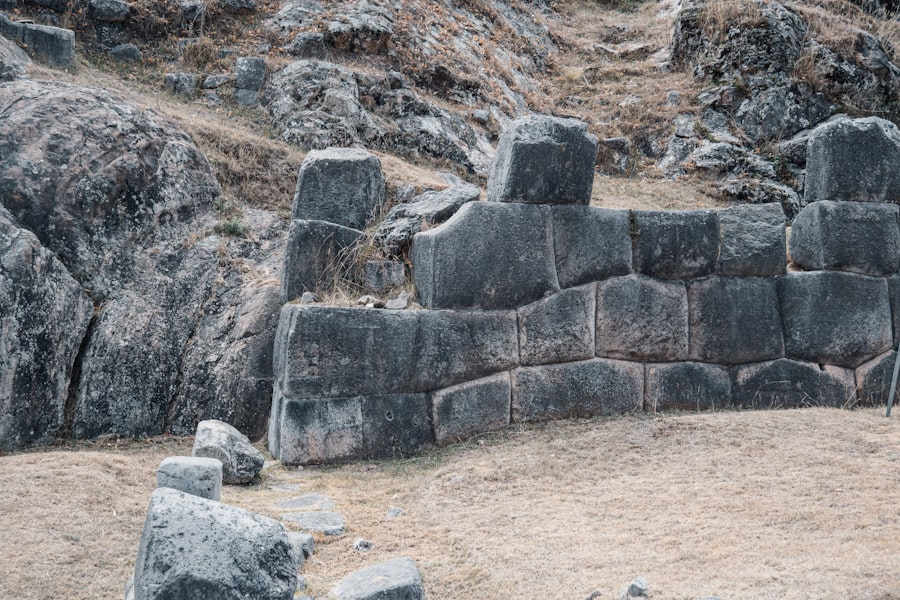
The successful transport and placement of the Baalbek stones highlight an impressive understanding of engineering principles among ancient builders. While modern technology allows for heavy lifting with cranes and machinery, ancient civilizations relied on ingenuity and manpower to achieve similar feats. The precise cutting and fitting of stones suggest that builders possessed advanced knowledge of geometry and structural integrity.
Additionally, some researchers argue that ancient builders may have employed simple machines such as levers or pulleys to assist in lifting and positioning the stones. These tools would have allowed workers to exert greater force with less effort, making it feasible to manipulate such heavy materials. The combination of skilled labor, innovative techniques, and a deep understanding of materials contributed to the successful construction of Baalbek’s monumental structures.
The Cultural and Religious Significance of the Baalbek Stones
Beyond their architectural marvels, the Baalbek stones hold profound cultural and religious significance for ancient civilizations. As a major center for worship, Baalbek was dedicated to various deities, with its temples serving as sites for rituals and ceremonies. The grandeur of these structures reflected not only religious devotion but also a sense of identity for those who inhabited the region.
The megalithic stones themselves were often imbued with symbolic meaning, representing strength, permanence, and divine connection. Their massive presence served as a reminder of the power of the gods worshipped at Baalbek and reinforced social cohesion among its inhabitants. As such, these stones were not merely construction materials; they were integral components of a cultural landscape that shaped beliefs and practices for generations.
Modern Attempts to Replicate Baalbek Stone Transport
In recent years, modern engineers and archaeologists have sought to replicate ancient methods for transporting large stones similar to those found at Baalbek. These experiments aim to shed light on how ancient builders may have accomplished such feats without modern technology. By using traditional tools and techniques, researchers have attempted to recreate scenarios that could explain how these massive blocks were moved.
One notable experiment involved constructing wooden sledges similar to those hypothesized by scholars. Participants attempted to transport heavy weights over various surfaces while documenting challenges encountered along the way. These modern attempts not only provide insights into ancient practices but also highlight the ingenuity required to overcome obstacles faced by builders in antiquity.
The Baalbek Stones and their Connection to Ancient Astronomical Alignments
The alignment of structures within Baalbek has led some researchers to explore potential connections between its megalithic stones and ancient astronomical phenomena. Some scholars suggest that certain temples may have been oriented toward celestial events such as solstices or equinoxes, indicating a sophisticated understanding of astronomy among its builders. This connection between architecture and celestial observation adds another layer of complexity to the study of Baalbek.
The alignment theories propose that ancient civilizations may have constructed their temples with specific astronomical events in mind, using them as markers for agricultural cycles or religious observances. If true, this would suggest that builders at Baalbek possessed not only advanced engineering skills but also a deep understanding of their environment and its celestial rhythms.
The Preservation and Conservation of the Baalbek Stones
As one of Lebanon’s most significant archaeological sites, preserving and conserving the Baalbek stones is crucial for future generations. Over time, natural erosion, human activity, and environmental factors have posed threats to these ancient structures. Efforts are underway to protect this UNESCO World Heritage site from further degradation while ensuring that its historical integrity remains intact.
Conservation initiatives involve careful monitoring of structural stability, restoration efforts where necessary, and public education about the importance of preserving cultural heritage. By fostering awareness among local communities and visitors alike, stakeholders aim to safeguard Baalbek’s legacy while promoting sustainable tourism practices that respect its historical significance.
The Continued Study and Exploration of the Baalbek Stone Transport Enigma
The enigma surrounding how the Baalbek stones were transported continues to inspire research and exploration within academic circles. Ongoing studies aim to uncover new evidence regarding construction techniques while integrating advancements in technology such as 3D modeling and geophysical surveys. These modern tools allow researchers to analyze site conditions more comprehensively than ever before.
As interest in ancient engineering grows globally, collaborative efforts between archaeologists, historians, engineers, and enthusiasts are likely to yield new insights into this captivating mystery. The quest for understanding how these monumental structures were built not only enriches knowledge about Baalbek but also deepens appreciation for human ingenuity throughout history. In conclusion, the transport enigma surrounding Baalbek’s megalithic stones remains one of history’s most intriguing puzzles.
The mystery surrounding the transport of the massive stones at Baalbek has intrigued historians and archaeologists for decades. Recent studies have suggested that advanced techniques may have been employed by ancient civilizations to move these colossal blocks. For a deeper dive into similar ancient engineering marvels, you can read more in this related article on the topic: Ancient Engineering Wonders.
WATCH THIS! 🔺 THEY LIED ABOUT THE PYRAMIDS — Here’s The Real Truth 🤯
FAQs
What is the Baalbek stone transport mystery?
The Baalbek stone transport mystery refers to the question of how ancient builders moved and positioned massive stone blocks, some weighing hundreds of tons, at the archaeological site of Baalbek in Lebanon. The techniques used to transport and lift these enormous stones remain a subject of debate and research.
Where is Baalbek located?
Baalbek is located in the Beqaa Valley of Lebanon. It is an ancient site known for its Roman temple complex, including the Temple of Jupiter, which features some of the largest stone blocks ever used in construction.
How large are the stones at Baalbek?
The stones at Baalbek vary in size, with some of the largest known as the Trilithon stones, each weighing approximately 800 to 1,000 tons. Other massive stones, such as the “Stone of the Pregnant Woman,” weigh around 1,200 tons.
What are some theories about how the stones were transported?
Theories include the use of rollers, sledges, ramps, and manpower. Some researchers suggest advanced engineering techniques or lost ancient technologies, while others propose that the stones were quarried and moved using conventional methods available at the time.
Is there any evidence of the tools or methods used to move the stones?
Archaeological evidence includes quarry marks, tool impressions, and remnants of ramps and roads. However, no definitive proof explains exactly how the largest stones were transported and lifted into place.
When were the Baalbek stones transported and used?
The massive stones were quarried and used primarily during the Roman period, around the 1st century BCE to the 3rd century CE, for constructing the temple complex.
Why is the Baalbek stone transport considered a mystery?
The mystery arises because the stones are extraordinarily large and heavy, and no clear historical records or archaeological evidence fully explain the methods used to move and position them with the technology known to be available at the time.
Have modern experiments been conducted to replicate the stone transport?
Yes, some experimental archaeologists have attempted to replicate the transport of large stones using ancient techniques such as wooden rollers, sledges, and manpower, with varying degrees of success, but none have conclusively demonstrated how the largest stones at Baalbek were moved.
Does the Baalbek stone transport mystery have any impact on our understanding of ancient engineering?
Yes, it highlights the advanced engineering skills and organizational capabilities of ancient civilizations and encourages ongoing research into ancient construction techniques and technologies.
Can tourists visit Baalbek to see the stones?
Yes, Baalbek is a popular archaeological site open to tourists, where visitors can see the massive stone blocks and the remains of the Roman temple complex.