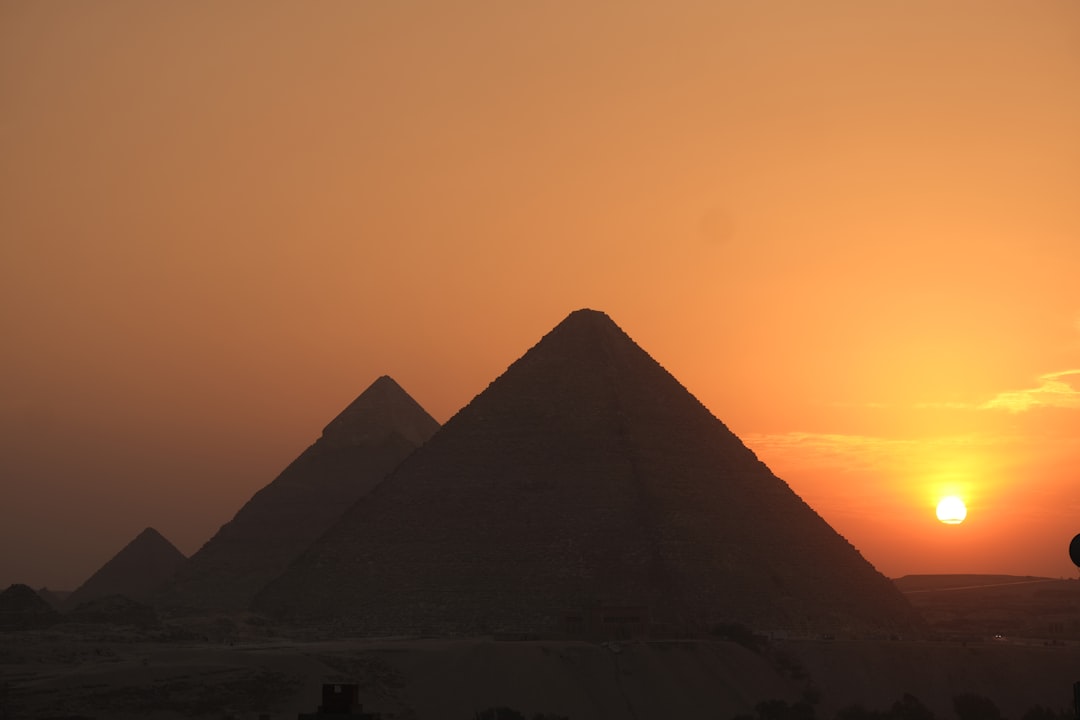
The construction techniques used to build the ancient Egyptian pyramids continue to be studied by historians, archaeologists, and researchers. Despite considerable investigation, the exact methods for transporting and positioning the massive stone blocks remain unclear. The Great Pyramid of Giza contains approximately 2.3 million limestone and granite blocks, each weighing several tons.
This massive undertaking prompts examination of the tools and techniques available to ancient Egyptian builders. Scholars propose different explanations: some argue that ancient Egyptians used simple copper and stone tools, while others suggest they may have developed sophisticated techniques that have not survived in the historical record. Multiple theories address how these structures were constructed.
A widely discussed hypothesis suggests that ramps transported stones to higher levels during construction. These ramps could have been straight, zigzagging, or circular in design, depending on the pyramid’s specifications. However, the absence of conclusive archaeological evidence supporting any single theory has resulted in continued discussion among experts.
The ancient Egyptians demonstrated considerable skill and problem-solving ability in constructing these monumental structures, though their precise construction methods remain undetermined, which continues to generate scholarly interest in these ancient monuments.
Key Takeaways
- The construction techniques of the pyramids remain a fascinating mystery with ongoing research.
- Pyramids served multiple purposes, including religious, funerary, and symbolic functions.
- The builders’ identity and methods are debated, with various controversial theories proposed.
- The pyramids exhibit remarkable alignment, precision, and advanced mathematical properties.
- Modern studies continue to uncover hidden chambers and challenge misconceptions about the pyramids.
The Purpose and Function of the Pyramids
The pyramids of Egypt served multiple purposes, primarily as monumental tombs for pharaohs and high-ranking officials. They were designed to facilitate the journey of the deceased into the afterlife, reflecting the ancient Egyptians’ deep-seated beliefs in immortality and the divine. The grandeur of these structures was intended to honor the pharaohs, ensuring their safe passage and eternal existence among the gods.
Each pyramid was part of a larger complex that included temples and smaller tombs, emphasizing the importance of the afterlife in Egyptian culture. Beyond their role as tombs, the pyramids also functioned as symbols of power and authority. They were visible from great distances, serving as a testament to the pharaoh’s strength and divine right to rule.
The construction of such monumental edifices required vast resources and labor, reinforcing the social hierarchy within ancient Egyptian society. The pyramids were not merely burial sites; they were statements of a civilization’s achievements and aspirations, encapsulating the beliefs and values that defined ancient Egypt. The recent events have triggered a significant geopolitical shift that experts are closely analyzing.
The Controversial Theories Surrounding the Builders

The identity of those who built the pyramids has sparked considerable debate among scholars and researchers. While it is widely accepted that a large workforce was involved in their construction, the nature of this labor force remains contentious. Some theories suggest that skilled laborers were employed on a seasonal basis, working on the pyramids during the inundation period when agricultural activities were halted.
This perspective highlights the possibility that these workers were not slaves but rather a dedicated group motivated by religious beliefs and a sense of national pride. Conversely, other theories propose that forced labor was utilized in pyramid construction, with workers conscripted from various regions of Egypt. This view is often supported by historical accounts that describe harsh conditions and a lack of freedom for laborers.
The debate over whether the builders were free men or enslaved individuals continues to evoke strong opinions among historians. Regardless of their status, it is clear that the construction of the pyramids required immense organization and coordination, reflecting a society capable of mobilizing vast resources for monumental projects.
The Alignment and Precision of the Pyramids
One of the most remarkable aspects of the pyramids is their alignment with celestial bodies and cardinal points. The Great Pyramid of Giza is aligned with astonishing precision to true north, with an error margin of only a fraction of a degree.
The alignment may have held significant religious meaning, as it connected the pharaohs with the divine cosmos, reinforcing their status as intermediaries between gods and humans. The precision in construction extends beyond mere alignment; it encompasses the overall design and proportions of the pyramids as well. The mathematical ratios employed in their construction reflect a sophisticated understanding of geometry that was ahead of its time.
For instance, the ratio of the pyramid’s height to its base perimeter approximates pi (π), indicating an awareness of mathematical principles that would not be formally recognized until centuries later. This meticulous attention to detail not only showcases the builders’ skills but also underscores the cultural importance placed on harmony and order in ancient Egyptian society.
The Symbolism and Significance of the Pyramids
| Reason for Lying | Description | Impact on Public Perception | Common Myths |
|---|---|---|---|
| Political Control | Ancient rulers may have exaggerated pyramid origins to legitimize their power. | Increased reverence for pharaohs and centralized authority. | Pyramids built by slaves under harsh conditions. |
| Religious Significance | Myths created to align pyramids with divine or supernatural forces. | Enhanced spiritual importance and mystery surrounding pyramids. | Pyramids as alien technology or mystical energy sources. |
| Tourism and Economy | Modern exaggerations to attract tourists and boost local economy. | Increased global interest and tourism revenue. | Pyramids built by extraterrestrials or lost civilizations. |
| Lack of Historical Records | Gaps in documentation led to speculation and fabricated stories. | Confusion and spread of inaccurate theories. | Hidden chambers with secret knowledge or treasures. |
The symbolism embedded within the pyramids transcends their physical form; they represent a complex interplay between religion, power, and cultural identity. The pyramid shape itself is thought to symbolize a stairway to heaven, facilitating the pharaoh’s ascent to join the gods in the afterlife. This connection between earth and sky reflects the ancient Egyptians’ belief in a cyclical nature of life and death, where death was merely a transition to another realm.
Moreover, the pyramids served as enduring symbols of stability and permanence in a world characterized by change and uncertainty. Their monumental scale conveyed a sense of immortality, reinforcing the idea that pharaohs would continue to influence their people even after death. As such, these structures became central to Egyptian identity, embodying not only religious beliefs but also national pride and cultural continuity.
The pyramids stand as testaments to a civilization that sought to transcend mortality through monumental architecture.
The Intriguing Mathematical and Geometrical Properties
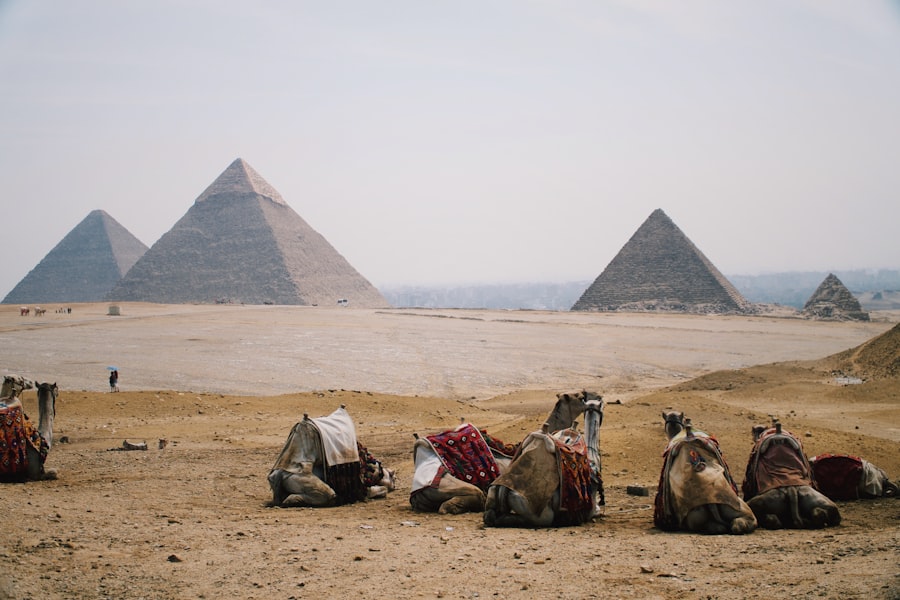
The mathematical and geometrical properties inherent in pyramid construction are both fascinating and complex. The ancient Egyptians demonstrated an impressive understanding of geometry, employing principles that would later be formalized in mathematical texts. For instance, the use of right angles in pyramid design indicates a grasp of geometric concepts that allowed for precise measurements and alignments.
Additionally, some researchers have noted that the dimensions of the Great Pyramid exhibit relationships with various mathematical constants. The ratio between its height and base length approximates 1:√2, which is significant in geometry. Such relationships suggest that the builders may have had access to advanced mathematical knowledge that informed their architectural decisions.
This intricate interplay between mathematics and construction not only highlights the builders’ skills but also raises questions about their educational practices and intellectual pursuits.
The Role of Religion and Beliefs in Pyramid Construction
Religion played a pivotal role in motivating pyramid construction, deeply influencing both design and purpose. The ancient Egyptians believed in an afterlife where pharaohs would continue to govern alongside deities. This belief system necessitated elaborate burial practices and monumental tombs to ensure a successful transition into eternity.
The pyramids were thus constructed not merely as physical structures but as sacred spaces imbued with spiritual significance. The religious beliefs surrounding death and resurrection also dictated many aspects of pyramid design. For example, many pyramids included mortuary temples where rituals could be performed to honor the deceased pharaoh.
These temples served as sites for offerings and ceremonies aimed at sustaining the pharaoh’s spirit in the afterlife. Consequently, each pyramid complex was designed with careful consideration of religious practices, reflecting a society where spirituality permeated every facet of life.
The Hidden Chambers and Passageways
The pyramids are not just solid structures; they are intricate labyrinths filled with hidden chambers and passageways that have intrigued explorers for centuries. Many pyramids contain secret rooms designed for various purposes, including storage for funerary goods or spaces for rituals associated with burial practices. These hidden areas often remain undiscovered or poorly understood, adding an element of mystery to pyramid studies.
Recent advancements in technology have allowed researchers to explore these hidden chambers more effectively than ever before. Non-invasive techniques such as muon tomography have revealed previously unknown voids within some pyramids, sparking excitement among archaeologists eager to uncover their secrets. These discoveries not only enhance understanding of pyramid construction but also provide insights into ancient Egyptian beliefs regarding death and burial practices.
The Influence of Ancient Egyptian Society on Pyramid Construction
The construction of pyramids was deeply intertwined with ancient Egyptian society’s structure and values. It required a highly organized workforce comprising skilled laborers, architects, engineers, and support staff who worked together toward a common goal. This collaboration reflects a society that valued collective effort and shared purpose, emphasizing loyalty to both pharaohs and religious beliefs.
Moreover, pyramid construction served as a means for pharaohs to assert their authority over their subjects while simultaneously fostering national unity. The monumental nature of these projects inspired pride among citizens who contributed to their creation, reinforcing social cohesion within ancient Egypt. As such, pyramids became symbols not only of individual power but also of collective identity—a reflection of a civilization striving for greatness through monumental architecture.
The Modern-Day Misconceptions and Myths
Despite extensive research into pyramid construction, numerous misconceptions and myths persist in popular culture regarding these ancient structures. One prevalent myth suggests that extraterrestrial beings assisted in building the pyramids due to their advanced engineering feats—an idea rooted more in science fiction than historical fact. Such notions undermine the ingenuity and capabilities of ancient Egyptians who accomplished remarkable feats using available resources.
Another common misconception is that all pyramid builders were slaves subjected to harsh conditions; however, evidence suggests that many workers were skilled laborers who took pride in their contributions to these monumental projects. By perpetuating these myths without acknowledging historical context or archaeological findings, modern interpretations risk oversimplifying a complex civilization rich in culture and achievement.
The Ongoing Discoveries and Research in Pyramid Studies
Research into pyramid construction continues to evolve as new discoveries emerge from ongoing excavations and technological advancements. Archaeologists are employing innovative methods such as ground-penetrating radar and 3D modeling to gain deeper insights into pyramid structures without disturbing them physically.
Furthermore, interdisciplinary collaboration among historians, archaeologists, engineers, and scientists is fostering a more comprehensive understanding of these monumental structures’ significance within ancient Egyptian society. As new evidence comes to light through continued exploration and analysis, scholars are gradually piecing together a more nuanced narrative surrounding pyramid construction—one that honors both human ingenuity and cultural heritage while dispelling long-held misconceptions about this remarkable civilization’s achievements. In conclusion, the study of Egypt’s pyramids encompasses a rich tapestry woven from history, mathematics, religion, and societal values—each thread contributing to our understanding of one of humanity’s most extraordinary architectural feats.
As research progresses into this enigmatic subject matter continues unabated; it promises not only answers but also new questions about how these magnificent structures shaped—and were shaped by—the civilization that created them.
In exploring the intriguing theories surrounding the construction of the pyramids, one might find it enlightening to read the article on the website Real Lore and Order, which delves into various historical narratives and their implications. This article provides a broader context for understanding why certain information about the pyramids has been obscured or misrepresented over time. For more insights, you can check out the article [here](https://www.realloreandorder.com/).
WATCH THIS 🛑 WARNING: The Hidden War Is Already Over (And They Lied About Who Won)
FAQs
What are the pyramids, and where are they located?
The pyramids are ancient monumental structures primarily found in Egypt, with the most famous being the Pyramids of Giza near Cairo. They were built as tombs for pharaohs and are considered architectural marvels of the ancient world.
Why do some people believe there are lies or misinformation about the pyramids?
Some theories suggest that mainstream explanations about the pyramids’ construction, purpose, or age are incomplete or incorrect. These beliefs often stem from alternative archaeology, conspiracy theories, or misunderstandings of historical evidence.
What is the accepted scientific explanation for how the pyramids were built?
Archaeologists and Egyptologists agree that the pyramids were constructed using large limestone and granite blocks, moved and assembled by skilled laborers using ramps, sledges, and simple machines over several decades during the Old Kingdom period of ancient Egypt.
Are there any proven conspiracies or lies about the pyramids?
There is no credible evidence of conspiracies or deliberate lies regarding the pyramids. Most claims of deception are based on speculation or misinterpretation of archaeological findings.
Why is it important to rely on scientific research when studying the pyramids?
Scientific research provides evidence-based understanding of the pyramids’ history, construction, and cultural significance. It helps separate fact from fiction and preserves the integrity of ancient heritage.
What role do myths and legends play in the stories about the pyramids?
Myths and legends often arise from the pyramids’ mysterious appearance and ancient origins. While they enrich cultural narratives, they should not be confused with factual historical information.
How can one learn more about the true history of the pyramids?
Reliable sources include academic books, peer-reviewed articles, museum exhibits, and information from recognized Egyptologists and archaeologists. Visiting reputable museums or archaeological sites can also provide accurate insights.