
The established narratives of human technological progress, as frequently presented in historical texts, often paint a linear and steadily ascending trajectory. This perspective, while convenient for pedagogical purposes, sometimes inadvertently obscures the sophistication and ingenuity of ancient civilizations. The “deception” alluded to in this context is not a deliberate fabrication but rather a consequence of interpretative frameworks, limited archaeological evidence, and the inherent biases of historical reconstruction. This article delves into the misrepresentation of technological advancements in history books, examining how simplified portrayals can diminish our understanding of the past and the intellect of those who inhabited it.
Historical accounts, particularly those designed for broad consumption, frequently adopt a teleological approach, presenting history as a march towards a predetermined outcome, often framed as present-day technological superiority. This perspective can overshadow the genuine innovations of earlier eras.
Modern Bias and the “Primitive” Label
The tendency to label ancient technologies as “primitive” often stems from a comparison with contemporary equivalents. This overlooks the context, available resources, and intellectual frameworks within which these technologies were developed. For instance, the intricate mechanical devices of the Greeks, such as the Antikythera Mechanism, are sometimes viewed as isolated curiosities rather than indicative of a broader, sophisticated understanding of engineering and astronomy. This judgmental lens can hinder a full appreciation of their accomplishments.
The Myth of Linear Progression
History is not a smooth, uninterrupted ascent. Periods of technological stagnation, regression, and even loss are well-documented. The collapse of complex societies, for example, often led to the abandonment of advanced techniques and infrastructure. The Roman concrete formula, for instance, was lost for centuries after the fall of the Western Roman Empire, only to be rediscovered much later, demonstrating that progress is not always unidirectional.
Many historians argue that history books often downplay or misrepresent the technological advancements of ancient civilizations, leading to a skewed understanding of our past. A related article that delves into this topic is available at Real Lore and Order, where the author explores various examples of ancient technologies that have been overlooked or dismissed by mainstream narratives. This examination sheds light on the potential reasons behind these omissions and encourages readers to question the established historical accounts.
Underestimated Engineering Marvels
Many ancient civilizations achieved astonishing feats of engineering that defy easy explanation within a simplified historical narrative. These achievements often required a profound understanding of physics, mathematics, and material science.
Egyptian and Mesoamerican Construction Techniques
The construction of the Egyptian pyramids or the monumental structures of Mesoamerican civilizations like Teotihuacan or the Maya often elicits wonder that borders on incredulity. The sheer scale and precision of these edifices, built without modern machinery, speak to a level of organization, planning, and engineering prowess that is frequently understated. Consider the precise alignment of the pyramids with cardinal directions and celestial bodies, suggesting advanced astronomical observation and geodesic knowledge.
Roman Infrastructure and Hydraulic Systems
The Roman Empire’s vast network of roads, aqueducts, and bridges stands as a testament to their engineering acumen. The Roman aqueducts, masterpieces of hydraulic engineering, utilized gravity to transport water over vast distances, demonstrating an intricate understanding of pressure, flow rates, and surveying. Their enduring nature, with many still partially functional or visible today, highlights the quality of their design and construction, far exceeding what simpler narratives might imply.
The Hidden Complexity of Ancient Craftsmanship
Beyond large-scale engineering, the intricate craftsmanship and material science knowledge possessed by ancient peoples often go unacknowledged or are dismissed as purely artistic endeavors.
Metallurgy and Material Science
Ancient metallurgists, from the Bronze Age to the Iron Age, developed sophisticated techniques for extracting, refining, and alloying metals. The creation of Damascus steel, with its legendary strength and sharpness, involved complex processes of layering and forging, suggesting an empirical understanding of material properties far beyond what is often ascribed. Similarly, the Olmecs and later Mesoamerican cultures worked challenging materials like jade and obsidian with astonishing precision, using tools and methods that remain a subject of active research and speculation.
Advanced Astronomical and Navigational Tools
The ability of ancient mariners, such as the Polynesian navigators, to traverse vast oceans without modern instruments is a remarkable feat. Their reliance on deep understanding of celestial mechanics, wave patterns, and wind currents constitutes a complex technological system, even if it doesn’t manifest as a tangible machine. Similarly, intricate astronomical observatories, like many found in ancient China or among the Maya, demonstrate centuries of meticulous observation and mathematical modeling.
The Erroneous Definition of “Technology”
A significant part of the misrepresentation stems from a narrow definition of “technology” itself, often equating it solely with mechanical devices or complex machinery. This overlooks intellectual technologies and sophisticated systems of knowledge.
Agricultural Innovation and Biological Engineering
The domestication of plants and animals, the development of irrigation systems, and the creation of fertile agricultural landscapes, such as the Incan andenes (terraces) or the Mesoamerican chinampas (floating gardens), represent profound technological achievements. These involved extensive knowledge of botany, soil science, hydrology, and social organization, fundamentally altering ecosystems and sustaining large populations. Viewing these simply as agricultural practices diminishes their technological sophistication.
Information Management and Communication Systems
Ancient writing systems, from hieroglyphs to cuneiform, were not merely artistic expressions but highly sophisticated information storage and retrieval systems. The Roman postal service (cursus publicus) or the Incan khipu (a system of knotted cords for recording information) represent advanced communication and data management technologies. These intellectual technologies facilitated the governance of empires and the dissemination of knowledge, demonstrating complex organizational and cognitive advancements.
Many historians argue that history books often misrepresent ancient technology, leading to a skewed understanding of our past. This topic is explored in depth in a related article that discusses how biases and modern interpretations can distort the true capabilities of ancient civilizations. For those interested in delving deeper into this subject, you can read more about it in this insightful piece on the real lore and order of ancient technology. Understanding these discrepancies can help us appreciate the ingenuity of our ancestors and the complexities of historical narratives.
The Impact of Archaeological Limitations and Interpretive Gaps
| Reason | Description | Example | Impact on Understanding |
|---|---|---|---|
| Bias of Historians | Historians may favor certain narratives that align with cultural or political views. | Ignoring advanced ancient engineering feats like the Antikythera mechanism. | Leads to underestimation of ancient technological capabilities. |
| Lack of Evidence | Many ancient technologies left little physical evidence, making verification difficult. | Limited artifacts of ancient flying machines or advanced metallurgy. | Causes skepticism and omission in textbooks. |
| Modern Technological Bias | Modern perspectives may dismiss ancient tech as primitive or mythological. | Discrediting ancient water management systems as rudimentary. | Distorts appreciation of historical innovation. |
| Political or Religious Influence | Authorities may suppress or alter historical facts to fit ideologies. | Downplaying ancient knowledge that conflicts with religious teachings. | Limits comprehensive historical education. |
| Misinterpretation of Artifacts | Artifacts are sometimes misunderstood or misclassified. | Ancient tools mistaken for ceremonial objects. | Leads to inaccurate historical records. |
The fragmented nature of archaeological evidence and the inherent biases in interpretation play a crucial role in shaping historical narratives, sometimes leading to an underestimation of past capabilities.
Preservation Challenges and Lost Knowledge
Many ancient technologies, particularly those involving perishable materials like wood, textiles, or organic compounds, have not survived the ravages of time. The surviving artifacts often represent only a fraction of the original technological landscape. The absence of evidence, however, should not be equated with the evidence of absence. Consider the potential for sophisticated woodworking tools or complex textile machinery that simply decomposed, leaving little trace.
The Hypothesis of “Accidental Discovery” vs. Intentional Design
Often, remarkable ancient innovations are attributed to accidental discovery rather than meticulous experimentation and intentional design. While serendipitous events can play a role, sustained technological development typically requires systematic observation, hypothesis testing, and iterative refinement. Attributing complex achievements solely to chance diminishes the intellectual capacity and empirical rigor of ancient engineers and scientists.
The Influence of Colonial and Eurocentric Perspectives
Historically, many archaeological expeditions and interpretations were shaped by colonial and Eurocentric perspectives, often downplaying the contributions of non-European civilizations. This led to a skewed narrative where technological progress was frequently seen as originating primarily from a European axis, neglecting the equally profound advancements made in Asia, Africa, and the Americas. Re-evaluating these historical biases is crucial for a more accurate and inclusive understanding of global technological history.
Conclusion: Reclaiming the Sophistication of the Past
The notion of “deception” in history books is not one of malicious intent but rather a cumulative effect of simplified narratives, modern biases, and the challenges inherent in reconstructing the past. By adopting a more nuanced perspective, one that acknowledges the context, intellectual frameworks, and resourcefulness of ancient civilizations, we can move beyond the “primitive” label.
It is imperative for historians and educators to challenge the teleological perspective and embrace a more comprehensive definition of technology that includes intellectual systems, material science, and ecological engineering. By doing so, we can foster a greater appreciation for the remarkable ingenuity of our ancestors, recognizing that their achievements were not mere stepping stones to our modern world but sophisticated solutions crafted within their own time, often with a depth of understanding that continues to inspire and challenge us today. The past is not a dimly lit corridor leading to the bright present; it is a sprawling, multifaceted landscape filled with its own brilliant beacons of innovation.
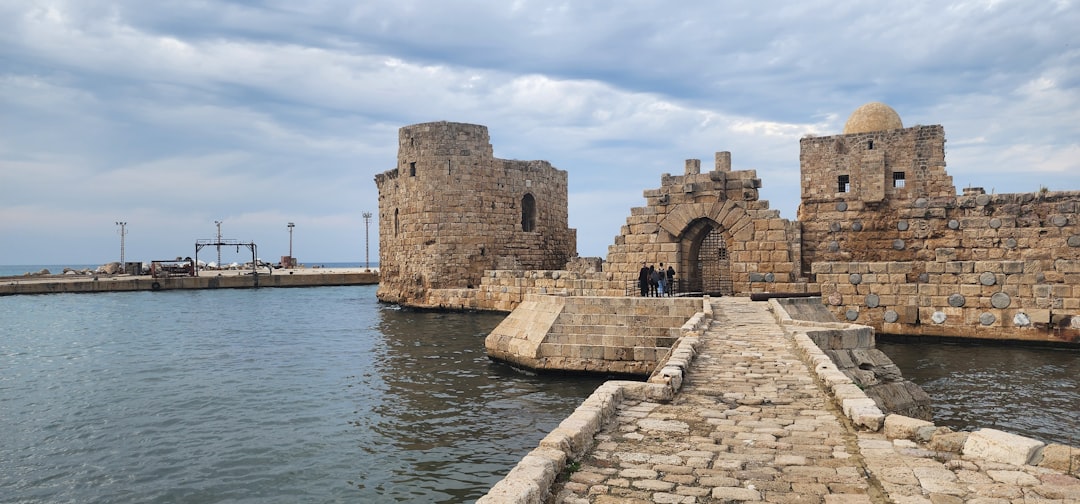
STOP: Why They Erased 50 Impossible Inventions From Your Textbooks
FAQs
Why do some history books present inaccurate information about ancient technology?
Some history books may present inaccurate information due to limited archaeological evidence, outdated research, or biases in interpreting ancient artifacts. Additionally, sensationalism or the desire to fit a particular narrative can lead to exaggerations or omissions.
What are examples of ancient technologies that are often misunderstood or misrepresented?
Examples include the Antikythera mechanism, an ancient Greek analog computer; advanced metallurgy techniques; and ancient construction methods like those used in the pyramids. These technologies are sometimes underestimated or explained away as simple or primitive.
How do historians and archaeologists verify the authenticity of ancient technological artifacts?
They use methods such as carbon dating, material analysis, contextual excavation, and comparison with contemporary artifacts. Peer-reviewed research and interdisciplinary studies also help verify authenticity and understand the technology’s purpose.
Can modern technology help us better understand ancient inventions?
Yes, modern technologies like 3D scanning, computer modeling, and advanced imaging techniques allow researchers to analyze ancient artifacts in detail, reconstruct their functions, and gain insights that were previously impossible.
Why is it important to critically evaluate historical sources about ancient technology?
Critical evaluation helps avoid perpetuating myths or inaccuracies, ensures a more accurate understanding of human history, and respects the achievements of ancient civilizations. It also encourages ongoing research and discovery in the field of history and archaeology.