
Throughout history, humanity has been captivated by enigmas that defy explanation. These forgotten historical mysteries not only pique your curiosity but also challenge your understanding of the past. They serve as a reminder that despite our advancements in technology and knowledge, there are still elements of history that remain shrouded in uncertainty.
You may find yourself drawn to these stories, wondering what truths lie hidden beneath layers of time and myth. Each mystery invites you to explore the boundaries of human experience, pushing you to question what you think you know about history. As you delve into these captivating tales, you will discover that they often intertwine with the fabric of culture, belief, and human endeavor.
From lost civilizations to unexplained artifacts, these mysteries evoke a sense of wonder and intrigue. They compel you to consider the possibility that there are still secrets waiting to be uncovered, stories yearning to be told. In this exploration, you will encounter some of the most perplexing historical enigmas that have left scholars and enthusiasts alike scratching their heads in disbelief.
Key Takeaways
- Many historical mysteries, like Atlantis and the Roanoke Colony, remain unsolved and fuel ongoing curiosity.
- The Voynich Manuscript is a cryptic book that has defied all attempts at decipherment.
- Ancient artifacts such as the Antikythera Mechanism reveal advanced technology far ahead of their time.
- Mysterious disappearances, including the USS Cyclops and the Mary Celeste, continue to intrigue researchers.
- The enduring fascination with these enigmas highlights humanity’s desire to uncover lost knowledge and history.
The Lost City of Atlantis: Myth or Reality?
One of the most enduring legends in human history is that of Atlantis, a fabled city said to have sunk into the ocean in a cataclysmic event. You may have heard tales of this advanced civilization, described by the philosopher Plato as a utopia filled with wealth, knowledge, and power. The allure of Atlantis lies not only in its grandeur but also in the mystery surrounding its existence.
Was it merely a figment of Plato’s imagination, or does evidence suggest that such a place once thrived? As you explore the various theories surrounding Atlantis, you will encounter a plethora of interpretations. Some scholars argue that it was based on real locations, such as the Minoan civilization on Crete or the island of Santorini, which experienced a volcanic eruption.
Others believe that Atlantis serves as an allegory for human hubris and the consequences of moral decay. Regardless of its origins, the story of Atlantis continues to inspire countless expeditions and research efforts aimed at uncovering its secrets. You may find yourself pondering whether the truth behind this legendary city is lost forever or if it lies just beneath the waves, waiting to be discovered.
The Mystery of the Roanoke Colony: What Happened to the Settlers?
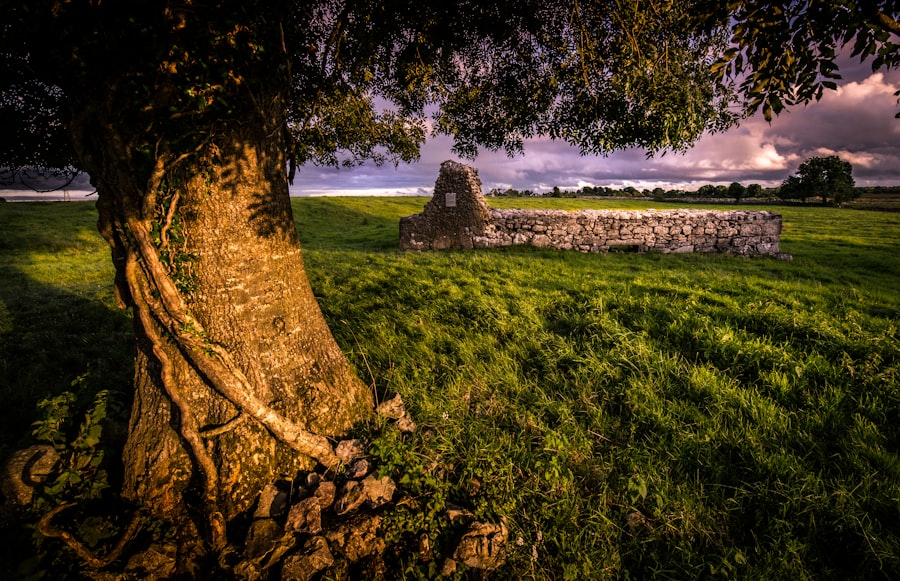
The Roanoke Colony, established in 1585 on Roanoke Island in present-day North Carolina, is another historical enigma that has baffled historians for centuries. When you think about the early attempts at colonization in America, the disappearance of this entire settlement stands out as one of the most perplexing events. When John White returned from England three years later, he found the colony abandoned, with no trace of its inhabitants except for the word “CROATOAN” carved into a tree.
This single clue has sparked numerous theories about what might have happened to the settlers. As you delve deeper into this mystery, you will encounter various hypotheses ranging from assimilation with local Native American tribes to a tragic fate met by starvation or disease. Some even speculate that the settlers attempted to return to England but perished at sea.
The lack of concrete evidence has led to endless speculation and debate among historians and archaeologists alike. You may find yourself captivated by the idea that these early colonists vanished without a trace, leaving behind only whispers of their existence and a legacy that continues to intrigue generations.
The Voynich Manuscript: Unraveling the Code of the Mysterious Book
The Voynich Manuscript is perhaps one of the most enigmatic texts ever discovered. Dating back to the early 15th century, this illustrated codex is filled with strange drawings and an unknown script that has stumped linguists and cryptographers for decades. As you examine its pages, you may feel a sense of wonder mixed with frustration; despite numerous attempts to decode its contents, no one has succeeded in deciphering its meaning.
The manuscript’s origins remain equally mysterious, with theories ranging from it being an elaborate hoax to a genuine work of alchemical knowledge. You might find it fascinating that some researchers believe the manuscript could hold secrets about herbal medicine or astronomical phenomena, while others argue it is simply an artistic creation without any real significance. The allure of the Voynich Manuscript lies not only in its indecipherable text but also in its ability to spark your imagination.
As you ponder its purpose and meaning, you may feel a connection to those who have come before you—scholars and adventurers who have dedicated their lives to unlocking its secrets.
The Disappearance of the USS Cyclops: Vanishing Without a Trace
| Historical Mystery | Description | Common Media Coverage | Reasons for Media Ignorance | Estimated Public Interest |
|---|---|---|---|---|
| The Voynich Manuscript | An undeciphered illustrated codex dating to the early 15th century, written in an unknown script. | Minimal, occasional niche articles | Complexity of content, lack of definitive breakthroughs | Moderate |
| The Lost Colony of Roanoke | Disappearance of English settlers from Roanoke Island in the late 16th century with no clear explanation. | Rarely covered beyond historical documentaries | Limited new evidence, overshadowed by other colonial history | Moderate |
| The Antikythera Mechanism | An ancient Greek analog computer used to predict astronomical positions and eclipses. | Occasional scientific features | Highly technical subject matter, niche audience | Low to Moderate |
| The Disappearance of the Indus Valley Civilization | Sudden decline and disappearance of one of the world’s earliest urban cultures around 1900 BCE. | Limited mainstream attention | Scarcity of written records, complex archaeological data | Moderate |
| The Identity of Jack the Ripper | Unsolved murders in London in 1888 with numerous suspects but no confirmed identity. | Extensive coverage historically, but less in recent mainstream media | Overexposure leading to audience fatigue | High historically, declining recently |
| The Phaistos Disc | A fired clay disc from Crete with mysterious symbols that remain undeciphered. | Very limited coverage | Obscure artifact, lack of consensus on meaning | Low |
The USS Cyclops was a navy cargo ship that mysteriously vanished in March 1918 while sailing from Barbados to Baltimore. With over 300 men aboard, its disappearance remains one of the largest non-combat losses in U.S. naval history. As you consider this maritime mystery, you may be struck by the sheer scale of its enigma; how could a ship so large simply disappear without a trace? Theories abound regarding its fate, ranging from storms and navigational errors to more sinister explanations involving sabotage or even supernatural forces. As you explore this mystery further, you’ll discover that the USS Cyclops was part of a larger narrative involving other vessels that disappeared in similar circumstances in the Bermuda Triangle region. This connection has fueled speculation about paranormal activity or magnetic anomalies affecting navigation systems. You may find yourself drawn into the web of theories surrounding this case, contemplating what could have happened on that fateful journey and why it remains unsolved more than a century later.
The Antikythera Mechanism: Ancient Greek Technology Ahead of its Time

Discovered in a shipwreck off the coast of Antikythera, Greece, the Antikythera Mechanism is often regarded as one of the earliest known analog computers. Dating back to around 150-100 BCE, this intricate device was designed to predict astronomical positions and eclipses for calendrical and astrological purposes. As you examine this remarkable artifact, you may be amazed by its complexity and sophistication—qualities that seem far ahead of its time.
The mechanism consists of a series of gears and dials that demonstrate an understanding of celestial mechanics that was not thought to exist until much later in history. You might find it intriguing that scholars are still working to fully understand how it functioned and what implications it had for ancient Greek society. The Antikythera Mechanism challenges your perception of technological advancement in antiquity and raises questions about what other innovations may have been lost to time.
The Nazca Lines: Ancient Geoglyphs and Their Purpose
The Nazca Lines are a series of enormous geoglyphs etched into the desert floor in southern Peru, depicting various animals, plants, and geometric shapes. As you gaze upon these massive designs from above, you may wonder about their purpose and how they were created with such precision thousands of years ago. The lines stretch over 1,000 square kilometers and can only be fully appreciated from an aerial perspective, leading many to speculate about their significance.
Some theories suggest that they were created for astronomical purposes or as part of religious rituals aimed at appeasing deities. Others propose that they served as pathways for ceremonial processions or were intended as markers for water sources. As you explore these possibilities, you may find yourself captivated by the idea that ancient civilizations possessed knowledge and skills that remain elusive today.
The Nazca Lines continue to inspire curiosity and debate among archaeologists and enthusiasts alike, inviting you to ponder their true meaning.
The Mystery of the Mary Celeste: Abandoned Ship or Supernatural Event?
The Mary Celeste is another maritime mystery that has captured your imagination for generations. Discovered adrift in the Atlantic Ocean in 1872 with no crew aboard, this ship was found in perfect condition—its cargo intact and personal belongings undisturbed. The absence of any sign of struggle or distress has led to countless theories about what could have happened on board.
You might find yourself intrigued by tales ranging from piracy and mutiny to supernatural occurrences or even alien abduction. As you delve into this mystery further, you’ll discover that many explanations have been proposed over the years, each more fantastical than the last. Some suggest that a sudden storm forced the crew to abandon ship while others believe they fell victim to a toxic gas leak from the cargo hold.
The lack of definitive answers only adds to your fascination with this case; it serves as a reminder that even in our modern world, there are still stories waiting to be unraveled.
The Shroud of Turin: Is it Really the Burial Cloth of Jesus?
The Shroud of Turin is one of the most controversial relics in religious history, believed by some to be the burial cloth that wrapped Jesus Christ after his crucifixion. As you examine this linen cloth bearing an image resembling a crucified man, you may feel a sense of awe mixed with skepticism. Scientific studies have produced conflicting results regarding its authenticity; radiocarbon dating suggests it dates back to the Middle Ages while other analyses indicate it could be much older.
You might find yourself grappling with questions about faith and science as you explore this mystery further. Is it possible for an artifact like the Shroud to hold genuine historical significance? Or is it merely a product of medieval artistry?
Regardless of your beliefs, the Shroud continues to captivate both believers and skeptics alike, serving as a focal point for discussions about religion, history, and human experience.
The Voynich Manuscript: Unraveling the Code of the Mysterious Book
Returning once more to the Voynich Manuscript—its allure is undeniable and merits further exploration. This enigmatic book has captured your imagination not just because of its indecipherable text but also due to its stunning illustrations depicting plants, astronomical charts, and mysterious figures engaged in various activities. Each page invites you into a world where knowledge remains tantalizingly out of reach.
As researchers continue their efforts to decode its contents using advanced technology like artificial intelligence and machine learning algorithms, you may feel a sense of anticipation about what discoveries lie ahead. Will someone finally unlock its secrets? Or will it remain an unsolvable puzzle?
The ongoing quest for understanding keeps your interest alive; it serves as a testament to humanity’s enduring desire for knowledge and connection with our past.
The Continued Fascination with Historical Mysteries
As you reflect on these forgotten historical mysteries, it’s clear that they hold an enduring fascination for people across cultures and generations. Each enigma invites you into a world where imagination meets inquiry—a space where questions linger long after answers have eluded discovery. Whether it’s pondering the fate of lost civilizations or deciphering ancient texts, these mysteries remind you that history is not just a collection of facts but also a tapestry woven from stories waiting to be told.
In an age where information is readily available at your fingertips, these mysteries serve as reminders that some aspects of our past remain tantalizingly out of reach—inviting exploration and contemplation for years to come. As long as there are questions left unanswered, your fascination with historical mysteries will continue to thrive.
One intriguing aspect of historical mysteries that often goes unnoticed by mainstream media is the enigmatic case of the lost colony of Roanoke. This unsolved mystery has captivated historians and amateur sleuths alike, yet it rarely receives the attention it deserves in popular outlets. For a deeper dive into such overlooked historical enigmas, you can explore the article on Real Lore and Order, which sheds light on various mysteries that have been sidelined by mainstream narratives. Check it out here: Real Lore and Order.
WATCH THIS! 🔍 Archaeologists REFUSE to Explain This Ancient Machine
FAQs
What are historical mysteries?
Historical mysteries refer to unresolved questions or unexplained events from the past that continue to intrigue researchers, historians, and the public. These can include lost civilizations, unexplained artifacts, mysterious disappearances, and unsolved crimes from history.
Why does mainstream media often ignore certain historical mysteries?
Mainstream media may ignore some historical mysteries due to a lack of concrete evidence, limited public interest, editorial priorities, or the complexity of the topics. Additionally, some mysteries may be overshadowed by more current news or considered too speculative for broad coverage.
Can historical mysteries be solved with modern technology?
Yes, advances in technology such as DNA analysis, ground-penetrating radar, and digital imaging have helped solve or shed new light on many historical mysteries. However, some mysteries remain unsolved due to missing evidence or the passage of time.
Are historical mysteries important to study?
Studying historical mysteries is important because it can provide insights into past cultures, human behavior, and historical events. It also encourages critical thinking and can inspire further research and discovery.
Where can I learn more about lesser-known historical mysteries?
You can explore academic journals, books by historians and archaeologists, specialized documentaries, and reputable websites dedicated to history and archaeology. Libraries and university resources are also valuable for in-depth research.
Do conspiracy theories often surround historical mysteries?
Yes, many historical mysteries attract conspiracy theories due to gaps in information and the human tendency to seek explanations. It is important to differentiate between evidence-based research and speculative or unfounded claims.
How do historians approach unresolved historical mysteries?
Historians use a combination of primary sources, archaeological evidence, scientific methods, and critical analysis to investigate historical mysteries. They often collaborate across disciplines to build the most accurate understanding possible.