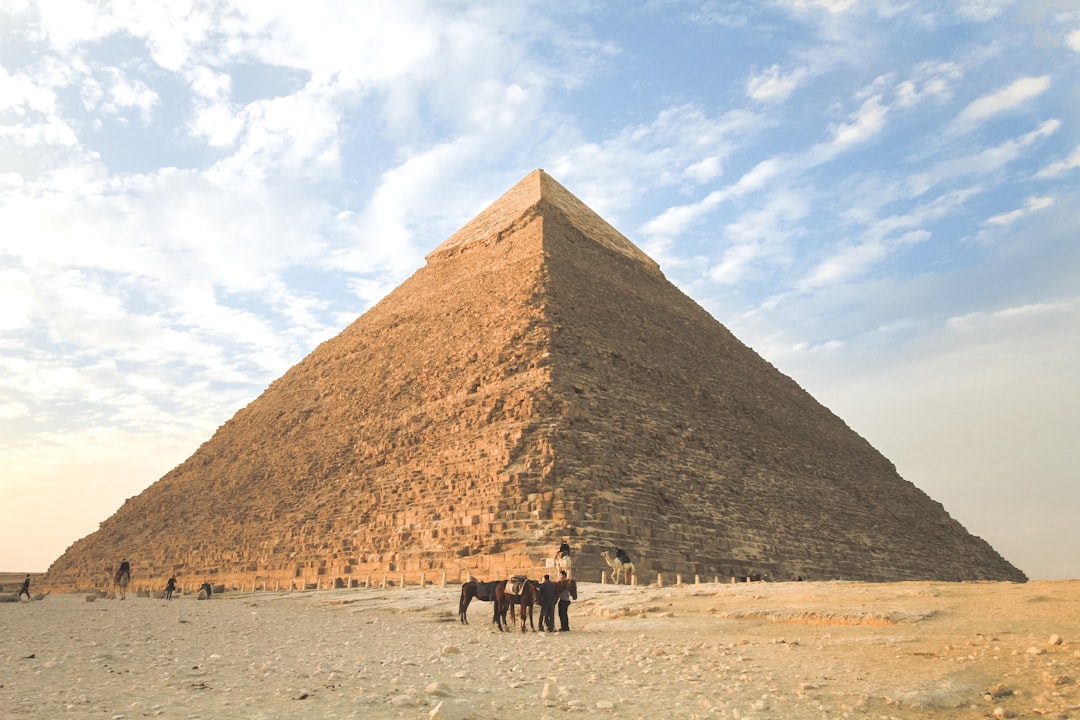
The Great Pyramid of Giza, an iconic symbol of ancient Egypt, stands as a testament to the ingenuity and ambition of a civilization that flourished over 4,500 years ago. Located on the Giza Plateau, this monumental structure is the largest of the three pyramids in the Giza pyramid complex and was originally built as a tomb for Pharaoh Khufu, also known as Cheops. Its sheer size and architectural sophistication have captivated historians, archaeologists, and tourists alike, making it one of the most studied and visited monuments in the world.
The Great Pyramid is not only a remarkable feat of engineering but also a cultural artifact that reflects the religious beliefs and social hierarchies of ancient Egyptian society. As the only surviving wonder of the Seven Wonders of the Ancient World, the Great Pyramid continues to inspire awe and curiosity. Its construction has sparked countless theories and debates, ranging from the methods employed to its purpose and significance.
The pyramid’s enduring presence serves as a bridge between the past and present, inviting exploration into the mysteries that surround its creation. This article delves into various aspects of the Great Pyramid, examining its construction process, alignment, mathematical principles, labor force, materials used, and its lasting legacy in engineering.
Key Takeaways
- The Great Pyramid showcases advanced ancient engineering with precise alignment and geometric design.
- Construction involved skilled labor, innovative technology, and carefully selected materials.
- Its purpose remains debated, ranging from tomb to astronomical observatory.
- Modern engineering studies continue to reveal insights into its construction techniques.
- The pyramid’s legacy profoundly influences contemporary engineering and architectural practices.
The Construction Process
The construction of the Great Pyramid is a subject of fascination and speculation. It is estimated that the pyramid was built over a period of approximately 20 years during the Fourth Dynasty of the Old Kingdom. The scale of this endeavor was unprecedented, requiring meticulous planning and organization.
Historians believe that a workforce of thousands was mobilized to transport and assemble the massive limestone blocks that constitute the pyramid’s structure. These blocks, weighing several tons each, were quarried from nearby sites and transported to the construction site using a combination of sledges and waterways. The logistics involved in such a monumental project were staggering.
Workers had to be fed, housed, and organized into teams, each responsible for specific tasks. Evidence suggests that a well-structured labor system was in place, with skilled artisans working alongside unskilled laborers. The construction process likely involved a series of ramps to facilitate the movement of stones to higher levels as the pyramid rose.
This method not only showcased the engineering prowess of ancient Egyptians but also highlighted their ability to mobilize resources effectively. Discover the secrets behind the pyramid mystery ancient egypt in this fascinating video.
The Alignment and Precision of the Structure
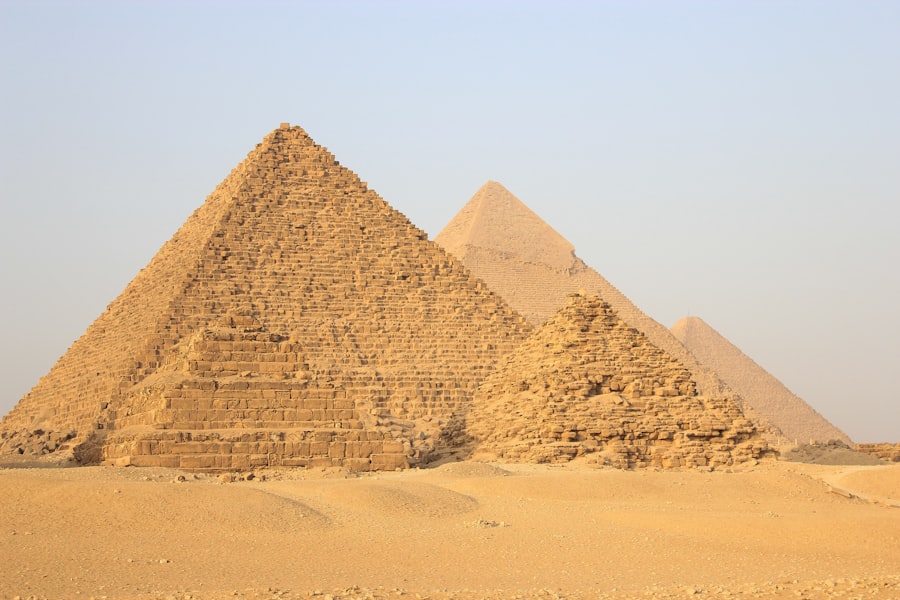
One of the most remarkable features of the Great Pyramid is its precise alignment with cardinal points. The structure is oriented with astonishing accuracy to true north, deviating by only a fraction of a degree. This level of precision raises questions about the methods used by ancient Egyptians to achieve such alignment without modern tools.
Scholars suggest that they may have employed simple astronomical observations, using the stars or the sun’s position to guide their measurements. The pyramid’s dimensions also reflect an extraordinary attention to detail. Each side measures approximately 230 meters in length, and the base is nearly perfectly level.
Such precision indicates a sophisticated understanding of geometry and surveying techniques. The alignment and accuracy of the Great Pyramid not only demonstrate the technical skills of its builders but also suggest a deeper cosmological significance, as many believe that these alignments were intended to connect the pharaoh with the divine.
The Use of Mathematics and Geometry in the Design
Mathematics and geometry played a crucial role in the design of the Great Pyramid. The ancient Egyptians possessed advanced knowledge of these disciplines, which they applied in various aspects of their architecture. The pyramid’s proportions are believed to reflect mathematical ratios that were significant in their culture, such as the golden ratio.
This ratio is often associated with beauty and harmony in design, suggesting that the builders aimed for aesthetic perfection in their creation. The use of geometry is evident in the pyramid’s shape itself—a square base leading to a pointed apex. This design not only served practical purposes but also held symbolic meaning, representing the rays of the sun and facilitating the pharaoh’s ascension to the afterlife.
The careful calculations involved in creating such a structure highlight the intellectual achievements of ancient Egyptian society and their ability to integrate mathematics into their architectural endeavors.
The Role of Labor and Technology in Building the Pyramid
| Engineering Aspect | Details | Significance | Estimated Measurement |
|---|---|---|---|
| Base Length | Each side of the square base | Ensures perfect alignment and stability | 230.4 meters (755.9 feet) |
| Height | Original height of the pyramid | Determines overall volume and scale | 146.6 meters (481 feet) |
| Angle of Inclination | Angle of the pyramid’s sides | Optimizes structural integrity and aesthetics | 51° 50′ 40″ |
| Stone Blocks | Number of limestone blocks used | Material quantity for construction | Approximately 2.3 million blocks |
| Average Block Weight | Weight of each limestone block | Impacts transportation and placement methods | 2.5 tons (average) |
| Precision of Base Leveling | Deviation in leveling the base | Ensures structural stability and symmetry | Less than 2.1 centimeters |
| Orientation | Alignment with cardinal points | Reflects astronomical knowledge and precision | Within 3/60th of a degree of true north |
| Internal Chambers | Number of main chambers inside | Functionality and design complexity | 3 (King’s Chamber, Queen’s Chamber, Grand Gallery) |
| Ventilation Shafts | Number of air shafts | Possible religious or practical purpose | 4 shafts |
| Construction Duration | Estimated time to build | Reflects workforce and project management | Approximately 20 years |
The construction of the Great Pyramid was not solely reliant on brute force; it also involved innovative technologies and techniques that facilitated its assembly. The labor force consisted of skilled workers who were likely organized into specialized teams, each responsible for different aspects of construction. Contrary to popular belief that slaves built the pyramids, evidence suggests that many workers were well-fed laborers who took pride in their contributions to such an important national project.
Technological advancements played a significant role in overcoming challenges during construction. For instance, tools made from copper and stone were used for quarrying and shaping blocks, while wooden sledges helped transport heavy stones across distances. Additionally, recent studies have proposed that water may have been poured on sand in front of sledges to reduce friction, making it easier to move heavy loads.
These innovations reflect a sophisticated understanding of engineering principles that allowed ancient Egyptians to achieve remarkable feats.
The Function and Purpose of the Pyramid

The primary function of the Great Pyramid was as a tomb for Pharaoh Khufu, serving as a final resting place for one of Egypt’s most powerful rulers. However, its purpose extended beyond mere burial; it was also designed to facilitate Khufu’s journey into the afterlife. The pyramid’s grand scale and elaborate design were intended to reflect Khufu’s divine status and ensure his immortality.
It was believed that by constructing such an impressive monument, Khufu would secure his place among the gods. In addition to its role as a tomb, the Great Pyramid served as a symbol of power and authority for future pharaohs. It represented not only Khufu’s reign but also the strength and stability of the Old Kingdom itself.
The pyramid complex included mortuary temples and smaller pyramids for queens, further emphasizing its significance within the broader context of ancient Egyptian funerary practices.
The Materials Used in Construction
The materials used in constructing the Great Pyramid were carefully selected for their durability and aesthetic appeal. The core structure primarily consisted of limestone blocks quarried from nearby sites, while higher levels were often faced with Tura limestone, known for its fine quality and bright white appearance. This outer casing would have given the pyramid a brilliant sheen when it was first completed, reflecting sunlight and making it visible from great distances.
In addition to limestone, granite was used for certain interior chambers, including the King’s Chamber. This material was sourced from Aswan, located over 800 kilometers away from Giza, highlighting the extensive logistical efforts involved in transporting materials across such distances. The choice of materials not only contributed to the pyramid’s structural integrity but also underscored its significance as a monumental work dedicated to a divine ruler.
Theories and Debates Surrounding the Construction Techniques
Despite extensive research on the Great Pyramid’s construction techniques, many questions remain unanswered, leading to various theories and debates among scholars. One prominent theory suggests that straight or zigzagging ramps were used to transport stones up as construction progressed. However, alternative theories propose that circular or spiral ramps may have been employed instead, allowing for easier access to higher levels without obstructing work on lower sections.
Another area of debate centers around how workers managed to lift such heavy stones into place with limited technology. Some researchers argue that levers or counterweights may have been utilized to assist in positioning blocks accurately. Others propose that a combination of manpower and ingenuity allowed workers to achieve remarkable feats without modern machinery.
These ongoing discussions reflect not only the complexity of ancient engineering but also highlight how much remains to be discovered about this iconic structure.
Modern Engineering and the Great Pyramid
Modern engineering has drawn inspiration from ancient structures like the Great Pyramid, showcasing how historical achievements continue to influence contemporary practices. Engineers today study the pyramid’s design principles and construction techniques to inform their own projects, particularly in terms of stability and durability. The pyramid’s ability to withstand millennia of natural disasters serves as a case study for modern architects seeking to create resilient structures.
Additionally, advancements in technology have allowed researchers to explore previously inaccessible areas within the pyramid using non-invasive methods such as ground-penetrating radar and 3D scanning. These techniques provide valuable insights into its internal structure without causing damage, revealing hidden chambers or passages that may hold further clues about its construction and purpose.
The Legacy and Influence of the Great Pyramid on Engineering
The legacy of the Great Pyramid extends far beyond its physical presence; it has profoundly influenced engineering practices throughout history. Its construction techniques have inspired countless architects and builders across cultures and eras, serving as a benchmark for monumental architecture. The principles established by ancient Egyptians continue to resonate in modern engineering education, where students study these early innovations as foundational elements in architectural design.
It represents not only technical prowess but also cultural identity and historical continuity. As societies evolve, they often look back at monumental structures like the Great Pyramid as reminders of their heritage and aspirations for greatness.
Uncovering the Mysteries of the Great Pyramid
The Great Pyramid remains one of history’s most enigmatic structures, embodying both human ingenuity and spiritual significance. Its construction process involved advanced techniques that continue to baffle researchers today while showcasing an impressive understanding of mathematics, geometry, and engineering principles among ancient Egyptians. As scholars continue to explore its mysteries through modern technology and interdisciplinary research, new insights emerge that deepen our appreciation for this architectural marvel.
Ultimately, uncovering these mysteries not only enriches our understanding of ancient Egyptian civilization but also highlights humanity’s enduring quest for knowledge and innovation. The Great Pyramid stands as a reminder that even in an age defined by rapid technological advancement, there is still much to learn from those who came before us—an eternal testament to human creativity and ambition etched in stone for millennia to come.
The engineering secrets behind the Great Pyramid of Giza have fascinated historians and archaeologists for centuries. Recent studies have shed light on the advanced techniques used by the ancient Egyptians, revealing insights into their construction methods and the tools they employed. For a deeper exploration of these intriguing topics, you can read more in this related article on ancient engineering marvels at com/’>Real Lore and Order.
WATCH THIS! 🔺 THEY LIED ABOUT THE PYRAMIDS — Here’s The Real Truth 🤯
FAQs
What is the Great Pyramid of Giza?
The Great Pyramid of Giza is an ancient pyramid located in Egypt, built as a tomb for the Pharaoh Khufu around 2580–2560 BC. It is the largest of the three pyramids on the Giza plateau and one of the Seven Wonders of the Ancient World.
How was the Great Pyramid constructed?
The Great Pyramid was constructed using millions of limestone and granite blocks, some weighing several tons. The exact methods are still studied, but it is believed that a combination of skilled labor, ramps, levers, and precise planning were used to move and place the stones.
What engineering techniques were used in the Great Pyramid?
The pyramid features precise alignment with the cardinal points, advanced knowledge of geometry, and sophisticated internal chambers and passageways. The builders used a level base, carefully cut stones, and an intricate system of corridors and chambers to ensure structural stability.
How accurate is the alignment of the Great Pyramid?
The Great Pyramid is aligned almost perfectly with the four cardinal directions (north, south, east, and west), with an error of only a few arc minutes. This precision demonstrates the ancient Egyptians’ advanced understanding of astronomy and surveying.
What materials were used in the construction of the Great Pyramid?
The primary materials were limestone blocks for the core and casing stones, and granite for the internal chambers and structural elements. The limestone was quarried locally, while the granite was transported from Aswan, located over 800 kilometers away.
What are some of the internal features of the Great Pyramid?
The pyramid contains several chambers, including the King’s Chamber, Queen’s Chamber, and the Grand Gallery. It also has air shafts and passageways that may have had religious or ventilation purposes.
How long did it take to build the Great Pyramid?
Scholars estimate that the construction took approximately 20 years, involving thousands of workers including skilled laborers, engineers, and support staff.
What are some of the mysteries or secrets about the Great Pyramid’s engineering?
Despite extensive research, some aspects remain debated, such as the exact methods used to transport and place the massive stones, the purpose of certain internal shafts, and the full extent of the pyramid’s symbolic and astronomical significance.
Why is the Great Pyramid considered an engineering marvel?
The Great Pyramid’s size, precision, and durability, achieved with ancient technology and without modern machinery, make it a remarkable feat of engineering and construction that continues to fascinate researchers and visitors worldwide.