
The decline and fall of empires, while often romanticized for their dramatic socio-political upheaval, invariably carry a less discussed but equally profound consequence: the loss of technological knowledge. When a civilization’s intricate fabric unravels, so too can the specialized skills, material sciences, and theoretical understandings that underpin its advanced technologies. This phenomenon, referred to as ‘lost technology,’ represents a significant impediment to subsequent societal development and a stark reminder of the fragility of innovation.
Imperial structures are often characterized by their sophisticated logistical networks, centralized governance, and specialized labor forces. These elements are not merely administrative conveniences; they are fundamental to the development and maintenance of complex technologies.
Centralized Patronage and R&D
Empires, especially those in their ascendancy, frequently invest heavily in research and development. This patronage extends to various fields, from military engineering to agricultural innovation and monumental construction. The Roman aqueducts, for instance, were not merely a triumph of civil engineering but a product of imperial resources, skilled labor, and sustained governmental support. Similarly, the extensive canal systems of Imperial China or the advanced metallurgy of pre-Columbian Mesoamerican empires demonstrate the capacity of centralized states to foster technological progress.
When an empire collapses, this patronage system often disintegrates. Funding for specialized projects ceases, academic institutions wither, and the social structures that incentivize innovation are dismantled. This loss of institutional support can be as damaging as the physical destruction of infrastructure, as it halts the intellectual pipeline that produces and refines technology.
Specialized Labor and Knowledge Transmission
The creation and operation of advanced technologies often require highly specialized individuals, from master craftsmen and engineers to theoretical scientists. Imperial societies, with their layered social hierarchies and differentiated labor, are well-positioned to cultivate such expertise. Consider the artisans responsible for intricate Byzantine mosaics or the scribes preserving knowledge in ancient libraries; their skills were honed over generations and often maintained within specific guilds or scholarly communities.
The collapse of an empire frequently entails societal fragmentation, leading to the dispersal or extermination of these specialized groups. Without established mechanisms for knowledge transmission – apprenticeships, scholarly institutions, or codified manuals – the intricate details of a technology can be lost. Imagine a master clockmaker’s workshop being looted and his apprentices scattered; the next generation may lack the foundational understanding to reconstruct his complex mechanisms. This loss is not merely about individual genius, but about the intricate web of shared knowledge and practical experience that supported it.
Supply Chains and Material Resources
Advanced technologies are rarely self-contained; they rely on complex supply chains for raw materials and manufactured components. Imperial control often facilitates the secure acquisition and distribution of these resources, whether it be tin for bronze, exotic woods for construction, or rare earths for specialized applications. The ability to project power over distant territories can secure monopolistic control over vital inputs, enabling large-scale industrial endeavors.
Upon collapse, these logistical networks fracture. Trade routes become hazardous, mines are abandoned, and the infrastructure for processing raw materials falls into disrepair. A civilization might lose the ability to forge high-quality steel not because the knowledge of metallurgy is forgotten, but because the supply of specific ores or the fuel for high-temperature furnaces becomes inaccessible. This can render existing technologies inoperable and prevent the replication of new ones, even if theoretical understanding persists.
The phenomenon of imperial collapse often results in the loss of valuable technologies and knowledge that were once integral to the civilization’s success. A related article that delves into this topic is available at Real Lore and Order, where the author explores how the fall of empires throughout history has led to the decline of technological advancements and the subsequent impact on society. This analysis provides a compelling look at the cyclical nature of innovation and decline, highlighting the importance of preserving knowledge in the face of political and social upheaval.
The Mechanisms of Loss
The mechanisms by which technology is lost during imperial collapse are varied and often overlapping, ranging from deliberate destruction to gradual erosion.
War and Destruction
Perhaps the most visceral cause of technological loss is war. Cities are razed, libraries burned, and workshops plundered. The deliberate destruction of infrastructure and knowledge centers is a common tactic in internecine conflicts that often accompany imperial decline. The burning of the Library of Alexandria, while perhaps less singular than popular myth suggests, serves as a powerful metaphor for the obliteration of accumulated knowledge during periods of political instability.
Such events do not merely destroy existing artifacts; they also disrupt the social continuity required for their understanding and maintenance. A complex machine, even if preserved, may become incomprehensible without the manuals, specialized tools, and skilled operators that were lost in the conflict.
Economic and Social Disruption
Beyond overt destruction, economic and social disruption also plays a significant role. When an empire’s economy crumbles, maintaining complex, resource-intensive technologies becomes untenable. Aqueducts, roads, and large-scale irrigation systems, requiring constant upkeep and a coordinated labor force, fall into disrepair. The cost of maintaining them outweighs the perceived benefit in a fragmented, resource-scarce environment.
Furthermore, social priorities shift. Survival often takes precedence over innovation. The incentive to become an engineer or a scholar diminishes when basic necessities are uncertain. This leads to a “brain drain” where specialized skills are no longer taught or practiced, and knowledge effectively dies with its practitioners. The collapse of urban centers, which are often hubs of technological activity, further exacerbates this problem, forcing populations into more agrarian, less specialized existences.
Deliberate Suppression and Ideological Shifts
In some instances, the loss of technology can be a consequence of deliberate suppression or radical ideological shifts. New regimes, particularly those arising from religious or populist movements, may reject the technologies and scientific principles of the overthrown empire, associating them with the old order. This iconoclasm can lead to the systematic dismantling of existing technological infrastructure and the persecution of those who advocate for its preservation.
Consider the occasional shifts in scientific methodology or philosophical approaches that have led to certain types of inquiry being abandoned or even demonized. While not always directly tied to imperial collapse, such ideological turns can effectively “lose” entire branches of knowledge by making them socially unacceptable or intellectually unfashionable for succeeding generations.
Environmental Degeneration
In less direct but equally impactful ways, environmental degradation can contribute to technological loss. Imperial collapse can lead to a decline in environmental stewardship, rendering certain resource-intensive technologies impossible or impractical. Deforestation, soil erosion, and changes in water management can alter the foundational resources needed for industries like metallurgy, construction, or large-scale agriculture.
If, for example, an empire relied on extensive timber for smelting high-grade metals and its collapse led to widespread deforestation and inability to manage reforestation, the complex metallurgical processes that required vast quantities of charcoal would inevitably decline. Subsequent societies might possess theoretical knowledge but lack the environmental context to implement it.
Case Studies in Lost Technology
History provides numerous examples of technologies and knowledge systems that declined or vanished following imperial collapse, from the mundane to the monumental.
Roman Concrete and Engineering
The Roman Empire was renowned for its advanced civil engineering, particularly its use of concrete (opus caementicium), aqueducts, and road networks. Roman concrete, capable of enduring for millennia, was a sophisticated material employing pozzolanic ash and specific aggregate mixtures. After the Western Roman Empire’s decline in the 5th century CE, the elaborate techniques for mixing and applying this durable concrete were largely lost or significantly simplified in Western Europe. Medieval builders reverted to less durable lime mortars, and the scale of Roman engineering feats was not matched for centuries.
The loss wasn’t entirely about the “secret recipe” but also about the coordinated labor, logistical capacity to mine and transport ingredients, and the comprehensive engineering knowledge required for such large-scale projects. The fragmented successor states lacked the centralized authority and resources necessary to maintain or replicate such infrastructure.
_Greek Fire_ and Byzantine Military Technology
The Byzantine Empire, the eastern continuation of the Roman Empire, possessed an array of advanced military technologies, perhaps most famously Greek fire. This incendiary weapon, likely a petroleum-based substance, was a closely guarded secret, crucial to Byzantine naval dominance for centuries. Its exact composition and methods of deployment remain a subject of historical debate, as the secret was effectively lost after the empire’s final decline and fall in the 15th century.
The loss of Greek fire illustrates the vulnerability of highly specific, state-controlled technologies. As the empire shrank and its internal stability diminished, the individuals possessing this knowledge likely dwindled, and the social structures capable of preserving and transmitting such a dangerous secret were eroded. It serves as a potent example of how the death of an empire can take unique and potent technologies with it.
Medieval Illuminated Manuscripts and Pigment Technology
While perhaps not “lost technology” in the sense of a machine, the exquisite craftsmanship and sophisticated pigment technology of medieval illuminated manuscripts and stained glass in Western Europe experienced a significant decline following periods of social disruption, particularly after the Black Death and subsequent political fragmentation. The intricate processes of preparing vellum, grinding rare minerals for pigments, and applying gold leaf were highly specialized and often confined to monastic scriptoria.
The disruptions of plague, war, and changing artistic patronage led to a decline in the number of skilled artisans and the dissolution of some monastic centers. While the idea of illumination persisted, the quality and complexity of the earliest works often surpassed those produced during later periods, as specific techniques and material knowledge became less widespread. This demonstrates how even in seemingly less overtly “technological” fields, complex processes and material science can be forgotten.
The Long-Term Impact on Subsequent Development
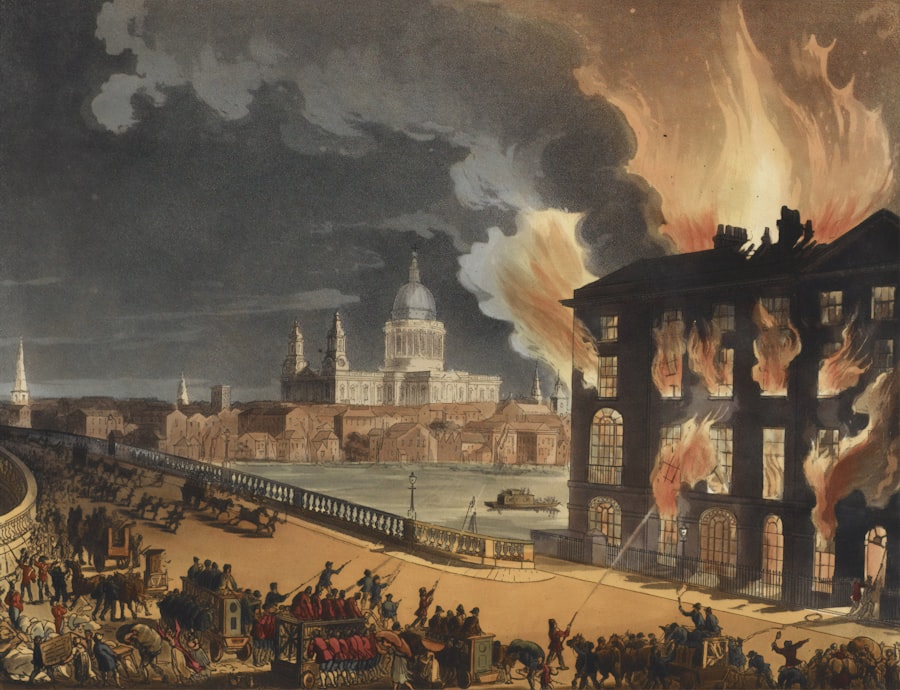
The phenomenon of lost technology undeniably imposes a significant cost on subsequent societies. When an advanced civilization collapses, the next generations often find themselves starting from a lower technological baseline, having to rediscover or reinvent what was once commonplace.
The Problem of Reinvention and Reinstitutionalization
Lost technology forces later societies to expend considerable resources on reinvention. Instead of building upon existing knowledge, they must often re-establish foundational principles, re-engineer components, and rebuild expertise from scratch. This is evident in the centuries-long gap between the high points of Roman engineering and the Renaissance, during which much of the Roman practical knowledge had to be painfully rediscovered. The “Dark Ages” in Europe, while a contested term, certainly represented a dramatic decline in the application of many Roman technologies.
Beyond specific inventions, the institutional frameworks for technological advancement – universities, research centers, governmental patronage of science – also frequently dissolve. Subsequent societies then face the dual challenge of not only rediscovering technologies but also reinstituting the social and intellectual structures that foster their development and dissemination.
Disrupted Trajectories of Progress
Technological progress is rarely linear. Each innovation builds upon previous ones, creating a cumulative effect. The loss of technology during imperial collapse represents a significant disruption to this cumulative trajectory. It is akin to a complex machine having several key components removed; the entire system ceases to function optimally, and future developments based on those components are impossible.
Consider the potential for alternative energy sources or medical treatments that may have been in nascent stages within advanced empires, only to be lost before full realization. The world could have followed entirely different technological paths had certain imperial innovations not been interrupted. We are left to speculate about roads not taken, and technologies whose possibilities were extinguished before they could truly blossom.
The phenomenon of imperial collapse often results in the loss of valuable technologies and knowledge that were once pivotal to a civilization’s success. A fascinating exploration of this topic can be found in a related article that discusses how the fall of empires has historically led to a decline in innovation and the abandonment of advanced practices. This connection between societal decline and technological regression is evident in various historical contexts. For those interested in delving deeper into this subject, you can read more about it in this insightful piece here.
Conclusion
| Metric | Description | Impact on Technology | Example |
|---|---|---|---|
| Loss of Skilled Labor | Decline in artisans, engineers, and scholars due to war, migration, or persecution | Reduction in technological innovation and maintenance of existing technologies | Fall of the Western Roman Empire leading to decline in road and aqueduct maintenance |
| Disruption of Trade Routes | Collapse of imperial control interrupts trade networks essential for resource and knowledge exchange | Scarcity of materials and loss of cross-cultural technological diffusion | Silk Road disruptions after Mongol Empire fragmentation |
| Destruction of Educational Institutions | Temples, libraries, and universities destroyed or abandoned during collapse | Loss of accumulated knowledge and interruption of scholarly activities | Burning of the Library of Alexandria |
| Political Instability | Frequent changes in leadership and civil wars | Reduced funding and support for technological projects | Post-Aztec Empire collapse in Mesoamerica |
| Economic Decline | Reduced wealth and resources available for technological development | Inability to sustain large-scale engineering or scientific endeavors | Decline of the Byzantine Empire’s infrastructure projects |
The impact of imperial collapse on lost technology is a multifaceted issue that underscores the fragility of human endeavor. It reminds us that technological prowess is not an inherent trait of humanity but a precarious construct, dependent upon a delicate interplay of social organization, economic stability, and intellectual transmission. As readers, we should consider that the magnificent feats of past empires are not merely monuments to their power, but also testaments to the intricate human systems required to sustain such innovation. When these systems fail, the world can, quite literally, forget how to build and create, leaving future generations to navigate a landscape littered with incomprehensible ruins and the silent echoes of forgotten genius. The lessons of lost technologies serve as a potent warning about the interdependencies that underpin our current advanced societies, urging us to safeguard not just our inventions, but the intricate societal structures that allow them to flourish.
FAQs
What is meant by “imperial collapse” in historical contexts?
Imperial collapse refers to the decline and fall of a large empire or imperial system, often resulting in political fragmentation, loss of centralized control, and significant social and economic upheaval.
How does the collapse of an empire contribute to the loss of technology?
When an empire collapses, the infrastructure supporting technological development—such as educational institutions, skilled labor, and trade networks—often deteriorates. This disruption can lead to the loss of specialized knowledge, manufacturing techniques, and technological innovations.
Can you provide historical examples where imperial collapse led to lost technology?
Yes, a notable example is the fall of the Western Roman Empire, which led to the decline of advanced engineering and architectural techniques in Europe during the early Middle Ages. Another example is the collapse of the Maya civilization, which resulted in the loss of certain astronomical and calendrical knowledge.
Are all technologies lost permanently after an imperial collapse?
Not necessarily. Some technologies may be preserved through oral traditions, smaller communities, or neighboring cultures. Over time, lost technologies can sometimes be rediscovered or reinvented, but the immediate aftermath of collapse often sees significant setbacks.
What factors influence whether technology is lost or preserved after an empire falls?
Factors include the extent of social disruption, the survival of educational and cultural institutions, the continuity of skilled artisans and scholars, the stability of trade routes, and the ability of successor states or neighboring societies to maintain or adapt the technological knowledge.