
Ancient maps serve as a fascinating window into the past, revealing not only the geographical understanding of early civilizations but also their cultural, political, and economic priorities. These artifacts, often crafted with meticulous care, reflect the worldview of their creators, showcasing how they perceived their surroundings and the universe at large. From the clay tablets of Mesopotamia to the intricate scrolls of the Greeks and Romans, ancient maps were more than mere navigational tools; they were expressions of identity and knowledge, encapsulating the essence of the societies that produced them.
The study of ancient maps invites a deeper exploration into the minds of those who lived thousands of years ago. Each map tells a story, not just of land and water but of human experience, exploration, and imagination. As scholars delve into these historical documents, they uncover layers of meaning that extend beyond geography, revealing insights into trade routes, territorial claims, and even mythological beliefs.
The allure of ancient maps lies in their ability to connect modern audiences with the distant past, igniting curiosity about how ancient peoples navigated their world.
Key Takeaways
- Ancient maps demonstrate surprisingly precise geographic knowledge that challenges modern assumptions.
- Advanced techniques in astronomy and mathematics were crucial to the accuracy of ancient cartography.
- Mythology and religion significantly influenced the design and interpretation of ancient maps.
- Comparing ancient maps with modern data reveals both remarkable accuracy and intriguing anomalies.
- The legacy of ancient maps continues to inspire fascination and research in contemporary cartography.
The Puzzling Precision of Ancient Cartography
The precision exhibited in ancient cartography often leaves modern observers in awe. Despite the rudimentary tools available to them, ancient cartographers managed to create maps that displayed remarkable accuracy for their time. For instance, the Ptolemaic maps from the second century AD demonstrated a sophisticated understanding of latitude and longitude, allowing for a level of detail that was not replicated until the Renaissance.
This precision raises questions about the methods and knowledge that these early mapmakers possessed. Moreover, the accuracy of ancient maps is not merely a testament to their craftsmanship but also reflects a deep understanding of geography that transcended their technological limitations. The maps often included not just physical features but also cultural landmarks, trade routes, and even celestial bodies.
This multifaceted approach to mapping suggests that ancient civilizations had a comprehensive grasp of their environment, which they documented with an impressive degree of skill and insight.
Uncovering the Secrets of Ancient Mapmaking Techniques
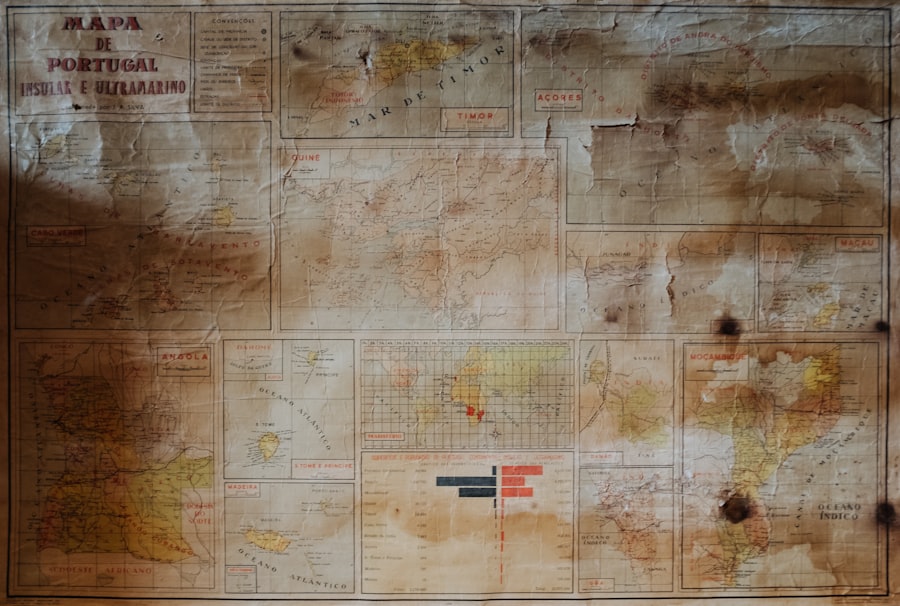
The techniques employed in ancient mapmaking remain a subject of intrigue for historians and archaeologists alike. While many methods have been lost to time, some evidence suggests that ancient cartographers utilized a combination of observational skills and rudimentary mathematical principles to create their maps. For example, they likely relied on celestial navigation, using the stars as reference points to determine their position on Earth.
This reliance on astronomy highlights the interconnectedness of various fields of study in ancient societies. Additionally, materials played a crucial role in the creation of these maps. Ancient cartographers used a variety of surfaces, from papyrus and parchment to clay tablets and stone carvings.
Each medium presented its own challenges and opportunities for expression. The choice of material often influenced the style and detail of the map, as well as its intended use—whether for navigation, education, or ceremonial purposes. By examining these techniques and materials, modern scholars can gain valuable insights into the cognitive processes behind ancient mapmaking.
The Astonishing Geographic Knowledge of Ancient Civilizations
The geographic knowledge possessed by ancient civilizations was often astonishing, especially considering the limited means available for exploration and documentation. Civilizations such as the Greeks, Romans, Egyptians, and Chinese developed extensive knowledge about their surroundings through exploration, trade, and cultural exchange. They mapped not only their immediate environments but also distant lands, often incorporating information gathered from travelers and merchants who ventured far from home.
This geographic awareness was crucial for trade and military strategy. For instance, the Roman Empire’s vast network of roads was meticulously mapped to facilitate movement across its territories. Similarly, the Chinese developed detailed maps that reflected their understanding of both land and water routes, which were essential for trade along the Silk Road.
The ability to accurately represent geographic features allowed these civilizations to expand their influence and maintain control over vast areas.
How Did Ancient Cartographers Achieve Such Remarkable Accuracy?
| Metric | Description | Value/Range | Notes |
|---|---|---|---|
| Positional Accuracy | Degree to which ancient maps correctly represent geographic locations | 10-50 km deviation | Varies widely depending on era and region |
| Scale Consistency | Uniformity of scale across the map | Low to None | Ancient maps often lack consistent scale |
| Projection Type | Method used to represent the curved surface of the Earth | None or rudimentary | Projection concepts developed much later |
| Cartographic Detail | Level of detail such as landmarks, rivers, and cities | Variable | Often symbolic rather than accurate |
| Orientation Accuracy | Correctness of map orientation (e.g., North at top) | Often inconsistent | Some maps oriented East or other directions |
| Geographical Knowledge | Extent of known world represented | Limited to known regions | Unknown areas often speculative or omitted |
| Measurement Tools | Instruments used for surveying and mapping | Primitive (e.g., compass, astrolabe) | Limited precision affected accuracy |
The remarkable accuracy achieved by ancient cartographers can be attributed to several factors that combined observation with empirical knowledge. One significant aspect was their reliance on firsthand experience; many mapmakers were explorers themselves or worked closely with those who traveled extensively. This experiential knowledge provided them with insights that were often more reliable than secondhand accounts.
Furthermore, ancient cartographers employed systematic methods for gathering data. They often conducted surveys and measurements using simple tools like ropes or sticks to gauge distances and angles. This empirical approach laid the groundwork for more sophisticated techniques developed in later centuries.
The integration of various sources—such as oral traditions, written records, and astronomical observations—also contributed to the accuracy of their maps, allowing them to create comprehensive representations of their world.
The Role of Astronomy and Mathematics in Ancient Mapmaking
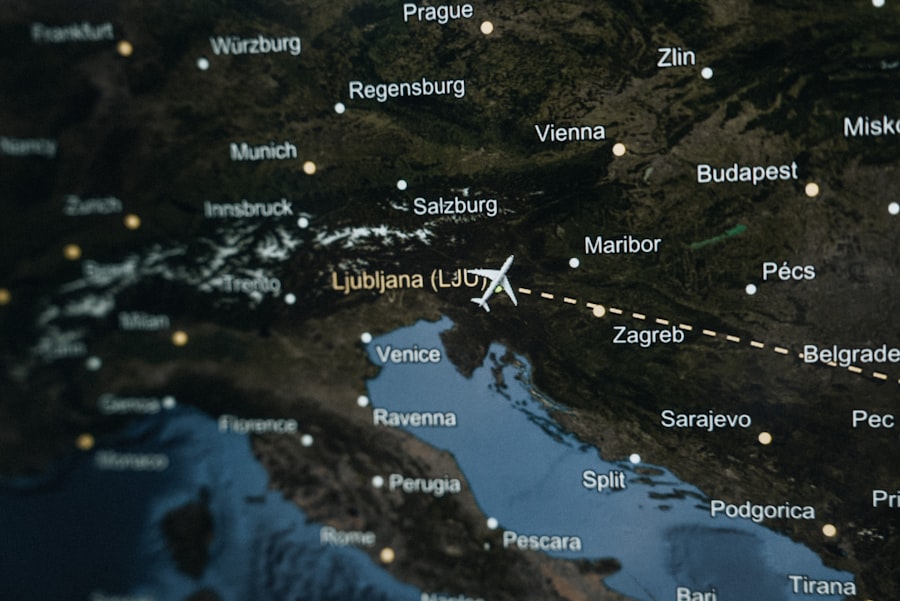
Astronomy played a pivotal role in ancient mapmaking, serving as both a guide for navigation and a framework for understanding geography.
This knowledge was crucial for determining latitude and longitude, enabling cartographers to create more accurate maps.
Mathematics also underpinned many aspects of ancient cartography. The use of geometry helped mapmakers calculate distances and angles between various points on Earth. For instance, the Greeks utilized geometric principles to create projections that represented curved surfaces on flat maps.
This mathematical foundation not only enhanced the accuracy of their maps but also reflected a broader intellectual tradition that valued logic and reason.
Examining the Influence of Mythology and Religion on Ancient Maps
Mythology and religion significantly influenced ancient maps, shaping how civilizations understood their world and represented it visually. Many maps incorporated mythological elements that reflected cultural beliefs about creation, cosmology, and the divine order of the universe. For example, some ancient maps depicted sacred sites or mythological creatures alongside geographical features, intertwining spiritual significance with physical reality.
In addition to mythological representations, religious beliefs often dictated how certain areas were mapped or interpreted. Sacred landscapes were frequently emphasized in cartographic depictions, highlighting places deemed holy or significant within a particular faith. This blending of geography with mythology and religion illustrates how ancient peoples viewed their environment not just as a physical space but as a realm imbued with meaning and significance.
Comparing Ancient Maps to Modern Geographic Data
When comparing ancient maps to modern geographic data, one can observe both striking similarities and notable differences. While modern technology allows for precise measurements and detailed representations of Earth’s surface through satellite imagery and GIS systems, ancient maps often conveyed information in more abstract or symbolic ways. Nevertheless, many ancient maps exhibit an impressive level of accuracy regarding major geographical features such as mountains, rivers, and coastlines.
Moreover, ancient maps often prioritized cultural significance over strict geographical accuracy. They reflected not only physical landscapes but also social structures, trade routes, and territorial claims that were important to the societies that created them. In contrast, modern maps tend to focus on objective representation and data-driven analysis.
This divergence highlights how mapping practices have evolved over time while still retaining elements of human experience and interpretation.
The Legacy of Ancient Maps in Modern Cartography
The legacy of ancient maps continues to resonate in modern cartography, influencing contemporary mapping practices in various ways. Many foundational principles established by ancient cartographers—such as scale representation, orientation, and symbolization—remain integral to modern mapmaking techniques. The emphasis on accuracy and detail found in ancient maps has paved the way for advancements in geographic information systems (GIS) that allow for dynamic mapping capabilities today.
Furthermore, the cultural narratives embedded within ancient maps serve as reminders of the importance of context in cartography. Modern mapmakers increasingly recognize that maps are not merely tools for navigation but also powerful instruments for storytelling that can shape perceptions of space and place. By studying ancient maps, contemporary cartographers can draw inspiration from historical practices while also acknowledging the cultural dimensions inherent in mapping.
Exploring the Mysteries and Anomalies of Ancient Maps
Despite extensive research into ancient cartography, many mysteries and anomalies remain unresolved. Some ancient maps depict regions or features that do not correspond with known geography or appear inconsistent with contemporary understanding. These discrepancies have led scholars to speculate about lost civilizations or undiscovered lands that may have influenced mapmaking practices.
Additionally, certain maps contain elements that seem to defy explanation—such as fantastical creatures or mythical locations—prompting debates about whether these representations were intended as literal depictions or symbolic illustrations reflecting cultural beliefs. The enigmatic nature of these anomalies invites further exploration into how ancient peoples conceptualized their world and what they deemed worthy of representation on their maps.
The Enduring Fascination with the Impossible Accuracy of Ancient Maps
The fascination with the seemingly impossible accuracy of ancient maps endures in contemporary discourse surrounding cartography and history.
This intrigue fuels ongoing research into ancient mapping practices while inspiring a sense of wonder about human ingenuity.
Moreover, this fascination extends beyond academic circles; it captivates the imagination of artists, writers, and enthusiasts who seek to explore the intersection between history and creativity through the lens of cartography. The allure of ancient maps lies not only in their historical significance but also in their ability to evoke curiosity about humanity’s quest for knowledge and understanding—a quest that continues to shape our relationship with the world today.
The accuracy of ancient maps has long been a topic of fascination and debate among historians and cartographers. While many ancient civilizations created intricate maps, the limitations of their knowledge and technology often resulted in inaccuracies. For a deeper exploration of this subject, you can read more in the article available at Real Lore and Order, which discusses the challenges and methodologies behind ancient cartography.
WATCH THIS! 🗺️ The Map That Proves Humans Explored Earth 5,000 Years Too Early
FAQs
What is meant by the accuracy of ancient maps?
Ancient map accuracy refers to how closely the geographical features and spatial relationships depicted on historical maps correspond to the actual physical world as we understand it today.
Why is it considered impossible for ancient maps to be fully accurate?
It is considered impossible because ancient mapmakers lacked modern tools such as satellites, GPS, and precise surveying instruments, which are essential for creating highly accurate representations of the Earth’s surface.
What methods did ancient civilizations use to create maps?
Ancient civilizations used observations from travel, landmarks, celestial navigation, and rudimentary surveying techniques to create maps, often relying on estimations and symbolic representations rather than precise measurements.
Can any ancient maps be considered reliable sources of geographical information?
While ancient maps may not be accurate by modern standards, they can still provide valuable insights into historical perceptions of geography, trade routes, and cultural understanding of the world at the time.
How do modern researchers evaluate the accuracy of ancient maps?
Researchers compare ancient maps with modern geographical data, analyze the methods and materials used, and consider the historical context to assess the level of accuracy and the purpose behind the map’s creation.
Are there any examples of ancient maps that show surprising accuracy?
Some ancient maps, such as the Ptolemaic maps or the Babylonian World Map, show remarkable understanding of certain regions, but their overall accuracy is limited and often includes distortions or mythical elements.
What challenges did ancient mapmakers face that affected map accuracy?
Challenges included limited technology, lack of standardized measurement units, incomplete knowledge of the world’s geography, and the influence of cultural or religious beliefs on map representation.
How has the understanding of ancient map accuracy evolved over time?
As archaeological discoveries and technological advancements have improved, scholars have gained a better understanding of the intentions and limitations of ancient maps, recognizing them as both practical tools and cultural artifacts rather than precise geographic documents.