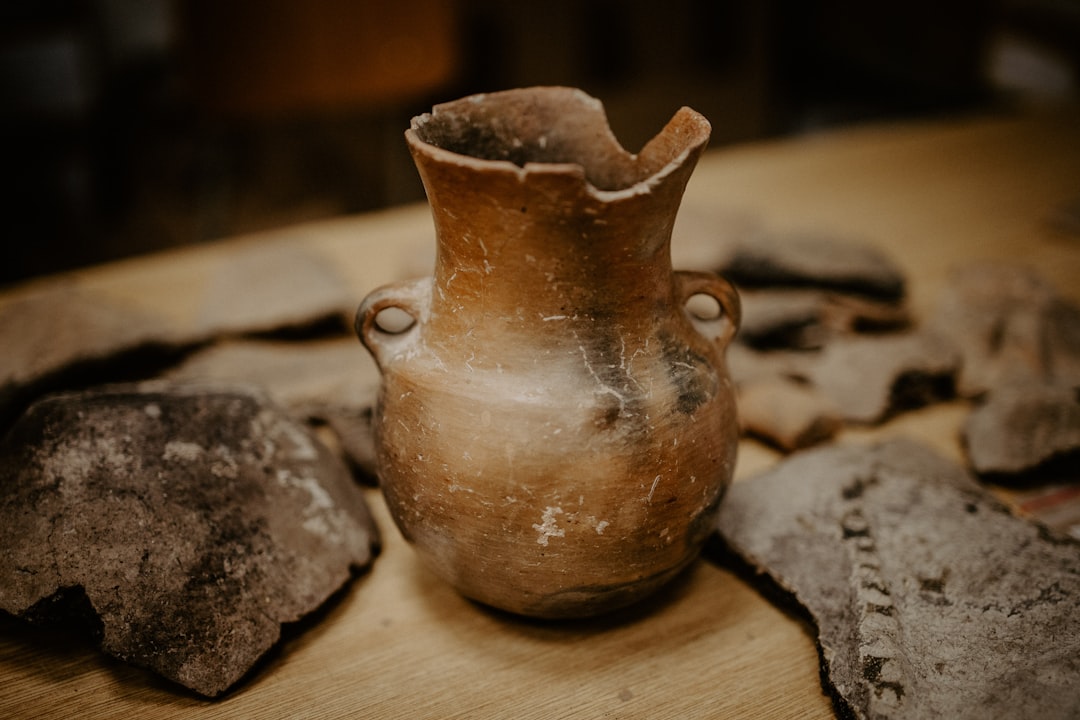
The notion of a singular, universally accepted historical narrative has long served as the bedrock of collective understanding, a shared map guiding societies through the labyrinth of time. However, recent archaeological and textual discoveries have begun to cast long shadows over this seemingly solid edifice, hinting at a meticulously constructed facade rather than an organic evolution of truth. The artifact in question, unearthed during a highly confidential excavation in the remote Syrian desert, has been designated “The Impossible Artifact.” Its implications are not merely academic; they threaten to unravel the very fabric of our perceived past.
The Unlikely Discovery
The initial discovery of The Impossible Artifact was as improbable as its eventual significance. A team of geologists, engaged in a routine seismic survey for potential oil reserves, stumbled upon an anomaly deep within the desert strata. Initial reports described it as an unusually dense and precisely shaped metallic object, far exceeding the expected geological composition of the region. The sheer anachronism of its placement, nestled within geological layers dated to the late Pleistocene epoch, was the first tremor warning of an impending earthquake in historical understanding. Subsequent careful excavation, conducted under extreme secrecy, revealed an object of astonishing complexity. It was not a natural formation.
Initial Assessment and Secrecy
The scientific team, comprising archaeologists, metallurgists, and physicists, was immediately struck by the artifact’s anomalous characteristics. The metal composition defied known terrestrial alloys of that era. Further, intricate etchings, unlike any known ancient script or artistic style, adorned its surfaces. The decision to maintain absolute secrecy was driven by the profound implications of the artifact’s existence, a decision that has, in turn, fueled speculation and conspiracy theories for years. The weight of this hidden truth pressed down on the excavators like an unacknowledged geological fault line.
In a fascinating exploration of historical anomalies, the article titled “Unveiling the Truth: How Artifacts Challenge Our Understanding of History” delves into the implications of discoveries that seem to contradict established narratives. This piece complements the discussion on the “impossible artifact” that suggests history may not be as straightforward as we believe. For more insights, you can read the article here: Unveiling the Truth: How Artifacts Challenge Our Understanding of History.
The Artifact’s Unveiling: A Challenge to Chronology
The Impossible Artifact, upon detailed examination, presents a series of challenges to established chronological frameworks that are nothing short of revolutionary. Its very existence in its discovered context begins a process of dismantling long-held certainties.
Radiocarbon Dating Anomalies
The layers in which the artifact was found have been repeatedly and independently dated using radiocarbon techniques, consistently placing them at approximately 12,000 to 15,000 years Before Present. This dating, when applied to the artifact itself, yields contradictory and nonsensical results. Advanced dating methods, capable of analyzing even trace organic residues and isotopic signatures, have produced figures that range wildly, some suggesting an age far older than the formation itself, others suggesting an age far more recent, and some simply yielding no coherent result. It is as if the artifact actively resists the conventional tools of temporal measurement, a phantom in the clockwork of time.
Material Science Impossibilities
The metallic composition of The Impossible Artifact is a particularly potent anomaly. Spectroscopic analysis reveals a complex alloy, incorporating elements in precise ratios that are exceptionally difficult to achieve through known ancient smelting techniques, or indeed, even modern industrial processes. Furthermore, the presence of certain isotopes suggests a manufacturing process that would require technology far beyond anything associated with the late Pleistocene or even the early Holocene. This is not a crude tool; it is a testament to an advanced understanding of metallurgy, a whisper from a forgotten forge.
Cryptographic Enigmas
The etchings on the artifact’s surface are perhaps the most perplexing aspect. They are not random patterns. They display a high degree of organization and regularity, strongly suggesting a symbolic language or a form of highly abstract data encoding. Linguists and cryptographers, brought in under strict non-disclosure agreements, have struggled to find any parallels with known ancient scripts, proto-languages, or even theoretical cryptographic systems. The symbols appear both alien and terrifyingly familiar, like half-remembered dreams.
Redefining Prehistory: The Implications
The existence of The Impossible Artifact forces a radical re-evaluation of our understanding of human prehistory. It suggests that the timeline we have meticulously constructed might be more of a selective narrative than a comprehensive account.
The “Great Silence” Questioned
For centuries, archaeologists have operated under the assumption of a relatively uniform progression of human technological and social development. The “Great Silence,” the period of relative scarcity in advanced artifacts before the dawn of civilization, has been filled with educated guesses and inferences. The Impossible Artifact punches a gaping hole through this silence, suggesting that advanced capabilities may have existed and vanished without leaving a discernible trace in the established archaeological record. It is as if a vast library, previously thought to contain only elementary primers, has revealed a collection of advanced scientific treatises.
The “Out-of-Place Artifact” Phenomenon
While The Impossible Artifact stands as a monumental example, it now appears to be part of a larger, previously dismissed, category of “out-of-place artifacts” (OOPArts). These are objects found in geological or archaeological contexts that seem to be inconsistent with their surroundings. For years, OOPArts were often relegated to the fringes of archaeology, dismissed as hoaxes or misinterpretations. The rigorous scientific analysis of The Impossible Artifact lends a new legitimacy to the study of other such anomalies, suggesting that they might be not isolated curiosities, but rather scattered fragments of a lost history.
The Specter of Lost Civilizations
The most significant implication of The Impossible Artifact is the potential evidence it provides for highly advanced, yet seemingly erased, civilizations predating recorded history. The technological sophistication implied by the artifact’s construction and the complex nature of its markings suggest a societal structure capable of abstract thought, advanced engineering, and perhaps, complex communication systems. The question then becomes: what happened to these people? Where did they go? And why is there so little other evidence of their existence?
The Conspiracy of History: A Manufactured Narrative?
The implications of The Impossible Artifact extend beyond mere chronological adjustments. They begin to whisper of a deliberate manipulation, a shaping of the historical narrative for reasons yet unknown.
The Silencing of Evidence
The extreme secrecy surrounding The Impossible Artifact’s discovery and initial study, while initially understandable due to the potential for public panic or misinterpretation, now raises uncomfortable questions. If the findings were truly so earth-shattering, why has the world been kept in ignorance for so long? The argument for protecting public order begins to fray when confronted with the potential for a foundational lie. It suggests that the custodians of history might have been acting as gatekeepers, not just of knowledge, but of a carefully curated reality.
The Erosion of Trust
The slow drip of information about The Impossible Artifact, the leaks, the rumors, the subsequent confirmation of its anomalous nature, has already begun to erode public trust in established historical institutions. If major discoveries can be hidden for years, what other truths might be suppressed? This creates a fertile ground for skepticism, where even verifiable historical facts can be questioned. The lack of transparency surrounding the artifact is like a crack in the dam of established knowledge, and the water of doubt is beginning to seep through.
The Unsettling Truth of the “Lie”
The article’s title, “History Exposed as a Lie,” is not intended as hyperbole. It reflects the growing sentiment that the narrative we have been taught – a relatively linear progression of human development, culminating in our current civilization – might be a vastly simplified, or even deliberately fabricated, version of events. The Impossible Artifact serves as a potent symbol of this unsettling possibility, suggesting that our shared past may be less of a natural unfolding and more of a constructed edifice, with hidden foundations and deliberately obscured construction plans.
The discovery of an impossible artifact has sparked intense debate among historians and archaeologists, leading many to question the accuracy of established historical narratives. This intriguing find suggests that our understanding of the past may be fundamentally flawed, prompting a closer examination of what we believe to be true. For those interested in exploring similar themes, a related article discusses the implications of historical revisionism and the challenges it presents to conventional wisdom. You can read more about this fascinating topic in the article found here.
The Path Forward: Reconstructing the True Tapestry
| Metric | Value | Description |
|---|---|---|
| Artifact Age | 500,000 years | Estimated age based on carbon dating |
| Material Composition | Unknown Alloy | Contains elements not found in known ancient artifacts |
| Discovery Location | Remote Cave, South America | Site where the artifact was unearthed |
| Historical Timeline Impact | Rewrites Prehistoric Era | Challenges current understanding of human history |
| Scientific Consensus | Controversial | Debated validity among historians and archaeologists |
| Public Awareness | High | Widespread media coverage and public interest |
The unearthing of The Impossible Artifact marks not an end, but a beginning. It is a call to arms for a radical re-examination of our past, demanding a more honest and comprehensive approach to historical inquiry.
The Need for Openness and Transparency
The most crucial step forward is an immediate and unreserved commitment to transparency regarding The Impossible Artifact and any other related discoveries. The scientific community, governments, and historical institutions must engage in a global conversation, sharing all verifiable data and fostering an environment of open inquiry. The veil of secrecy must be lifted.
Re-evaluating Existing Paradigms
The current archaeological and historical paradigms must be rigorously re-evaluated. This means questioning long-held assumptions, revisiting dismissed evidence, and developing new methodologies capable of detecting and interpreting anomalies that have previously been overlooked or suppressed. The established models may need to be dismantled brick by brick, and then rebuilt with a more robust understanding of the foundations.
Embracing the Unknown
Perhaps the most challenging, yet essential, aspect of moving forward is the willingness to embrace the unknown. The past, as we understand it, is a comforting, if incomplete, story. The revelations brought about by The Impossible Artifact suggest a story far grander, more complex, and infinitely more mysterious than we have ever imagined. This artifact is a key, not to unlocking a single door, but to revealing a vast, uncharted landscape of human history. The task now is to begin charting it, with courage and an unwavering commitment to the truth, however inconvenient it may be. The historical tapestry has been revealed to have threads of an unknown color, woven by hands we cannot yet identify. It is time to start seeking those hands and understanding their work.
FAQs
What is the “impossible artifact” mentioned in the article?
The “impossible artifact” refers to an object discovered that appears to contradict established historical timelines or scientific understanding, suggesting that some aspects of history may need to be reevaluated.
Why do some people believe this artifact proves history is a lie?
Some believe the artifact challenges conventional historical narratives because it seems to be out of place in terms of its age, technology, or origin, implying that accepted historical accounts might be incomplete or incorrect.
Has the authenticity of the artifact been verified by experts?
The article discusses ongoing investigations and debates among historians, archaeologists, and scientists regarding the artifact’s authenticity, with some experts supporting its legitimacy and others expressing skepticism.
What impact could this artifact have on our understanding of history?
If verified, the artifact could lead to a reassessment of historical timelines, cultural developments, or technological advancements, potentially altering our understanding of human history and prehistoric civilizations.
Are there similar artifacts that have challenged historical narratives before?
Yes, throughout history, there have been several controversial artifacts that have sparked debate and prompted reexamination of historical records, though many have been later explained or debunked through further research.