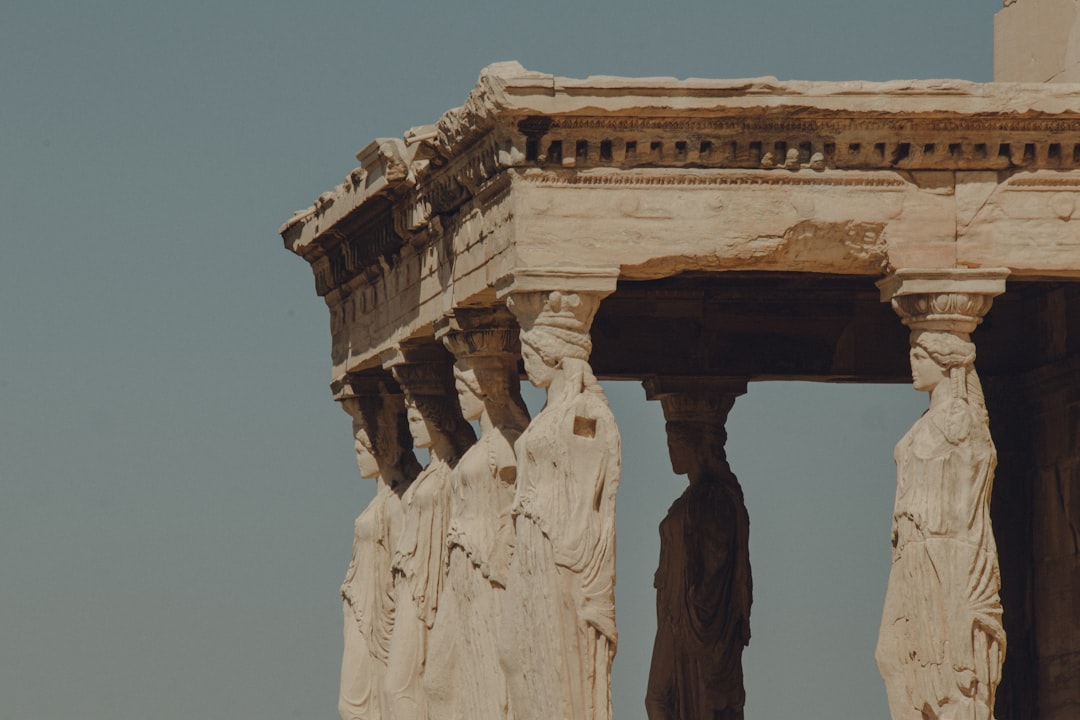
The documentary “The Lost Worlds: Advanced Ancient Civilizations” embarks on an exploration of historical and archaeological enigmas, positing the existence of technologically and culturally sophisticated societies predating conventionally accepted timelines. This film, presented in a factual style, methodically investigates various hypotheses and archaeological findings that challenge prevalent narratives of human development. It serves as a comprehensive overview for viewers interested in alternative perspectives on prehistory, inviting them to consider the possibility that the foundations of human civilization may stretch further back and be more complex than widely understood.
Challenging the Conventional Timeline
The documentary begins by laying the groundwork for its central premise: the questioning of established historical timelines. This initial segment acts as a primer, setting the stage for the introduction of evidence that appears to contradict the mainstream understanding of the rise of complex societies.
The Out-of-Place Artifacts (OOPArt) Phenomenon
One of the primary facets explored involves the concept of OOPArt, or “out-of-place artifacts.” These are objects discovered in archaeological contexts that seem inconsistent with the technological capabilities attributed to the period in which they were found. The film presents examples such as the Antikythera Mechanism, a complex astronomical calculator from ancient Greece, and various metallic spheres and intricate carvings found in geological strata dating back millions of years. The documentary discusses the scientific scrutiny these objects have undergone, acknowledging both conventional explanations (e.g., misidentification, geological anomalies) and the alternative interpretations that suggest a more advanced origin. It approaches these artifacts not as definitive proof, but as data points that warrant further investigation and open questioning of established paradigms.
Geological Evidence and Cataclysmic Events
“The Lost Worlds” delves into geological evidence that hints at significant earth-altering events in the distant past. The Younger Dryas impact hypothesis, for instance, is presented as a potential explanation for widespread disruption and environmental change around 12,900 to 11,700 years ago. The film explores how such an event could have profoundly impacted prevailing civilizations, potentially obliterating physical evidence or forcing survivors into a regressive state. It discusses geological formations like tektites, nanodiamonds, and platinum group elements found in sedimentary layers, which some researchers interpret as markers of extraterrestrial impacts. The documentary maintains a balanced perspective by acknowledging the ongoing scientific debate surrounding these findings, presenting them as pieces of a larger puzzle.
Architectural Marvels and Engineering Puzzles
A significant portion of the documentary focuses on ancient architectural achievements that continue to defy straightforward explanation, particularly concerning the methods of their construction. These structures stand as enduring testaments to the ingenuity of their builders, yet often raise more questions than answers about the technology available at the time.
Precision Stonework and Megalithic Structures
The film meticulously examines sites renowned for their precision stonework, including Puma Punku in Bolivia, the Giza Plateau in Egypt, and various locations in Peru. At Puma Punku, the documentary highlights the intricately carved, interlocking stone blocks, some weighing many tons, that exhibit tolerances comparable to modern machining. The narrative questions how ancient civilizations, purportedly lacking metal tools or advanced lifting equipment, could have achieved such feats. It explores various theories, from sophisticated empirical knowledge of leverage and counterweights to more speculative ideas involving lost technologies. The emphasis remains on the observable precision and the challenge it poses to conventional archaeological explanations.
Astronomical Alignments and Sacred Geometry
Beyond mere construction, the documentary explores the astronomical alignments and geometric principles embedded within many ancient structures. Sites like Stonehenge, the Great Pyramid of Giza, and observatories in the Americas are presented as evidence of a sophisticated understanding of celestial mechanics and mathematics. The film illustrates how these alignments often correspond with solstices, equinoxes, and specific stellar constellations, suggesting a deliberate and advanced observational capability. The concept of “sacred geometry,” where mathematical ratios and natural forms are intentionally incorporated into design, is also introduced. The documentary contemplates whether this indicates a deep scientific knowledge or a merely an accidental byproduct of religious symbolism.
Ancient Maps and Global Connections
The documentary shifts its focus to cartographic anomalies and the intriguing possibility of prehistoric global reconnaissance. This section presents evidence that suggests an understanding of geography far exceeding what is typically attributed to ancient cultures.
The Piri Reis Map and other Anomalous Cartography
The Piri Reis Map, a 16th-century Ottoman map, is a central point of discussion. The film highlights its depiction of Antarctica’s coastline, allegedly before its official discovery and without its ice cap—a feature that was only confirmed in the 20th century through seismic surveys. The documentary explores the implications of such a map, raising questions about its source material and the potential existence of earlier civilizations with advanced navigational and cartographic capabilities. Other less famous but equally perplexing ancient maps, such as the Oronteus Finaeus map, are also briefly mentioned, reinforcing the theme of knowledge seemingly “out of time.” The film carefully navigates the controversies surrounding these maps, acknowledging that while intriguing, their origins and interpretations are complex and often debated among scholars.
Transoceanic Contact Theories
Building on the cartographic evidence, “The Lost Worlds” then examines theories of ancient transoceanic contact. While not directly showcasing “lost worlds,” these theories imply a level of maritime technology and exploratory ambition that could point to broader capabilities. The presence of coca and tobacco in Egyptian mummies, for example, is cited as a puzzling biological anomaly that suggests contact with the Americas long before Columbus. The documentary discusses the various proposed mechanisms for such contact, from accidental drift to deliberate exploration, without endorsing any single viewpoint. It frames these occurrences as indicators that the geographical isolation of ancient cultures might be an oversimplified assumption.
Myths, Legends, and Collective Memory
The documentary explores the rich tapestry of ancient myths and legends, positing that these narratives might contain echoes of real historical events and forgotten civilizations. Viewing these stories not merely as fiction but as diluted historical records offers a different lens through which to interpret the past.
Flood Myths and Cataclysmic Narratives
A prevalent theme across numerous ancient cultures worldwide is the flood myth. From the Mesopotamian Epic of Gilgamesh to the biblical account of Noah, and narratives from indigenous peoples across the Americas and Asia, the regularity of these tales is striking. The documentary explores the striking similarities in these accounts – a great deluge, a heroic survivor or family, and the repopulation of the earth. The film suggests that such widespread and consistent narratives might be collective memories of actual global or regional cataclysmic events, perhaps related to the geological evidence discussed earlier. It considers the mechanism by which such memories could be preserved and transmitted across generations and vast geographical distances, offering theories about cultural diffusion and shared human experiences.
Deified Ancestors and Culture Bearers
Another recurring motif in ancient mythology is the figure of the deified ancestor or “culture bearer” – beings who arrived from elsewhere or descended from the heavens to impart knowledge, skills, and civilization to early humans. The documentary cites examples like Thoth in ancient Egypt, Quetzalcoatl in Mesoamerica, and Oannes in Sumerian mythology. These figures are often depicted as bringing agriculture, writing, architecture, and moral laws to humanity, essentially jump-starting civilization. The film explores the hypothesis that these myths could be allegorical or literal accounts of emissaries from more advanced societies, acting as catalysts for development in less advanced regions. It avoids sensationalism, instead focusing on the pattern recognition of these widespread mythical archetypes and their potential implications for historical understanding.
The Role of Consciousness and Human Potential
The final section of “The Lost Worlds” shifts from physical evidence to a more philosophical exploration of human consciousness and potential. It speculates on the cognitive abilities of ancient peoples and what might have facilitated the purported advanced knowledge demonstrated by some civilizations.
Non-Material Explanations for Ancient Knowledge
The documentary ventures into discussions regarding non-material or unconventional explanations for the advanced knowledge some ancient cultures appear to possess. This includes speculation on altered states of consciousness, intuitive knowledge, or even forms of direct perception that are not conventionally understood in modern science. The film briefly touches upon the concept of “Akashic records” or a universal field of information, positing that certain individuals or groups in the past might have had access to such a repository of knowledge. It acknowledges the speculative nature of these ideas but presents them as part of a broader discourse that attempts to explain anomalies where physical evidence alone seems insufficient. This section implicitly challenges the scientific materialism prevalent in much historical inquiry.
Learning from the Past for the Future
Concluding its journey, “The Lost Worlds” encourages viewers to consider the implications of these forgotten or ignored civilizations for contemporary society. It suggests that by understanding the potential rise and fall of advanced societies, humanity might gain insights into its own trajectory and vulnerabilities. The documentary advocates for an open-minded approach to historical inquiry, emphasizing that the narrative of human history is not a static text but a dynamic and evolving story. It urges the audience to consider the possibility that much remains undiscovered and misunderstood, acting as a call to curiosity and continued exploration. The film leaves the viewer with a sense of wonder and a challenge to re-evaluate preconceived notions about the origins of knowledge and the true depth of human ingenuity.
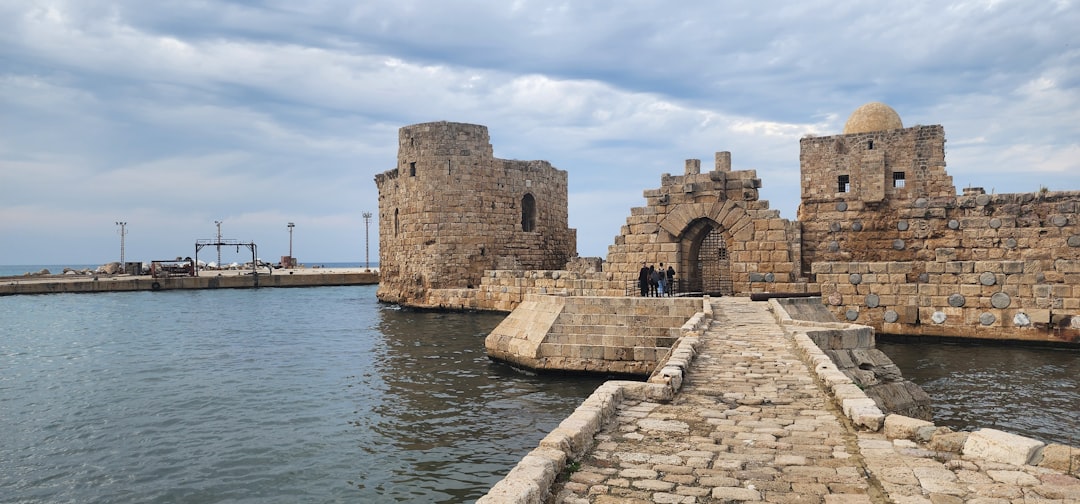
STOP: Why They Erased 50 Impossible Inventions From Your Textbooks
FAQs
What ancient civilizations are featured in the Advanced Ancient Civilizations documentary?
The documentary typically covers advanced ancient civilizations such as the Egyptians, Mesopotamians, Indus Valley, Mayans, and sometimes lesser-known cultures like the Sumerians and the Olmecs.
What defines an “advanced” ancient civilization in the documentary?
An advanced ancient civilization is characterized by achievements in areas such as architecture, engineering, writing systems, governance, astronomy, and social organization that were highly developed for their time.
Does the documentary include archaeological evidence to support its claims?
Yes, the documentary presents archaeological findings, artifacts, and expert interviews to provide factual evidence supporting the advanced nature of these ancient civilizations.
Are there any theories about lost technologies or knowledge in the documentary?
Some episodes explore theories about lost technologies or knowledge, such as advanced engineering techniques or astronomical understanding, but these are presented alongside mainstream archaeological interpretations.
Is the documentary suitable for educational purposes?
Yes, the Advanced Ancient Civilizations documentary is designed to be informative and educational, making it suitable for students, educators, and anyone interested in history and archaeology.