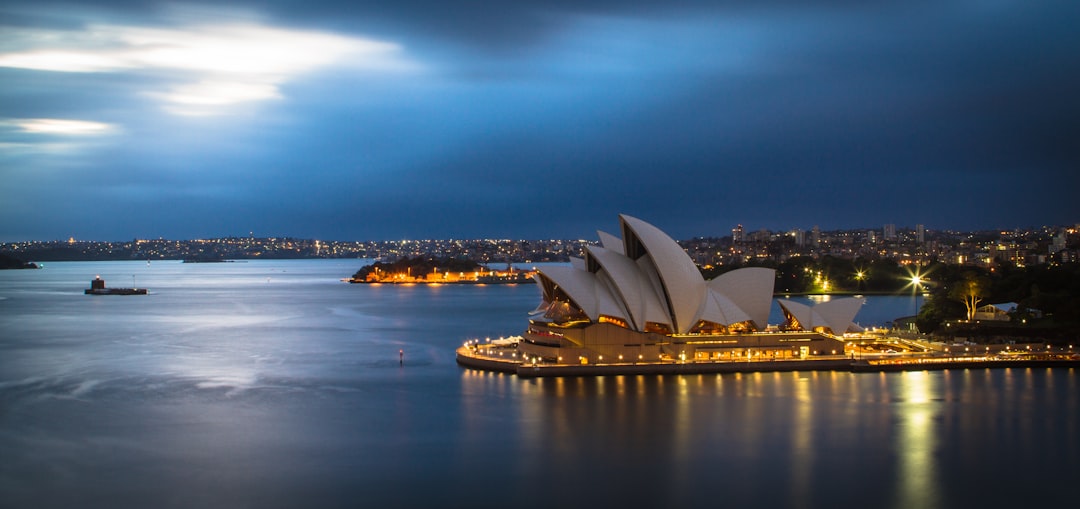
Australia, often branded as the “lucky country,” has long projected an image of boundless opportunity, pristine nature, and egalitarian spirit. This pervasive narrative, deeply ingrained in both national identity and international perception, suggests a society where hard work guarantees success, where natural resources translate into universal prosperity, and where a fair go is extended to all. However, a closer examination reveals a more complex and, at times, troubling reality. The “lucky country” moniker, while possessing elements of truth, increasingly functions as a convenient illusion, obscuring significant socioeconomic disparities, environmental vulnerabilities, and a reckoning with historical injustices. This article will delve into the fissures appearing in this cherished national myth, exposing the underlying challenges that often go unacknowledged in the rosy glow of the dominant narrative.
Economic Imbalances and the Fading Dream
The foundation of the “lucky country” narrative is often economic – a land rich in resources, experiencing sustained growth, and promising a high standard of living. However, this economic prosperity is not uniformly distributed, and the dream of effortless advancement is becoming increasingly elusive for many Australians.
The Resource Curse in Disguise
Australia’s vast reserves of minerals, particularly iron ore and coal, have undoubtedly fueled periods of significant economic growth. Yet, dependence on these commodities has created a cyclical economy susceptible to global market fluctuations. While mining magnates accumulate colossal wealth, the everyday Australian often sees little direct benefit from these boom-bust cycles, beyond perhaps a brief uptick in employment in specific regions. Furthermore, this reliance on extractive industries has hindered diversification, leaving the nation vulnerable as the global economy transitions towards more sustainable practices. The “resource curse,” a phenomenon where resource-rich nations experience slower economic growth and development, appears to be subtly at play, albeit in a nuanced form, as the broader population struggles with increasing cost of living pressures.
The Shrinking Middle and Growing Inequality
Over recent decades, Australia has witnessed a concerning widening of the income gap. The concept of a strong, thriving middle class, once a cornerstone of Australian society, is under considerable strain. Wage stagnation, particularly in real terms, has made it increasingly difficult for average families to keep pace with rising costs of housing, education, and healthcare. This growing inequality is not merely an abstract economic statistic; it manifests in tangible ways, from the proliferation of food queues to the declining rates of home ownership among younger generations. The “fair go” often begins to sound hollow when one considers the significant disparities in starting points and opportunities.
Environmental Reckoning: A Fragile Continent
Beneath the idyllic postcard images of sun-drenched beaches and ancient landscapes lies a continent grappling with profound environmental challenges. The “lucky country” narrative often conveniently overlooks the vulnerability of Australia’s unique ecosystems and the escalating impact of climate change.
The Scars of Exploitation
Australia’s historical economic development has often come at a significant environmental cost. From widespread deforestation for agriculture and urban expansion to the ongoing impact of mining operations, the land bears the scars of exploitation. The Murray-Darling Basin, the nation’s largest river system, is a poignant example of over-extraction and mismanagement, with severe consequences for biodiversity and agricultural communities. These environmental degradations are not just aesthetic concerns; they directly impact the very resources that underpin Australian life, from water security to soil fertility.
Climate Change: A Dire Present, A Bleaker Future
No discussion of Australia’s environmental reality can ignore the existential threat of climate change. A continent already prone to extreme weather events, Australia is experiencing an intensification of these phenomena, including prolonged droughts, devastating bushfires, and more frequent and intense flood events. The 2019-2020 Black Summer bushfires, which scorched vast tracts of land and claimed numerous lives, served as a stark and undeniable warning. Despite accumulating scientific evidence and lived experience, Australia has faced criticism internationally for its hesitant approach to climate action, a position that further undermines the image of a progressive and environmentally responsible nation. The “lucky country” is, in many respects, directly on the front lines of climate change, and its luck may be running out without decisive action.
Social Fractures and the Myth of Mateship
The cherished notion of “mateship,” a bond of camaraderie and mutual support, is a powerful symbol of Australian identity. However, this idealized image often glosses over significant social inequalities and a persistent struggle for genuine inclusivity.
The Persistent Shadow of Dispossession
Australia’s foundation is built upon the dispossession of Aboriginal and Torres Strait Islander peoples, an injustice that continues to cast a long shadow over contemporary society. Despite decades of activism and some progress, Indigenous Australians continue to experience profound disadvantages across almost all socioeconomic indicators, including health, education, employment, and incarceration rates. The “lucky country” narrative struggles to reconcile itself with the ongoing trauma and systemic racism faced by its First Peoples. Achieving true reconciliation and addressing the legacy of colonialism remains one of Australia’s most pressing and unresolved challenges, demonstrating a profound limitation of the “mateship” ideal when it comes to the nation’s original inhabitants.
Housing Affordability: The Generational Divide
Access to affordable housing has become a critical social issue, particularly for younger generations. Once a nation where home ownership was a realistic aspiration for many, Australia now faces a severe housing crisis characterized by exorbitant property prices and rapidly rising rents. This phenomenon has created a significant generational divide, with older Australians often benefiting from property appreciation while younger Australians are increasingly locked out of the market. The “great Australian dream” of owning a home is slowly transforming into an impossible fantasy for a growing segment of the population, leading to increased precarity and financial stress.
A Shifting Global Identity: Navigating Power and Influence
Australia’s place in the world is also undergoing a period of re-evaluation. The “lucky country” narrative, with its undertones of splendid isolation and self-sufficiency, no longer fully aligns with the complexities of contemporary geopolitics and Australia’s evolving role on the international stage.
The Lion and the Dragon: A Diplomatic Tightrope
Historically, Australia has maintained strong ties with its traditional allies, particularly the United States and the United Kingdom. However, its economic fortunes have become intricately linked with China, its largest trading partner. This dual allegiance has created a delicate diplomatic tightrope, as Australia navigates increasing geopolitical tensions between major powers. The challenges of maintaining economic prosperity while upholding democratic values and strategic alliances present a significant test to Australia’s foreign policy and its ability to project a consistent global identity. The “lucky country” must now strategically consider its role in a rapidly changing and often volatile international landscape.
Soft Power and National Brand: Beyond the Beaches
While Australia’s natural beauty and laid-back lifestyle continue to attract tourists, the nation’s “soft power” – its ability to influence through cultural appeal and values – is being tested. International perceptions are increasingly shaped not just by stunning landscapes but by a nation’s human rights record, environmental policies, and its approach to global challenges. As Australia seeks to project an image of innovation and progress, it must contend with criticism regarding its climate policies, its treatment of asylum seekers, and its historical injustices. The “brand” of the “lucky country” is more than just tourism brochures; it is a reflection of the nation’s character and its commitment to global citizenship.
Conclusion: Reimagining “Luck” for the 21st Century
The “lucky country” epithet, while perhaps endearing, increasingly functions as a form of national self-deception. It risks fostering complacency and obscuring the profound challenges that demand urgent attention. To truly live up to any notion of “luck” in the 21st century, Australia must move beyond superficial narratives and confront the underlying economic inequalities, environmental vulnerabilities, social divisions, and complex geopolitical realities. This involves a willingness to critically examine its past, honestly assess its present, and proactively shape its future.
The true test of Australia’s “luck” will not lie in its abundance of natural resources or its historical good fortune, but in its capacity to address these pressing issues with courage, innovation, and a genuine commitment to a “fair go” for all its people, present and future. The illusion of effortless prosperity must give way to a dedicated pursuit of sustainable, equitable, and inclusive solutions. Only then can the “lucky country” evolve from a convenient lie into a genuine aspiration, built on resilience, responsibility, and a profound respect for its diverse people and its precious, ancient land.
FAQs
What is the main argument of the article “The Lucky Country Was a Lie Australia”?
The article argues that the common perception of Australia as “the lucky country” is misleading, highlighting economic, social, and political challenges that contradict this optimistic label.
Why is Australia often referred to as “the lucky country”?
Australia earned the nickname “the lucky country” due to its abundant natural resources, stable political system, and high standard of living, which historically contributed to its prosperity.
What evidence does the article provide to challenge the idea that Australia is “the lucky country”?
The article presents data on rising inequality, environmental issues, economic vulnerabilities, and social problems to demonstrate that Australia’s success is not as assured or universal as the phrase suggests.
How has Australia’s economy contributed to the perception of it being “the lucky country”?
Australia’s economy, driven by mining and exports, has experienced significant growth, which contributed to the perception of luck; however, reliance on these sectors also exposes the country to global market fluctuations.
What are some social issues in Australia that contradict the “lucky country” narrative?
Issues such as Indigenous disadvantage, housing affordability crises, and increasing mental health concerns challenge the notion that all Australians equally benefit from the country’s prosperity.