
The intellectual landscape of the Hellenistic period, a vibrant tapestry woven from the threads of Greek and Eastern influences, witnessed an extraordinary flourishing of scientific and engineering prowess. This era, stretching from the death of Alexander the Great in 323 BCE to the rise of the Roman Empire in 31 BCE, was not merely a time of philosophical discourse and artistic endeavor, but also a crucible for mechanical innovation, where theoretical understanding met practical application with remarkable results. The engineers of this period were not mere tinkerers; they were applied mathematicians, astronomers, and physicists, whose conceptual frameworks and intricate designs laid the foundations for much future technological advancement. Their achievements, often startling in their complexity and ingenuity, reveal a civilization deeply engaged with the challenges and possibilities of the physical world.
The city of Alexandria, founded by Alexander the Great in Egypt, rapidly ascended as the intellectual epicenter of the Hellenistic world. Its unparalleled collection of scrolls in the Great Library, along with institutions like the Mouseion, fostered an environment ripe for scientific inquiry and technological development. This intellectual ferment attracted the finest minds of the age, transforming Alexandria into a veritable workshop of ideas and inventions. The sheer concentration of knowledge and talent created a synergistic effect, where theoretical advancements could be rapidly tested and refined.
The Library and Mouseion’s Role
The Great Library of Alexandria, more than just a repository of knowledge, served as a dynamic research institution. Scholars from across the Hellenistic world flocked there, not only to consult its vast collection but also to engage in collaborative research and debate. Imagine a modern-day supercomputer, but instead of processing data, it processes ideas, with a thousand minds networked together. The Mouseion, a temple to the Muses, functioned as a proto-university, providing state-supported patronage for scholars, scientists, and engineers, granting them the resources and time necessary for deep investigation and experimentation. This environment fostered a culture of meticulous observation, rigorous deduction, and inventive problem-solving.
Royal Patronage and Practical Applications
The Ptolemaic dynasty, ruling Egypt from Alexandria, played a crucial role in funding and encouraging these scientific and engineering pursuits. Their patronage was not purely altruistic; many of the innovations served practical purposes for the state, such as enhancing military capabilities, improving agriculture, or impressing foreign dignitaries. Consider the magnificent lighthouse of Pharos, a marvel of engineering often cited as one of the Seven Wonders of the Ancient World. This structure, illuminated by a complex array of mirrors and fires, facilitated safe navigation into Alexandria’s bustling harbor, demonstrating the practical application of advanced optical and structural engineering.
The mechanical cosmos of Hellenistic engineers showcases the remarkable ingenuity and innovation of ancient civilizations, particularly in the realm of mechanics and automation. For a deeper exploration of this fascinating topic, you can read a related article that delves into the intricate designs and inventions of the time. This article provides insights into how these early engineers laid the groundwork for modern engineering principles. To learn more, visit this link.
Automata and Mechanized Spectacles
Perhaps some of the most captivating innovations of the Hellenistic engineers were their intricate automata. These self-operating devices, often designed for entertainment or religious ritual, showcased a profound understanding of pneumatics, hydraulics, and gear trains. They were less about crude utility and more about demonstration of principles, a playful exploration of how the world might be manipulated and controlled. To witness these devices in action would have been akin to watching a magician reveal a mind-bending illusion, only the magic here was the product of pure mechanical ingenuity.
Hero of Alexandria’s Ingenuity
Hero of Alexandria, a prolific author and engineer, stands as a towering figure in this field. His treatises, such as Pneumatica and Automata, detail a wide array of devices ranging from coin-operated holy water dispensers to temple doors that opened automatically through the use of fire and air pressure. His “aeolipile,” a rudimentary steam engine, elegantly demonstrated the principle of jet propulsion, although its practical applications were not fully realized in his time. Hero’s work exemplified the Hellenistic fascination with pneumatics, using the properties of air and water to create motion and surprise. One can envision the awe undoubtedly felt by those witnessing a statue pour wine from a pitcher or a system of whistles playing a tune, all without visible human intervention. These were not just toys; they were conceptual prototypes, blueprints for future technological marvels.
Philon of Byzantium’s Contributions
Philon of Byzantium, another influential engineer, also contributed significantly to the understanding and application of mechanical principles. His work included designs for war machines, but also focused on ingenious automatic devices. His description of a “water organ” or hydraulis, a keyboard instrument that used water to regulate air pressure for its pipes, demonstrated a sophisticated understanding of hydraulics and acoustics. Philon’s devices, like Hero’s, transcended mere entertainment; they were tangible expressions of theoretical knowledge, each mechanism a testament to the elegant dance between force, motion, and control.
Precision Instruments and Astronomical Marvels

Beyond the realm of fantastical automata, Hellenistic engineers also excelled in the creation of highly precise instruments, particularly in the fields of astronomy and measurement. Their efforts to map the cosmos, to understand the movements of celestial bodies, demanded an unprecedented level of accuracy in their tools. These instruments were not simply observational aids; they were extensions of the human intellect, allowing for a deeper probe into the universe’s mechanics.
The Antikythera Mechanism: A Celestial Calculator
The Antikythera Mechanism, discovered in a shipwreck off the coast of Greece, stands as arguably the most complex and sophisticated artifact from the ancient world. This bronze gear train device, dating to the first century BCE, functioned as an astronomical calculator, predicting eclipses, lunar phases, and the positions of celestial bodies with remarkable accuracy. It represents the pinnacle of Hellenistic mechanical engineering, showcasing an astonishing mastery of gear cutting, differential gearing, and intricate calibration. Imagine unwrapping a present from the distant past, only to find a perfectly working analog computer. The Antikythera Mechanism was not merely a device; it was a conceptual model of the cosmos, a physical manifestation of astronomical theories, and a testament to the fact that advanced computational devices are not solely a modern invention. Its complexity defied the common understanding of ancient technological capabilities for decades after its discovery.
Astronomical Observatories and Measurement Tools
Hellenistic astronomers, such as Eratosthenes and Hipparchus, utilized a range of precise instruments to conduct their observations and calculations. Quadrants, astrolabes (though further developed in the Islamic Golden Age, their roots are in Hellenistic instruments), and armillary spheres allowed for the measurement of angles, altitudes of celestial bodies, and the determination of geographical coordinates. Eratosthenes’ remarkably accurate calculation of the Earth’s circumference, relying on geometric principles and precise measurements of shadows, exemplifies the practical application of these tools. These were not just instruments for curiosity; they were the scaffolding upon which a scientific understanding of the universe was built, piece by meticulous piece.
Hydraulic and Mechanical Innovations for Practical Life
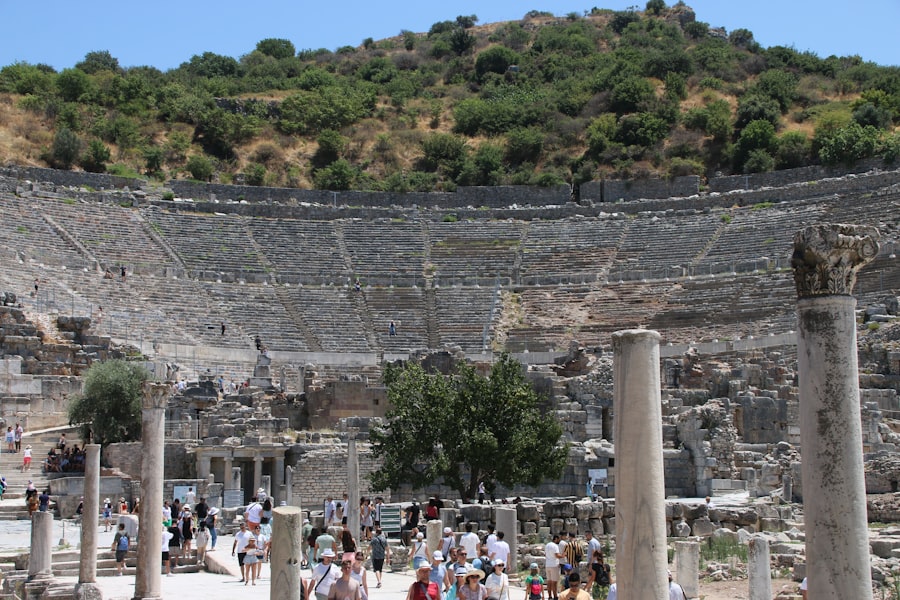
While the more spectacular inventions draw much attention, Hellenistic engineers were equally adept at developing practical technologies that improved daily life and served the functional needs of their societies. These innovations, though perhaps less dazzling than automata, were foundational to the efficient operation of cities and diverse industries. They represent the quiet workhorses of the Hellenistic period, tirelessly serving the needs of the populace.
Water Lifting Devices and Pumps
The management of water resources was a perennial challenge in the ancient world, especially in agricultural societies. Hellenistic engineers tackled this problem with ingenious solutions. The Archimedes’ screw, designed by the legendary mathematician and engineer Archimedes, remains a remarkably efficient device for lifting water, still in use in some parts of the world today. Ctesibius of Alexandria, credited as the “father of pneumatics,” invented various forms of pumps, including the force pump, which could raise water to significant heights and even be used in fire engines. These devices transformed landscapes, making arable land more productive and ensuring urban water supplies. Think of them as the unsung heroes of their time, quietly fueling the engine of civilization.
Odometer and Surveying Equipment
The need for accurate measurement extended beyond astronomy to terrestrial navigation and land management. Philon of Byzantium, among others, is credited with describing an odometer, a device designed to measure distances traveled. Similar in principle to a modern car’s odometer, it used a cart with gears that, after a certain distance, would drop a pebble into a collection box. This was crucial for road building, surveying, and logistics, enabling more precise mapping and administration of vast territories. The ability to accurately quantify space was as important as quantifying time for a burgeoning empire.
The mechanical cosmos of Hellenistic engineers showcases their remarkable ingenuity and innovation, reflecting a profound understanding of mechanics that laid the groundwork for future advancements. For those interested in exploring this fascinating topic further, an insightful article can be found at this link, which delves into the intricate designs and inventions that emerged during this era. The contributions of these engineers not only influenced their contemporaries but also left a lasting legacy that continues to inspire modern engineering practices.
The Legacy and Influence of Hellenistic Engineering
| Engineer | Invention | Purpose | Key Features | Historical Impact |
|---|---|---|---|---|
| Hero of Alexandria | Automata | Entertainment and religious ceremonies | Use of pneumatics and steam power | Early development of automated machines and steam engines |
| Ctesibius | Water Clock (Clepsydra) | Time measurement | Use of water flow regulation and mechanical indicators | Improved accuracy in timekeeping devices |
| Philo of Byzantium | Catapult | Military siege weapon | Mechanical tension and torsion principles | Advanced ancient warfare technology |
| Archimedes | Compound Pulley System | Mechanical advantage in lifting | Combination of multiple pulleys to reduce effort | Foundation for mechanical engineering principles |
| Philo of Byzantium | Mechanical Theater | Automated stage performances | Complex gear systems and pneumatics | Early example of programmable machines |
The intellectual inheritance of the Hellenistic engineers was profound and far-reaching, even if many of their original texts were lost to time. Their ideas and inventions did not merely vanish but percolated through subsequent centuries, influencing Roman engineers, and later, through translations and adaptations, contributing to the scientific and technological advancements of the Islamic Golden Age and eventually the European Renaissance. Their work forms an essential link in the chain of global technological development.
Transmission of Knowledge
The systematic study and documentation of mechanical principles by figures like Hero and Philon provided a foundational corpus of knowledge. While much was undoubtedly lost, what survived in Greek, and later Roman and Arabic translations, served as crucial textbooks for generations of engineers and scholars. These texts were blueprints for understanding the physical world, offering not just solutions, but frameworks for how to approach and solve engineering problems. Imagine finding an ancient instruction manual that still holds relevance today; that was the power of these treatises.
Impact on Roman Technology
Roman engineers, while renowned for their practical applications in architecture and infrastructure, often built upon the theoretical and practical foundations laid by their Hellenistic predecessors. The Roman aqueducts, for instance, relied on sophisticated understanding of hydraulics that had been developed and refined in the Hellenistic world. Their war machines, too, often incorporated Hellenistic designs, adapted and scaled for the needs of a conquering empire. The Romans were excellent at mass production and deployment, but the intellectual genesis of many of their core technologies can be traced back to the Hellenistic period.
Seeds of the Scientific Revolution
The emphasis on observation, experimentation, and the application of mathematical principles to physical phenomena, so characteristic of Hellenistic engineering, can be seen as a direct precursor to the Scientific Revolution centuries later. The conceptual tools and methodologies developed by these engineers laid the groundwork for future scientific inquiry. The Antikythera Mechanism, with its intricate gears and precise calculations, implicitly speaks a language understandable to Galileo or Newton, a language of universal laws and mathematical precision. The mechanical cosmos envisioned and constructed by Hellenistic engineers was a powerful testament to human ingenuity, a beacon of intellectual curiosity that continues to illuminate the path of scientific and technological progress.
FAQs
What is the mechanical cosmos in the context of Hellenistic engineers?
The mechanical cosmos refers to the conceptualization and construction of models and devices by Hellenistic engineers that represented the universe as a complex, interconnected machine. These engineers used gears, levers, and other mechanical components to simulate celestial movements and natural phenomena.
Who were some notable Hellenistic engineers involved in creating mechanical models of the cosmos?
Notable Hellenistic engineers include Hero of Alexandria, Ctesibius, and Archimedes. They developed various mechanical devices such as automata, water clocks, and early astronomical models that demonstrated the principles of mechanics and celestial motion.
What types of devices did Hellenistic engineers create to represent the cosmos?
Hellenistic engineers created devices like the Antikythera mechanism, which is an ancient analog computer used to predict astronomical positions and eclipses. They also built planetaria, orreries, and other geared mechanisms to model the movements of the sun, moon, and planets.
How did the mechanical cosmos influence later scientific and engineering developments?
The mechanical cosmos concept laid foundational ideas for understanding the universe through mechanical principles. It influenced later astronomers and engineers during the Renaissance and beyond, contributing to the development of clocks, scientific instruments, and the mechanistic worldview in science.
What materials and technologies did Hellenistic engineers use to build their mechanical cosmos devices?
Hellenistic engineers primarily used bronze, wood, and stone to construct their devices. They employed advanced techniques in metallurgy and gear-cutting, utilizing intricate gear trains, cams, and escapements to achieve precise mechanical movements that mimicked celestial cycles.