The South Pointing Chariot is an ancient Chinese mechanical device that originated during the 3rd century BCE. The device functions as a directional indicator, utilizing a differential gear system to maintain a figure pointing consistently toward the south regardless of the chariot’s movement or changes in direction. This mechanical achievement demonstrates advanced engineering knowledge and precision manufacturing capabilities that existed in ancient China.
Historical records indicate that the South Pointing Chariot served both practical and ceremonial purposes in Chinese society. The device operated through a complex arrangement of gears that calculated the chariot’s rotational movements and compensated accordingly to preserve the southern orientation of its pointing figure.
The South Pointing Chariot represents significant technological innovation in mechanical engineering, particularly in the development of differential gear systems. Its construction required precise understanding of gear ratios, mechanical advantage, and rotational mechanics. Modern reconstructions and analyses have confirmed the feasibility of the ancient designs, validating historical accounts of the device’s functionality and demonstrating the advanced state of Chinese mechanical engineering during this period.
Key Takeaways
- The South Pointing Chariot is an ancient Chinese mechanical device designed to maintain a fixed directional pointer.
- It utilizes an early form of the differential mechanism to keep the pointer aimed south regardless of the chariot’s turns.
- The device holds significant cultural importance as a symbol of innovation and navigation in ancient China.
- Its design influenced later mechanical engineering developments and modern differential systems.
- Despite extensive study, some aspects of its construction and operation remain a historical mystery.
Historical Background of the South Pointing Chariot
The origins of the South Pointing Chariot can be traced back to the Warring States period in China, a time characterized by political fragmentation and intense competition among various states. This era fostered an environment ripe for innovation, as states sought advantages in warfare and navigation. The chariot is believed to have been invented by the renowned polymath Mozi, who was known for his contributions to philosophy, engineering, and military strategy.
His work laid the groundwork for many technological advancements, including this remarkable device. The historical context surrounding the South Pointing Chariot is essential for understanding its significance. During this period, navigation was crucial for military campaigns and trade routes.
The ability to maintain a consistent directional orientation would have provided significant advantages in both contexts. As such, the chariot not only reflects the technological capabilities of its time but also highlights the practical needs that drove innovation. The device’s creation can be seen as a response to the challenges faced by ancient Chinese society, showcasing how necessity often fuels invention.
Function and Purpose of the Differential Mechanism
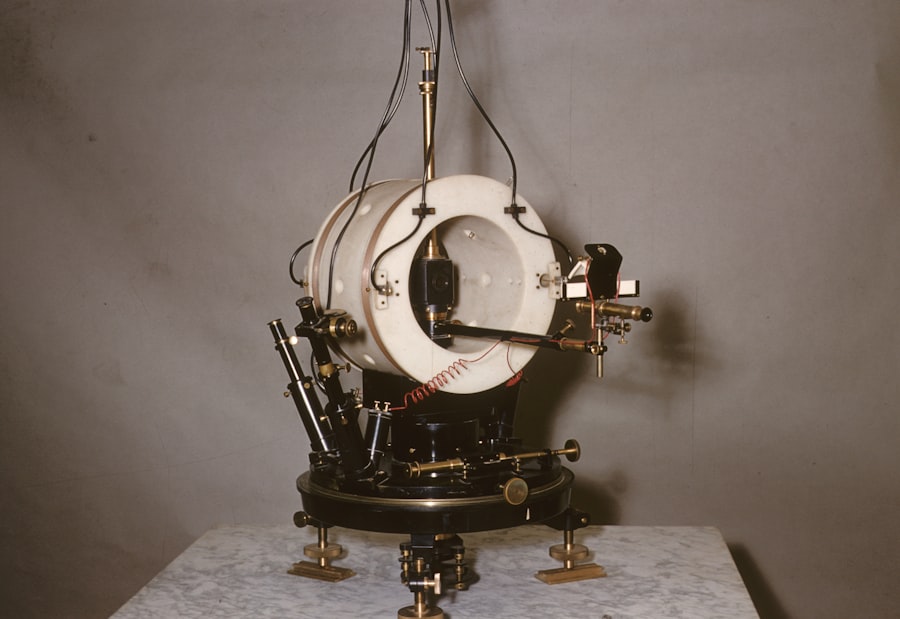
At the heart of the South Pointing Chariot lies its differential mechanism, a sophisticated system that allows the chariot to maintain its orientation towards the south while being moved in any direction. This mechanism operates on principles that would not be fully understood until centuries later, making it a marvel of ancient engineering. The differential mechanism consists of a series of gears and pivots that work together to ensure that the directional pointer remains aligned with true south, regardless of how the chariot itself is turned or moved.
The primary purpose of this mechanism was to provide navigational assistance. In an era when maps were rudimentary at best, having a reliable means of determining direction was invaluable. The South Pointing Chariot allowed travelers and military leaders to orient themselves accurately, facilitating better decision-making during journeys or battles.
Its design reflects a deep understanding of mechanical principles, showcasing how ancient engineers were able to solve complex problems with innovative solutions.
Design and Construction of the South Pointing Chariot
The design of the South Pointing Chariot is as fascinating as its function. Constructed from wood and metal, it features a platform mounted on wheels, with a directional pointer affixed to it. The pointer is designed to rotate freely on a vertical axis, allowing it to maintain its alignment with south as the chariot moves.
The intricate arrangement of gears and pivots within the chariot’s base is what enables this remarkable functionality. The construction process would have required skilled craftsmanship and a deep understanding of materials and mechanics. Artisans would have had to carefully select wood for durability while ensuring that metal components were precisely shaped to fit together seamlessly.
The assembly of such a device would have been no small feat, requiring collaboration among various specialists in woodworking, metalworking, and engineering. This collaborative effort underscores the advanced level of craftsmanship present in ancient China and highlights the importance placed on innovation during this period.
Cultural Significance of the South Pointing Chariot
| Metric | Description | Value / Specification | Unit |
|---|---|---|---|
| Number of Gears | Total gears used in the differential mechanism | 4 | Count |
| Gear Ratio | Ratio between input and output gears to maintain direction | 1:1 | Ratio |
| Wheelbase | Distance between front and rear axles affecting differential operation | 1.2 | meters |
| Turning Radius | Minimum radius the chariot can turn while maintaining pointer direction | 3.5 | meters |
| Pointer Accuracy | Degree of deviation from true south during operation | ±2 | degrees |
| Material | Primary material used for gears and mechanism | Bronze | — |
| Weight | Total weight of the differential mechanism | 15 | kilograms |
| Operational Speed | Maximum speed at which the mechanism maintains accurate pointing | 5 | km/h |
Beyond its mechanical brilliance, the South Pointing Chariot holds significant cultural value within Chinese history. It symbolizes not only technological advancement but also reflects broader philosophical ideas prevalent during its time. The chariot embodies the spirit of exploration and discovery that characterized ancient Chinese thought, emphasizing humanity’s desire to understand and navigate the world around them.
Moreover, the chariot serves as a cultural artifact that connects modern society with its historical roots. It represents a bridge between past and present, illustrating how ancient innovations continue to influence contemporary technology. The reverence for such devices in Chinese culture speaks to a broader appreciation for ingenuity and creativity throughout history.
As scholars study the chariot, they uncover insights into the values and priorities of ancient Chinese society, enriching our understanding of their worldview.
Theoretical and Practical Implications of the Differential Mechanism

The differential mechanism employed in the South Pointing Chariot has far-reaching theoretical implications that extend beyond its immediate function. It challenges modern scholars to reconsider their understanding of ancient engineering practices and encourages them to explore how such mechanisms could have influenced other technological developments throughout history. The principles behind this mechanism are foundational to many modern machines, suggesting that ancient engineers possessed knowledge that would not be fully recognized until much later.
Practically speaking, the differential mechanism exemplifies how complex systems can be designed to solve specific problems effectively. Its application in navigation highlights the importance of precision in engineering—a principle that remains relevant today. By studying this ancient device, engineers can gain insights into efficient design practices and innovative problem-solving techniques that can be applied in contemporary contexts.
Comparison with Other Ancient Mechanical Devices
When comparing the South Pointing Chariot with other ancient mechanical devices, it becomes evident that it occupies a unique niche in engineering history. While many ancient cultures developed various tools for navigation and measurement—such as astrolabes or sundials—the chariot’s differential mechanism sets it apart due to its dynamic adaptability. Unlike static devices that rely on fixed points for orientation, the South Pointing Chariot offers a mobile solution that can adjust in real-time.
Additionally, while devices like Archimedes’ screw or Heron’s steam engine demonstrate remarkable ingenuity, they serve different purposes than navigation. The South Pointing Chariot’s focus on maintaining directional accuracy while in motion showcases an advanced understanding of mechanics that was not commonly found in other cultures at the time. This distinction highlights not only the uniqueness of Chinese engineering but also emphasizes how different civilizations approached similar challenges through diverse solutions.
Influence and Legacy of the South Pointing Chariot
The influence of the South Pointing Chariot extends far beyond its immediate historical context; it has left an indelible mark on subsequent generations of engineers and inventors. Its principles have inspired various navigational tools throughout history, contributing to advancements in cartography and exploration. As societies evolved and technology progressed, elements of the chariot’s design can be seen echoed in modern devices that rely on similar mechanical principles.
Moreover, the legacy of the South Pointing Chariot serves as a reminder of humanity’s enduring quest for knowledge and innovation. It stands as an example of how ancient civilizations laid the groundwork for future advancements by pushing boundaries and exploring new ideas. As contemporary engineers continue to grapple with complex challenges, they can draw inspiration from this ancient device’s ingenuity and adaptability.
Modern Applications of the Differential Mechanism
In today’s world, the principles behind the differential mechanism found in the South Pointing Chariot have been adapted for various modern applications. One notable example is in robotics, where differential drive systems are employed to enable precise movement and navigation in autonomous vehicles. These systems allow robots to maneuver effectively while maintaining orientation—much like their ancient counterpart.
Additionally, advancements in technology have led to new interpretations of differential mechanisms in fields such as aerospace engineering and computer science. The ability to maintain orientation while navigating complex environments is crucial for drones and spacecraft, where precision is paramount. By studying historical devices like the South Pointing Chariot, modern engineers can glean insights into effective design strategies that enhance functionality across diverse applications.
Challenges and Limitations in Understanding the South Pointing Chariot
Despite extensive research into the South Pointing Chariot, challenges remain in fully understanding its mechanics and historical context. Much of what is known comes from fragmented historical texts and archaeological findings, leaving gaps in knowledge about its exact construction methods and usage over time. Scholars often grapple with interpreting ancient writings that may lack clarity or detail regarding specific aspects of the chariot’s design.
Furthermore, reproducing an accurate model based on existing descriptions poses practical challenges for researchers today. While some attempts have been made to recreate functioning versions of the chariot, discrepancies between interpretations can lead to variations in understanding its true capabilities. These limitations highlight the complexities involved in studying ancient technologies and underscore the need for continued exploration and interdisciplinary collaboration among historians, engineers, and archaeologists.
The Enduring Mystery and Innovation of the South Pointing Chariot
In conclusion, the South Pointing Chariot remains an enduring symbol of innovation and mystery within the annals of engineering history. Its sophisticated differential mechanism not only showcases advanced mechanical principles but also reflects broader cultural values associated with exploration and knowledge-seeking in ancient China. As scholars continue to unravel its complexities, they uncover insights that resonate with contemporary challenges faced by modern society.
The legacy of this remarkable device serves as a reminder that human ingenuity knows no bounds; it transcends time and geography, inspiring future generations to push boundaries and explore new frontiers. The South Pointing Chariot stands as a testament to humanity’s relentless pursuit of understanding—a pursuit that continues to shape our world today.
The south pointing chariot is a fascinating ancient mechanism that showcases the ingenuity of early engineering. For those interested in exploring more about historical inventions and their significance, you can read a related article on this topic at Real Lore and Order. This resource delves into various historical artifacts and their impact on our understanding of technology in ancient civilizations.
WATCH THIS! The Impossible Technology They Erased From History
FAQs
What is a South Pointing Chariot?
The South Pointing Chariot is an ancient Chinese mechanical device designed to always point in a fixed direction, traditionally south, regardless of the chariot’s movement or turns.
How does the South Pointing Chariot work?
It uses a differential mechanism that translates the rotation of the wheels into the rotation of a pointer. This mechanism compensates for turns, ensuring the pointer maintains a constant orientation relative to the ground.
What is a differential mechanism in the context of the South Pointing Chariot?
A differential mechanism is a system of gears that allows the pointer to rotate at a rate that counteracts the chariot’s turns, keeping the pointer aimed in a fixed direction.
When was the South Pointing Chariot invented?
The South Pointing Chariot is believed to have been invented during the Three Kingdoms period in China, around the 3rd century AD.
What is the significance of the South Pointing Chariot?
It is considered an early example of a mechanical navigation device and demonstrates advanced understanding of gear systems and differential mechanisms in ancient China.
Is the South Pointing Chariot a compass?
No, it is not a magnetic compass. Instead, it relies on mechanical gearing to maintain a fixed directional pointer.
Can the South Pointing Chariot be used for modern navigation?
While historically significant, the South Pointing Chariot is not practical for modern navigation compared to electronic and magnetic compass technologies.
What materials were used to build the South Pointing Chariot?
Traditional South Pointing Chariots were constructed using wood and metal components for the wheels, gears, and pointer.
How does the differential mechanism compensate for turns?
The differential gears measure the difference in rotation between the left and right wheels, adjusting the pointer’s rotation to counteract the chariot’s turning angle.
Are there modern applications of the differential mechanism used in the South Pointing Chariot?
Yes, the principle of differential gearing is widely used in modern vehicles to allow wheels to rotate at different speeds during turns, improving handling and stability.