The Grand Gallery is a large ascending corridor located within the Great Pyramid of Giza, constructed during the Fourth Dynasty of the Old Kingdom (approximately 2580-2510 BCE) as part of Pharaoh Khufu’s burial complex. This passage measures approximately 47 meters in length, 8.5 meters in height, and 2.1 meters in width, making it one of the most significant architectural features within the pyramid. The gallery’s construction demonstrates the advanced engineering capabilities of ancient Egyptian builders.
The walls are built using a corbelling technique, where each successive course of stone blocks projects slightly inward from the course below, creating a vaulted ceiling without requiring a keystone arch. This method allows the structure to support substantial weight while maintaining an open interior space. The corbelled walls consist of seven courses of limestone blocks, each stepped inward by approximately 7.6 centimeters.
The Grand Gallery serves as the primary access route to the King’s Chamber, where Khufu’s sarcophagus is located. Along the gallery’s floor runs a central ramp flanked by two raised walkways. The walls contain 27 pairs of slots and niches whose exact purpose remains debated among Egyptologists, though they may have held wooden beams used during construction or served a function related to the pyramid’s internal blocking system.
The precision of the stonework and the sophisticated understanding of load distribution required for this construction reflect the advanced mathematical and engineering knowledge possessed by the pyramid’s builders.
Key Takeaways
- The Pyramid Grand Gallery features advanced corbelling techniques that showcase ancient Egyptian engineering prowess.
- Corbelling has a long architectural history, serving both structural and symbolic purposes in the gallery’s design.
- The gallery’s corbelling was crucial for distributing weight and ensuring the stability of the massive pyramid structure.
- Preservation efforts highlight the cultural significance and ongoing challenges in maintaining this ancient architectural marvel.
- The corbelling in the Pyramid Grand Gallery has influenced modern architectural designs, reflecting its enduring legacy.
The History of Corbelling in Architecture
Corbelling, an ancient architectural technique, has been utilized across various cultures and epochs, dating back thousands of years. This method involves stacking stones or bricks in such a way that each layer projects slightly beyond the one below it, creating an arch-like effect. The origins of corbelling can be traced to prehistoric structures, where early builders sought to create roofs and openings without the use of modern tools or materials.
As civilizations evolved, so too did the application of corbelling, with notable examples found in ancient Mesopotamia, Mesoamerica, and, of course, Egypt. In ancient Egypt, corbelling became a defining feature of monumental architecture. The technique was employed not only in the construction of pyramids but also in temples and tombs.
The use of corbelling allowed architects to create vast interior spaces that were both functional and visually striking. Over time, this method was refined and adapted to suit the specific needs of each structure, leading to increasingly complex designs. The Pyramid Grand Gallery exemplifies this evolution, showcasing the culmination of centuries of architectural experimentation and innovation. Discover the secrets behind the pyramid mystery ancient egypt in this fascinating video.
The Purpose of Corbelling in the Construction of the Pyramid Grand Gallery

The primary purpose of corbelling in the Pyramid Grand Gallery was to support the immense weight of the stone blocks above while allowing for an open and spacious interior. As the builders constructed the pyramid, they faced the challenge of creating a stable structure that could withstand the forces exerted by the massive stones used in its construction. Corbelling provided a solution by distributing weight more evenly across the walls, reducing the risk of collapse.
Additionally, corbelling allowed for the creation of a visually impressive space that would inspire awe in those who entered. The Grand Gallery’s soaring height and dramatic angles evoke a sense of grandeur befitting a royal burial site. By employing corbelling techniques, architects were able to craft an environment that not only served practical purposes but also conveyed the power and divinity associated with Pharaoh Khufu.
This duality of function and symbolism is a hallmark of ancient Egyptian architecture.
The Design and Engineering of the Corbelling in the Pyramid Grand Gallery
The design and engineering of the corbelling in the Pyramid Grand Gallery reflect a sophisticated understanding of structural principles. Each layer of stone is meticulously placed to ensure stability while allowing for an upward progression that culminates in a vaulted ceiling. The careful selection and shaping of each block were critical; builders had to account for both weight distribution and aesthetic appeal.
The result is a series of corbelled arches that rise gracefully toward the apex, creating an illusion of lightness despite the massive stonework.
The angles at which stones were laid were calculated to optimize strength while minimizing material use.
This efficiency is particularly impressive given the limited tools available to ancient builders. The Pyramid Grand Gallery stands as a remarkable example of how ancient Egyptians harnessed their knowledge to create enduring structures that have withstood the test of time.
The Symbolism and Cultural Significance of the Corbelling in Ancient Egyptian Architecture
| Feature | Description | Dimensions | Material | Purpose |
|---|---|---|---|---|
| Grand Gallery | Main ascending passage inside the Great Pyramid of Giza | Approx. 8.6 m high, 46.7 m long, 2.1 m wide | Limestone blocks | Access to King’s Chamber, structural support |
| Corbelling Technique | Overlapping stone blocks projecting inward to form an arch-like structure | Each layer projects approx. 0.25 m beyond the one below | Limestone | Distribute weight, prevent collapse |
| Corbelled Vault Height | Height achieved by corbelling in the Grand Gallery | Up to 8.6 meters | N/A | Creates spacious interior passage |
| Number of Corbelled Layers | Number of stone layers used in corbelling | Approximately 150 layers | Limestone | Structural integrity and height |
| Load Distribution | Effect of corbelling on weight distribution | Redirects weight to side walls | N/A | Prevents ceiling collapse |
In addition to its practical applications, corbelling in ancient Egyptian architecture carries deep symbolic meaning. The upward thrust of corbelled arches can be interpreted as a representation of ascension and connection to the divine. In a culture that placed immense importance on the afterlife and spiritual beliefs, such architectural features served not only as structural elements but also as metaphors for the journey to eternity.
The Grand Gallery itself is imbued with cultural significance; it was designed to facilitate the passage of the pharaoh’s spirit into the afterlife. The corbelled design enhances this symbolism by creating an environment that evokes feelings of elevation and transcendence. As visitors move through this space, they are reminded of the ancient Egyptians’ profound beliefs about life, death, and rebirth—a testament to their enduring legacy.
The Preservation and Restoration of the Corbelling in the Pyramid Grand Gallery
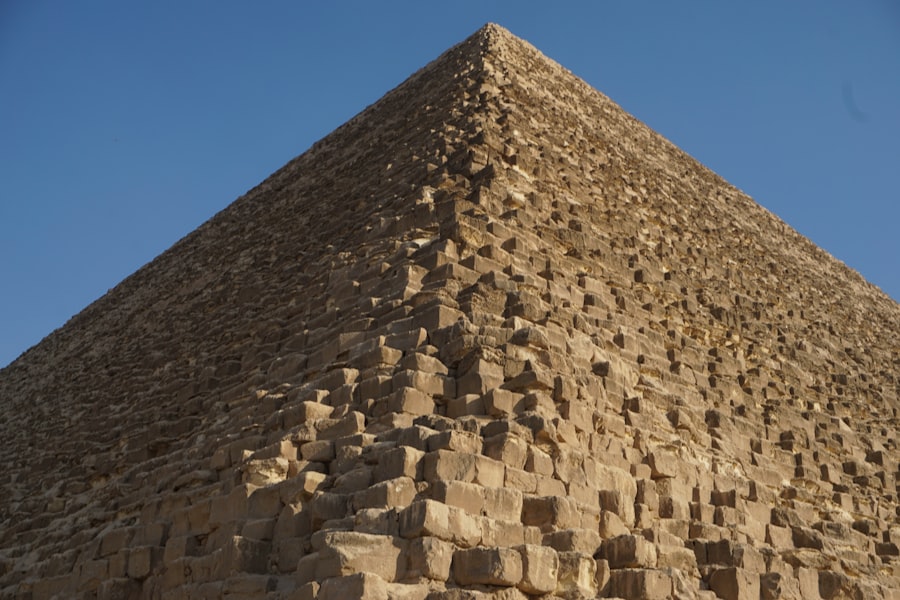
Preserving and restoring the corbelling in the Pyramid Grand Gallery presents unique challenges due to its age and historical significance. Over millennia, natural erosion, human activity, and environmental factors have taken their toll on this ancient structure. Efforts to maintain its integrity require careful planning and expertise to ensure that any restoration work does not compromise its authenticity or historical value.
Conservationists have employed various techniques to stabilize the corbelled arches while preserving their original materials as much as possible. This includes monitoring structural integrity through advanced technology and employing traditional methods used by ancient builders when necessary.
The Influence of the Pyramid Grand Gallery’s Corbelling on Modern Architecture
The innovative use of corbelling in the Pyramid Grand Gallery has left an indelible mark on modern architecture. Contemporary architects often draw inspiration from ancient techniques when designing structures that require both strength and aesthetic appeal. The principles behind corbelling—weight distribution, structural integrity, and visual impact—continue to inform modern building practices.
In particular, the concept of creating open spaces without intrusive supports has been embraced in various architectural styles. From large public buildings to residential homes, architects have adapted corbelling techniques to suit modern materials and technologies while paying homage to their ancient predecessors. This connection between past and present highlights how timeless principles can transcend generations, influencing design choices even today.
The Challenges of Studying and Documenting the Corbelling in the Pyramid Grand Gallery
Studying and documenting the corbelling in the Pyramid Grand Gallery poses several challenges for researchers and archaeologists alike. The sheer scale and complexity of this architectural feature require meticulous examination to understand its construction fully. Additionally, access to certain areas within the pyramid can be restricted due to safety concerns or ongoing preservation efforts.
Furthermore, interpreting historical records related to construction techniques can be difficult due to gaps in documentation or varying accounts from different sources. Researchers must rely on a combination of archaeological evidence, comparative analysis with other structures, and modern technology such as 3D scanning to gain insights into how corbelling was employed in this iconic site. Despite these challenges, ongoing studies continue to shed light on this remarkable aspect of ancient Egyptian architecture.
The Relationship between Corbelling and Other Architectural Features in the Pyramid Grand Gallery
The relationship between corbelling and other architectural features within the Pyramid Grand Gallery is integral to understanding its overall design. For instance, the alignment of corbelled arches with other structural elements such as walls and ceilings creates a cohesive aesthetic that enhances both functionality and beauty. This interplay between different architectural components showcases the meticulous planning that went into constructing such an elaborate space.
Moreover, corbelling interacts with other features like passageways and chambers within the pyramid itself. The careful consideration given to how these elements connect reflects an advanced understanding of spatial dynamics. As visitors navigate through various sections of the pyramid, they experience firsthand how corbelling contributes not only to structural stability but also to an immersive architectural journey.
The Corbelling in the Pyramid Grand Gallery: A Marvel of Ancient Engineering
The corbelling found in the Pyramid Grand Gallery stands as a marvel of ancient engineering that continues to captivate scholars and visitors alike. Its ability to support massive stone blocks while creating an expansive interior space exemplifies the ingenuity inherent in ancient Egyptian architecture. Each layer meticulously placed demonstrates not only technical skill but also an artistic vision that transcends time.
As one gazes up at the soaring heights created by this technique, it becomes evident that corbelling was more than just a method; it was an expression of cultural values and aspirations. The Grand Gallery serves as a reminder that even in an age long past, human creativity knew no bounds—a legacy that resonates through centuries.
The Enduring Legacy of the Corbelling in the Pyramid Grand Gallery
In conclusion, the corbelling within the Pyramid Grand Gallery represents an enduring legacy that speaks volumes about ancient Egyptian civilization’s architectural prowess. This technique not only fulfilled practical needs but also embodied profound cultural significance, reflecting beliefs about life after death and divine connection. As modern architects continue to draw inspiration from these ancient methods, they honor a tradition that has shaped human creativity for millennia.
The preservation efforts surrounding this remarkable structure ensure that future generations will have access to its beauty and historical importance. As scholars delve deeper into understanding its complexities, they uncover new layers of meaning that enrich our appreciation for this architectural wonder. Ultimately, the corbelling in the Pyramid Grand Gallery stands as a testament to human ingenuity—a bridge between past achievements and future aspirations that will continue to inspire awe for years to come.
The Grand Gallery of the Great Pyramid is an architectural marvel, showcasing the impressive technique of corbelling that was used in its construction. This method allowed the ancient builders to create a soaring space that leads to the King’s Chamber, demonstrating their advanced understanding of engineering. For more insights into the fascinating aspects of ancient architecture, you can read a related article on this topic at this link.
WATCH THIS! 🔺 THEY LIED ABOUT THE PYRAMIDS — Here’s The Real Truth 🤯
FAQs
What is the Grand Gallery in the Great Pyramid?
The Grand Gallery is a large, ascending corridor inside the Great Pyramid of Giza. It connects the Queen’s Chamber to the King’s Chamber and is notable for its impressive height and corbelled walls.
What does corbelling mean in the context of the Grand Gallery?
Corbelling is an architectural technique where each successive layer of stone slightly overhangs the one below it. In the Grand Gallery, corbelling creates a stepped, narrowing effect on the walls, providing structural stability and an impressive visual design.
Why was corbelling used in the Grand Gallery?
Corbelling was used to distribute the weight of the stones above the gallery, preventing collapse and allowing for a taller, more open passageway. It also helped to reduce the load on the chambers below.
How tall is the Grand Gallery?
The Grand Gallery is approximately 8.6 meters (28 feet) high at its tallest point, making it one of the most striking internal features of the Great Pyramid.
What materials were used in the construction of the Grand Gallery?
The Grand Gallery was constructed primarily from large limestone blocks, carefully cut and placed using corbelling techniques to create its distinctive stepped walls.
Is the Grand Gallery unique to the Great Pyramid?
Yes, the Grand Gallery is a unique architectural feature found only in the Great Pyramid of Giza. It is not present in other Egyptian pyramids.
What was the purpose of the Grand Gallery?
While the exact purpose is still debated, the Grand Gallery likely served as a grand passageway to the King’s Chamber and may have had ceremonial or symbolic significance in addition to its structural role.
How does corbelling contribute to the stability of the pyramid?
Corbelling helps to transfer the weight of the stones above away from the central passage and chambers, reducing pressure and preventing structural failure within the pyramid.
Can visitors see the Grand Gallery today?
Yes, the Grand Gallery is accessible to visitors who tour the interior of the Great Pyramid, allowing them to experience its impressive scale and architectural design firsthand.