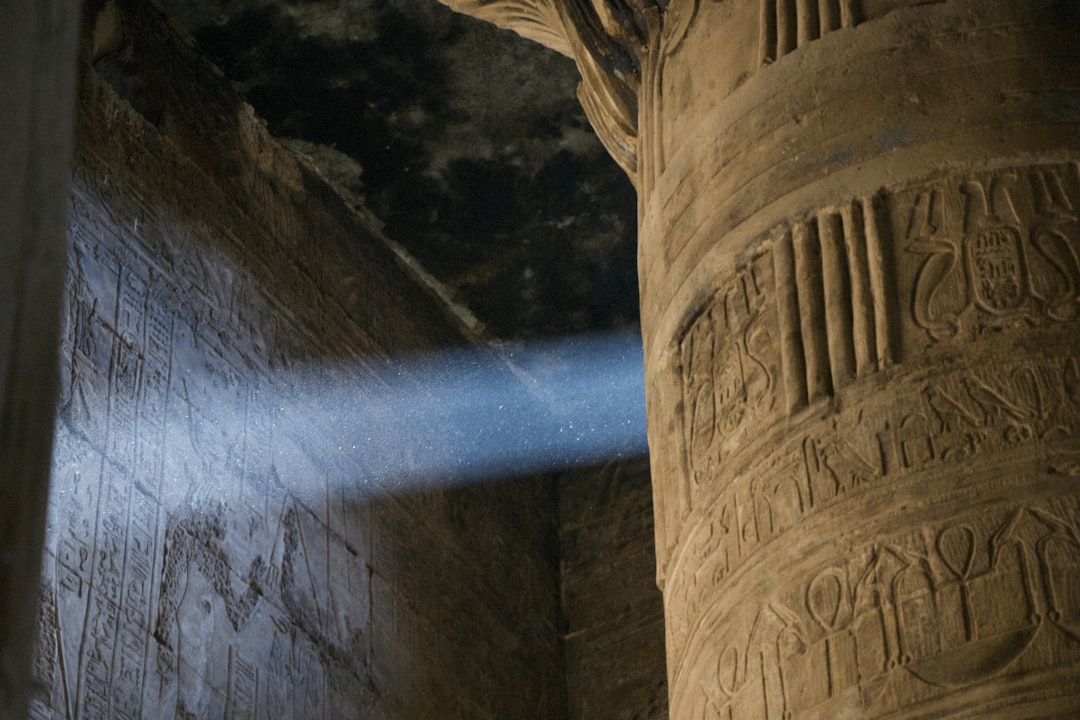
The human journey is a tapestry woven with threads of understanding, each strand representing accumulated knowledge passed down through generations. Yet, this tapestry is not uniformly vibrant. Throughout history, critical junctures reveal periods where this illuminated fabric has been deliberately dimmed, its intricate patterns obscured. The suppression of ancient knowledge, a phenomenon rooted in the dynamics of power and control, has repeatedly acted as a censor, preventing the full spectrum of human intellectual heritage from reaching subsequent eras. This article examines the mechanisms and motivations behind such suppressions, illustrating how the control of information has been a potent tool for maintaining societal hierarchies and shaping collective narratives.
The allure of knowledge is undeniable; it is the bedrock upon which progress is built, the lens through which societies understand themselves and their place in the cosmos. However, for those who wield power, knowledge can also represent a profound threat. Unfettered access to information can empower individuals, challenge established doctrines, and illuminate paths to alternative social structures. Consequently, the suppression of ancient knowledge is not a random act of cultural vandalism but a calculated strategy employed by ruling elites, religious institutions, and nascent political regimes to solidify their authority and perpetuate their dominance. Imagine a meticulously constructed edifice of power. Knowledge, especially that which questions the foundations of this edifice, becomes a dangerous tremor, capable of causing cracks and eventual collapse. Thus, the act of suppression is akin to shoring up those foundations by removing any structural elements that could undermine them.
Dissent and the Undermining of Authority
Ancient texts and traditions often contain philosophical systems, ethical frameworks, and historical accounts that can offer powerful critiques of contemporary power structures. When these alternative perspectives become widely accessible, they can inspire doubt and foster dissent among the populace. Those in power, acutely aware of this potential, often move to silence or discredit sources of knowledge that champion different forms of societal organization or individual autonomy. This could manifest as the burning of libraries, the persecution of scholars, or the deliberate reinterpretation of texts to align with prevailing ideologies. The aim is to ensure that the prevailing narrative, the one that legitimizes the current rulers, remains unchallenged and unchallenged.
The Preservation of Ideological Purity
Many power structures, particularly those with a strong religious or ideological component, rely on a fixed and unquestionable dogma. Ancient knowledge that contradicts or expands upon these established beliefs can be seen as heretical or corrupting. The suppression of such knowledge becomes a vital act of ideological preservation. By excising or isolating inconvenient truths, the ruling body ensures that its followers remain within the confines of the accepted worldview, preventing the introduction of concepts that might sow confusion or weaken faith. This is akin to a gardener pruning away any branches that do not conform to the desired shape of the tree, ensuring a uniform and controllable growth.
Economic and Political Advantage
The control of specific forms of knowledge can also be directly linked to economic and political advantage. For instance, ancient agricultural techniques, medicinal practices, or astronomical observations that confer a practical advantage might be hoarded by a ruling class to maintain their prosperity or strategic superiority. Similarly, historical accounts that legitimize a particular lineage or conquest might be suppressed if they challenge the current power dynamic. The distribution of knowledge, in these instances, is not for the benefit of all, but a tool to reinforce the existing economic and political stratification.
Throughout history, the suppression of ancient knowledge has often been attributed to various political, religious, and social factors that sought to control the narrative of human understanding. A related article that delves deeper into this topic can be found at Real Lore and Order, which explores how certain civilizations and institutions have intentionally obscured or destroyed valuable wisdom to maintain power and influence over the masses. This examination reveals the ongoing struggle between enlightenment and ignorance, highlighting the importance of rediscovering and preserving ancient insights for future generations.
Manifestations of Suppression: From Eradication to Obfuscation
The methods employed to suppress ancient knowledge are as varied as the knowledge itself. While outright destruction represents the most dramatic form of erasure, more insidious techniques involve distortion, selective reproduction, and the deliberate neglect of valuable information. These methods often work in concert, creating a web of obfuscation that makes the retrieval and understanding of suppressed knowledge exceptionally challenging. The forest floor, rich with forgotten seeds, can be cleared by fire, or simply by being paved over with more recent, less fertile growth.
The Burning of Libraries and Texts
Throughout history, the pyre has been a recurring symbol of intellectual destruction. The burning of libraries, such as the catastrophic loss of the Library of Alexandria, represents a direct and devastating assault on accumulated knowledge. These acts were often motivated by political expediency, religious fervor, or the desire to eliminate evidence of past transgressions or alternative beliefs. The ashes of burned manuscripts represent not just the loss of paper and ink, but the silencing of countless voices and centuries of inquiry.
The Great Library of Alexandria: A Symbol of Loss
The Library of Alexandria, one of the most significant centers of learning in the ancient world, suffered multiple destructions throughout its history. While the exact circumstances of its demise are debated, the cumulative loss of its vast collection of scrolls and texts represents an immeasurable void in our understanding of ancient scholarship, science, and literature. Its destruction serves as a potent reminder of the fragility of knowledge when faced with conflict and political instability.
The Persecution of Scholars and Custodians of Knowledge
Beyond the destruction of physical texts, the individuals who possessed and disseminated knowledge were also prime targets for suppression. Scholars, philosophers, shamans, and oral historians who held or transmitted dissenting or inconvenient information often faced persecution, exile, or even execution. The removal of these living repositories of knowledge effectively cut off the channels through which this information could be passed to future generations. This is akin to silencing the skilled craftspeople who hold the secrets of their trade, thereby preventing the continuation of their art.
Socrates: A Philosophical Martyr
The trial and execution of Socrates by the Athenian democracy is a stark example of how intellectual dissent could be met with lethal force. Accused of impiety and corrupting the youth, Socrates’ relentless questioning of established norms and his pursuit of truth, even when it challenged popular beliefs, ultimately led to his condemnation. His death underscored the danger that independent philosophical inquiry posed to the established social and political order.
The Deliberate Obfuscation and Reinterpretation of Texts
When direct destruction was not feasible or desirable, the suppression of ancient knowledge often took the form of deliberate obfuscation and reinterpretation. Texts could be selectively excerpted, key passages removed, or entire works distorted to fit a new ideological agenda. This allowed existing structures of power to co-opt or neutralize potentially disruptive knowledge by presenting it in a palatable, recontextualized form. Think of water that has been purposefully muddied to obscure its clarity.
The Role of Scribes and Translators
In societies where literacy was not widespread, scribes and translators held significant power in shaping the interpretation of written documents. Rulers could employ these individuals to subtly alter texts during the copying or translation process, ensuring that the disseminated version reinforced their authority rather than challenging it. This was a silent, insidious form of control, working beneath the surface of public perception.
The Promotion of a Dominant Narrative Through Controlled Education
Formal and informal educational systems have always been crucial for transmitting knowledge. When these systems are controlled by a ruling elite, they become powerful engines for propagating a specific worldview and suppressing alternative perspectives. Ancient knowledge that does not align with the officially sanctioned narrative is simply omitted from curricula, relegated to obscure footnotes, or presented in a demeaning light. This systematic exclusion ensures that future generations are indoctr ביותר with only the approved versions of history and understanding.
The Echoes of Suppression: Navigating the Lost Archives
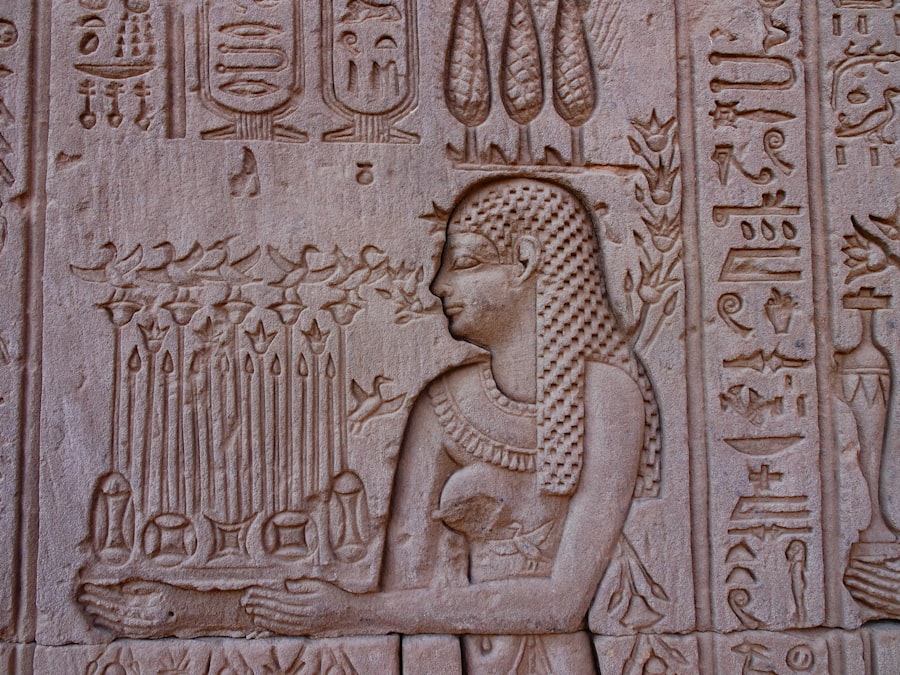
The ramifications of suppressed ancient knowledge are profound and far-reaching. The loss of scientific discoveries, philosophical insights, and historical understandings has arguably hampered human progress, leading to cyclical patterns of error and repeated intellectual detours. Discovering and reconstructing these lost archives is a continuous intellectual endeavor, a quest to reclaim fragments of our collective past.
The Loss of Scientific and Technological Advancements
Many ancient civilizations possessed sophisticated knowledge of astronomy, medicine, mathematics, and engineering that, if retained, could have accelerated scientific and technological development. The suppression or loss of this knowledge resulted in periods where humanity had to rediscover principles that had already been mastered centuries prior. This represents a stalled trajectory of progress, akin to a ship forced to sail without its navigational charts.
Ancient Agricultural Techniques
Evidence suggests that various ancient cultures developed advanced agricultural techniques, including sophisticated irrigation systems, crop rotation methods, and soil enrichment practices. The loss or suppression of this knowledge could have contributed to periods of famine and agricultural inefficiency in subsequent eras, highlighting the practical consequences of intellectual amnesia.
The Muting of Alternative Philosophies and Spiritual Traditions
Beyond the practical sciences, ancient knowledge encompasses a rich tapestry of philosophical thought and spiritual practices that offered diverse perspectives on the human condition, ethics, and the nature of reality. The suppression of these traditions often led to a homogenization of thought, limiting the intellectual landscape and potentially contributing to social and spiritual impoverishment. This is like living in a garden with only one species of flower, when a diverse ecosystem of ideas could have bloomed.
Indigenous Wisdom and Oral Traditions
Many indigenous cultures around the world possessed intricate knowledge systems, passed down through oral traditions, concerning their environments, social structures, and spiritual beliefs. The colonization and suppression of these cultures often resulted in the decimation of this invaluable knowledge, severing vital links between humanity and the natural world.
The Distortion of Historical Narratives
The deliberate suppression or manipulation of historical accounts has consistently served to legitimize the power of ruling groups. By erasing or distorting the narratives of marginalized peoples or inconvenient events, those in power can construct a history that supports their present-day claims and reinforces their authority. This creates a warped mirror reflecting only a partial and self-serving reality.
The Erasure of Women’s Contributions
Throughout history, the contributions of women to science, philosophy, art, and governance have often been systematically overlooked, suppressed, or attributed to men. This has resulted in a skewed understanding of historical progress and a persistent underestimation of female intellectual capacity. The narrative often presented is like a play with only male actors on stage, with the female characters relegated to the shadows.
The Modern Manifestations of Ancient Knowledge Suppression
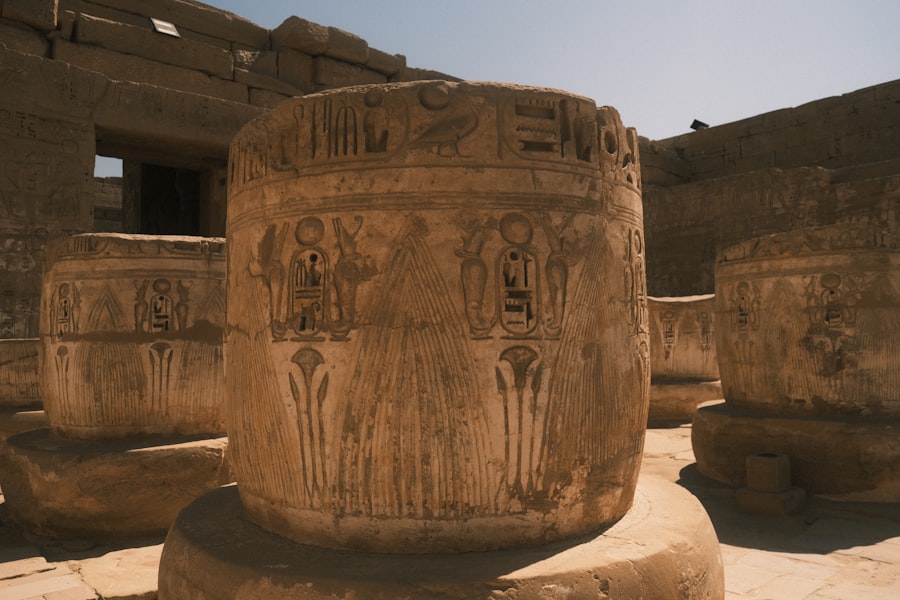
While the book burnings and persecutions of antiquity may seem like relics of the past, the underlying mechanisms of power and control continue to operate in contemporary times. The forms of suppression have evolved, leveraging new technologies and sophisticated discourse to maintain ideological dominance and control the flow of information. The same hunger for control persists, merely finding new avenues for expression.
The Weaponization of Information in the Digital Age
The digital age, while democratizing information access in many ways, also presents new opportunities for suppression. State-sponsored disinformation campaigns, algorithmic manipulation of search results, and the selective censorship of online content can effectively bury inconvenient truths or promote favored narratives. This creates an echo chamber where only authorized ideas reverberate.
Filter Bubbles and Algorithmic Bias
Social media algorithms and personalized news feeds can create “filter bubbles” that expose individuals primarily to information that confirms their existing beliefs, effectively shielding them from dissenting viewpoints. This unconscious suppression of alternative perspectives can reinforce existing biases and make individuals more susceptible to manipulation.
The Intellectual Property and Corporate Control of Knowledge
In the modern era, knowledge itself has become a commodity, subject to intellectual property laws and corporate control. The patenting of scientific discoveries and the proprietary nature of certain data can restrict access to vital information, hindering further research and innovation, and creating artificial barriers to advancement. This is like a fortress guarding a fertile valley, preventing others from cultivating its bounty.
The Cost of Access to Research
The exorbitant cost of accessing academic journals and research papers by major publishers can create significant barriers for students, independent researchers, and institutions in less affluent regions. This economic suppression of knowledge limits the participation in and contribution to the global intellectual discourse.
The Reemergence and Reclamation of Suppressed Narratives
Despite centuries of suppression, ancient knowledge is rarely truly lost. Fragments endure in oral traditions, rediscovered texts, and the persistent memories of communities. Increasingly, there is a global effort to reclaim, translate, and disseminate this lost heritage, challenging dominant narratives and enriching our understanding of human history and potential. This is like a stubborn root pushing through concrete, seeking the light.
The Work of Independent Scholars and Activists
A dedicated cadre of independent scholars, archaeologists, linguists, and activists are at the forefront of uncovering and disseminating previously suppressed knowledge. Their work often involves painstaking research, cross-cultural collaboration, and the advocacy for greater transparency and access to historical archives. They are the archaeologists of buried ideas.
Throughout history, the suppression of ancient knowledge has often been attributed to various political, religious, and social factors that sought to maintain control over the populace. For instance, many scholars argue that the rise of organized religion played a significant role in diminishing the value of pre-existing wisdom, as it conflicted with dogmatic beliefs. This topic is explored in greater depth in a related article that discusses the implications of such suppression and its impact on modern society. You can read more about this intriguing subject in the article found here. Understanding these dynamics can shed light on how the past continues to influence our present and future.
Conclusion: The Ongoing Struggle for Illuminated Understanding
| Reason for Suppression | Description | Historical Examples | Impact on Society |
|---|---|---|---|
| Religious Control | Authorities suppressed knowledge that contradicted religious doctrines to maintain power and influence. | Burning of the Library of Alexandria, Index Librorum Prohibitorum by the Catholic Church | Loss of scientific and philosophical advancements, slowed intellectual progress |
| Political Power | Rulers suppressed knowledge that threatened their authority or challenged the status quo. | Destruction of Mayan codices by Spanish conquistadors, censorship in totalitarian regimes | Restricted public awareness, maintained authoritarian control |
| Economic Interests | Knowledge was suppressed to protect trade secrets or monopolies held by certain groups. | Guild restrictions in medieval Europe, suppression of alchemical knowledge | Delayed technological innovation, limited competition |
| Cultural Dominance | Dominant cultures suppressed indigenous or rival knowledge to assert superiority. | Colonial suppression of native knowledge systems, destruction of indigenous manuscripts | Loss of cultural heritage, homogenization of knowledge |
| Fear of Social Upheaval | Knowledge that could inspire rebellion or social change was suppressed to maintain order. | Censorship of revolutionary texts, suppression of scientific ideas like heliocentrism | Delayed social reforms, maintained existing hierarchies |
The suppression of ancient knowledge is not merely a historical footnote but a recurring theme in the human story, intimately tied to the enduring tension between power and freedom of thought. Throughout history, those who sought to maintain control have recognized the potent threat posed by unverified, alternative, or challenging forms of understanding. From the burning of libraries to the subtle manipulation of digital information, the methods have evolved, but the underlying motivation—to safeguard existing hierarchies and shape collective consciousness—remains remarkably consistent.
As readers, it is imperative to understand that the pursuit of knowledge is an active and often ongoing struggle. The archives of human understanding are not static vaults but dynamic landscapes constantly subject to revision, interpretation, and, unfortunately, suppression. The task before us is to remain vigilant, to critically engage with the information we consume, and to champion the open access and preservation of all forms of knowledge. By actively seeking out the obscured narratives, questioning the dominant discourse, and supporting the work of those who tirelessly reclaim our lost intellectual heritage, we contribute to a more illuminated understanding of ourselves and our collective past. The tapestry of human knowledge is vast and intricate; it is our responsibility to ensure that every thread, no matter how faint, is allowed to shine.
STOP: Why They Erased 50 Impossible Inventions From Your Textbooks
FAQs
1. What does it mean that ancient knowledge was suppressed?
Suppression of ancient knowledge refers to the deliberate restriction, destruction, or concealment of information, texts, or discoveries from past civilizations. This often occurred due to political, religious, or cultural reasons, where certain groups sought to control or limit access to knowledge.
2. Who were responsible for suppressing ancient knowledge?
Various groups have been responsible for suppressing ancient knowledge throughout history, including religious authorities, political rulers, and colonial powers. For example, some religious institutions destroyed texts that contradicted their doctrines, while conquering empires sometimes destroyed or hid the knowledge of the cultures they dominated.
3. Why was ancient knowledge suppressed?
Ancient knowledge was often suppressed to maintain power, control populations, or prevent the spread of ideas considered dangerous or heretical. Suppressing knowledge could also be motivated by fear of losing authority or to eliminate competing belief systems and cultural practices.
4. What are some examples of suppressed ancient knowledge?
Examples include the burning of the Library of Alexandria, which housed vast amounts of ancient texts; the destruction of Mayan codices by Spanish conquistadors; and the banning of certain philosophical or scientific works during the Middle Ages in Europe.
5. How has suppressed ancient knowledge been recovered or rediscovered?
Suppressed ancient knowledge has been recovered through archaeological discoveries, translation of ancient manuscripts, and the study of surviving texts preserved in other cultures or languages. Modern technology, such as digital imaging and carbon dating, has also helped scholars uncover and authenticate lost knowledge.