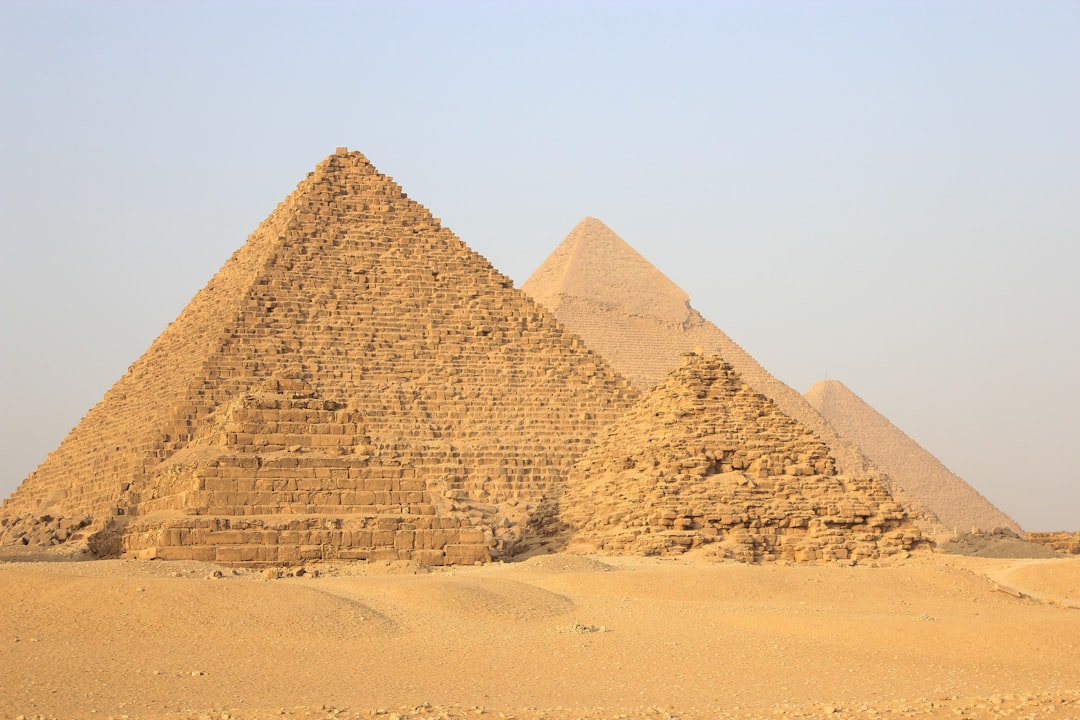
Pyramids have long been associated with the burial practices of ancient civilizations, particularly in Egypt. However, their purpose extends far beyond mere tombs for pharaohs and elite individuals. These monumental structures served as a testament to the power and divine status of rulers, acting as a bridge between the earthly realm and the afterlife.
The pyramids were designed to facilitate the journey of the deceased into the next world, ensuring that their spirit would ascend to the heavens and join the gods. This belief in an afterlife was central to ancient Egyptian culture, and the pyramids were constructed with intricate care to reflect this spiritual significance. Moreover, the pyramids functioned as symbols of national identity and unity.
They were not only architectural feats but also representations of the collective effort of a society working towards a common goal. The construction of these grand structures required immense resources, labor, and organization, showcasing the capabilities of ancient civilizations. Thus, while they served as burial sites, their purpose was multifaceted, embodying religious beliefs, political power, and social cohesion.
Discover the secrets behind the
Despite extensive research, many mysteries still shroud the construction of pyramids. One of the most enduring questions is how ancient builders managed to transport and position such massive stones with limited technology. Various theories have been proposed, ranging from the use of sledges and lubricated pathways to complex ramp systems that allowed workers to elevate stones to great heights.
However, no single explanation has been universally accepted, leaving room for speculation and further investigation. Additionally, the workforce behind these monumental projects remains a topic of debate. While it was once believed that slaves were primarily responsible for pyramid construction, recent evidence suggests that skilled laborers were organized into teams and worked on a rotating basis.
These workers were likely well-fed and housed near the construction sites, indicating that their labor was valued rather than exploited. This shift in understanding highlights the complexity of pyramid construction and the social dynamics at play during this monumental endeavor.
The Symbolism and Significance of Pyramid Shapes
The shape of pyramids carries profound symbolism that transcends their physical form. The triangular structure is often interpreted as a representation of the rays of the sun, connecting the earth with the heavens. In ancient Egyptian belief, this connection was vital for the pharaohs, who were seen as divine intermediaries between gods and humans.
The pyramid’s apex pointed towards the sky, symbolizing the pharaoh’s ascent to join the gods in the afterlife. Furthermore, pyramids can be viewed as embodiments of stability and permanence. Their broad bases provide a solid foundation, while their tapering tops suggest an upward movement towards enlightenment and divinity.
This duality reflects the ancient Egyptians’ understanding of life and death, where earthly existence is grounded in reality while spiritual aspirations reach for the divine.
The Alignment of Pyramids with Astronomical Events
| Metric | Data/Observation | Implication |
|---|---|---|
| Number of Mummies Found | Very few or no royal mummies discovered inside pyramids | Suggests pyramids were not primarily used as tombs |
| Burial Artifacts | Lack of typical burial goods inside pyramids | Indicates pyramids may have had a different function than burial |
| Internal Chamber Design | Complex passageways and chambers with no clear burial chamber | Points to symbolic or ritualistic purposes rather than tombs |
| Historical Records | Ancient texts rarely mention pyramids as tombs | Challenges traditional view of pyramids as burial sites |
| Decay and Looting Evidence | Many pyramids show signs of early looting and no intact burials | Could mean pyramids were not designed to protect tombs |
| Alternative Theories | Proposals include pyramids as power plants, astronomical observatories, or spiritual centers | Supports the idea pyramids had multifunctional or symbolic roles |
The alignment of pyramids with celestial bodies is another fascinating aspect that underscores their significance in ancient cultures. Many pyramids are oriented towards specific stars or constellations, suggesting that their builders possessed advanced astronomical knowledge. For instance, the Great Pyramid is aligned with remarkable precision to true north, while other pyramids are oriented towards significant stars such as Sirius or Orion’s Belt.
This alignment likely held great importance for ancient Egyptians, who closely observed celestial movements as part of their agricultural calendar and religious practices. The rising and setting of stars marked critical times for planting and harvesting crops, while certain celestial events were believed to influence spiritual occurrences. By aligning their monumental structures with these astronomical phenomena, ancient builders not only demonstrated their understanding of the cosmos but also reinforced their cultural beliefs about life, death, and rebirth.
The Function of Pyramids in Ancient Egyptian Society
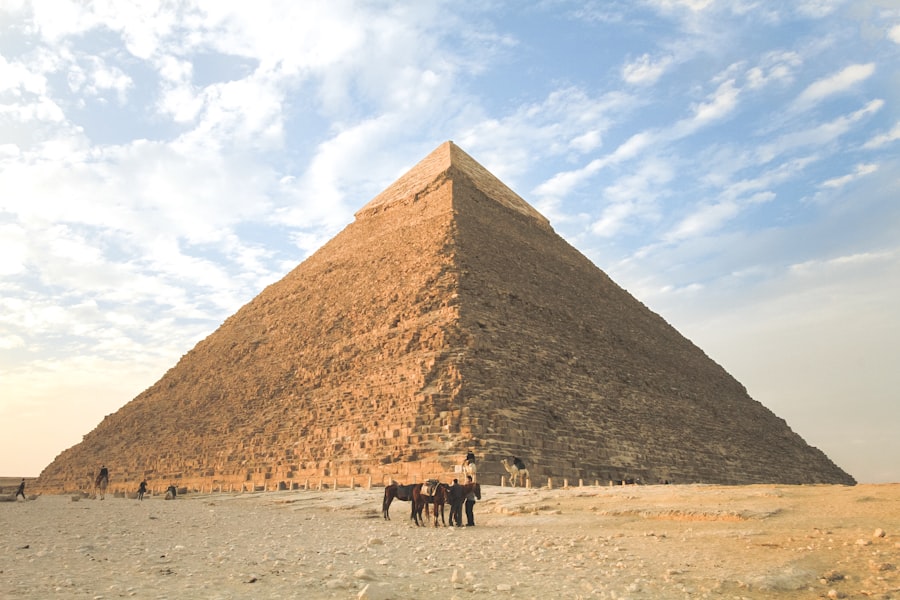
Pyramids played a crucial role in ancient Egyptian society beyond their function as tombs or religious symbols. They served as focal points for community gatherings and rituals, reinforcing social cohesion among the populace. The construction process itself involved thousands of workers from various backgrounds, fostering a sense of unity as they collaborated on a monumental project that would stand for millennia.
Additionally, pyramids acted as centers for economic activity. The resources required for their construction stimulated trade and labor markets within ancient Egypt. Quarrying stone, transporting materials, and providing food for workers created a network of economic interdependence that benefited local communities.
As such, pyramids were not merely isolated structures; they were integral to the social fabric and economic vitality of ancient Egyptian civilization.
Pyramids in Other Cultures and Civilizations
While pyramids are most famously associated with ancient Egypt, similar structures can be found in various cultures around the world. The Mesoamerican civilizations, such as the Maya and Aztecs, constructed step pyramids that served both religious and ceremonial purposes. These structures often featured temples at their summits where rituals were performed to honor deities or commemorate significant events.
In addition to Mesoamerica, pyramidal structures have been discovered in places like Sudan and China. The Nubian pyramids in Sudan are notable for their unique design and smaller scale compared to their Egyptian counterparts. Meanwhile, in China, pyramid-like tombs have been found that reflect similar burial practices among ancient dynasties.
These cross-cultural similarities highlight a shared human inclination towards monumental architecture as a means of expressing beliefs about life, death, and spirituality.
The Spiritual and Religious Importance of Pyramids
The spiritual significance of pyramids cannot be overstated; they were deeply intertwined with religious beliefs in ancient cultures. In Egypt, pyramids were seen as gateways to the afterlife, where pharaohs would ascend to join the gods after death. This belief system dictated not only how pyramids were constructed but also how they were adorned with inscriptions and artwork depicting scenes from the Book of the Dead—a guide for navigating the afterlife.
In other cultures as well, pyramidal structures served as sacred spaces where rituals took place. For instance, Mesoamerican pyramids often hosted ceremonies involving offerings to gods or ancestral spirits. These practices underscored the belief that such structures were not merely physical edifices but rather conduits for spiritual energy and divine connection.
The Energy and Power of Pyramids
Beyond their physical presence and spiritual significance, many believe that pyramids possess unique energy properties. Some theorists suggest that their geometric shape creates a specific energy field that can influence both physical matter and human consciousness. This idea has led to various experiments aimed at harnessing this energy for healing or meditation purposes.
While scientific validation remains elusive, anecdotal evidence from individuals who have spent time near or within pyramidal structures often speaks to feelings of heightened awareness or tranquility. This perception adds another layer to the allure of pyramids—transforming them from mere historical artifacts into symbols of potential energy and power that resonate with those who seek deeper connections with themselves or the universe.
Modern Discoveries and Research on Pyramids
In recent years, advancements in technology have led to exciting discoveries regarding pyramids that continue to reshape our understanding of these ancient structures. Non-invasive techniques such as ground-penetrating radar have revealed hidden chambers within some pyramids that were previously unknown. These findings suggest that there may be more to learn about how these monumental structures were used or what they contained.
Additionally, ongoing archaeological excavations continue to uncover artifacts that provide insight into daily life during the time when these pyramids were built. From tools used by laborers to ceremonial objects placed within tombs, each discovery adds depth to our understanding of ancient societies and their relationship with these iconic structures.
The Legacy and Influence of Pyramids on Society
The legacy of pyramids extends far beyond their original contexts; they have influenced art, architecture, and culture throughout history. Their iconic shape has inspired countless artists and architects across different eras—from neoclassical buildings in Europe to modern interpretations in contemporary design. Pyramids have become symbols of human achievement and aspiration, representing both physical endurance and spiritual enlightenment.
Moreover, they continue to captivate imaginations worldwide—drawing tourists eager to witness these wonders firsthand while inspiring countless works of literature and film that explore themes related to mystery, power, and transcendence. As such, pyramids remain not only monuments to ancient civilizations but also enduring symbols that resonate with humanity’s quest for meaning across time and space.
Many researchers have proposed alternative theories regarding the purpose of the pyramids, suggesting that they were not merely tombs for pharaohs but served other significant functions. For a deeper exploration of this topic, you can read the article on this subject at this link. This article delves into various hypotheses, including the idea that the pyramids may have been used for astronomical observations or as centers for religious rituals, challenging the traditional view of these monumental structures.
WATCH THIS! 🔺 THEY LIED ABOUT THE PYRAMIDS — Here’s The Real Truth 🤯
FAQs
Why were pyramids traditionally thought to be tombs?
Pyramids, especially those in Egypt, were long believed to be tombs because they contained burial chambers and were associated with pharaohs, who were often buried with treasures and artifacts for the afterlife.
If pyramids weren’t tombs, what were they used for?
Some theories suggest that pyramids served as ceremonial or religious structures, astronomical observatories, or symbols of political power rather than solely as burial sites.
What evidence challenges the idea that pyramids were tombs?
Archaeologists have found that many pyramids lack typical burial artifacts, such as mummies or grave goods, and some burial chambers appear empty or unfinished, suggesting alternative purposes.
Did all pyramids serve the same function?
No, pyramid functions likely varied by culture and time period. While Egyptian pyramids are often linked to burial, other pyramid-like structures in Mesoamerica and elsewhere had different ceremonial or social roles.
How do modern archaeologists study the purpose of pyramids?
Researchers use a combination of archaeological excavation, analysis of artifacts, architectural studies, and advanced technologies like ground-penetrating radar to understand pyramid functions.
Are there any pyramids confirmed to be tombs?
Yes, some pyramids, such as the Pyramid of Djoser and the Great Pyramid of Giza, contain burial chambers and evidence of funerary practices, supporting their use as tombs in certain cases.
What alternative theories exist about pyramid construction?
Alternative theories propose that pyramids were built as energy generators, astronomical calendars, or centers for religious rituals, though these ideas are often debated within the academic community.
Why is the question of pyramid function important?
Understanding the true purpose of pyramids helps historians and archaeologists gain insight into ancient civilizations’ beliefs, social structures, and technological capabilities.