
The decline and collapse of empires represents a recurring pattern throughout human history that continues to attract scholarly attention across multiple disciplines. Historical analysis reveals that empires typically experience periods of territorial expansion and political dominance before entering phases of gradual or rapid decline. This process involves the deterioration of administrative control over distant territories, the weakening of economic systems, and the diminishing of cultural and political influence beyond core regions.
The collapse of empires results from complex interactions between internal and external factors. Internal causes commonly include administrative inefficiency, economic strain from maintaining extensive territories, social unrest, succession crises, and the inability to adapt to changing circumstances. External pressures often involve military conflicts with rival powers, invasions by neighboring groups, economic competition, and shifts in trade routes or technological advantages that favor competitors.
Research into imperial decline provides analytical frameworks for understanding contemporary geopolitical dynamics.
These patterns offer relevant insights for examining current international relations, the sustainability of modern state systems, and the challenges facing contemporary global powers in maintaining their influence and territorial integrity.
Key Takeaways
- Empires vanish due to a combination of internal conflicts, economic decline, and external pressures.
- Historical case studies reveal patterns of imperial overstretch and cultural shifts leading to collapse.
- External forces such as invasions and geopolitical competition significantly accelerate empire downfall.
- The legacy of vanished empires influences modern political, social, and cultural structures.
- Understanding past empire declines offers crucial lessons for current and future global powers to avoid similar fates.
Factors that contribute to the disappearance of empires
Several factors contribute to the decline and eventual disappearance of empires, each interwoven with the others in complex ways. One primary factor is overextension, where an empire stretches its resources too thin across vast territories. This often leads to logistical challenges, making it difficult to maintain control over distant lands.
As communication and transportation become strained, the central authority may struggle to respond effectively to local issues, resulting in unrest and rebellion. The Roman Empire serves as a classic example of this phenomenon; its vast expanse made it increasingly difficult to manage effectively, ultimately leading to its fragmentation. Another significant factor is economic instability.
Empires often rely on a robust economy to sustain their military and administrative apparatus. When economic conditions deteriorate—due to war, resource depletion, or trade disruptions—the empire’s ability to project power diminishes. This economic decline can create a vicious cycle; as resources dwindle, so does the capacity to maintain order and defend against external threats.
The Ottoman Empire experienced such economic challenges in its later years, contributing to its gradual disintegration as it struggled to compete with rising European powers.
Case studies of historical empires that have vanished

Throughout history, numerous empires have vanished, each offering unique lessons about the dynamics of power and decline. The Aztec Empire, for instance, was a formidable force in Mesoamerica until the arrival of Spanish conquistadors in the early 16th century. The combination of superior weaponry, strategic alliances with rival tribes, and the introduction of diseases decimated the Aztec population and led to their swift downfall.
This case illustrates how external forces can dramatically alter the fate of an empire, often in ways that are unforeseen by its leaders. Similarly, the Soviet Union provides a more contemporary example of an empire that vanished under the weight of internal contradictions and external pressures. Established as a superpower after World War II, the Soviet Union faced mounting economic challenges, political corruption, and a growing desire for independence among its constituent republics.
The eventual collapse in 1991 was precipitated by a combination of these internal factors and external pressures from Western nations during the Cold War. The dissolution of the Soviet Union not only marked the end of an empire but also reshaped global geopolitics in profound ways.
The role of external forces in the downfall of empires
External forces play a crucial role in the downfall of empires, often acting as catalysts for change that internal dynamics alone cannot achieve. Military invasions, economic sanctions, and diplomatic isolation can all contribute to an empire’s decline. For instance, the British Empire faced significant challenges during World War II when its resources were stretched thin by global conflict.
The war not only weakened Britain’s military might but also emboldened independence movements within its colonies. The subsequent decolonization process was largely driven by external pressures from both nationalist movements and changing global attitudes toward imperialism. Moreover, competition from rival powers can significantly impact an empire’s stability.
The rise of new powers often leads to conflicts that can drain resources and divert attention from governance. The Spanish Empire’s decline in the 17th century can be attributed in part to competition from England and France, which sought to expand their own colonial holdings at Spain’s expense. This external competition forced Spain into costly military engagements that further weakened its grip on its territories.
The impact of internal conflicts on the collapse of empires
| Factor | Description | Impact on Historical Record | Examples |
|---|---|---|---|
| Conquest and Overwriting | New empires conquer and replace previous regimes, rewriting history to favor themselves. | Erasure or alteration of previous empire’s records and monuments. | Roman Empire replacing Carthaginian records; Mongol Empire rewriting histories of conquered lands. |
| Destruction of Records | Deliberate destruction of documents, inscriptions, and artifacts. | Loss of primary sources leading to gaps in historical knowledge. | Burning of Library of Alexandria; Qin dynasty’s book burnings. |
| Cultural Assimilation | Absorption of one culture into another, diluting distinct identity. | Blurring or loss of unique cultural markers in history. | Hellenization of Near East; Romanization of Gaul. |
| Bias in Historical Writing | Historians favor dominant powers, ignoring or minimizing others. | Skewed historical narratives that marginalize certain empires. | Eurocentric histories ignoring African empires; colonial narratives. |
| Oral Traditions Lost | Empires relying on oral history lose records when traditions fade. | Disappearance of entire histories without written documentation. | Many indigenous empires in the Americas and Africa. |
| Natural Decay and Time | Physical degradation of artifacts and sites over centuries. | Loss of tangible evidence, making reconstruction difficult. | Ruins of Mesopotamian cities; faded inscriptions of Indus Valley. |
Internal conflicts are another critical factor contributing to the collapse of empires. These conflicts can manifest in various forms, including civil wars, ethnic strife, and political dissent. When an empire is unable to manage internal divisions effectively, it risks fracturing from within.
The Roman Empire faced numerous internal challenges during its later years, including power struggles among emperors and widespread corruption within its administration. These issues undermined public trust and loyalty, leading to revolts and further destabilization. The fragmentation of empires often occurs when different groups within the empire seek autonomy or independence.
The Austro-Hungarian Empire is a prime example; its diverse population comprised various ethnic groups with distinct identities and aspirations. As nationalist sentiments grew in the 19th century, internal tensions escalated, ultimately contributing to the empire’s dissolution after World War
Economic and social factors that lead to the decline of empires
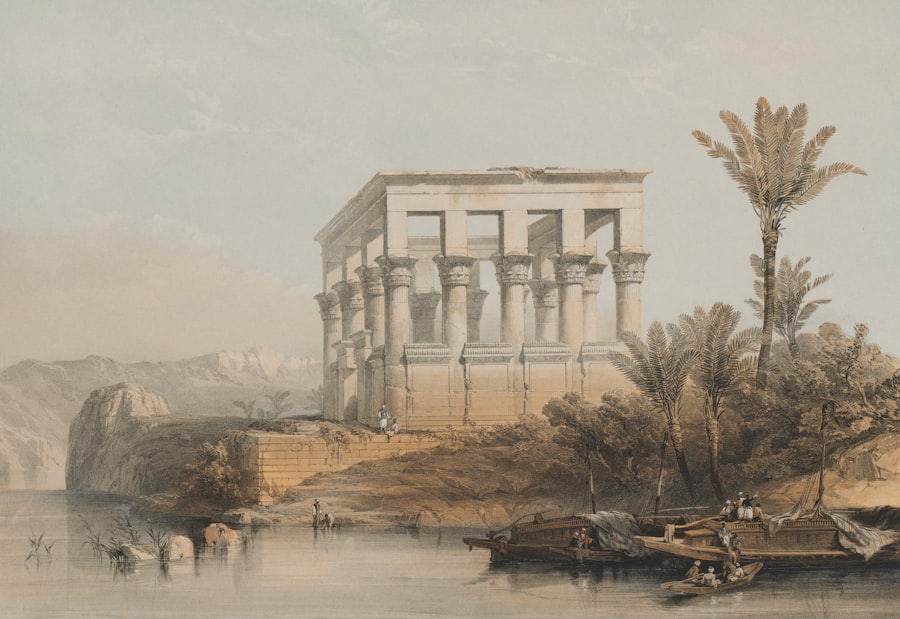
Economic and social factors are deeply intertwined with the decline of empires, influencing their stability and longevity. A declining economy can lead to social unrest as citizens become disillusioned with their leaders’ ability to provide for their needs. In many cases, economic downturns are exacerbated by poor governance or corruption within the ruling elite.
For example, the decline of the Mughal Empire in India was marked by economic mismanagement and heavy taxation that alienated local populations. As discontent grew among various social classes, it paved the way for uprisings that further weakened imperial authority. Social factors such as changing demographics can also play a significant role in an empire’s decline.
As populations shift due to migration or changing birth rates, empires may struggle to adapt to new social realities. The British Empire faced challenges in this regard as it attempted to govern increasingly diverse populations across its colonies. The inability to integrate different cultures and address their unique needs often led to tensions that undermined imperial cohesion.
The legacy of vanished empires on modern societies
The legacy of vanished empires continues to shape modern societies in profound ways. Many contemporary nations grapple with issues stemming from their imperial pasts, including questions of identity, governance, and social cohesion. The borders drawn during colonial times often ignored ethnic and cultural divisions, leading to ongoing conflicts in regions such as Africa and the Middle East.
These legacies serve as reminders of how imperial ambitions can have lasting repercussions long after an empire has disappeared. Furthermore, cultural influences from vanished empires persist in language, religion, art, and governance structures across the globe. For instance, the Roman Empire’s legal system has had a lasting impact on many modern legal frameworks in Europe and beyond.
Similarly, the spread of Christianity during European colonialism continues to influence religious practices worldwide. Understanding these legacies allows contemporary societies to navigate their histories while addressing ongoing challenges related to identity and governance.
The concept of “imperial overstretch” and its impact on empires
The concept of “imperial overstretch” refers to the phenomenon where an empire expands beyond its capacity to maintain control effectively. This idea has been articulated by various scholars who argue that overextension is a common precursor to imperial decline. When an empire attempts to govern vast territories without adequate resources or infrastructure, it risks losing control over its far-flung regions.
The British Empire’s experience during World War II exemplifies this concept; as it became embroiled in global conflict, its ability to manage its colonies diminished significantly. Imperial overstretch can also lead to strategic vulnerabilities that adversaries may exploit. For instance, during World War I, Germany’s attempts at rapid expansion strained its military resources and ultimately contributed to its defeat.
This notion underscores the importance of balance in imperial ambitions; while expansion may offer short-term gains, it can create long-term challenges that threaten an empire’s stability.
The role of cultural and ideological shifts in the disappearance of empires
Cultural and ideological shifts play a pivotal role in shaping the trajectory of empires throughout history. As societies evolve, so too do their values and beliefs about governance, identity, and power dynamics. The Enlightenment period marked a significant ideological shift in Europe that challenged traditional notions of monarchy and imperialism.
Ideas about democracy, self-determination, and human rights began to take root, leading many colonies to question their subjugation under imperial rule. The decline of empires often coincides with these cultural transformations as populations demand greater autonomy or reject oppressive systems altogether. The fall of colonial empires in the mid-20th century was fueled by a wave of anti-colonial sentiment that sought to dismantle imperial structures in favor of self-governance.
This ideological shift not only contributed to the disappearance of several empires but also reshaped global politics in ways that continue to resonate today.
The potential for empires to re-emerge or be replaced by new powers
While many empires have vanished throughout history, discussions about their potential re-emergence or replacement by new powers remain relevant today. In an increasingly interconnected world marked by globalization and shifting power dynamics, some argue that new forms of empire may emerge based on economic influence rather than territorial control. For instance, multinational corporations wield significant power that can rival traditional nation-states in terms of economic impact.
However, the lessons learned from past empires suggest that any resurgence must be approached with caution. The complexities involved in managing diverse populations and addressing socio-economic disparities remain pertinent challenges for any emerging power seeking dominance on a global scale. As history has shown time and again, those who fail to learn from past mistakes may find themselves repeating them.
Lessons to be learned from the vanishing act of empires for present and future global powers
The study of vanishing empires offers invaluable lessons for present and future global powers navigating an increasingly complex geopolitical landscape. One key takeaway is the importance of adaptability; successful powers must be willing to evolve in response to changing circumstances rather than clinging rigidly to outdated models of governance or expansionism. Empires that fail to adapt risk alienating their populations or becoming vulnerable to external threats.
Additionally, fostering inclusive governance structures that address diverse needs is crucial for maintaining stability within any power structure. Empires that prioritize dialogue over oppression are more likely to cultivate loyalty among their constituents rather than resentment or rebellion. Ultimately, understanding the dynamics behind vanishing empires equips contemporary leaders with insights necessary for navigating their own paths toward sustainable governance in an ever-changing world.
In conclusion, while history may be littered with examples of vanished empires, each case provides rich material for reflection on power dynamics across time and space. By examining these patterns—ranging from external pressures to internal conflicts—modern societies can glean valuable lessons about resilience amid change while striving toward more equitable futures free from imperial legacies.
A fascinating exploration of this phenomenon can be found in the article titled “The Rise and Fall of Great Civilizations,” which delves into the cyclical nature of empires and their eventual erasure from collective memory. For more insights, you can read the article [here](https://www.realloreandorder.com/sample-page/).
WATCH THIS! 🏛️ Empires Didn’t Collapse—They Got Erased: The Pattern Nobody Sees
FAQs
What does it mean for an empire to be erased from history?
It refers to the process by which the existence, achievements, or influence of an empire are minimized, forgotten, or deliberately omitted from historical records and collective memory.
How can empires get erased from historical narratives?
Empires can be erased through biased historical accounts, destruction of records, cultural assimilation, political agendas, or the dominance of other powers rewriting history to exclude or diminish them.
Are there examples of empires that have been erased or marginalized in history?
Yes, several empires such as the Kingdom of Kush, the Hittite Empire, and the Khmer Empire have been less emphasized or overlooked in mainstream historical narratives despite their significant contributions.
What role do historians and archaeologists play in preventing the erasure of empires?
Historians and archaeologists work to uncover, preserve, and interpret evidence from past civilizations, ensuring a more accurate and inclusive understanding of history that acknowledges all empires.
Can political or cultural biases influence how empires are recorded in history?
Yes, political and cultural biases often shape historical narratives, leading to selective emphasis or omission of certain empires based on contemporary values, power dynamics, or nationalistic agendas.
How does the erasure of empires affect modern understanding of history?
It can lead to incomplete or skewed perspectives, underappreciation of cultural diversity, and a lack of recognition for the contributions of various civilizations to human development.
Is it possible to recover the history of erased empires?
Yes, through ongoing research, archaeological discoveries, and critical re-examination of sources, historians can reconstruct and reintegrate the histories of marginalized or forgotten empires.