
Throughout human history, the sun and moon have held an undeniable fascination, their regular cycles providing the backdrop for life itself. Among their grandest displays, eclipses, those cosmic ballets of light and shadow, have long captivated observers. Before the advent of modern astronomy and precise predictive models, ancient civilizations embarked on ambitious endeavors to understand and anticipate these celestial events. This article delves into the ingenious methods employed by early humans to track eclipses, highlighting their astronomical prowess and enduring legacy.
Ancient societies, bound to the rhythms of the natural world, invested significant effort in observing celestial phenomena. The dramatic obscuration of the sun or the reddening of the moon would have been events of profound significance, often interpreted as divine omens or supernatural occurrences. However, amidst the awe and fear, astute observers began to discern patterns.
The Rhythmic Motions of Celestial Bodies
The sun’s predictable path across the sky, marking the seasons, and the moon’s consistent phases, governing tides and ritual calendars, were the foundational pillars of ancient astronomy. Through meticulous, long-term observation, early sky-gazers recognized the periodicity of these movements. This foundational understanding was crucial for any attempt to predict eclipses. They saw the sky as a grand clock, and its hands, the sun and moon, moved with a regularity that, once understood, could unlock powerful knowledge.
The Role of Oral Traditions and Pictographs
Before written languages were fully developed, knowledge of celestial patterns was passed down through generations via oral traditions. Storytelling, often intertwined with myths and religious narratives, served as a powerful mnemonic device for preserving astronomical data. Furthermore, pictographs and petroglyphs found in various ancient sites across the globe depict astronomical symbols, sometimes interpreted as early attempts to record celestial alignments or significant events like eclipses. These visual records offered a tangible, if often symbolic, representation of their understanding.
Ancient humans had a remarkable ability to observe and track celestial events, including eclipses, which played a significant role in their understanding of the cosmos. They developed various methods to predict these occurrences, often linking them to agricultural cycles and religious practices. For a deeper exploration of how ancient civilizations recorded and interpreted eclipses, you can read the article found at this link.
Calendrical Systems and Eclipse Cycles
The development of sophisticated calendrical systems was a pivotal step in predicting eclipses. By accurately tracking the passage of time, ancient civilizations could identify recurring patterns in celestial movements that foreshadowed these events.
The Saros Cycle
One of the most remarkable discoveries in ancient astronomy was the Saros cycle. This period of approximately 18 years, 11 days, and 8 hours (or 223 synodic months) represents the approximate repetition of a celestial configuration that leads to similar eclipses. If a solar or lunar eclipse occurs, a very similar eclipse will occur one Saros period later. This understanding was a profound leap in predictive capability. Imagine, if you will, the generations of patient observation and careful record-keeping required to uncover such a subtle yet powerful periodicity.
Babylonian Eclipse Records
The Babylonians, renowned for their advanced astronomy, were among the first to systematically record and predict eclipses using the Saros cycle. Cuneiform tablets, dating back millennia, detail meticulously observed eclipses, often noting their time, location, and even magnitude. Their astronomical texts demonstrate an impressive mathematical understanding that allowed them to project these patterns into the future, enabling them to anticipate upcoming eclipses with considerable accuracy. They essentially built a celestial atlas with predictive power.
Egyptian and Mayan Calendars
Other ancient cultures also developed sophisticated calendrical systems that may have incorporated eclipse tracking. The elaborate calendars of the Egyptians, with their focus on the cycles of the Nile and the sun, and the intricate Mayan calendar, with its Long Count and Tzolkin cycles, both demonstrate a deep understanding of natural periodicities. While direct evidence of precise eclipse prediction using these calendars is sometimes debated, their ability to meticulously track celestial movements strongly suggests a capacity for understanding and perhaps anticipating these events. The Mayan Dresden Codex, for example, contains tables that are believed by some scholars to be used for predicting lunar eclipses.
Astronomical Alignments and Megalithic Structures
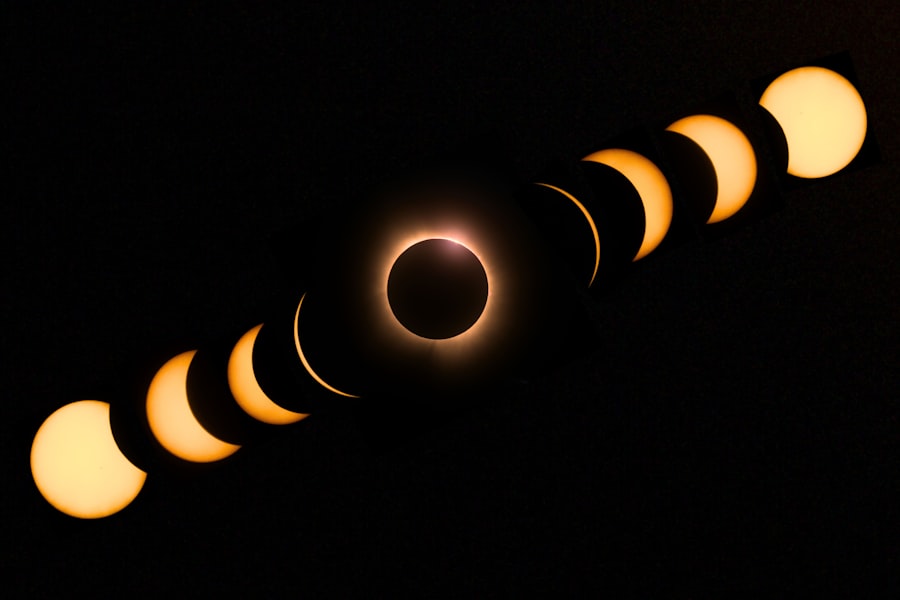
The construction of monumental structures aligned with celestial events provides compelling evidence of ancient peoples’ commitment to astronomical observation and, by extension, eclipse tracking. These structures served as both observatories and calendars writ large.
Stonehenge: A Celestial Observatory
Perhaps the most famous example of a megalithic observatory is Stonehenge in England. While its primary purpose remains a subject of academic debate, its alignment with the solstices is undeniable. Researchers have also proposed that various stones and features within Stonehenge could have been used to track the moon’s complex 18.6-year cycle (the Metonic cycle), which is intimately linked to the timing of eclipses. One could envision priests or astronomers using the interplay of light and shadow across these stones as a grand celestial clock, deciphering the movements of the sky.
Nabta Playa and Other Ancient Observatories
Even older than Stonehenge, the megalithic circles at Nabta Playa in southern Egypt, dating back over 7,000 years, demonstrate equally sophisticated astronomical alignments. These circles align with the summer solstice and other significant celestial events, hinting at a deep understanding of sky patterns. Similar structures have been found globally, from the Medicine Wheels of North America to the meticulously crafted lines and geoglyphs in Peru. These sites represent a collective human endeavor to imprint their understanding of the cosmos onto the very landscape.
Gnomons and Sundials
Beyond large-scale structures, simpler tools like gnomons (upright poles that cast a shadow) and early sundials were instrumental in tracking the sun’s apparent motion. By observing the length and direction of shadows throughout the day and across seasons, ancient astronomers could precisely determine the solstices and equinoxes, crucial anchor points in any calendrical system used for eclipse prediction. These tools, though seemingly simple, were the daily workhorses of ancient timekeeping.
Rituals, Omens, and the Drive for Prediction

The profound impact of eclipses on ancient societies fueled a strong desire for prediction. Predicting these celestial spectacles provided immense power and prestige to those who possessed the knowledge.
Divine Intervention and Portentous Events
For many ancient cultures, eclipses were not merely astronomical phenomena but powerful omens, often interpreted as signs of divine favor or wrath. A solar eclipse could signify the death of a king or impending disaster, while a lunar eclipse might be seen as the moon bleeding, foretelling famine or war. This deep-seated belief system provided a potent impetus for tracking and understanding these events. The ability to “predict” an eclipse, even if through pattern recognition rather than detailed mathematical modeling, would have been seen as a profound connection to the divine.
The Role of Priests and Astronomers
In societies where celestial observation was intertwined with religious practices, priests often served as the primary astronomers. They were the keepers of arcane knowledge, responsible for interpreting celestial events and advising rulers. Their observations, often conducted over entire lifetimes and passed down through lineages, formed the bedrock of early astronomical science. They were not merely stargazers; they were interpreters of the divine will as manifested in the heavens.
Maintaining Social Order and Authority
The ability to predict an eclipse, particularly a solar eclipse, would have conferred immense authority upon the individual or group possessing that knowledge. Imagine the power inherent in announcing that the sun would “die” on a certain day and then, when it actually happened, offering an explanation or ritual that seemingly “brought it back.” Such an act would solidify religious and political control, reinforcing the hierarchical structure of society. This practical outcome, maintaining social order, was a powerful motivator for the pursuit of eclipse prediction.
Ancient humans developed various methods to track celestial events, including eclipses, which held significant cultural and religious importance. By observing the patterns of the moon and sun, they created calendars that helped predict these occurrences. For a deeper understanding of how these early civilizations interpreted and recorded such phenomena, you can explore a related article on this topic at Real Lore and Order. This resource delves into the fascinating ways ancient societies connected their lives to the cosmos.
The Legacy of Ancient Eclipse Trackers
| Method | Description | Region/Culture | Accuracy | Time Period |
|---|---|---|---|---|
| Stone Circles and Alignments | Structures aligned with solar and lunar events to predict eclipses | Europe (e.g., Stonehenge) | Moderate; could predict approximate eclipse dates | Neolithic to Bronze Age (3000-1000 BCE) |
| Lunar Saros Cycle Observation | Tracking the 18-year Saros cycle to forecast eclipses | Babylonia, Mesopotamia | High; able to predict eclipses within a day | 2nd millennium BCE |
| Mythological Records and Oral Traditions | Using stories and myths to encode eclipse patterns | Various indigenous cultures worldwide | Low to moderate; symbolic rather than precise | Prehistoric to historic times |
| Ancient Astronomical Texts | Written records detailing eclipse cycles and predictions | China, India, Greece | High; mathematical models for eclipse prediction | 1st millennium BCE onward |
| Shadow Tracking with Gnomons | Using shadow lengths and directions to monitor solar events | Ancient Egypt, China | Moderate; helped identify eclipse timings | 3rd millennium BCE onward |
The methods developed by ancient civilizations to track eclipses, though lacking modern instrumentation, represent a monumental intellectual achievement. Their meticulous observations, sophisticated calendrical systems, and ingenious use of monumental architecture laid the groundwork for future astronomical advancements.
Foundations of Modern Astronomy
The systematic recording of celestial events, the identification of cycles like the Saros, and the development of predictive methodologies were fundamental contributions to the science of astronomy. These early observations provided the empirical data upon which later astronomers, like those in ancient Greece and medieval Islamic empires, would build more complex mathematical models. They were the first to build the ladder by which we now reach for the stars.
Enduring Cultural Significance
Even today, eclipses retain a potent cultural significance. While modern science readily explains their occurrence, the primeval awe they inspire remains. The stories and myths surrounding eclipses in ancient cultures continue to captivate and inform our understanding of humanity’s enduring fascination with the cosmos. These ancient narratives serve as a testament to the profound impact these celestial events had on the human psyche.
A Test of Human Ingenuity
The journey to understand and predict eclipses was a testament to human ingenuity, perseverance, and intellectual curiosity. Faced with a seemingly chaotic and unpredictable sky, ancient observers tirelessly sought order and pattern. Their achievements, often attributed to divine inspiration, were in reality the product of rigorous observation, careful record-keeping, and the relentless application of human intellect. They remind us that the quest for knowledge, even about the most distant of phenomena, has always been a driving force of human civilization. The shadows cast by eclipses were not just ephemeral moments of darkness, but sparks for intellectual illumination.
SHOCKING: 50 Artifacts That Prove History Was Erased
FAQs
How did ancient humans first notice eclipses?
Ancient humans likely noticed eclipses by observing the sudden darkening of the sun or moon during their regular sky-watching activities. These rare and dramatic events would have stood out, prompting curiosity and attempts to understand their patterns.
What methods did ancient cultures use to track eclipses?
Many ancient cultures tracked eclipses by carefully recording celestial events over long periods. They used tools like stone circles, calendars, and alignments of monuments to predict when eclipses might occur based on observed cycles.
Which ancient civilizations are known for tracking eclipses?
Civilizations such as the Babylonians, Chinese, Mayans, and ancient Greeks are well-known for their detailed records and predictions of eclipses. They developed sophisticated astronomical knowledge to anticipate these events.
Why was tracking eclipses important to ancient humans?
Tracking eclipses was important for religious, agricultural, and social reasons. Eclipses were often seen as omens or messages from the gods, and predicting them helped leaders maintain authority and plan activities tied to lunar and solar cycles.
How accurate were ancient eclipse predictions?
While not as precise as modern calculations, ancient eclipse predictions were surprisingly accurate. By recognizing patterns like the Saros cycle, some cultures could forecast eclipses years in advance with reasonable reliability.