The annals of human history are replete with tales of ingenuity and innovation, often presenting a narrative of linear progression from crude beginnings to sophisticated technologies. Yet, a closer examination of ancient civilizations reveals remarkable instances of advanced mechanical understanding, challenging our modern assumptions about the capabilities of our distant predecessors. These “unbelievable ancient machines” were not mere curiosities but complex devices that, in some cases, were unprecedented for their time and, in others, foreshadowed inventions centuries later. This article delves into a selection of these marvels, exploring their historical context, probable functions, and the enduring mysteries that surround their construction and operation.
Discovered in 1901 off the coast of the Greek island of Antikythera, the Antikythera Mechanism stands as one of the most astonishing artifacts of the ancient world. This bronze device, dating to approximately 150-100 BCE, represents an astronomical calculator of extraordinary complexity, demonstrating a level of mechanical sophistication previously thought to have been achieved only in the late Middle Ages.
Discovery and Reconstruction
The mechanism was found amongst the wreckage of a Roman-era shipwreck, along with statues, pottery, and other treasures. For decades after its discovery, the corroded and fragmented artifact defied comprehensive understanding. It was only through meticulous scientific investigation, employing advanced imaging techniques like X-ray tomography, that researchers began to unravel its intricate workings. The machine consists of at least 30 intricately meshed bronze gears, housed within a wooden casing, inscribed with astronomical scales and dials.
Function and Capabilities
At its core, the Antikythera Mechanism was designed to predict astronomical positions and eclipses with remarkable accuracy. It functioned as an analogue computer, simulating the movements of celestial bodies.
Solar and Lunar Calendars
One of its primary functions was to display the positions of the sun and moon against the zodiac and a calendar scale. It incorporated a 365-day Egyptian calendar, which could be adjusted to account for leap years, although the exact mechanism for this adjustment is still debated.
Eclipse Prediction
Perhaps its most impressive feature was its ability to predict solar and lunar eclipses. The mechanism used the Saros cycle, a period of 223 lunar months (approximately 18 years and 11 days), which accurately predicts the recurrence of eclipses. A spiraling dial on the back of the mechanism tracked this cycle, indicating when future eclipses would occur.
Planetary Movements
While the current fragments unequivocally demonstrate the tracking of the sun and moon, ongoing research, particularly given recent epigraphic reinterpretations, suggests the mechanism may have also been capable of modeling the movements of at least some of the five known planets (Mercury, Venus, Mars, Jupiter, and Saturn). This would elevate its complexity even further, positioning it as a true cosmic simulator.
Implications for Ancient Greek Technology
The existence of the Antikythera Mechanism fundamentally reshapes our understanding of Hellenistic engineering and scientific prowess. It demonstrates a profound knowledge of gear trains, epicyclic gearing, and observational astronomy. The level of precision required for its construction suggests a sophisticated workshop and a lineage of intellectual development that has largely been lost to history. This device serves as a stark reminder that technological advancements are not always linear; periods of bloom can be followed by decline, and knowledge can be forgotten.
In exploring the fascinating world of ancient technology, one cannot overlook the intriguing concept of machines that seemingly defy the limits of their time. A related article that delves deeper into this subject is titled “Ancient Machines That Shouldn’t Exist,” which discusses various artifacts and inventions from antiquity that challenge our understanding of historical technological capabilities. To read more about these astonishing discoveries, you can visit the article here: Ancient Machines That Shouldn’t Exist.
Hero of Alexandria’s Automata: The Dawn of Robotics
Hero of Alexandria, a brilliant engineer and mathematician who lived in the first century CE, is credited with designing and describing numerous mechanical devices, many of which were powered by steam, air pressure, or water. His treatises, particularly “Pneumatics” and “Automata,” provide a fascinating glimpse into a world where mechanical ingenuity bordered on theatrical magic.
Self-Operating Temples and Theatrical Machines
Hero’s work details a range of automata designed for various purposes, from opening temple doors automatically to animating religious statues and creating elaborate theatrical displays. These devices were not merely static models but dynamic machines that performed sequences of actions.
The Automatic Temple Doors
One of Hero’s most celebrated inventions was a mechanism that automatically opened temple doors when a fire was lit on an altar. This was achieved through a clever application of expanding air. As the fire heated the air inside a sealed chamber below the altar, the compressed air would force water into a bucket, which, due to its increased weight, would pull on ropes and pulleys, thereby opening the temple doors.
Moving Figures and Oracles
Hero also described mechanisms for animating figures, such as statues that poured libations, played musical instruments, or even delivered prophecies. These often involved intricate systems of weights, siphons, and levers, creating the illusion of supernatural intervention. Imagine the awe these creations must have inspired in an audience unfamiliar with the underlying principles of physics.
The Aeolipile: Proto-Steam Engine
Perhaps Hero’s most famous invention, and one that is often cited as a precursor to the steam engine, is the aeolipile. This device consisted of a sealed kettle of water heated by a fire, with two L-shaped tubes extending from its top into a hollow sphere. Steam generated in the kettle would travel through these tubes into the sphere, escaping through nozzles on the sphere’s periphery. The escaping steam, acting through Newton’s third law of motion (for every action, there is an equal and opposite reaction), would cause the sphere to rotate rapidly.
A Scientific Toy, Not an Industrial Tool
While the aeolipile demonstrated the principle of jet propulsion and steam power, it was primarily seen as a scientific curiosity or a novelty rather than a practical engine for work. Ancient societies, particularly those with readily available slave labor, lacked the economic impetus to develop such devices for industrial applications. This distinction is crucial; the capacity for invention often outpaces the societal need or demand for its widespread adoption.
Hero’s Legacy
Hero of Alexandria’s contributions highlight the fact that the fundamental principles of mechanics and thermodynamics were understood and applied in sophisticated ways in antiquity. His writings served as a valuable resource for later generations of engineers and inventors, demonstrating an early understanding of power generation and automation that would not be fully realized for another 1,500 years. His automata acted as a fascinating bridge between the theoretical understanding of physics and its playful, almost magical, manifestation.
The Roman Odometer: An Empire’s Measuring Device
The vastness of the Roman Empire necessitated efficient administration, logistics, and infrastructure. One often-overlooked invention that greatly aided in these endeavors was the Roman odometer, a device designed to measure distances traveled. While no complete Roman odometer has survived, descriptions from ancient texts, notably by Vitruvius, allow for theoretical reconstructions.
Vitruvius’ Description
The Roman architect and engineer Vitruvius, in his De Architectura (On Architecture), provides a detailed account of an odometer designed for a wagon. His description outlines a system of gears that would drop a pebble into a receptacle for every Roman mile traveled.
The Wheel’s Rotation
At the heart of the odometer was a wheel, typically the wagon wheel itself, whose circumference was precisely known. As the wagon moved, the wheel would rotate.
Gear Trains and Gearing Ratios
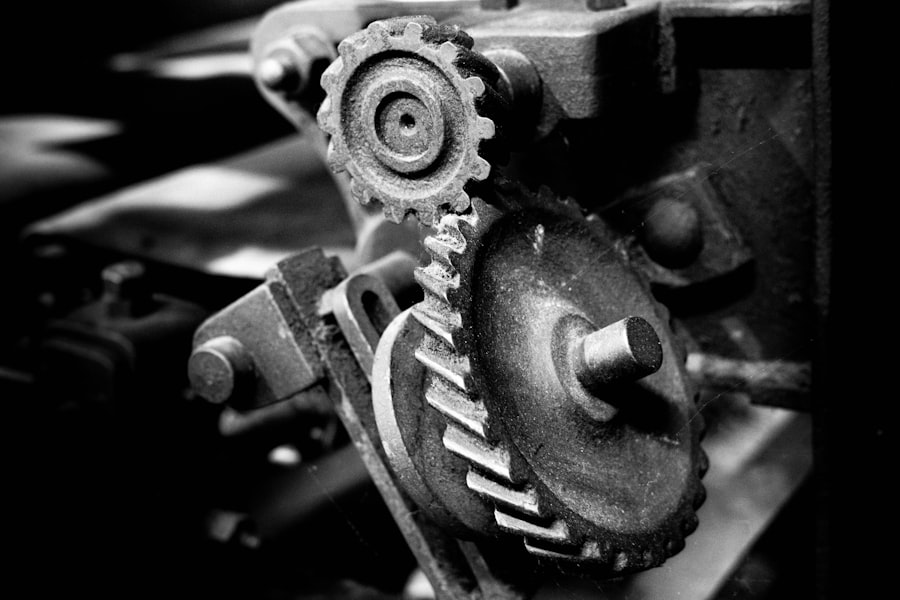
Connected to the axle of the wagon wheel would be a complicated system of gears. Vitruvius describes a primary gear, affixed to the wheel, engaging with a smaller gear above it. This smaller gear would, in turn, engage with another gear, and so on. The number of teeth on each gear and their precise ratios were crucial for accurate measurement. Vitruvius’ description includes specific ratios that, when calculated, would ensure that after a certain number of rotations of the wagon wheel (corresponding to one Roman mile), a final gear would complete one full revolution.
The Pebble Drop
Attached to this final gear was a mechanism designed to drop a pebble into a designated container. Each pebble represented one Roman mile. For those who ponder how such a system might have been reset or how longer distances were read, it is presumed that the accumulated pebbles would simply be counted at the end of a journey.
Practical Applications and Historical Impact
The Roman odometer, if widely implemented, would have had significant practical implications for the Roman Empire.
Road Construction and Maintenance
Accurate distance measurement was vital for planning and constructing the extensive network of Roman roads. It allowed engineers to calculate material needs, labor requirements, and to accurately map the terrain.
Military Logistics
For the Roman legions, knowing precise distances was paramount for logistical planning – calculating march times, supply requirements for troops and animals, and positioning of encampments. This strategic information would have been invaluable for military campaigns.
Taxation and Administration
In an empire that relied heavily on agricultural output and trade, accurate distance measurement could have played a role in assessing taxes, calculating transport costs, and managing trade routes.
The Baghdad Battery: An Electro-Chemical Enigma

Discovered in 1938 near Baghdad, Iraq, the artifact known as the “Baghdad Battery” or “Parthian Battery” is a collection of three primary components: a ceramic pot, a copper cylinder, and an iron rod. Dated to the Parthian era (around 250 BCE to 224 CE), its true purpose remains a subject of considerable debate, with one prominent theory suggesting it functioned as an ancient electrochemical cell.
The Artifact’s Composition
The “battery” consists of a 13-centimeter tall clay jar, inside of which is a copper cylinder held in place by asphalt. An iron rod is suspended within the center of the copper cylinder, again sealed with asphalt. Crucially, the iron rod does not touch the copper cylinder.
The Electrolyte Hypothesis
Proponents of the “battery” theory posit that if an electrolyte solution, such as grape juice, vinegar, or citric acid, were poured into the jar, it would create an electrochemical reaction between the copper and iron, generating a small electrical current.
Replicative Experiments
Several modern experiments have replicated the Baghdad Battery using various acidic solutions. These experiments have successfully generated voltages ranging from 0.5 to 2 volts. While these are modest voltages, they are significant enough for certain applications.
Potential Ancient Uses
If the Baghdad Battery indeed functioned as an electrical source, what could its purpose have been in antiquity? This is where speculation diverges.
Electroplating and Gilding
One of the most compelling theories suggests the batteries were used for electroplating or gilding. This process involves using electricity to deposit a thin layer of one metal (e.g., gold) onto the surface of another (e.g., silver or copper). Ancient artifacts show evidence of remarkably thin gold and silver coatings that are difficult to achieve through traditional fire-gilding methods. A series of Baghdad Batteries connected in parallel could have provided sufficient voltage and current for such a process.
Medical Applications
Another hypothesis suggests a therapeutic use, particularly for pain relief. Ancient Greek and Roman texts describe the use of electric fish (like torpedo rays) for treating ailments such as headaches and gout. It is conceivable that a small, controlled electrical current from the batteries could have been applied for similar purposes, albeit without understanding the underlying physiological mechanisms.
Religious or Mystical Rites
Given the awe and perhaps fear that electricity might inspire, it’s also been suggested that the Baghdad Battery could have been used in religious ceremonies to create special effects or to “magically” animate objects, similar to Hero of Alexandria’s automata. A shock from such a device could well have been interpreted as divine intervention.
Debates and Alternative Explanations
It is important to note that the “battery” theory is not universally accepted. Skeptics argue that no electrical wires or associated equipment have ever been found alongside the Baghdad Battery, and that the primary purpose could have been for scroll storage due to the acidic nature of early inks degrading scrolls. Nevertheless, the existence of such a sophisticated arrangement of metals and insulators, dating back millennia, provides fertile ground for reconsideration of ancient electrical knowledge.
In exploring the fascinating world of ancient technology, one cannot overlook the intriguing concept of machines that seemingly should not exist. A compelling article on this topic can be found at Real Lore and Order, where the author delves into various artifacts and inventions from ancient civilizations that challenge our understanding of historical technological capabilities. These discoveries not only spark curiosity but also invite us to reconsider the ingenuity of our ancestors and the mysteries that still surround their achievements.
The Archimedes’ Screw: Water’s Ancient Elevator
| Machine Name | Estimated Age | Location Found | Material | Function | Notable Feature |
|---|---|---|---|---|---|
| Antikythera Mechanism | ~2,100 years | Antikythera, Greece | Bronze | Astronomical calculator | Complex gear system predating similar technology by centuries |
| Baghdad Battery | ~2,000 years | Near Baghdad, Iraq | Clay, Copper, Iron | Possible galvanic cell (battery) | Potential ancient electrical device |
| Roman Dodecahedron | ~1,800 years | Europe (various sites) | Bronze or Stone | Unknown (theories include measuring device or candlestick) | Unclear purpose despite precise geometric shape |
| Saqqara Bird | ~2,200 years | Saqqara, Egypt | Wood | Possible model of a glider or bird | Resembles modern aircraft design |
| Iron Pillar of Delhi | ~1,600 years | Delhi, India | Wrought Iron | Structural pillar | Resists corrosion despite age and environment |
Attributed to Archimedes of Syracuse in the 3rd century BCE, the Archimedes’ screw is a remarkable hydraulic machine that transformed the ability to lift water from lower to higher elevations. Its elegant simplicity belies its profound impact on agriculture, drainage, and engineering.
Design and Operation
The basic design of an Archimedes’ screw involves a helical surface (a screw) rotating inside a cylindrical pipe or casing. The lower end of the screw is submerged in water, and as the screw turns, water is trapped within the helical flights and progressively lifted upwards.
Key Components
Typically, an Archimedes’ screw consists of:
- The Screw: A spiral blade, often made of wood or metal, either around a central shaft or forming a continuous helix.
- The Casing: A close-fitting cylinder (often made of wood or later metal) that encloses the screw and prevents water from simply falling back down.
- Source of Power: In ancient times, this would have been manual labor (cranked by hand or foot), animal power (oxen or donkeys), or sometimes water wheels.
The Principle of Operation
As the screw rotates, the lowermost portion of the helix scoops up a volume of water. As rotation continues, this water is contained within the lowest flight. With further rotation, the water is progressively pushed along the helix, always “resting” on the lower surface of the screw and prevented from flowing backward by the casing, until it is discharged at the higher end. It functions akin to a continuous series of scoops.
Ancient Applications and Impact
The Archimedes’ screw was not merely a theoretical construct; it was a widely adopted and highly effective tool that addressed critical challenges in ancient societies.
Irrigation in Agriculture
Perhaps its most significant application was in irrigation, particularly in regions like Egypt and Mesopotamia. By allowing farmers to lift water from rivers or canals onto higher fields, it significantly increased arable land and crop yields, thereby supporting larger populations. This was a direct accelerator of agricultural productivity.
Drainage and Land Reclamation
The screw was also invaluable for draining waterlogged lands, marshes, and even flooded mines. Its ability to continuously remove water made it an essential tool for land reclamation projects and for making previously inhospitable areas productive. Draining the marshlands around ancient cities was a common use for the device.
Ship Bilge Pumping
Historical accounts suggest that Archimedes himself may have invented the screw for use in pumping bilge water out of large ships, known as the Syracusia, a colossal vessel built for Hiero II of Syracuse. This application would have greatly improved maritime safety and efficiency.
Enduring Legacy
The Archimedes’ screw is a testament to the enduring power of simple yet ingenious mechanical principles. It is one of the few ancient machines that continues to be used, in modified forms, even today, primarily in wastewater treatment plants and for moving granular materials. Its ability to lift large volumes of water with relatively low energy input made it a transformative technology, demonstrating that ancient engineers were not only capable of complex designs but also understood the profound practical implications of their inventions.
In conclusion, the investigation into these unbelievable ancient machines reveals a human past far richer in technological sophistication than often acknowledged. The Antikythera Mechanism opens a window into Hellenistic astronomical computation, Hero’s automata demonstrate an early understanding of automation and steam power, the Roman odometer speaks to an empire’s need for precise measurement, the Baghdad Battery challenges our timeline of archaic electrical knowledge, and the Archimedes’ screw stands as a timeless symbol of hydraulic engineering. These devices are not merely museum pieces; they are intellectual time capsules, urging us, the modern reader, to reconsider the “primitive” label often affixed to ancient civilizations. They represent peaks of mechanical genius, reminding us that innovation is a constant thread woven throughout human history, often appearing in unexpected forms and at unexpected times, only to be rediscovered and re-evaluated by future generations.

STOP: Why They Erased 50 Impossible Inventions From Your Textbooks
FAQs
What are some examples of ancient machines that shouldn’t exist?
Examples include the Antikythera mechanism, an ancient Greek analog computer used to predict astronomical positions, and the Baghdad Battery, which some believe to be an early form of galvanic cell or battery.
How were these ancient machines discovered?
Many were found during archaeological excavations or underwater explorations. For instance, the Antikythera mechanism was discovered in a shipwreck off the coast of the Greek island Antikythera in 1901.
Why do some people believe these machines shouldn’t exist?
These machines exhibit advanced technology and engineering skills that seem unexpected for their time periods, leading to debates about the level of ancient technological knowledge.
What materials were used to create these ancient machines?
Ancient machines were typically made from materials like bronze, wood, stone, and sometimes iron, depending on the era and region of origin.
Do these ancient machines have any influence on modern technology?
Yes, studying these devices provides insight into early engineering and scientific understanding, influencing modern fields such as astronomy, mechanics, and electrical engineering.