Here is an article about Angkor Wat’s urban hydrology, written from the third-person point of view, with the requested formatting and style:
The vast archaeological complex of Angkor, a testament to the Khmer Empire’s grandeur, harbors a hidden marvel: a sophisticated water management system that was instrumental in its rise and sustenance. Far beyond the iconic towers of Angkor Wat, lies an intricate network of reservoirs, canals, and moats, a hydraulic engineering feat that allowed a sprawling metropolis to flourish in a tropical climate. Uncovering Angkor Wat’s urban hydrology reveals the ingenuity of its builders and the profound relationship between water, civilization, and power.
The development of Angkor as a major urban center was intrinsically linked to its ability to control and utilize water resources. Situated in the floodplains of the Tonle Sap Lake and the Mekong River, the region experienced distinct wet and dry seasons, presenting both opportunities and challenges. The Khmer people, more than merely adapting to these cycles, actively shaped them, creating a landscape designed to harness the abundant rainfall and manage its flow.
The Blessing and the Curse of the Monsoon
The annual monsoon season, while crucial for agriculture, also brought the threat of devastating floods. Understanding and controlling this natural cycle was paramount for the survival and prosperity of the civilization. The Khmer engineers, through their innovative water management techniques, transformed this potentially destructive force into a vital resource.
The Spiritual Significance of Water
Water held deep religious and symbolic importance in Khmer culture. It was associated with purity, fertility, and spiritual renewal. The construction of water features within temples, particularly the moats surrounding Angkor Wat, was not solely utilitarian but also served to embody these cosmological beliefs, reflecting the mythical ocean that surrounded Mount Meru, the abode of the gods.
Recent research on urban hydrology in relation to Angkor Wat has highlighted the intricate water management systems that supported this ancient civilization. For a deeper understanding of how these systems functioned and their impact on the surrounding environment, you can explore the article titled “Ancient Water Management in Angkor: Lessons for Modern Urban Hydrology” available at this link. This article delves into the historical context and modern implications of water management practices in urban settings, drawing parallels between past and present challenges.
Pillars of the System: Barays, Reservoirs of Monumental Scale
Central to Angkor’s hydraulic infrastructure were the barays, massive artificial reservoirs that served as the empire’s water storage and distribution hubs. These colossal earthworks, often spanning several kilometers, were epic undertakings, requiring immense labor and logistical coordination. They acted as the empire’s lungs, breathing in the monsoon rains and exhaling life-giving water throughout the dry season.
The Great Barays: East and West
The sheer scale of the East and West Barays is awe-inspiring. The West Baray, the largest, measures approximately 8 kilometers long and 2.1 kilometers wide, encompassing an area of about 16 square kilometers. The East Baray, though slightly smaller, is equally impressive. These reservoirs, when full, held an astronomical volume of water, effectively buffering the city against drought and providing a stable water supply for irrigation and daily use.
Construction Techniques and Labor
The construction of these barays involved the excavation and relocation of an immense volume of earth. Evidence suggests that large labor forces, likely comprised of conscripted workers, were employed in their creation. The earth excavated was often used to build the surrounding causeways and embankments, demonstrating an efficient use of resources. The precision with which these structures were engineered, considering gradients and water flow, speaks volumes about their advanced understanding of hydraulics.
The Function of Barays Through the Year
During the wet season, the barays would fill, acting as a sponge to absorb excess rainfall, thus preventing widespread flooding of the surrounding lowlands upon which agriculture depended. As the dry season intensified, the stored water would be gradually released through a network of canals, irrigating rice paddies and supplying the needs of the burgeoning population. This controlled release was a symphony of engineering, ensuring that water was available when and where it was needed most.
The Arteries of the Metropolis: Canals and Ditches for Distribution
Complementing the monumental barays was an extensive network of canals and ditches. These were the conduits that carried water from the reservoirs to the fields, to the city’s inhabitants, and to the temples themselves. This intricate web of channels facilitated the efficient distribution of water, allowing for intensive rice cultivation and supporting the dense urban population a feat that often eludes modern urban planners.
The Network of Irrigation Canals
The canals were not simply dug; they were meticulously designed. Their dimensions, gradients, and interconnectivity were crucial for optimal water flow. These channels formed a sophisticated irrigation system that enabled multiple rice harvests per year in some areas, a significant achievement that provided the agricultural surplus necessary to feed a large empire.
Water for the City and Temples
Beyond agriculture, the canal network supplied water for domestic use within the urban areas and for the ceremonial needs of the temples. The moats surrounding major temple complexes, such as Angkor Wat, were fed and maintained by this system, serving both defensive and symbolic purposes. The water in these moats was meticulously managed, reflecting the sacredness attributed to water in Khmer cosmology.
Connecting the Empire
The larger canals also served as arteries of transportation, facilitating the movement of goods and people throughout the Angkorian realm. This dual function of water management and transportation highlights the holistic approach taken by the Khmer engineers, where infrastructure served multiple purposes, amplifying its impact and efficiency.
Angkor Wat’s Moat: A Symbolic Shield and Hydraulic Masterpiece

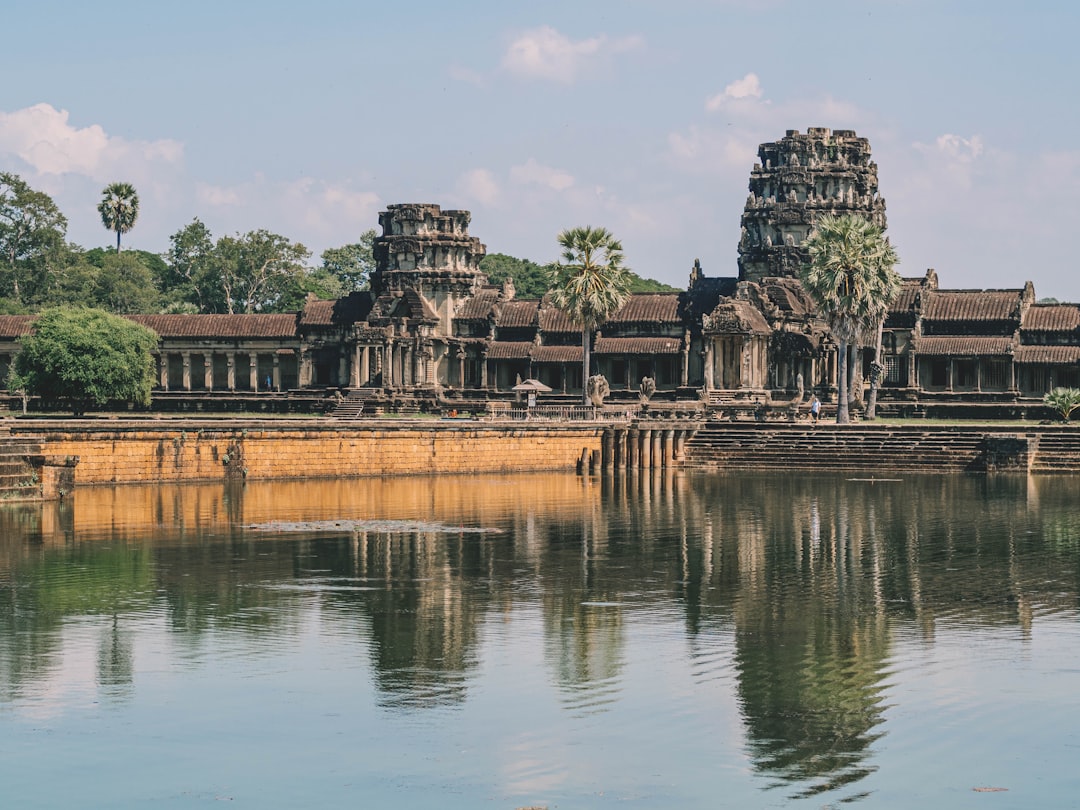
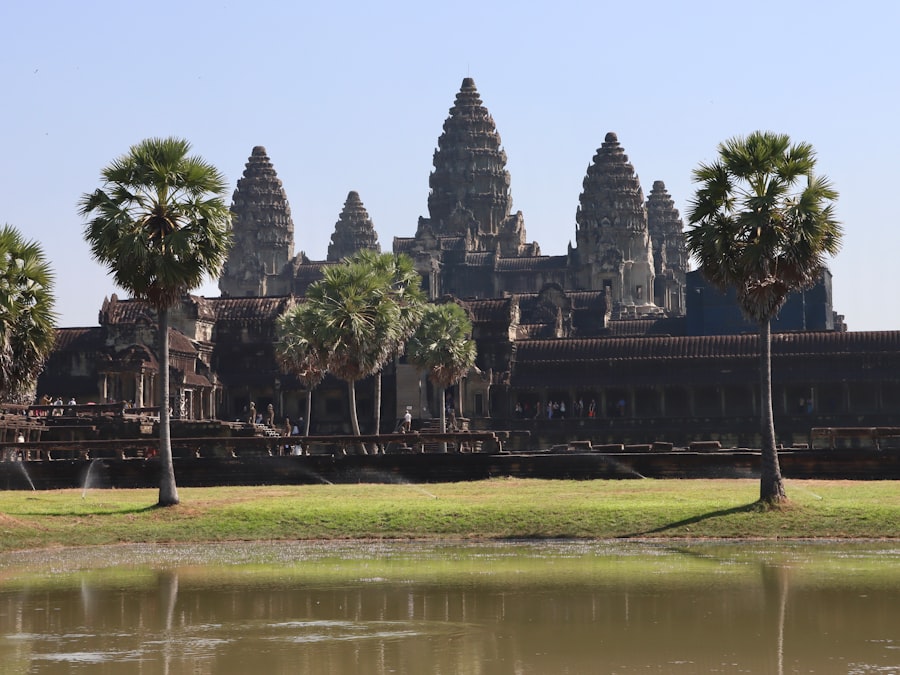
The iconic moat surrounding Angkor Wat is more than just a defensive feature; it is a sophisticated element of the temple’s sophisticated water management system and a powerful symbol. Its construction and continuous function are a testament to the builders’ understanding of hydraulics and their desire to imbue the sacred space with meaning.
The Moat as a Defensive Barrier
In a practical sense, the moat provided a significant defensive barrier, making the temple complex more difficult to access and attack. This added layer of security was essential for a structure of such immense religious and political importance.
The Moat’s Symbolic Resonance
Cosmologically, the moat represented the mythical ocean surrounding Mount Meru, the cosmic mountain at the center of the universe according to Hindu and Buddhist beliefs. By encircling the temple with water, the builders transformed it into a representation of the divine realm, a sacred island in a sea of earthly existence. The act of crossing the moat to enter the temple was a symbolic journey from the mundane to the sacred.
The Hydraulic Engineering of the Moat
The continuous filling and maintenance of Angkor Wat’s moat required a sophisticated understanding of water flow and management. It was fed by canals that channeled water from nearby sources, and its water level was carefully regulated. The engineering involved in ensuring a constant supply of fresh water while preventing stagnation or overflow demonstrates a remarkable grasp of hydraulic principles. Scholars continue to study the precise mechanisms employed to maintain this vital feature.
Recent studies on Angkor Wat’s urban hydrology have shed light on the intricate water management systems that supported this ancient civilization. For a deeper understanding of the environmental factors influencing the site, you can explore a related article that discusses the historical context and modern implications of these findings. This research not only highlights the engineering prowess of the Khmer Empire but also emphasizes the importance of sustainable practices in contemporary urban planning. To learn more about these fascinating insights, visit this article.
The Legacy and the Lessons: Understanding Angkor’s Water Management Today
| Research Metric | Value | Unit | Description |
|---|---|---|---|
| Annual Rainfall | 1400 | mm/year | Average annual precipitation in the Angkor Wat region |
| Water Table Depth | 3.5 | meters | Average depth to groundwater beneath Angkor Wat |
| Surface Runoff Coefficient | 0.35 | Ratio | Proportion of rainfall that becomes surface runoff in urban areas |
| Urban Land Cover | 12 | % | Percentage of urbanized land within the Angkor Wat archaeological park |
| Water Quality Index | 78 | Score (0-100) | Assessment of water quality in urban hydrological features |
| Evapotranspiration Rate | 900 | mm/year | Estimated annual evapotranspiration in the Angkor Wat area |
| Flood Frequency | 2 | events/year | Average number of urban flooding events recorded annually |
The study of Angkor Wat’s urban hydrology offers invaluable insights into the ingenuity of past civilizations and provides lessons that resonate even in the modern era. The meticulous planning, the sustainable practices, and the deep understanding of the environment that underpinned Angkor’s water system are qualities that contemporary societies strive to emulate.
Rediscovering and Preserving the System
Modern archaeological and scientific research continues to unravel the complexities of Angkor’s water management system. Techniques such as LiDAR (Light Detection and Ranging) have revolutionized our understanding, revealing a much more extensive and interconnected network than was previously visible. Preservation efforts are crucial to protect these ancient marvels of engineering.
Lessons in Sustainable Water Management
The Khmer Empire’s ability to sustain a large population and a complex civilization for centuries through its water management system offers a powerful example of sustainable practices. Their holistic approach, integrating water use with agriculture, urban planning, and religious beliefs, stands in stark contrast to many modern, often fragmented, approaches.
Water as a Foundation for Urban Development
The story of Angkor underscores the fundamental role of water in the development and endurance of urban centers. By understanding and effectively managing water, civilizations can thrive and flourish. The Khmer Empire, through its masterful manipulation of water, built a civilization that continues to captivate and inspire, a living testament to the power of human ingenuity when in harmony with the natural world. The silent canals and vast barays whisper tales of a time when water was not merely a resource, but the very architecture of power and prosperity.

WATCH NOW ▶️ WARNING: The Giza Muon Scans Just Changed Everything
FAQs
What is the focus of Angkor Wat urban hydrology research?
Angkor Wat urban hydrology research focuses on studying the water management systems, drainage, and hydrological processes within the Angkor Wat archaeological site and its surrounding urban area. The research aims to understand how ancient water infrastructure supported the city’s sustainability and how it interacts with modern environmental conditions.
Why is hydrology important for the preservation of Angkor Wat?
Hydrology is crucial for preserving Angkor Wat because water management affects the stability of the temple structures and the surrounding landscape. Proper understanding of water flow, flooding risks, and groundwater levels helps prevent damage caused by erosion, waterlogging, or drought, ensuring the site’s long-term conservation.
What methods are used in urban hydrology research at Angkor Wat?
Researchers use a combination of remote sensing, geographic information systems (GIS), hydrological modeling, field surveys, and archaeological studies to analyze water systems at Angkor Wat. These methods help map ancient canals, reservoirs, and drainage networks and assess their functionality and impact on the urban environment.
How does Angkor Wat’s ancient water system influence modern urban hydrology studies?
Angkor Wat’s ancient water system provides valuable insights into sustainable water management practices in tropical urban environments. Studying these systems helps modern researchers develop strategies for flood control, water conservation, and urban planning that can be applied in contemporary cities facing similar climatic and environmental challenges.
What challenges do researchers face in studying Angkor Wat’s urban hydrology?
Challenges include the complexity of the ancient water infrastructure, changes in land use and vegetation over time, limited historical records, and the impact of modern development. Additionally, balancing archaeological preservation with hydrological interventions requires careful planning and interdisciplinary collaboration.