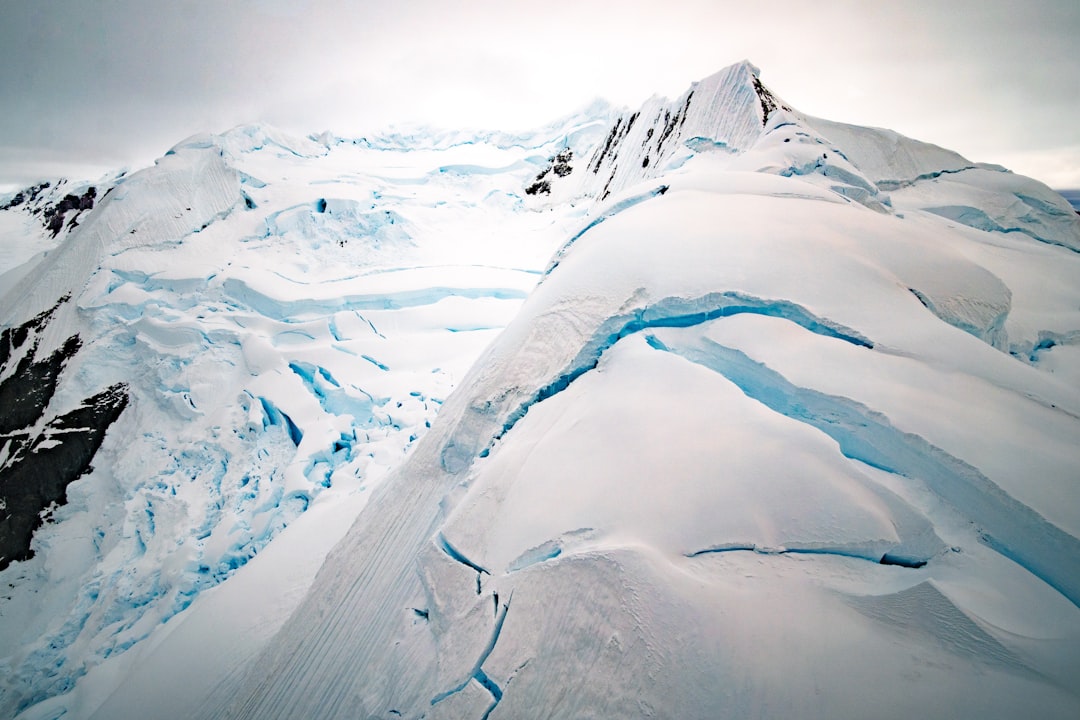
Antarctica, a continent shrouded in ice and mystery, continues to yield secrets beneath its vast frozen expanse. For decades, scientific endeavors have focused on piercing this icy veil, and one of the most enigmatic phenomena encountered are the subglacial radar anomalies. As the year 2025 unfolds, new data and refined analytical techniques promise to shed further light on these peculiar reflections, offering unprecedented insights into the continent’s deep past, its geodynamic processes, and potentially even unique forms of life. This article explores the current understanding, forthcoming research, and the implications of these captivating subglacial features.
Subglacial radar anomalies are distinct, strong, or unusual reflections detected by ice-penetrating radar systems that do not correspond to the expected signal from the ice-bedrock interface, nor do they perfectly align with interpretations of liquid water at the bed. These anomalies manifest in various forms, from discrete, high-amplitude echoes to diffuse, irregular patterns, often embedded within deeper ice layers or at the ice-bedrock boundary. Their very existence challenges conventional models of ice sheet dynamics and subglacial geology.
Types of Radar Anomalies
The diversity of these anomalies suggests a range of underlying causes. Researchers broadly categorize them based on their morphological and spectral characteristics.
High-Amplitude Point Reflections
These anomalies appear as exceptionally bright, localized echoes, often interpreted as discrete, highly reflective objects or interfaces. While some are attributed to subglacial lakes, others remain unexplained by fluid bodies alone. The scattering properties of these reflections are key to differentiating them from typical water-filled basins.
Diffuse, Layered Reflections
In contrast to point reflections, some anomalies present as broad, often undulating layers within the ice column or at its base. These are frequently associated with areas of high geothermal heat flux or zones of complex sedimentary deposition, yet their exact composition remains a subject of intense debate.
Spectral Signatures of Anomalies
Advancements in radar technology allow for the analysis of the spectral characteristics of radar returns. Different materials and physical states absorb and reflect radar waves at varying frequencies. Analyzing these spectral signatures provides a powerful tool for distinguishing between, for example, saline water, freshwater, sediments, or even different types of bedrock. This methodology, akin to fingerprinting, is becoming increasingly sophisticated.
Recent studies have uncovered intriguing subglacial radar anomalies in Antarctica, sparking interest in the potential implications for climate science and glacial dynamics. For a deeper understanding of these findings and their significance, you can explore the related article titled “Unveiling the Secrets Beneath: Antarctica’s Subglacial Radar Anomalies” available at this link. This article delves into the latest research conducted in 2025, shedding light on the mysteries hidden beneath the ice and their potential impact on global sea levels.
Explaining the Anomalies: Competing Hypotheses
The scientific community has proposed several hypotheses to account for the observed subglacial radar anomalies. No single explanation universally applies, suggesting a complex interplay of geological, glaciological, and potentially even biological factors.
Subglacial Water Bodies
The most common explanation for strong radar reflections is the presence of subglacial lakes or pervasive films of meltwater. The dielectric contrast between ice and liquid water is significant, leading to strong reflections. However, not all strong reflections fit the typical morphology or expected hydrological characteristics of known subglacial lakes.
Subglacial Lakes and Their Dynamics
Antarctica hosts over 400 known subglacial lakes. These bodies of water vary in size and are thought to be intimately connected to ice flow, transporting heat and sediment. Radar anomalies often highlight regions where lakes are suspected but have not been definitively characterized. The dynamic nature of these lakes, with periods of filling and draining, can also influence radar returns.
Brine Pools and Saline Sediments
Recent research suggests that highly saline water, or brine, may exist beneath the ice sheet, particularly in coastal regions or areas with ancient marine sediment entrapment. Brine possesses different dielectric properties than freshwater, potentially producing distinct radar signatures. The high salinity could also depress the freezing point, allowing liquid water to persist at temperatures below 0°C.
Geothermal and Geological Influences
The underlying geology and geothermal heat flow play a crucial role in shaping the subglacial environment, and thus, radar reflections.
High Geothermal Heat Flux
Elevated geothermal heat flow from the Earth’s interior can contribute to basal melting, leading to subglacial water formation or warmer ice. Anomalies could correspond to areas of localized volcanism, magmatic intrusions, or thin continental crust allowing greater heat transfer. Mapping these geothermal hotspots provides vital context for anomaly interpretation.
Sedimentary Basins and Deposits
Thick sequences of subglacial sediments can also produce complex radar reflections. The presence of water-saturated sediments or varying sediment lithologies can create strong impedance contrasts. Furthermore, the acoustic properties of unconsolidated sediments differ significantly from bedrock, influencing radar wave propagation and reflection.
Hydrothermal Activity
The possibility of active hydrothermal vents beneath the ice sheet, similar to those found in deep ocean environments, has gained traction. Such vents would release geothermally heated water and minerals, creating localized warm zones and potentially supporting unique extremophile ecosystems. These areas would undoubtedly produce distinctive radar signatures.
Unique Physical States of Water and Ice
The extreme pressures and temperatures at the base of the Antarctic ice sheet can create unusual physical states of water and ice, which might explain some anomalies.
Clathrates (Gas Hydrates)
Clathrates, or gas hydrates, are ice-like crystalline solids that trap gas molecules (e.g., methane) within their structure. They can form under high pressure and low temperature conditions. If significant deposits of clathrates exist subglacially, their presence would generate distinct radar reflections due to the difference in dielectric properties compared to ice or liquid water. Their potential decomposition could also release methane, a potent greenhouse gas.
Metamorphic Ice and Basal Ice Layers
The ice at the very base of the ice sheet undergoes significant metamorphic processes due to immense pressure and shear stress. This can lead to the formation of basal ice layers with different crystal orientations, impurity content, or even entrained rock fragments and sediment, all of which can alter radar reflectivity.
2025: An Era of Advanced Detection and Analysis

The year 2025 marks a pivotal point in subglacial radar anomaly research, driven by technological advancements and more sophisticated analytical approaches.
Next-Generation Radar Systems
The deployment of new generations of ice-penetrating radar systems is revolutionizing data acquisition. These systems boast improved power, wider bandwidths, and multi-frequency capabilities, providing richer, more detailed datasets.
Ultra-Wideband Radar
Traditional radar systems operate within a relatively narrow frequency band. Ultra-wideband radar, by contrast, transmits and receives signals across a much broader spectrum. This allows for superior vertical resolution, enabling researchers to distinguish finer layers within the ice and differentiate subtle changes in the subglacial environment. Imagine using a single, broad brushstroke versus a palette of fine-tipped pens to discern intricate details.
Multi-Frequency and Polarimetric Radar
Employing radar systems that transmit and receive at multiple distinct frequencies provides an additional dimension of information. Different frequencies penetrate ice and interact with subglacial features in unique ways, offering complementary insights. Polarimetric radar, which analyzes the polarization state of the returned radar waves, is particularly powerful for characterizing the shape, orientation, and dielectric properties of subglacial materials. This is akin to gaining not just the outline of an object, but also its texture and composition.
Sophisticated Data Processing and Machine Learning
The sheer volume and complexity of data generated by modern radar systems necessitate advanced processing techniques, with machine learning emerging as a critical tool.
Automated Anomaly Detection and Classification
Manually identifying and classifying radar anomalies across vast datasets is a laborious and prone to human error. Machine learning algorithms, particularly deep learning networks, can be trained on existing anomaly data to automatically detect and classify similar features in new datasets with high accuracy and efficiency. This accelerates the mapping process and reduces the reliance on subjective interpretation.
Inverse Modeling and Material Characterization
Advanced inverse modeling techniques are being employed to infer the physical properties of subglacial materials from radar data. These models consider the propagation of radar waves through the ice column and the interaction with the bedrock and subglacial features. By varying parameters such as dielectric permittivity, conductivity, and even acoustic velocity in these models, researchers can generate synthetic radar signals and compare them to observed data to constrain the most probable subglacial compositions.
Fusion of Multi-Sensor Data
The integration of radar data with other geophysical datasets, such as seismic surveys, gravimetry, and magnetometry, provides a more holistic view of the subglacial environment. Machine learning can be used to fuse these disparate datasets, identifying patterns and correlations that might be missed by analyzing each dataset in isolation. This multi-messenger approach offers a more comprehensive understanding of the underlying geology and glaciology.
Implications and Future Directions

The insights garnered from subglacial radar anomalies, particularly with the advancements in 2025, have profound implications for various scientific disciplines and for our understanding of Earth’s past and future.
Unraveling Past Climate and Geophysical History
Subglacial radar anomalies serve as archives of deep time. The presence and characteristics of these features can provide crucial information about past ice sheet dynamics, episodes of glacial advance and retreat, and the tectonic history of the Antarctic continent.
Subglacial Lake Sediments as Paleoclimate Archives
If an anomaly corresponds to a subglacial lake, drilling operations could retrieve sediment cores. These cores act as time capsules, preserving evidence of past environmental conditions, including changes in ice sheet thickness, regional temperature, and even ancient biological activity, offering unparalleled insights into Earth’s climate history.
Tectonic Activity and Mantle Dynamics
Distinct radar anomalies, particularly those linked to geothermal hotspots, could indicate ongoing tectonic activity or regions of thinning crust and upwelling mantle. Understanding these geodynamic processes is crucial for reconstructing the continent’s geological evolution and its influence on ice sheet stability.
Astrobiological Significance
The extreme environments represented by subglacial anomalies, particularly those potentially hosting liquid water or hydrothermal activity, hold significant astrobiological interest.
Analogues for Extraterrestrial Environments
Subglacial lakes and potential hydrothermal systems beneath miles of ice are excellent terrestrial analogues for environments on icy moons in our solar system, such as Europa and Enceladus. Understanding the potential for life to thrive in these conditions on Earth informs our search for extraterrestrial life.
Potential for Undiscovered Ecosystems
The isolation, unique geochemistry, and protection from surface radiation offered by the ice sheet creates a crucible for the evolution of novel microbial ecosystems. The characterization of subglacial anomalies could pinpoint locations where such extremophile communities might exist, awaiting discovery. This frontier of biological exploration remains largely untapped.
Implications for Ice Sheet Stability and Sea Level Rise
Understanding the distribution and dynamics of subglacial features, particularly those involving water or weak sediments, is critical for predicting future ice sheet behavior.
Basal Lubrication and Ice Flow
Subglacial water acts as a lubricant, reducing friction at the ice-bed interface and accelerating ice flow into the ocean. Improved characterization of water-related anomalies will lead to more accurate models of ice sheet dynamics, a crucial step in projecting future sea-level rise.
Sediment Deformation and Channelization
The presence of weak, water-saturated sediments can lead to rapid ice flow through deformation rather than basal sliding. Anomalies indicating thick sedimentary basins or channels could reveal areas prone to rapid ice loss.
As we move deeper into the 21st century, the continued exploration and interpretation of Antarctica’s subglacial radar anomalies will undoubtedly unveil more profound secrets. The concerted efforts of glaciologists, geophysicists, geochemists, and astrobiologists, armed with cutting-edge technology and analytical techniques, promise to transform our understanding of this enigmatic continent and its intricate relationship with the global Earth system. The echoes from beneath the ice are not merely reflections; they are whispers from a forgotten past and clues to a challenging future.

SHOCKING: New Radar Reveals City Under Antarctica
FAQs
What are subglacial radar anomalies in Antarctica?
Subglacial radar anomalies in Antarctica refer to unusual or unexpected signals detected beneath the ice sheet using radar technology. These anomalies can indicate variations in ice thickness, the presence of liquid water, or unusual geological features beneath the ice.
How is radar technology used to study Antarctica’s subglacial environment?
Radar technology, specifically ice-penetrating radar, is used to send radio waves through the ice. These waves reflect off different layers and materials beneath the ice, allowing scientists to map the subglacial landscape, identify water bodies, and detect anomalies beneath the ice sheet.
Why are subglacial radar anomalies important for climate research?
Subglacial radar anomalies can reveal hidden lakes, channels, and geological structures that influence ice flow and stability. Understanding these features helps scientists predict how the Antarctic ice sheet may respond to climate change and contribute to global sea-level rise.
What new findings are expected from the 2025 studies on Antarctica subglacial radar anomalies?
The 2025 studies aim to provide more detailed maps of subglacial features, identify previously unknown water systems, and improve understanding of ice dynamics. These findings could enhance models of ice sheet behavior and improve predictions of future changes in Antarctica.
Are there any challenges in interpreting subglacial radar data in Antarctica?
Yes, interpreting radar data can be challenging due to complex ice layering, signal scattering, and the presence of mixed materials beneath the ice. Additionally, extreme weather conditions and remote locations make data collection and validation difficult.