
The history of cartography is a fascinating journey that reflects humanity’s evolving understanding of the world. In ancient times, maps were rudimentary, often depicting only local terrains and significant landmarks. The earliest known maps date back to the Babylonians around 600 BCE, showcasing a simplistic view of the world that was heavily influenced by mythology and religion.
These early cartographers relied on oral traditions and observations, creating maps that served practical purposes for navigation and territorial claims. As civilizations advanced, so did their mapping techniques. The Greeks, particularly figures like Ptolemy, introduced more sophisticated methods of representing geographical information, laying the groundwork for future cartographic endeavors.
As the Middle Ages unfolded, cartography experienced a decline in innovation due to the dominance of religious dogma over scientific inquiry. However, the Renaissance marked a significant turning point. The revival of classical knowledge and the advent of exploration led to a surge in map-making.
Explorers like Columbus and Magellan expanded the known world, prompting cartographers to create more accurate and detailed representations. The invention of the printing press further revolutionized cartography, allowing for the mass production of maps and making them accessible to a broader audience. By the 18th and 19th centuries, advancements in surveying techniques and the establishment of national mapping agencies transformed cartography into a scientific discipline, paving the way for modern mapping practices.
Key Takeaways
- Cartography has evolved from ancient mapmaking to a critical tool in modern national security and intelligence.
- Advances in technology, including satellite imagery and remote sensing, have transformed the accuracy and scope of mapping.
- Maps play a strategic role in defining national borders, military operations, and geopolitical power dynamics.
- Ethical and legal concerns arise from the use of cartography in state secrets, propaganda, and misinformation.
- Emerging trends in cartography focus on balancing technological innovation with transparency and security challenges.
The Role of Cartography in National Security and Defense
Cartography plays a crucial role in national security and defense, serving as a vital tool for military planning and operations. Accurate maps are essential for strategizing troop movements, identifying potential threats, and assessing geographical advantages. Military leaders rely on detailed topographical maps to understand the terrain, which can significantly influence the outcome of conflicts.
For instance, during World War II, the Allies utilized meticulously crafted maps to plan their invasions, demonstrating how cartography can shape military strategy. Moreover, cartography aids in the identification of critical infrastructure and resources within a nation. By mapping out transportation networks, communication lines, and supply routes, military planners can devise strategies that maximize efficiency while minimizing vulnerabilities.
In contemporary conflicts, where asymmetric warfare is prevalent, understanding the local geography becomes even more vital. Cartographers now employ advanced technologies to create dynamic maps that can be updated in real-time, providing military personnel with the most current information available.
The Use of Cartography in Intelligence Gathering and Analysis
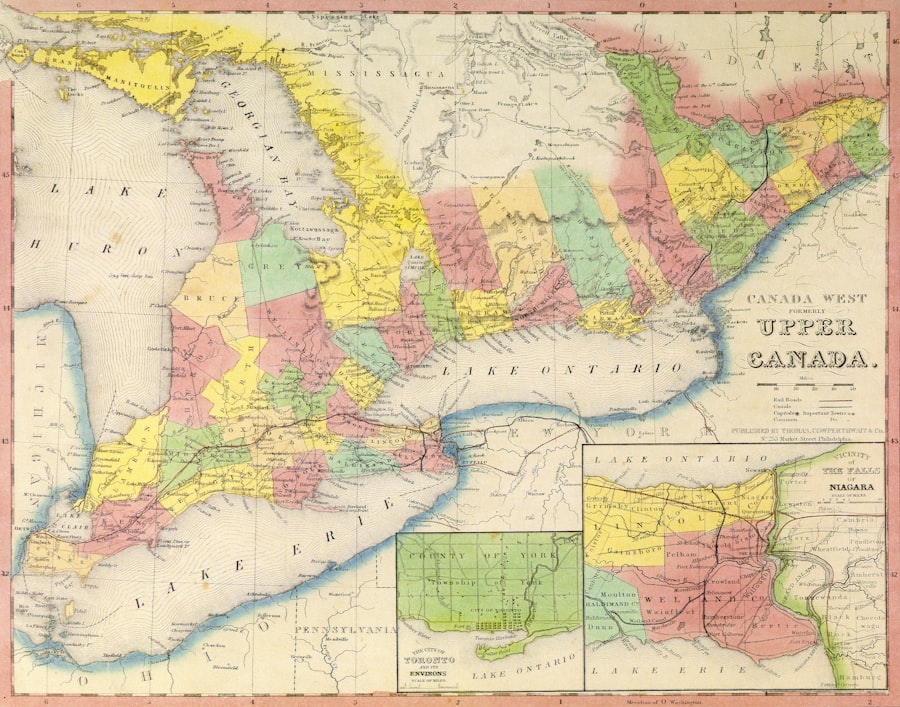
In the realm of intelligence gathering, cartography serves as an indispensable asset for analysts seeking to interpret complex data. Maps provide a visual representation of information that can reveal patterns and trends not easily discernible through text alone. Intelligence agencies utilize geographic information systems (GIS) to analyze spatial data, allowing them to identify potential threats and assess risks more effectively.
This capability is particularly important in counterterrorism efforts, where understanding the geographical context of operations can lead to more informed decision-making. Furthermore, cartography enhances situational awareness by integrating various data sources into a cohesive visual format. Analysts can overlay demographic information, infrastructure details, and environmental factors onto maps to gain insights into how these elements interact within a specific region.
This comprehensive approach enables intelligence agencies to anticipate developments and respond proactively to emerging threats. As geopolitical landscapes shift rapidly, the ability to visualize complex data through cartography becomes increasingly critical for national security.
The Impact of Technology on Modern Cartography and Mapping
The advent of technology has revolutionized cartography in ways previously unimaginable. Geographic Information Systems (GIS) have transformed how maps are created, analyzed, and utilized. These systems allow cartographers to collect vast amounts of data from various sources, including satellite imagery, GPS technology, and social media feeds.
This integration of data enables the creation of highly detailed and interactive maps that can be tailored to specific needs. Moreover, advancements in remote sensing technology have significantly enhanced mapping accuracy. Satellites equipped with sophisticated sensors can capture high-resolution images of the Earth’s surface, providing invaluable information for urban planning, environmental monitoring, and disaster response.
Drones have also emerged as powerful tools for mapping hard-to-reach areas, allowing for real-time data collection that can inform decision-making processes across multiple sectors. As technology continues to evolve, so too will the capabilities of cartography, leading to even more innovative applications in various fields.
The Relationship Between Cartography and Geopolitics
| Metric | Description | Value | Unit | Notes |
|---|---|---|---|---|
| Number of Classified Maps | Total maps designated as state secrets | 1,200 | maps | Includes topographic and strategic maps |
| Years of Classification | Duration maps remain classified | 50 | years | Standard declassification period |
| Authorized Personnel | Number of individuals with access | 350 | people | Includes military and government officials |
| Security Clearance Level | Required clearance to access cartographic secrets | Top Secret | classification level | Highest level of security clearance |
| Annual Review Frequency | How often classified maps are reviewed | 1 | per year | Ensures relevance and security |
| Incidents of Unauthorized Access | Reported breaches in the last decade | 3 | incidents | All incidents were contained promptly |
Cartography is deeply intertwined with geopolitics, as maps often reflect power dynamics and territorial disputes. The way borders are drawn on a map can influence national identity and sovereignty, making cartography a potent tool in political discourse. Historical examples abound where maps have been used to justify territorial claims or assert dominance over disputed regions.
For instance, during colonial expansion, European powers produced maps that depicted their territories in ways that legitimized their control over vast lands. In contemporary geopolitics, cartography continues to play a significant role in shaping international relations. Nations often use maps to communicate their positions on territorial disputes or resource claims.
The South China Sea is a prime example where competing claims are represented through various maps that reflect differing national interests. As countries navigate complex geopolitical landscapes, the interpretation and presentation of maps become critical in diplomatic negotiations and conflict resolution.
Cartography and the Creation of National Borders and Boundaries
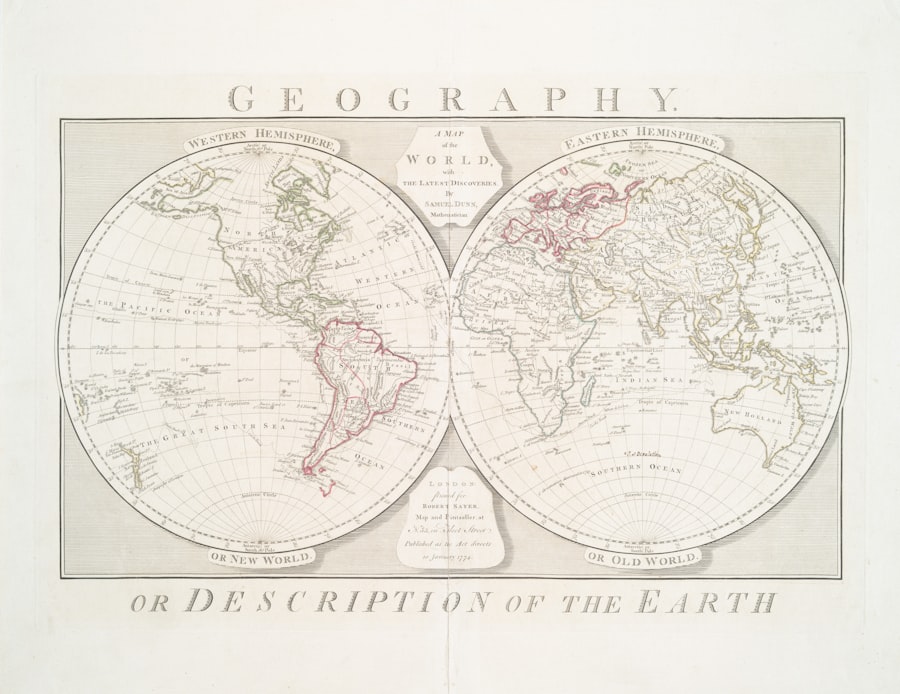
The creation of national borders is one of the most significant functions of cartography throughout history. Borders are not merely lines on a map; they represent political agreements, cultural identities, and historical narratives. The process of delineating borders has often been contentious, with disputes arising from colonial legacies or ethnic divisions.
Cartographers have played a pivotal role in this process by producing maps that define these boundaries and influence how nations perceive themselves and each other. In many cases, borders have been drawn without regard for the cultural or social realities on the ground. This has led to conflicts that persist today as communities find themselves divided by arbitrary lines established by colonial powers or international treaties.
Cartographers must navigate these complexities when creating maps that reflect current realities while also considering historical contexts.
The Role of Satellite Imagery and Remote Sensing in Modern Cartography
Satellite imagery and remote sensing technologies have transformed modern cartography by providing unprecedented access to detailed geographical information. Satellites orbiting the Earth capture high-resolution images that reveal intricate details about land use, vegetation cover, urban development, and environmental changes. This wealth of data allows cartographers to create accurate maps that reflect current conditions on the ground.
Remote sensing also plays a crucial role in disaster management and environmental monitoring. By analyzing satellite imagery before and after natural disasters such as hurricanes or earthquakes, responders can assess damage levels and prioritize recovery efforts effectively. Additionally, remote sensing enables scientists to monitor climate change impacts over time by tracking changes in land cover or glacial retreat.
As these technologies continue to advance, their integration into cartographic practices will enhance our understanding of complex environmental issues.
The Influence of Cartography on Military Strategy and Operations
Cartography has long been recognized as a fundamental component of military strategy and operations. Accurate maps provide commanders with essential information about terrain features that can influence troop movements and tactical decisions during conflicts. For instance, understanding elevation changes can determine how forces navigate through mountainous regions or how artillery is deployed effectively.
In modern warfare, the importance of real-time mapping cannot be overstated. Military operations increasingly rely on digital mapping tools that allow for rapid updates based on changing conditions on the battlefield. These tools enable commanders to visualize troop positions alongside enemy movements while considering logistical challenges such as supply routes or potential ambush sites.
As warfare evolves with technological advancements like drones and cyber warfare capabilities, cartography will continue to play a pivotal role in shaping military strategies.
The Ethical and Legal Implications of Cartography in State Secrets
The intersection of cartography with state secrets raises significant ethical and legal questions regarding transparency and accountability. Governments often classify sensitive geographical information related to national security or intelligence operations, limiting public access to critical data that could inform citizens about potential risks or threats. This secrecy can lead to mistrust between governments and their populations as citizens grapple with the implications of undisclosed information.
Moreover, the use of cartography in state secrets can create dilemmas regarding privacy rights versus national security interests. For instance, satellite imagery may reveal private properties or sensitive locations without consent from individuals or communities affected by such surveillance practices. Balancing these competing interests requires careful consideration of ethical frameworks that prioritize both security needs and individual rights while fostering public trust in governmental institutions.
Cartography and the Influence of Propaganda and Misinformation
Cartography has historically been employed as a tool for propaganda and misinformation campaigns aimed at shaping public perception or justifying political agendas. Maps can be manipulated to emphasize certain narratives while downplaying others; this selective representation can distort reality and influence public opinion significantly. For example, during wartime propaganda efforts often depict enemy territories in exaggerated ways to instill fear or rally support for military actions.
In today’s digital age where misinformation spreads rapidly through social media platforms, the potential for misleading maps has increased exponentially. Individuals or organizations may create deceptive maps that misrepresent facts about territorial claims or resource distributions to sway public sentiment or incite conflict. As society grapples with these challenges posed by misinformation campaigns utilizing cartographic tools, it becomes imperative for consumers of information to critically evaluate sources while promoting media literacy initiatives aimed at fostering informed citizenship.
The Future of Cartography: Emerging Trends and Challenges in State Secrets Revealed
Looking ahead, the future of cartography is poised for exciting developments driven by emerging technologies such as artificial intelligence (AI), machine learning (ML), augmented reality (AR), virtual reality (VR), blockchain technology among others which promise enhanced capabilities for map-making processes while addressing challenges related transparency accountability privacy rights among others . AI algorithms can analyze vast datasets quickly identifying patterns trends previously unnoticed enabling more accurate predictive modeling within various fields including urban planning disaster response environmental monitoring etc . However , these advancements also raise concerns regarding ethical implications surrounding surveillance privacy rights access control over sensitive geographical information .
As governments grapple with balancing national security interests against public accountability demands , it will be crucial for stakeholders including policymakers technologists civil society organizations engage collaboratively develop frameworks ensuring responsible use emerging technologies while safeguarding individual rights fostering trust between citizens institutions . Ultimately , navigating this complex landscape will require ongoing dialogue innovation adaptability ensuring cartography remains relevant responsive evolving needs society .
Cartography has long been intertwined with state secrets, as maps can reveal sensitive information about military installations, natural resources, and strategic locations. An insightful article that delves into the implications of cartography in the context of state secrets can be found on the Real Lore and Order website. For more information, you can read the article [here](https://www.realloreandorder.com/).
WATCH THIS! 🗺️ The Map That Proves Humans Explored Earth 5,000 Years Too Early
FAQs
What is cartography?
Cartography is the science and art of making maps. It involves the representation of geographical information visually, using symbols, colors, and labels to convey spatial data effectively.
What are state secrets in the context of cartography?
State secrets in cartography refer to geographic information or maps that a government classifies as confidential for national security reasons. This can include details about military installations, borders, infrastructure, or other sensitive locations.
Why do governments keep certain maps secret?
Governments keep certain maps secret to protect national security, prevent espionage, safeguard military operations, and control sensitive information that could be exploited by adversaries or unauthorized parties.
How do cartographers handle classified information?
Cartographers working with classified information follow strict protocols, including security clearances, restricted access, and secure storage. They may produce maps with limited detail or altered features to prevent sensitive data from being disclosed.
Can state secrets in cartography affect public maps?
Yes, public maps may omit or generalize certain details to avoid revealing sensitive information. This can result in less precise or incomplete representations of certain areas on publicly available maps.
Are there historical examples of cartography being used to protect state secrets?
Yes, throughout history, many countries have restricted the publication of detailed maps, especially during wartime or periods of political tension, to prevent enemies from gaining strategic advantages.
How has technology impacted the secrecy of cartographic information?
Advancements in satellite imagery, GPS, and digital mapping have made it more challenging to keep geographic information secret. However, governments continue to regulate and control access to sensitive data through legal and technical means.
Is it legal to publish classified maps?
Publishing classified maps without authorization is illegal in most countries and can result in severe penalties, including fines and imprisonment, due to the potential risks to national security.
Can civilians access state secret maps?
Generally, civilians cannot access maps classified as state secrets. Access is typically restricted to authorized personnel with appropriate security clearances.
What role do international laws play in cartographic state secrets?
International laws and agreements may influence how countries handle sensitive geographic information, especially regarding border disputes and military installations, but the classification of state secrets remains primarily under national jurisdiction.