
For millennia, humanity’s understanding of its own past has been a river, carving its course through layers of time. For much of this journey, a particular epoch has remained a vast, largely uncharted territory: the period preceding the last glacial maximum. Scientific consensus, built on a foundation of geological and archaeological data, has painted a picture of humanity existing in rudimentary forms, scattered across the globe, their tools simple, their societies small-scale. This conventional narrative, much like a well-worn map, has guided our explorations. However, a growing body of evidence is beginning to suggest that this map might be incomplete, lacking chapters that speak of a civilization far more complex and advanced than previously imagined. This article delves into this emerging field, examining the enigmatic clues that hint at the existence of a pre-Ice Age advanced civilization, a possibility that challenges our deep-seated assumptions about human history.
The most compelling evidence for a pre-Ice Age advanced civilization lies not in fragile artifacts that crumble with time, but in the enduring testament of stone. These are not simple piles of rock, but colossal structures, meticulously crafted and precisely aligned, whose origins defy easy explanation within the accepted timeline of human development. Their sheer scale, sophisticated engineering, and astronomical orientations suggest a level of societal organization, technological capability, and specialized knowledge that seems to sprout from a different temporal soil.
Gobekli Tepe: A Riddle in the Fertile Crescent
Perhaps the most famous, and indeed paradigm-shifting, of these sites is Göbekli Tepe in southeastern Turkey. Discovered in the 1960s but extensively excavated since the 1990s, this sprawling complex of massive stone pillars predates Stonehenge by some 7,000 years. Carbon dating places its construction between 9600 and 8200 BCE, meaning it was erected by hunter-gatherers. This temporal placement is a cornerstone of the debate, as it challenges the long-held belief that complex monumental architecture required settled agricultural societies and sophisticated hierarchical structures.
- The Pillars of Enigma: The site features at least twenty different circular and rectangular structures, each surrounded by rows of T-shaped limestone pillars. These pillars, some weighing up to 20 tons and standing 18 feet tall, are intricately carved with depictions of animals such as lions, boars, foxes, snakes, and birds. The artistry and detail of these carvings suggest a level of artistic sophistication and a deep understanding of the natural world.
- Astronomical Alignments: Researchers have observed that many of the structures exhibit precise astronomical alignments, particularly with celestial events like the rising of certain stars or solstices. For example, evidence suggests alignments with the constellation Cygnus. Such precision requires sophisticated observational astronomy and the mathematical understanding to translate these observations into architectural design. The question arises: to what purpose were these celestial connections forged?
- The Hunter-Gatherer Paradox: The prevailing theory struggles to reconcile the monumental labor and organizational capacity required to quarry, transport, carve, and erect these massive stones with a hunter-gatherer lifestyle. These societies are typically characterized by mobility and a lack of permanent settlements, making the construction of such enduring edifices seem incongruous. How did these seemingly simple societies mobilize the resources and manpower for such an undertaking?
The Enigmatic Scale of the Pyramids of Giza (Pre-Dynastic Theories)
While the Great Pyramids of Giza are unequivocally attributed to the Old Kingdom of Egypt, a growing number of researchers propose that their genesis, or at least the conception of monumental pyramid building, might extend far deeper into history. The precision of their construction, the logistical feat of their creation, and the sheer magnitude of the undertaking have led to speculation about capabilities that might have existed prior to the accepted dynastic period.
- Precision Engineering Beyond Their Time: The astounding accuracy with which the pyramids are aligned with magnetic north, the incredible precision of their stone cutting, and the sheer weight of the blocks used have been points of contention. The internal passageways and chambers are engineered with a remarkable degree of precision, suggesting advanced knowledge of geometry and surveying.
- The Water Erosion Hypothesis: Geologist Robert Schoch, among others, has proposed the theory that the erosion patterns on the Sphinx and the surrounding enclosure walls predate the Old Kingdom, suggesting that they were exposed to significant rainfall over a much longer period. This would place their construction in a wetter climatic era, potentially thousands of years before 2500 BCE, pushing the timeline into periods where advanced civilization is not conventionally believed to have existed.
- Unexplained Construction Techniques: Despite extensive study, the exact methods used to quarry, transport, and lift the massive stone blocks remain a subject of debate. While theories involving ramps and levers are prevalent, the scale of the operation and the apparent ease with which impossibly heavy stones were placed have fueled speculation about technologies or methodologies that have been lost to time.
Further Anomalies: Baalbek and Beyond
Beyond these prominent examples, other sites around the world display similar characteristics of immense stone construction that challenge conventional chronologies.
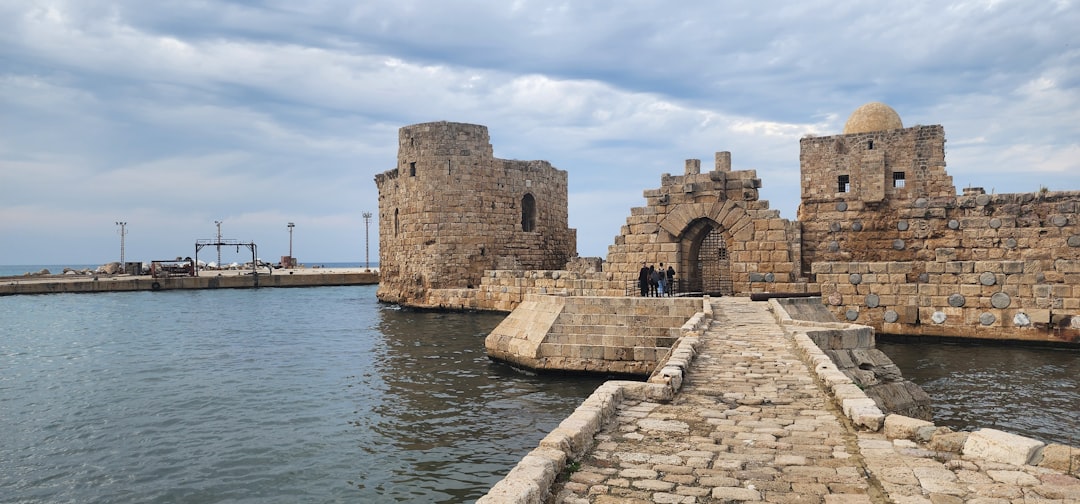
- Baalbek’s Trilithon: The temple complex at Baalbek in Lebanon features the “Trilithon,” a wall composed of three massive stone blocks, each weighing approximately 800 tons. These blocks are so perfectly cut and fitted that a knife blade cannot be inserted between them. The quarry from which these stones were likely sourced is located nearby, containing even larger, unfinished blocks that dwarf those used in the wall. The sheer scale of these stones and the sophistication of their placement point to an engineering prowess that is difficult to attribute to the civilizations known to have inhabited the region during the periods of its conventional dating.
- Submerged Structures: In various locations around the world, evidence of submerged stone structures has been observed. These include formations off the coast of Japan (Yoonaguni Monument), Cuba, and other maritime areas. The geometric regularity of these formations, combined with their location underwater, suggests they were built on land during periods of lower sea levels and subsequently submerged due to post-glacial sea-level rise. This places their construction in a timeframe potentially deep within the last glacial period or earlier.
The intriguing question of whether an advanced civilization existed before the Ice Age has captivated researchers and enthusiasts alike. A related article that delves into this topic can be found on Real Lore and Order, which explores various theories and archaeological findings that suggest the possibility of sophisticated societies existing thousands of years ago. For more insights and detailed discussions, you can read the article here: Real Lore and Order.
Echoes in the Deep: Submerged Civilizations and Paleoclimatology
The very landscape of our planet bears silent witness to dramatic climatic shifts. The ebb and flow of ice sheets, the rise and fall of sea levels – these are the geological breaths of Earth. When we look at these shifts through the lens of paleoclimatology, we unlock a new understanding of where and when human societies might have flourished, revealing potential canvases for advanced civilizations that are now hidden beneath the waves.
The Last Glacial Maximum: A Frozen World, a Hidden Past
The last glacial maximum, roughly 20,000 years ago, locked away vast amounts of water in immense ice sheets. This resulted in significantly lower sea levels, exposing vast areas of continental shelf that are now submerged. This forgotten landmass represents a tantalizing frontier for archaeological exploration, a submerged chapter of human history.
- Exposed Continental Shelves: During periods of lowered sea levels, land bridges and broad coastal plains become accessible. These areas would have been ideal for early human settlement and the development of complex societies. The Doggerland region in the North Sea, for example, was a vast expanse of land connecting Britain to mainland Europe, supporting a rich ecosystem and likely human habitation.
- The Potential for Lost Cities: The submergence of these areas due to post-glacial sea-level rise means that any settlements or structures that existed there are now lost beneath the ocean. If an advanced civilization existed prior to this period, its grandest manifestations might well lie hidden in the ocean depths, waiting to be rediscovered.
- Geological Markers as Clues: Geologists and oceanographers can identify submerged coastlines, ancient riverbeds, and other geological features that indicate former terrestrial environments. These provide tantalizing clues about where to focus future underwater archaeological investigations.
The Mediterranean and its Submerged Secrets
The Mediterranean Sea, a cradle of ancient civilizations, also holds clues to an even older past.
- The Aegean Sea’s Lost Shores: Archaeological surveys off the coast of Crete and other Aegean islands have revealed submerged Neolithic sites, suggesting that settlements now underwater were once on dry land. The extent of these submerged areas implies a significant sea-level rise over millennia, potentially encompassing periods of advanced human activity.
- Possible Connections to Minoan and Mycenaean Precursors: While the Minoan and Mycenaean civilizations are well-documented, some theories suggest that they might have inherited knowledge or even art forms from a much older, now-submerged precursor civilization. The transition from Paleolithic to Neolithic cultures is often depicted as a sudden leap, and perhaps some of that innovation originated from a lost era.
The Mystery of the Black Sea’s Freshwater Past
The Black Sea offers another compelling case for submerged history.
- A Freshwater Lake Pre-Flood: Evidence suggests that the Black Sea was once a large freshwater lake, isolated from the Mediterranean. Its catastrophic flooding with saltwater, estimated to have occurred around 5600 BCE, presents a dramatic geological event.
- Submerged Human Habitation: Archaeological finds on the Black Sea floor, including pottery shards and ancient wooden structures, indicate human habitation before the inundation. This places human activity in this region during a time when it was a freshwater lake, potentially extending to earlier periods than conventionally understood for complex societies in the area. The story of this flooding event could also be the genesis of Noah’s flood myths.
Anomalous Artifacts and Lost Technologies
Beyond colossal constructions, certain artifacts suggest a level of technological sophistication and knowledge that appears out of sync with their purported archaeological context. These are the scattered jigsaw pieces of a puzzle that challenge the established picture of early human ingenuity.
The Antikythera Mechanism: A Glimpse of Ancient Computation
The Antikythera mechanism, discovered in a shipwreck off the coast of the Greek island of Antikythera, is arguably the most astonishing artifact hinting at lost technology. Dated to the 2nd century BCE, this complex device used intricate gears to calculate and display astronomical positions, eclipses, and even the timing of the Olympic Games.
- Sophistication Beyond Its Era: The complexity of the mechanism, mirroring that of 14th-century astronomical clocks, has left scholars astounded. It implies a level of mechanical engineering and understanding of astronomical cycles far in advance of what was believed to be present in ancient Greece.
- Questions of Origin and Precursors: While attributed to classical Greece, its sophistication leads some to question whether it was an isolated marvel or the culmination of a much longer tradition of advanced instrument making that has been lost to us. Could it be a descendant of even earlier, pre-Ice Age technologies?
- Potential for Misplaced Antiquity: The artifact was found in a Roman-era shipwreck, but its manufacture predates it. The question remains whether the knowledge to create such a device existed independently at that time or if it was a relic of an even older, more technologically advanced culture, perhaps one that predates the widespread adoption of agriculture.
Other Enigmatic Objects: Disjuncts in the Timeline
Numerous other finds, often less publicized and more debated, contribute to the picture of technological anomalies.
- The Baghdad Battery: Discovered near Baghdad, these ceramic jars containing copper cylinders and iron rods have been interpreted by some as ancient electrochemical cells, potentially used for electroplating or even medical treatments. If genuine, their age would place them in the Parthian or Sasanian periods (pre-224 CE), but their function and the level of understanding of electricity they suggest are still debated. Could the principles behind them have been understood even earlier?
- The Saqqara Bird: This wooden artifact, discovered in an ancient Egyptian tomb, bears a striking resemblance to a modern glider or airplane. While often dismissed as a child’s toy or a ceremonial object, its aerodynamic proportions have led to speculation about an understanding of flight principles that challenges conventional Egyptian technological capabilities.
- Ancient Metalwork and Alloys: The discovery of extremely pure metals, or complex alloys, in archaeological contexts that predate the supposed technological milestones for their creation, raises questions. For instance, the advanced metallurgy observed in some ancient South American cultures pre-dates what was thought to be possible for their respective eras.
Challenging the Conventional Timeline of Human Development
The evidence for a pre-Ice Age advanced civilization forces a re-evaluation of our current understanding of human history, a narrative often presented as a steady, linear progression from simplicity to complexity. This new perspective suggests that this progression might be more akin to a tapestry, with some threads of advanced achievement woven in periods we previously considered barren.
The “Out of Africa” Model and its Gaps
The prevailing “Out of Africa” model suggests that Homo sapiens evolved in Africa and then migrated outwards, gradually developing culture and technology. While this model is robust, it doesn’t fully account for instances of apparently advanced knowledge or artifacts appearing in regions or timeframes that don’t neatly fit the migration waves.
- Sudden Leaps in Development: The archaeological record sometimes shows what appear to be sudden leaps in technological or cultural sophistication, rather than gradual evolution. Göbekli Tepe, for example, appears to spring forth from a hunter-gatherer context with a fully formed monumental architecture and artistic tradition.
- Independent Innovation vs. Lost Knowledge Transfer: The conventional view largely favors independent innovation by different groups of Homo sapiens. However, the possibility of knowledge transfer from an older, advanced civilization, even in fragmented forms, offers an alternative explanation for these seemingly abrupt advancements.
The “Great Silence” and the Fermi Paradox Analogy
The absence of definitive, overwhelming proof of a pre-Ice Age civilization is often referred to as the “Great Silence” on this subject. This is analogous to the Fermi Paradox in astrobiology, which questions why, given the vastness of the universe and the high probability of extraterrestrial life, we haven’t encountered any evidence of alien civilizations.
- The Ephemeral Nature of Civilizations: Civilizations, even advanced ones, are not necessarily eternal. They can rise, flourish, and decline, leaving behind only faint echoes or buried remnants. The forces of nature, geological upheavals, and the passage of immense timescales can erase even the most substantial evidence.
- The Unseen and Undiscovered: Much of our planet, particularly the ocean floor and subterranean layers, remains unexplored. It is plausible that much of the evidence of such a civilization lies hidden, waiting for future exploration and advanced detection technologies. The human endeavor to understand our past is like a ship setting sail on an uncharted ocean; we are still charting the currents and sounding the depths.
Rethinking “Civilization”: Beyond Agriculture and Cities
Our current definition of “civilization” is heavily influenced by the rise of agriculture, settled communities, and urban centers. If we consider the possibility of a pre-Ice Age advanced civilization, we might need to broaden this definition.
- Alternative Models of Society: Could there have been advanced societies that didn’t rely on agriculture as we understand it? Perhaps highly sophisticated nomadic cultures, or societies adapted to vastly different environments (e.g., ice age conditions), possessed knowledge and capabilities we cannot currently fathom.
- Knowledge as the Hallmark of Advancement: The advancement of a civilization might not solely be measured by monumental constructions or complex tools, but by its understanding of the natural world, mathematics, astronomy, and perhaps even consciousness itself. This deeper knowledge could have developed independently of the societal structures we associate with civilization.
The intriguing question of whether an advanced civilization existed before the Ice Age has captivated researchers and enthusiasts alike. Many theories suggest that ancient societies may have thrived during this period, leaving behind traces of their existence that we are only beginning to uncover. For those interested in exploring this topic further, a related article provides fascinating insights into the evidence and implications of such civilizations. You can read more about it in this detailed exploration that delves into the mysteries of our planet’s prehistoric past.
The Future of Exploration: New Tools and Open Minds
| Metric | Data/Value | Source/Reference | Notes |
|---|---|---|---|
| Time Period of Ice Age | Approximately 2.58 million to 11,700 years ago | Geological Records | Last glacial period ended around 11,700 years ago |
| Evidence of Advanced Civilization | No confirmed evidence | Archaeological and Geological Studies | Current mainstream science finds no proof of advanced civilizations before the Ice Age |
| Human Ancestors’ Technological Level | Stone tools, basic fire use | Anthropological Research | Homo sapiens and predecessors had primitive technology during Ice Age |
| Claims of Pre-Ice Age Advanced Civilizations | Speculative, no scientific consensus | Alternative Theories, Pseudoscience | Includes theories like Atlantis, but lack empirical support |
| Geological Anomalies Suggesting Civilization | None conclusively linked to advanced civilizations | Geology and Archaeology | Some anomalies explained by natural processes |
| Carbon Dating Limits | Up to ~50,000 years | Radiocarbon Dating Methodology | Limits ability to date artifacts older than Ice Age |
| Alternative Dating Methods | Thermoluminescence, Uranium-series dating | Geochronology | Used to date older artifacts and geological formations |
The pursuit of evidence for a pre-Ice Age advanced civilization is not a fringe pursuit but a growing area of interdisciplinary research. As technology advances and our understanding of Earth’s past deepens, new avenues for discovery are opening, requiring both scientific rigor and an openness to challenging established paradigms.
Advancements in Underwater Archaeology
As mentioned, submerged sites hold immense potential. Innovations in sonar, remotely operated vehicles (ROVs), and underwater imaging are making it increasingly feasible to explore these lost worlds.
- High-Resolution Mapping: Techniques like multi-beam sonar can create incredibly detailed maps of the seabed, revealing subtle anomalies that could indicate man-made structures.
- ROVs and Autonomous Underwater Vehicles (AUVs): These robotic explorers can operate at extreme depths and for extended periods, allowing for close-up visual inspection and sample collection in areas previously inaccessible to humans.
- Dating of Submerged Sediments: Advanced dating techniques for marine sediments can help establish the chronology of when sea levels rose and submerged ancient lands, providing a temporal framework for potential settlements.
Geological and Geophysical Techniques
Beyond direct archaeological investigation, geological and geophysical methods can provide indirect evidence.
- Paleoseismic Studies: Studying ancient earthquakes and fault lines can reveal evidence of past geological events that might have impacted or destroyed settlements.
- Geochemical Analysis: Examining the composition of ancient soils and minerals can reveal patterns of human activity, such as agriculture or industrial processes, even if physical structures have eroded.
- Cosmic Ray Exposure Dating: This technique can be used to date exposed rock surfaces, providing insights into the age of geological formations and potentially any associated human modifications.
The Importance of Interdisciplinary Collaboration
This field necessitates a collaborative approach, bringing together archaeologists, geologists, oceanographers, physicists, historians, and anthropologists.
- Synergy of Disciplines: By combining expertise, researchers can develop more comprehensive hypotheses and more effective strategies for data collection and interpretation. For example, geologists can identify potential areas of past human habitation based on climatic models, while archaeologists can then target these areas for investigation.
- Challenging Existing Frameworks: The very nature of this research requires individuals who are willing to question established orthodoxies and consider unconventional explanations. This requires a robust scientific methodology, where hypotheses are rigorously tested, but also a degree of intellectual flexibility.
- The Role of Citizen Science and Open Data: As technologies become more accessible, citizen science initiatives and the open sharing of data could play a role in identifying anomalies and patterns that might otherwise be overlooked.
The possibility of a pre-Ice Age advanced civilization, while still speculative, is supported by a growing collection of enigmas. These are not mere coincidences, but recurring patterns of sophistication and precision that challenge our established assumptions. The “stones of time” – the megalithic structures, the submerged landscapes, and the anomalous artifacts – are all whispering tales of a past that may be far richer and more complex than we currently comprehend. As we continue to probe the depths of geological history and develop new methods of scientific inquiry, we inch closer to potentially rewriting the first chapters of humanity’s grand narrative, revealing a forgotten epoch of innovation and a testament to the enduring spirit of human endeavor across the vast canvas of time. The journey to uncover this evidence is the ultimate detective story, played out on a planetary scale.
STOP: Why They Erased 50 Impossible Inventions From Your Textbooks
FAQs
1. Is there any scientific evidence supporting the existence of an advanced civilization before the Ice Age?
Currently, there is no credible scientific evidence that confirms the existence of an advanced civilization before the Ice Age. Most archaeological and geological findings indicate that human civilizations developed after the last Ice Age, around 10,000 years ago.
2. What time period does the Ice Age refer to?
The term “Ice Age” commonly refers to the last glacial period, which lasted from approximately 115,000 to 11,700 years ago. This period was characterized by extensive ice sheets covering large parts of North America, Europe, and Asia.
3. Why do some theories suggest advanced civilizations existed before the Ice Age?
Some speculative theories propose that advanced civilizations existed before the Ice Age based on interpretations of ancient myths, unexplained archaeological findings, or anomalies in geological records. However, these theories lack robust scientific support and are not widely accepted by experts.
4. How do scientists study human history before the Ice Age?
Scientists use methods such as archaeology, paleontology, and geology to study human history before the Ice Age. They analyze fossils, stone tools, and environmental data to understand early human activity and the development of civilizations.
5. Could climate changes during the Ice Age have affected early human civilizations?
Yes, climate changes during the Ice Age significantly impacted human populations by altering habitats, food availability, and migration patterns. However, the development of complex civilizations is generally believed to have occurred after the Ice Age, during more stable climatic conditions.