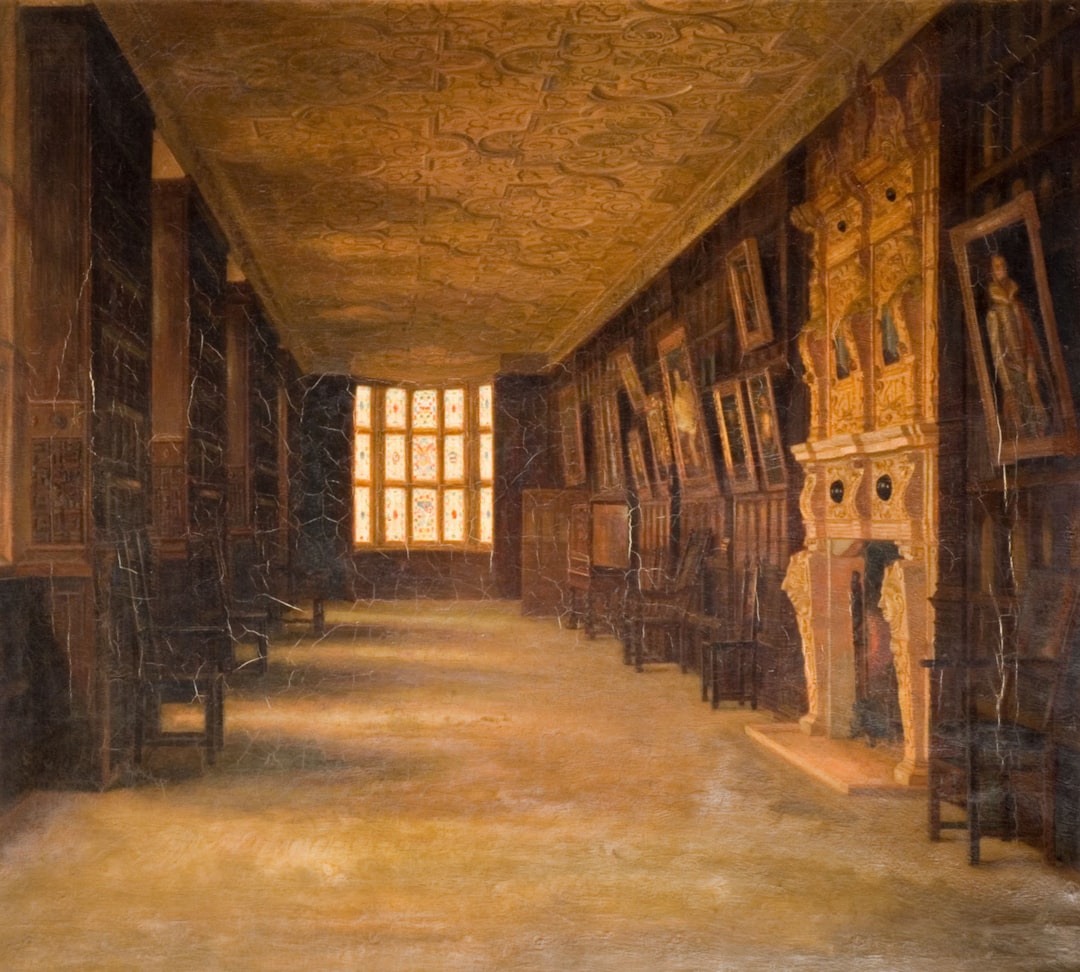
The Library of Alexandria, often regarded as one of the most significant repositories of knowledge in the ancient world, stood as a beacon of intellectual pursuit and scholarly endeavor. Established in the early 3rd century BCE in the city of Alexandria, Egypt, it was not merely a collection of scrolls but a vibrant hub where scholars from various cultures converged to share ideas, conduct research, and engage in philosophical discourse. The library was part of a larger institution known as the Mouseion, dedicated to the Muses, which served as a center for learning and the arts.
This environment fostered an unparalleled exchange of knowledge, making it a pivotal site for the advancement of science, literature, and philosophy. The library’s collection was vast, reportedly housing hundreds of thousands of scrolls that encompassed a wide array of subjects, including mathematics, astronomy, medicine, and literature. Scholars such as Euclid and Archimedes were among those who contributed to its legacy, producing works that would influence generations to come.
The Library of Alexandria was not only a physical space filled with texts; it represented the spirit of inquiry and the pursuit of wisdom that characterized the Hellenistic period. Its existence underscored the importance of knowledge as a tool for understanding the world and improving human life.
Key Takeaways
- The Library of Alexandria was a renowned center of knowledge and learning in ancient times, housing a vast collection of texts and maps.
- Ancient cartography played a crucial role in mapping the world and understanding geographical features, trade routes, and cultural exchange.
- The legacy of the Library of Alexandria continues to influence the preservation and dissemination of knowledge through its collection of ancient maps.
- Uncovering lost maps from the Library’s collection provides valuable insights into ancient cartography and the navigation of seas and beyond.
- The role of maps in ancient Alexandria was essential for navigating the seas, facilitating trade, and exploring new territories, shaping the world as we know it today.
The Ancient Art of Cartography: Mapping the World
Cartography, the art and science of map-making, has been an essential aspect of human civilization since ancient times. In the context of the ancient world, maps served not only as navigational aids but also as reflections of cultural understanding and geographical knowledge. Early cartographers utilized rudimentary tools and observational techniques to create representations of their surroundings, often blending empirical data with mythological elements.
This fusion of fact and fiction in early maps reveals much about the societies that produced them, showcasing their beliefs, fears, and aspirations. In ancient Alexandria, cartography flourished alongside other scientific disciplines. The city was home to notable figures such as Eratosthenes, who is credited with calculating the Earth’s circumference with remarkable accuracy.
His work exemplified the sophisticated understanding of geography that existed during this period. Maps created in Alexandria were not merely practical tools; they were also artistic expressions that conveyed complex information about trade routes, territorial boundaries, and cultural exchanges. The maps produced during this era laid the groundwork for future explorations and significantly influenced how subsequent generations perceived their world.
The Legacy of the Library: Preserving and Disseminating Knowledge
The legacy of the Library of Alexandria extends far beyond its physical existence; it represents a profound commitment to preserving and disseminating knowledge. The library’s scholars were dedicated to collecting texts from various cultures, translating them into Greek, and making them accessible to a wider audience. This effort not only preserved ancient works that might have otherwise been lost but also facilitated cross-cultural dialogue and intellectual exchange.
The library’s role as a custodian of knowledge helped to ensure that valuable insights from diverse traditions were not forgotten. Moreover, the Library of Alexandria set a precedent for future institutions dedicated to learning. Its model inspired the establishment of libraries throughout the Mediterranean and beyond, fostering an environment where knowledge could be shared and built upon.
The library’s commitment to scholarship and inquiry influenced later educational institutions, such as those in Rome and medieval Europe.
Uncovering Lost Maps: Exploring the Library’s Collection
| Metrics | Data |
|---|---|
| Number of Lost Maps | 150 |
| Exploration Time | 6 months |
| Map Restoration Cost | 10,000 |
| Public Interest | High |
The collection housed within the Library of Alexandria is believed to have included numerous maps that documented the ancient world in intricate detail. However, much of this cartographic treasure has been lost to history due to various factors, including wars, fires, and neglect. The quest to uncover these lost maps has become a significant area of interest for historians and archaeologists alike.
By piecing together fragments of information from ancient texts and inscriptions, researchers strive to reconstruct what these maps may have looked like and how they contributed to the understanding of geography at the time. Recent archaeological discoveries have shed light on some aspects of Alexandria’s cartographic heritage. For instance, references to maps in works by ancient scholars provide clues about their content and purpose.
Additionally, fragments of papyrus containing geographical information have been unearthed in various locations across Egypt. These findings offer tantalizing glimpses into the sophisticated mapping techniques employed by ancient cartographers and highlight the importance of continued exploration in uncovering lost knowledge.
The Role of Maps in Ancient Alexandria: Navigating the Seas and Beyond
In ancient Alexandria, maps played a crucial role in navigation and exploration, particularly given the city’s strategic location along trade routes connecting Europe, Asia, and Africa. Mariners relied on maps to guide their journeys across the Mediterranean Sea, while traders used them to navigate complex networks of commerce. The accuracy and detail found in these maps were vital for ensuring safe passage and successful trade ventures.
As such, cartography was not merely an academic pursuit; it had practical implications for economic prosperity and cultural exchange. Moreover, maps served as tools for political power and territorial claims. Rulers and empires utilized cartographic representations to assert dominance over regions and populations.
In Alexandria, where diverse cultures intersected, maps became instruments for negotiating relationships between different groups. They reflected not only geographical realities but also social hierarchies and power dynamics. Thus, maps were integral to both navigation and diplomacy in ancient Alexandria.
The Quest for Lost Maps: Rediscovering Ancient Cartographic Treasures

The quest for lost maps from the Library of Alexandria is akin to a treasure hunt through time. Scholars are driven by a desire to recover these cartographic artifacts that hold keys to understanding ancient civilizations’ perspectives on geography and their interactions with one another. This pursuit involves meticulous research into historical texts that reference maps or describe geographical features.
In addition to textual analysis, modern technology has opened new avenues for rediscovering ancient cartographic treasures. Techniques such as satellite imagery and ground-penetrating radar have revolutionized archaeological exploration, allowing researchers to identify potential sites where lost maps or related artifacts may be buried.
As excavations continue in regions once part of ancient Alexandria’s sphere of influence, there is hope that more fragments will be uncovered, providing further insight into this rich cartographic legacy.
Digital Technologies and the Preservation of Ancient Maps
In an age defined by rapid technological advancement, digital technologies have emerged as powerful tools for preserving ancient maps and making them accessible to a global audience. Digitization initiatives undertaken by libraries and museums aim to create high-resolution digital copies of fragile manuscripts and maps that would otherwise be at risk of deterioration. These efforts not only safeguard invaluable cultural heritage but also democratize access to knowledge by allowing individuals from diverse backgrounds to explore these resources online.
Furthermore, digital mapping platforms enable researchers to analyze historical maps alongside contemporary geographic data. This integration fosters a deeper understanding of how landscapes have changed over time and how ancient societies interacted with their environments. By utilizing Geographic Information Systems (GIS) technology, scholars can visualize historical trade routes or migration patterns based on ancient cartographic evidence.
Such innovative approaches breathe new life into the study of ancient maps while ensuring their preservation for future generations.
Mapping the Ancient World: Insights into Trade, Exploration, and Cultural Exchange
The maps created in ancient Alexandria provide invaluable insights into trade networks, exploration endeavors, and cultural exchanges that shaped the Mediterranean world. By examining these cartographic representations, historians can trace the flow of goods, ideas, and people across vast distances. For instance, maps depicting trade routes reveal how commodities such as spices, textiles, and precious metals were exchanged between different cultures, fostering economic interdependence.
Moreover, these maps illustrate how exploration expanded human understanding of geography beyond familiar territories. As sailors ventured into uncharted waters guided by ancient maps, they encountered new lands and peoples that would ultimately reshape their worldviews. The cultural exchanges resulting from these encounters enriched societies on both sides—introducing new technologies, philosophies, and artistic expressions that transcended borders.
The Library’s Influence on Modern Cartography and Geographic Exploration
The influence of the Library of Alexandria on modern cartography is profound yet often understated. The principles established by its scholars laid foundational concepts that continue to inform contemporary map-making practices. For instance, the emphasis on empirical observation and systematic documentation can be traced back to the methodologies employed by ancient cartographers in Alexandria.
Their commitment to accuracy set standards that modern cartographers strive to uphold. Additionally, the library’s legacy extends into geographic exploration itself. The thirst for knowledge that characterized Alexandria’s intellectual community inspired subsequent generations to embark on voyages of discovery across uncharted territories.
Explorers such as Christopher Columbus and Vasco da Gama were motivated by a desire to expand geographical knowledge—a pursuit rooted in the traditions established by earlier scholars at the Library of Alexandria.
The Future of Lost Map Discovery: Challenges and Opportunities
As researchers continue their quest for lost maps from antiquity, they face both challenges and opportunities in their endeavors. One significant challenge lies in the limited availability of primary sources; many texts referencing ancient maps have been lost or exist only in fragmentary form. This scarcity necessitates innovative approaches to reconstructing historical cartography while navigating gaps in knowledge.
However, advancements in technology present exciting opportunities for discovery. Collaborative efforts among historians, archaeologists, and digital humanists are paving new paths toward uncovering lost treasures from antiquity. Interdisciplinary research initiatives that combine expertise from various fields can yield fresh insights into ancient mapping practices while fostering a deeper appreciation for their significance within broader historical contexts.
Preserving the Legacy: The Importance of Access to Ancient Maps for Research and Education
Preserving access to ancient maps is crucial for research and education across disciplines ranging from history to geography. These artifacts serve as windows into past societies’ worldviews—offering glimpses into how they understood their environments and interacted with one another. By ensuring that scholars have access to these resources through digitization efforts or physical archives, institutions can facilitate ongoing research that enriches our understanding of human history.
Moreover, access to ancient maps fosters educational opportunities for students at all levels—encouraging critical thinking about geography’s role in shaping cultures over time. Engaging with historical cartography allows learners to appreciate diverse perspectives while developing skills necessary for navigating contemporary global challenges rooted in historical contexts. Ultimately, preserving access to ancient maps is not just about safeguarding artifacts; it is about nurturing curiosity and fostering connections between past and present generations through shared knowledge.
The Library of Alexandria, renowned for its vast collection of knowledge and ancient texts, has long been a subject of fascination and mystery, particularly regarding the lost maps that were once housed within its walls. These maps, believed to contain invaluable geographical and astronomical information, have sparked numerous discussions and theories about their content and significance. For those interested in exploring more about the mysteries surrounding the Library of Alexandria and its lost treasures, a related article can be found on Real Lore and Order, which delves into the historical context and the enduring legacy of this ancient institution.
WATCH THIS 🧊The US Military Confirmed It: What’s REALLY Under the Antarctic Ice?
FAQs
What was the Library of Alexandria?
The Library of Alexandria was a renowned ancient library and cultural center in Alexandria, Egypt. It was one of the largest and most significant libraries of the ancient world.
What were the lost maps of the Library of Alexandria?
The lost maps of the Library of Alexandria refer to the collection of ancient maps and geographical knowledge that were housed in the library before it was destroyed. These maps were considered to be highly advanced for their time and contained valuable information about the known world.
How were the maps lost?
The exact circumstances of the loss of the maps of the Library of Alexandria are not fully known. The library was destroyed in a series of events over centuries, including fires, wars, and political upheaval. It is believed that the maps and other valuable documents housed in the library were lost during these destructive events.
What was the significance of the lost maps?
The lost maps of the Library of Alexandria were significant because they contained valuable information about the geography, cartography, and navigation of the ancient world. They were considered to be highly advanced for their time and were influential in shaping the understanding of the known world.
Is there any hope of finding the lost maps?
While the original maps of the Library of Alexandria are believed to be lost forever, there is ongoing research and exploration to uncover ancient maps and geographical knowledge from other sources. Advances in technology and archaeology may provide new insights into the lost maps and their significance.