
Time dilation is a physical phenomenon described by Einstein’s theory of relativity, where time passes at different rates for observers in different reference frames. This effect occurs due to relative velocity differences between observers or variations in gravitational field strength. When an object moves at velocities approaching the speed of light relative to a stationary observer, time passes more slowly for the moving object as measured by the stationary observer.
The mathematical relationship governing time dilation demonstrates that as velocity increases toward the speed of light, the time differential becomes increasingly pronounced. In gravitational time dilation, clocks run slower in stronger gravitational fields compared to weaker ones. These effects have been experimentally verified through atomic clock measurements on high-speed aircraft and satellites, as well as observations of particle decay rates in accelerators.
Time dilation has practical applications in modern technology, particularly in Global Positioning System (GPS) satellites, which must account for both special and general relativistic effects to maintain accuracy. The phenomenon also affects high-energy particle physics experiments and astronomical observations of objects moving at relativistic speeds. These measurable effects confirm the predictions of relativity theory and demonstrate that time is not absolute but depends on the observer’s frame of reference.
Key Takeaways
- Time dilation is a phenomenon where time passes at different rates depending on relative speed or gravitational fields.
- Einstein’s Theory of Relativity provides the foundation for understanding time dilation.
- Time dilation significantly impacts space travel, causing astronauts to age slower relative to people on Earth.
- Practical applications of time dilation include the accuracy of GPS systems, which must account for time differences.
- Experimental evidence, such as the twin paradox and observations near black holes, confirms the reality of time dilation.
The Theory of Relativity
To fully grasp the concept of time dilation, one must first understand the theory of relativity, formulated by Albert Einstein in the early 20th century. This groundbreaking theory is divided into two parts: special relativity and general relativity. Special relativity, introduced in 1905, focuses on the physics of objects moving at constant speeds, particularly those approaching the speed of light.
It posits that the laws of physics are the same for all observers, regardless of their relative motion. This leads to the conclusion that time and space are intertwined in a four-dimensional continuum known as spacetime. General relativity, published in 1915, expands upon these ideas by incorporating gravity into the framework.
It describes gravity not as a force but as a curvature of spacetime caused by massive objects. This curvature affects how objects move and how time is experienced in different gravitational fields. For example, time runs slower in stronger gravitational fields compared to weaker ones.
Together, these two theories revolutionized our understanding of the universe and laid the groundwork for exploring complex phenomena like time dilation.
Understanding the Concept of Time Dilation
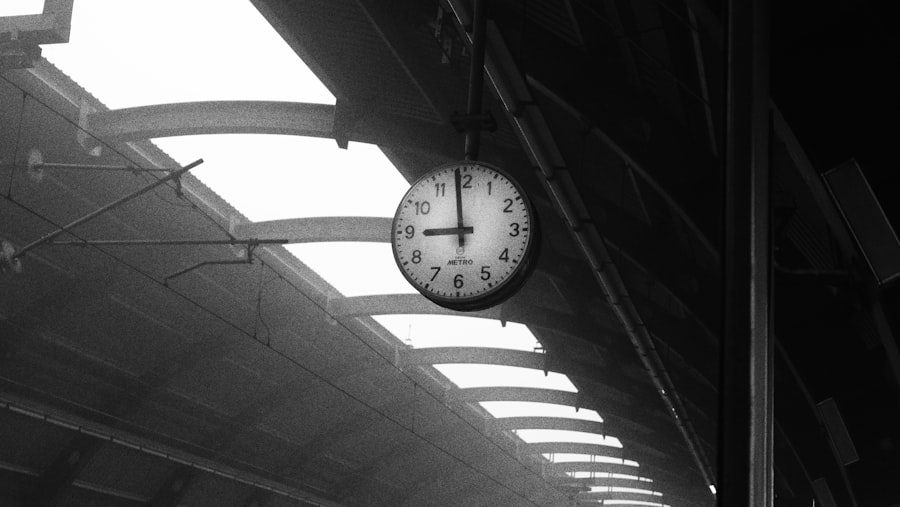
To comprehend time dilation more thoroughly, consider how it manifests in different scenarios. One common illustration involves two observers: one stationary on Earth and another traveling in a high-speed spacecraft. According to special relativity, as the spacecraft accelerates to speeds close to that of light, time for the traveler slows down relative to the observer on Earth.
This effect becomes increasingly pronounced as speeds approach light speed, leading to significant differences in aging and experience between the two individuals.
When you think about how time behaves near massive objects like planets or stars, you realize that gravity can warp spacetime itself.
For instance, if you were to stand on the surface of a black hole, time would pass much more slowly for you compared to someone far away from its gravitational influence. This means that if you were to escape from such an environment and return to a region with weaker gravity, you would find that more time has passed for others than for you.
How Time Dilation Affects Space Travel
As humanity looks toward the stars and considers interstellar travel, understanding time dilation becomes crucial. The vast distances between celestial bodies mean that even traveling at high speeds would require significant amounts of time from an Earth perspective. If you were to embark on a journey to a distant star system at near-light speed, you would experience only a fraction of the time it takes for your journey compared to those who remain on Earth.
This could lead to scenarios where you return home after what feels like only a few years, only to find that decades or even centuries have passed on Earth. This phenomenon poses intriguing challenges for future space exploration missions. As you contemplate long-duration space travel, you must consider not only the physical effects of prolonged weightlessness but also the psychological implications of experiencing time differently than those left behind.
The potential for time dilation to create generational gaps between travelers and their home planet raises ethical questions about relationships and responsibilities toward those who remain on Earth.
Time Dilation in Everyday Life
| Scenario | Relative Velocity (v/c) | Time Dilation Factor (γ) | Elapsed Time for Stationary Observer (t) | Elapsed Time for Moving Observer (t’) | Explanation |
|---|---|---|---|---|---|
| Low Speed | 0.1 | 1.005 | 10 seconds | 9.95 seconds | Minimal time dilation at 10% speed of light |
| Moderate Speed | 0.5 | 1.1547 | 10 seconds | 8.66 seconds | Noticeable time dilation at half speed of light |
| High Speed | 0.9 | 2.294 | 10 seconds | 4.36 seconds | Significant time dilation near speed of light |
| Very High Speed | 0.99 | 7.09 | 10 seconds | 1.41 seconds | Extreme time dilation close to speed of light |
| Near Light Speed | 0.9999 | 70.71 | 10 seconds | 0.141 seconds | Almost maximal time dilation effect |
While time dilation may seem like an abstract concept reserved for science fiction or advanced physics, it actually has practical implications in our everyday lives. One notable example is found in the operation of satellites used for global positioning systems (GPS). These satellites orbit Earth at high altitudes and speeds, where both special and general relativistic effects come into play.
The clocks on these satellites tick slightly faster than those on Earth due to their velocity and the weaker gravitational field they experience. If engineers did not account for this discrepancy when calculating GPS signals, your navigation system would quickly become inaccurate. The effects of time dilation must be corrected to ensure that GPS technology remains reliable and precise.
This real-world application illustrates how deeply intertwined our lives are with concepts derived from advanced physics, highlighting that even mundane activities like finding directions are influenced by phenomena like time dilation.
The Twin Paradox and Time Dilation

One of the most famous thought experiments illustrating time dilation is known as the twin paradox. In this scenario, imagine you have an identical twin who decides to embark on a journey through space at near-light speed while you remain on Earth. When your twin returns after what they perceive as only a few years of travel, they discover that you have aged significantly more during their absence—perhaps by decades or even centuries.
This paradox raises questions about simultaneity and how we perceive time differently based on our relative motion. While it may seem counterintuitive that one twin ages more slowly than the other, this outcome is consistent with the principles of relativity. The twin paradox serves as a powerful illustration of how time dilation operates under extreme conditions and challenges our conventional understanding of aging and experience.
Experimental Evidence for Time Dilation
The principles of time dilation are not merely theoretical; they have been confirmed through various experiments over the years. One notable experiment involved atomic clocks placed on airplanes flying around the world. When these clocks were compared with stationary clocks on Earth after their journeys, scientists found that the clocks on the planes had recorded less elapsed time than those on the ground—an empirical demonstration of time dilation in action.
Another significant piece of evidence comes from observations of particles known as muons, which are created when cosmic rays collide with atoms in Earth’s atmosphere. These particles have a very short lifespan; however, when scientists measure their decay rates at high velocities—such as when they are produced in particle accelerators—they find that muons live longer than expected due to time dilation effects. These experiments provide concrete validation for Einstein’s theories and reinforce our understanding of how time can be affected by speed and gravity.
Time Dilation and GPS Systems
As previously mentioned, GPS technology serves as an excellent example of how time dilation impacts our daily lives. The satellites that make up the GPS network orbit Earth at altitudes where both special and general relativistic effects must be taken into account. The combination of their high speeds and weaker gravitational fields means that their onboard clocks run faster than those on Earth’s surface.
To ensure accurate positioning data, engineers must apply corrections based on these relativistic effects when designing GPS systems. Without these adjustments, your GPS device could lead you astray by several kilometers over time—an error that could have serious consequences for navigation and transportation systems worldwide. This practical application underscores how fundamental concepts from theoretical physics can have tangible effects on technology we rely upon every day.
Time Dilation and Black Holes
Black holes represent one of the most extreme environments where time dilation occurs. As massive objects with gravitational fields so strong that nothing can escape them, black holes warp spacetime dramatically. If you were to approach a black hole’s event horizon—the point beyond which nothing can return—you would experience significant time dilation compared to an observer far away from its influence.
For someone falling into a black hole, time would appear to slow down dramatically as they approach this boundary. From an external observer’s perspective, however, it would seem as though you were frozen in time at the event horizon while light emitted from your body gradually faded away. This interplay between gravity and time creates mind-bending scenarios that challenge our understanding of reality and highlight the profound implications of relativity.
The Implications of Time Dilation for the Future
As we continue to explore the universe and push the boundaries of technology, understanding time dilation will be crucial for future endeavors in space exploration and beyond. The potential for interstellar travel raises questions about how humanity will cope with vast differences in aging and experience among travelers compared to those remaining on Earth. Moreover, advancements in technology may allow us to harness these principles for practical applications beyond navigation systems or scientific research.
As we develop new methods for propulsion or consider colonizing other planets, grappling with the effects of time dilation will be essential for ensuring successful missions and maintaining connections between distant communities.
Understanding Time Dilation in the Context of Modern Physics
In conclusion, time dilation is a captivating concept rooted in Einstein’s theories of relativity that has far-reaching implications across various fields—from astrophysics to everyday technology like GPS systems. By challenging our intuitive notions about time as a constant flow, it opens up new avenues for exploration and understanding within modern physics. As you reflect on these ideas, consider how they shape not only our comprehension of the universe but also our place within it.
The interplay between speed, gravity, and time invites us to rethink our perceptions and embrace the complexities inherent in our reality—a journey that continues to unfold as we delve deeper into the mysteries of existence itself.
Time dilation, a fascinating consequence of Einstein’s theory of relativity, illustrates how time can pass at different rates depending on an object’s velocity or gravitational field. For a deeper understanding of this concept, you can explore a related article that delves into the implications of relativity and its effects on time perception. Check it out here: