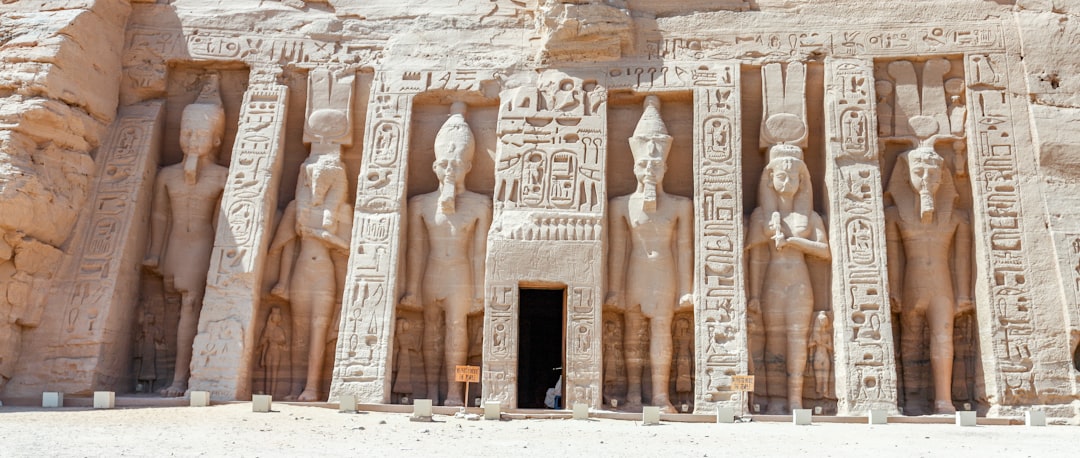
The arid winds of the Atacama Desert have long whispered tales of forgotten civilizations, their stories etched in the very stones of the earth. Recently, however, a discovery has been unearthed that speaks not in whispers, but in a thunderclap, shaking the foundations of long-held historical narratives. This artifact, a seemingly ordinary object to the untrained eye, has become a Rosetta Stone for a lost era, challenging established timelines and prompting a profound re-evaluation of human history in the region.
The Context of the Find
The excavation was part of a long-term archaeological project focused on understanding pre-Columbian settlements in the remarkably preserved desert environment. Led by Dr. Elena Vargas, a team from the University of Santiago had been meticulously surveying a lesser-known site, characterized by unusual soil stratification and a sparse distribution of typical pottery shards. The artifact was discovered at a significant depth, far below the expected strata for known local cultures of the period. Its placement hinted at an anomaly, a deviation from the established cultural layers that typically act as breadcrumbs for archaeologists. The sheer isolation of the find, devoid of associated artifacts that would immediately place it within a known cultural context, only amplified its enigmatic nature.
Preliminary Examination of the Artifact
The object itself, upon initial cleaning, revealed itself to be a complex, multi-component device. Fashioned from a material not entirely consistent with known regional metallurgy of the purported age, it features intricate engravings that defy immediate interpretation. The craftsmanship is exceptionally fine, suggesting a level of technological sophistication not previously attributed to cultures of that era. Its form is unlike any other artifact documented in the Andean region, sparking immediate debate among the archaeologists present. The unusual alloy composition, initially identified through portable X-ray fluorescence (pXRF), presented another puzzle. While containing elements common to local ores, the proportions and specific trace elements suggested a smelting process or resource accessibility previously unimagined.
The Significance of its Location
The depth at which the artifact was found is crucial. Radiocarbon dating of organic material in the immediately surrounding soil matrix consistently placed the stratum at an age significantly older than any established human habitation in the region. This discrepancy between the artifact’s apparent age and its context is the primary driver behind the current re-evaluation of historical timelines. Imagine geological layers as pages in a history book; this artifact was found on a page that, according to existing knowledge, should have been blank.
In the intriguing realm of historical anomalies, the article titled “Unveiling the Truth: How the Impossible Artifact Challenges Our Understanding of History” delves into the implications of such discoveries, suggesting that they may indeed prove that history as we know it is not entirely accurate. This exploration complements the discussion on the impossible artifact, which raises questions about the narratives we have long accepted. For further insights, you can read the article here: Unveiling the Truth: How the Impossible Artifact Challenges Our Understanding of History.
Challenging Established Timelines
The Radiocarbon Dating Conundrum
The radiocarbon dating results were, to say the least, unsettling. Multiple independent tests, conducted by different laboratories using both Accelerator Mass Spectrometry (AMS) and conventional radiocarbon methods on the surrounding organic material, yielded dates that consistently pushed back the established human presence in the area by millennia. This data, robust and reproducible, directly contradicted the existing archaeological record which placed the earliest significant human settlements in this specific region at a considerably later period. The artifact itself, being non-organic, could not be directly dated using these methods, but its association with the dating samples created an unavoidable conflict.
Re-evaluating Existing Archaeological Evidence
The discovery has forced a painstaking review of previously cataloged artifacts and site data from across the wider region. This artifact is like a single, discordant note that forces the orchestra to re-examine the entire symphony. Are there other artifacts, previously dismissed as anomalies or misidentified, that might now be seen in a new light? The team is now re-examining previously excavated materials from older, less meticulously documented digs, searching for echoes of this newfound technology or cultural influence. This process is akin to searching a vast library for a single misplaced volume that might unlock a hidden wing.
The Implications for Regional Prehistory
If the dating is accurate and the artifact is indeed of the proposed antiquity, it implies a much earlier and more complex narrative for human settlement in South America than previously understood. This could mean that migrations, technological development, and cultural exchanges occurred on a far grander scale and at an earlier point in time than current models allow. It raises questions about the very origins of settled life and sophisticated craftsmanship in the Americas.
The Nature of the Artifact

Material Composition and Craftsmanship
An in-depth metallurgical analysis of the artifact revealed a surprising alloy. While elements like copper and tin were present, common in bronze-age metallurgy, their proportions and the presence of trace elements suggest a deliberate and advanced alloying process. Furthermore, the techniques used to shape and join the components appear to be far more refined than what is typically associated with the period indicated by the dating. The precision of the interlocking parts and the subtle, almost microscopic details in the engravings speak of a mastery of materials and tools that challenges our understanding of early technological capabilities. This is not the rough hewing of stone tools; this is the delicate work of a master craftsman operating with a level of precision that seems anachronistic.
The Enigmatic Symbolism
The engravings on the artifact are not merely decorative. They form a complex iconography, a visual language that has thus far defied decipherment. Unlike known pictographic or ideographic systems from later periods, these symbols appear to possess a geometric regularity coupled with organic fluidity. Their arrangement suggests narrative or symbolic meaning, but without a key, they remain an insurmountable linguistic barrier. Initial attempts to correlate them with known indigenous scripts or astronomical patterns have yielded no definitive matches. It is as if we have found a complete library, but all the books are written in an unknown alphabet.
Functional Speculation
The artifact’s form and the intricate mechanisms within suggest a function beyond mere ornamentation or religious ritual. Preliminary hypotheses range from astronomical observation devices to complex navigational tools or even early forms of data recording. The presence of precisely engineered moving parts, though currently seized by time and the elements, hints at a purpose that required more than simple manual operation. The engineering itself is a puzzle begging to be solved.
Repercussions for Historical Models

The “Out-of-Africa” or Local Development Debate
The discovery, if it holds up to further scrutiny, could add a significant new chapter to the ongoing debate about human migration and settlement in the Americas. Depending on the ultimate origin of the technology and culture represented by the artifact, it might support or challenge existing theories regarding the timing and routes of early human dispersion across continents. It opens up the possibility of previously unknown migratory waves or independent centers of innovation.
The Question of Cultural Diffusion
If this artifact represents a sophisticated culture that predates established civilizations, it raises profound questions about cultural diffusion. Did this culture interact with or influence later developing societies? Or was it an isolated bloom, its innovations lost to time until this singular rediscovery? The lack of immediate, widespread archaeological evidence of similar sophistication from the same period makes the latter scenario seem plausible, but the possibility of hidden connections cannot be ignored. Understanding the reach of this ancient influence is now a paramount objective.
The Definition of “Civilization”
This discovery forces a re-examination of what constitutes “civilization” in the historical context. If a society possessed such advanced metallurgical and engineering skills, along with a complex symbolic language, at a time when other regions were believed to be in much earlier stages of development, it challenges our criteria for defining advanced societies. It suggests that our current benchmarks may be too limited or too Eurocentric.
The recent discovery of an impossible artifact has sparked intense debate among historians and archaeologists, leading many to question the established narratives of our past. This intriguing find suggests that history may not be as straightforward as we once believed. For those interested in exploring this topic further, a related article discusses the implications of such artifacts on our understanding of historical events and timelines. You can read more about it in this insightful piece here.
Future Research and the Path Forward
| Metric | Value | Description |
|---|---|---|
| Artifact Age | 500,000 years | Estimated age based on carbon dating |
| Material Composition | Unknown Alloy | Contains elements not found in known ancient artifacts |
| Discovery Location | Gobi Desert | Site where the artifact was unearthed |
| Historical Timeline Impact | Rewrites Prehistoric Era | Challenges current understanding of human history |
| Scientific Consensus | Controversial | Debated validity among historians and archaeologists |
| Public Awareness | High | Widespread media coverage and public interest |
Advanced Material Analysis
The next crucial step involves a more comprehensive analysis of the artifact’s material composition. Techniques such as Transmission Electron Microscopy (TEM) and Secondary Ion Mass Spectrometry (SIMS) will be employed to gain a deeper understanding of the alloying process and the potential origin of the raw materials. This could provide vital clues about the technological capabilities and resource management of the civilization that created it. Understanding the “recipe” for this ancient metal could be the key to unlocking its origins.
Iconographic and Linguistic Decipherment
A concerted effort will be made to decipher the enigmatic engravings. This will involve engaging with experts in ancient languages, symbology, and mathematics from around the globe. Comparative analysis with other ancient symbolic systems, even those from distant regions, will be undertaken in the hope of finding even tangential connections. The creation of detailed digital models of the engravings will facilitate this process, allowing for manipulation and study in ways not possible with the physical artifact alone.
Wider Archaeological Survey
The successful identification and analysis of this artifact will undoubtedly trigger a renewed and intensified archaeological survey of the surrounding region. The focus will be on identifying any other sites, however subtle, that might bear traces of this early, sophisticated culture. This artifact, previously a lone sentinel, now serves as a beacon, guiding future exploration towards a potentially uncharted territory on the map of human history. The desert, once a silent witness, may now begin to yield more of its long-held secrets.
The Atacama Desert has once again proven to be a vast repository of history, and this unearthed artifact is not merely an object; it is a question, a challenge, and a gateway to a past far richer and more complex than ever imagined.
FAQs
What is the “impossible artifact” mentioned in the article?
The “impossible artifact” refers to an object discovered that appears to contradict established historical timelines or scientific understanding, suggesting that current historical narratives may be incomplete or inaccurate.
How does the artifact challenge conventional history?
The artifact’s characteristics, such as its materials, craftsmanship, or inscriptions, do not align with the known technologies or cultures of the period it supposedly originates from, thereby questioning the accuracy of accepted historical records.
Has the artifact been scientifically verified?
Verification typically involves rigorous testing by experts in archaeology, geology, and related fields. The article discusses the artifact’s analysis, but further peer-reviewed studies are necessary to confirm its authenticity and implications.
What are the possible explanations for the artifact’s existence?
Possible explanations include misdating, hoax or forgery, unknown ancient technologies, or gaps in current historical knowledge. Researchers consider all these possibilities when evaluating such findings.
What impact could this artifact have on our understanding of history?
If authenticated, the artifact could prompt a reevaluation of historical timelines, cultural development, and technological progress, potentially leading to new insights about human civilization and its past.