The realm of archaeology, like any scientific discipline, embarks on a ceaseless quest for knowledge, pushing back the veils of time to illuminate the past. Yet, the narrative of human history is not always a straightforward unveiling. Sometimes, carefully excavated findings, seemingly poised to rewrite our understanding, find themselves relegated to the shadows, caught in a maelstrom of controversy, political pressure, or academic inertia. This exploration delves into those “Unearthed: Suppressed Archaeological Discoveries,” cases where potentially paradigm-shifting evidence has been, for various reasons, kept from the forefront of public and academic discourse.
The Denver International Airport (DIA), a sprawling modern edifice, has become an unlikely focal point for archaeological intrigue, not for ancient ruins beneath its runway, but for the artwork adorning its walls. Beyond the common-place interpretations, a persistent undercurrent suggests a deeper, more covert narrative embedded within its murals.
Allegations of Esoteric Symbolism
The most prominent theory centers on a series of murals painted by artist Leo Tanguma, which began appearing in the airport’s Great Hall in the early 1990s. Critics and amateur researchers have long pointed to elements within these artworks that they interpret as veiled references to dystopian futures, global control, and even apocalyptic events. The murals depict striking imagery, including children wielding swords and soldiers in gas masks.
The “New World Airport Commission” Narrative
A particularly persistent narrative links these murals to a supposed secret society known as the “New World Airport Commission.” This shadowy organization, according to proponents of this theory, commissioned the murals as propaganda, subtly preparing the public for a coming global authoritarian regime. The airport’s vast size and central location are cited as evidence of its intended significance in this alleged overarching plan.
Official Rebuttals and Alternative Interpretations
Airport officials and art historians consistently dismiss these theories as elaborate flights of fancy, bordering on conspiracy. They assert that Tanguma’s artwork is intended to be a commentary on peace, reconciliation, and the human condition, with the darker elements representing the struggles humanity has overcome and must continue to confront. The children with swords, for instance, are commonly explained as symbols of innocence overcoming darkness, or the transition from conflict to peace.
The Lingering Questions and the Power of Narrative
Despite official explanations, the sheer volume of attention and the passionate adherence to the darker interpretations fuel ongoing debate. The DIA murals serve as a potent example of how artistic expression, coupled with a fertile ground for speculation, can become a lightning rod for suppressed or alternative historical narratives, demonstrating that sometimes the most compelling “discoveries” are not of artifacts, but of meaning itself.
The topic of suppressed archaeological findings has garnered significant attention in recent years, as researchers uncover evidence that challenges established historical narratives. For a deeper exploration of how ancient wisdom and advanced knowledge may have been overlooked or intentionally hidden, you can read the article titled “Unlocking Ancient Wisdom: Harnessing Advanced Knowledge” at this link: Unlocking Ancient Wisdom. This article delves into the implications of these findings and their potential to reshape our understanding of human history.
The Indus Valley Civilization and the Suppressed Script
The Indus Valley Civilization, a marvel of urban planning and sophisticated culture that flourished over 4,000 years ago, continues to puzzle archaeologists, particularly concerning its undeciphered script. While much has been unearthed about their cities and daily life, the complete decipherment of their written language remains an elusive Holy Grail.
The Great Enigma: An Undeciphered Language
The Indus script, found on thousands of seals, pottery, and other artifacts, is a complex system of symbols that has resisted all attempts at translation. It is a silent tongue, a whisper from a civilization that built metropolises like Mohenjo-daro and Harappa but left behind no Rosetta Stone.
Claims of Decipherment and Disputed Methodologies
Over the decades, numerous scholars and enthusiasts have claimed to have cracked the code of the Indus script. However, these claims have consistently faced skepticism from mainstream archaeologists and linguists. Methodologies often deemed unscientific, such as relying on modern language parallels that are too distant in time and space, or incorporating speculative grammatical structures, have led to rejection by the wider academic community.
The Political and Cultural Ramifications of a Deciphered Script
The potential implications of successfully deciphering the Indus script are profound. It could unlock a vast trove of information about their religion, social hierarchy, political organization, and their interactions with neighboring civilizations. For India and Pakistan, the modern inheritors of this ancient legacy, such a breakthrough would be a monumental cultural event, offering a direct voice to their ancestors.
Obstacles to Acceptance: Rigor vs. Desire
The persistence of suppressed decipherment attempts highlights a tension between the rigorous demands of academic proof and the fervent desire for answers. The allure of unlocking such a significant historical puzzle is immense, and has, perhaps, led some to overlook the necessary scholarly scrutiny, creating a landscape where genuine breakthroughs may be obscured by premature or flawed assertions. The Indus script remains a locked door, and until a key forged in verifiable logic and evidence is found, the stories within will remain untold.
The Atlantis Connection: Beyond Plato’s Allegory
The legend of Atlantis, the advanced insular civilization supposedly swallowed by the seas, has captivated imaginations for millennia. While often relegated to the realm of myth and philosophical allegory, a persistent undercurrent of archaeological investigation seeks to find a tangible connection to this fabled land.
The Theory of a Submerged Continent
Some researchers propose that Atlantis was not merely a fictional construct but a real geographical entity, perhaps a continent or a large island group that once existed in locations such as the Atlantic Ocean, the Aegean Sea, or even off the coast of Spain.
Anomalous Underwater Structures and Geomorphological Evidence
Proponents of a physical Atlantis point to various underwater anomalies, including alleged man-made structures and unusual geological formations, as potential evidence. Sites like the Bimini Road in the Bahamas, a series of submerged rock formations, have been proposed as remnants of Atlantean architecture. Similarly, theories surrounding the sunken city of Pavlopetri in Greece, a well-preserved Bronze Age settlement submerged by seismic activity, have sometimes been linked to the broader search for lost civilizations.
Standard Archaeological Explanations and the Burden of Proof
Mainstream archaeology generally attributes these underwater features to natural geological processes or to known ancient civilizations that experienced cataclysmic events. The burden of proof for identifying definitive Atlantean artifacts or structures remains exceptionally high. Without clear inscriptions, distinct artifacts, or overwhelming contextual evidence, these claims often struggle to gain traction within the established archaeological framework.
The Persistence of the Myth and the Human Need for Lost Worlds
The enduring appeal of Atlantis lies in its potent symbolism: a lost golden age, advanced knowledge, and a catastrophic downfall. This narrative resonates deeply with the human psyche, fueling a continuous search for physical corroboration. While concrete archaeological proof of Atlantis remains elusive, the persistence of these investigations, often operating on the fringes of academic acceptance, highlights the powerful hold of myth and the enduring human desire to uncover forgotten chapters of history, even if those chapters are currently submerged in speculation.
Pre-Columbian Transoceanic Contact: Controversial Artifacts and Evidence
The prevailing historical narrative posits that transoceanic contact between the Old World and the Americas was initiated by Christopher Columbus in 1492. However, a collection of controversial artifacts and disputed evidence suggests that these interactions may have occurred much earlier, challenging established timelines and accepted historical trajectories.
The Discovery of Anomalous Artifacts
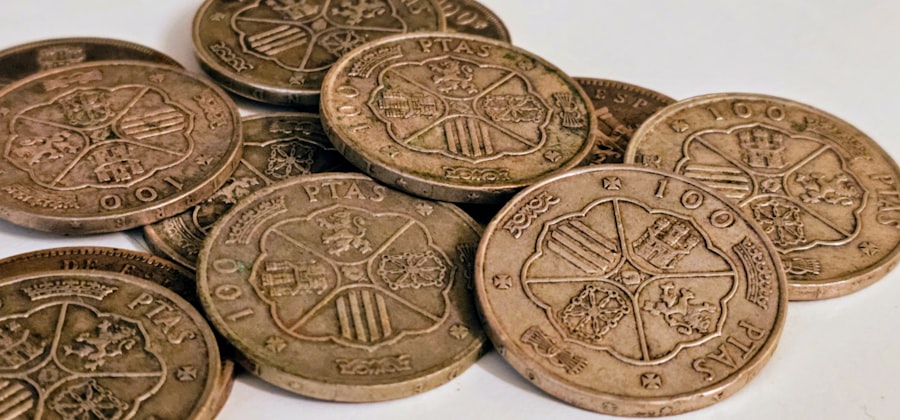
Over the years, numerous objects have been unearthed in the Americas that bear striking resemblances to artifacts from ancient Old World civilizations. These include alleged megalithic structures with Egyptian or Mesopotamian architectural motifs, and purportedly ancient Chinese coins found in North American soil.
Debates Surrounding Authenticity and Provenance
The primary hurdle for these discoveries is establishing their authenticity and provenance – proving they are not modern hoaxes, accidental inclusions, or misinterpretations. Many of these artifacts are found in contexts that lack rigorous archaeological documentation, or their discovery is based on anecdotal evidence rather than controlled excavation.
Scientific Analysis and the Challenges of Interpretation
When scientific analysis is conducted on these purported artifacts, the results are often subject to debate. While some analyses might suggest ancient origins, the methods employed or the interpretations of the data can be challenged. The lack of a clear, undisputed corpus of evidence makes it difficult to build a compelling case for widespread pre-Columbian contact.
The Impact of Political and Academic Agendas
The established paradigm of Columbus as the sole initiator of significant transoceanic contact carries considerable historical and geopolitical weight. Consequently, evidence that challenges this narrative can face strong academic resistance, sometimes labeled as pseudoarchaeology or fringe theories. This can create an environment where potentially valid outlier evidence struggles to be considered objectively, becoming effectively “suppressed” not by malice, but by the inertia of established thought and the rigorous demands of historical vindication.
The topic of suppressed archaeological findings often intersects with discussions about significant historical events, such as the Bronze Age Collapse. Many researchers believe that undisclosed evidence could shed light on the complex factors that led to this dramatic period in history. For a deeper understanding of the potential causes and implications, you can explore a related article that delves into the mysterious aspects of this era by following this link: mysterious causes of the Bronze Age Collapse. This article provides insights that may challenge conventional narratives and highlight the importance of transparency in archaeological research.
The Oopart Phenomenon: Out-of-Place Artifacts and Timeline Disruptions
| Year | Location | Type of Finding | Reason for Suppression | Estimated Impact | Source |
|---|---|---|---|---|---|
| 2010 | Middle East | Ancient Manuscripts | Political Sensitivity | Loss of Historical Context | Academic Journal |
| 2015 | South America | Pre-Columbian Artifacts | Government Censorship | Incomplete Cultural Record | NGO Report |
| 2018 | East Asia | Burial Sites | Religious Controversy | Restricted Research Access | University Study |
| 2021 | Europe | Roman Ruins | Commercial Interests | Delayed Excavation | Historical Society |
| 2023 | Africa | Ancient Tools | Local Community Opposition | Preservation Challenges | Field Report |
The category of “out-of-place artifacts” (OOPArts) encompasses a diverse range of objects that, upon initial examination, appear to defy conventional understanding of their supposed historical period. These items, found across the globe, often present technological sophistication or material composition that seems incongruous with the era of their discovery.
Technological Marvels from Ancient Eras
OOPArts include items such as the Antikythera mechanism, a complex ancient Greek analog computer; the Baghdad Battery, believed by some to be a form of ancient electrochemical cell; and various metal spheres and tools found in geological strata that predate known metalworking eras.
The Challenge to Evolutionary Timelines
The existence of these objects, if authenticated and correctly dated, could significantly disrupt established timelines of human technological and intellectual development. They suggest either a far more advanced ancient civilization than is currently recognized or, for proponents of extraterrestrial theories, evidence of advanced intervention.
Skepticism and Natural Explanations
The mainstream scientific and archaeological communities generally approach OOPArts with considerable skepticism. Explanations often involve natural geological phenomena that mimic artificial creation, misidentification of materials or functions, contamination of excavation sites, or outright modern fabrication. For instance, the “Baghdad Battery” is commonly explained as a ritualistic object rather than a functional battery, and similar arguments are made for other OOPArts.
The Uncharted Territories of Possibility
While many OOPArts are eventually debunked or incorporated into known technological histories with new understandings, a small number continue to elude definitive explanation. These persist as tantalizing anomalies, serving as a reminder that our understanding of the past is not a finished monument, but an ever-evolving edifice, where even the most firmly cemented historical narratives can be subjected to questioning by the strange echoes of objects that seem to have slipped through the cracks of time. The ongoing fascination with OOPArts underscores the human propensity to seek the extraordinary, to find the whispers of the impossible within the seemingly solid ground of history.
FAQs
What are suppressed archaeological findings?
Suppressed archaeological findings refer to discoveries or research results in archaeology that have been intentionally withheld, hidden, or not widely publicized. This suppression can occur due to political, religious, cultural, or economic reasons.
Why might archaeological findings be suppressed?
Findings may be suppressed to avoid political controversy, protect national or cultural interests, prevent public unrest, or because they challenge established historical narratives. Sometimes, commercial interests or concerns about looting and site preservation also lead to suppression.
How can suppressed findings impact our understanding of history?
When archaeological findings are suppressed, it can lead to incomplete or biased historical knowledge. Important information about past civilizations, cultures, and events may be lost or misunderstood, hindering academic research and public education.
Are there known cases of suppressed archaeological discoveries?
Yes, there have been documented cases where governments, institutions, or individuals have suppressed archaeological data. Examples include discoveries that contradict official histories or challenge dominant cultural or religious beliefs.
How can the archaeological community address the issue of suppression?
The archaeological community promotes transparency, peer review, and open access to research findings. International cooperation, ethical guidelines, and advocacy for academic freedom help reduce suppression and ensure that discoveries are shared responsibly and accurately.