
The study of ancient droughts has emerged as a critical field within archaeology, offering insights into how past civilizations adapted to environmental challenges. As climate change continues to reshape the modern world, understanding the historical context of droughts becomes increasingly relevant. By examining the remnants of ancient societies, researchers can glean valuable lessons about resilience, adaptation, and the long-term impacts of water scarcity.
Unearthing ancient droughts not only enriches the narrative of human history but also provides a framework for addressing contemporary environmental issues. The significance of ancient droughts extends beyond mere historical curiosity; it serves as a lens through which to view the interplay between climate and human development. As archaeologists sift through layers of soil and artifacts, they uncover evidence that reveals how societies responded to prolonged periods of aridity.
This exploration is not just about identifying when and where droughts occurred; it is also about understanding the broader implications for social structures, economies, and cultural practices. The quest to unearth these ancient phenomena is a testament to humanity’s enduring struggle against the forces of nature.
Key Takeaways
- Unearthing ancient droughts provides valuable insights into past climate patterns and their impact on civilizations.
- Archaeological evidence collection methods include studying tree rings, lake sediment, and ancient agricultural practices.
- Analysis of ancient droughts through archaeological findings helps in understanding the severity and duration of past droughts.
- Ancient droughts had significant impacts on civilizations, leading to societal disruptions, migration, and even collapse of some societies.
- Comparing ancient droughts to modern droughts can help in understanding the long-term patterns and implications of climate change.
- Technological advancements, such as remote sensing and GIS, have revolutionized the study of ancient droughts.
- Climate change played a significant role in ancient droughts, affecting precipitation patterns and contributing to environmental stress.
- Ancient civilizations employed resilience strategies such as water management, crop diversification, and trade to cope with droughts.
- Ancient droughts had cultural and social implications, influencing religious beliefs, social structures, and even the rise and fall of empires.
- Preservation of archaeological evidence of ancient droughts is crucial for future research and for raising awareness about the impacts of climate change.
- Future research on ancient droughts can provide valuable lessons for modern society in adapting to and mitigating the impacts of climate change.
Methods of Archaeological Evidence Collection
Archaeologists employ a variety of methods to collect evidence related to ancient droughts, utilizing both traditional excavation techniques and modern scientific approaches. Excavation remains a cornerstone of archaeological practice, allowing researchers to uncover artifacts, structures, and organic materials that provide clues about past environmental conditions. By carefully stratifying layers of soil, archaeologists can establish timelines and correlate them with known climatic events, such as droughts.
This meticulous process often involves the analysis of pollen samples, which can indicate shifts in vegetation patterns that correspond with periods of reduced rainfall. In addition to excavation, remote sensing technologies have revolutionized the way archaeologists gather data about ancient landscapes. Techniques such as LiDAR (Light Detection and Ranging) enable researchers to visualize topographical features obscured by vegetation or sediment.
This technology can reveal ancient irrigation systems, settlement patterns, and even changes in land use that may have been influenced by drought conditions. Furthermore, sediment core analysis from lakes and wetlands provides a continuous record of environmental changes over millennia, allowing scientists to reconstruct past climates and identify periods of drought with greater precision.
Analysis of Ancient Droughts through Archaeological Findings

The analysis of archaeological findings related to ancient droughts involves a multidisciplinary approach that integrates geology, climatology, and anthropology. By examining artifacts such as pottery, tools, and food remains, researchers can infer how societies adapted their agricultural practices in response to changing environmental conditions. For instance, the presence of drought-resistant crops in archaeological sites may indicate a strategic shift in farming practices during periods of water scarcity.
Additionally, isotopic analysis of human and animal remains can provide insights into dietary changes that occurred as communities faced diminishing resources. Moreover, the study of ancient texts and inscriptions can complement archaeological evidence by offering narratives that describe societal responses to drought. Historical records from civilizations such as the Maya or the Mesopotamians often detail the social upheaval and migration patterns triggered by prolonged dry spells.
By synthesizing these diverse sources of information, researchers can construct a more comprehensive understanding of how ancient peoples navigated the challenges posed by droughts, revealing patterns of resilience and adaptation that resonate with contemporary issues.
Impact of Ancient Droughts on Civilizations
| Civilization | Time Period | Impact of Drought |
|---|---|---|
| Mesopotamia | 2100-1600 BCE | Decline in agricultural productivity, social unrest, and political instability |
| Maya Civilization | 800-1000 CE | Population decline, abandonment of cities, and political fragmentation |
| Ancient Egypt | 2200-2150 BCE | Famine, economic hardship, and political upheaval |
The impact of ancient droughts on civilizations was profound and multifaceted, often leading to significant social, economic, and political changes. In many cases, prolonged periods of aridity resulted in crop failures that triggered food shortages and famine. This scarcity could destabilize societies, leading to increased competition for resources and potential conflict among neighboring groups.
For example, the collapse of the Classic Maya civilization has been partially attributed to severe drought conditions that disrupted agricultural production and undermined social cohesion. In addition to immediate effects on food security, ancient droughts often prompted migrations as communities sought more hospitable environments. The movement of populations in search of water sources or fertile land could lead to cultural exchanges but also conflicts over territory.
The archaeological record reveals evidence of abandoned settlements and shifting trade routes during periods of drought, highlighting how environmental stressors could reshape the landscape of human interaction. These dynamics underscore the interconnectedness between climate and civilization, illustrating how environmental challenges can catalyze significant transformations in societal structures.
Comparison of Ancient Droughts to Modern Droughts
When comparing ancient droughts to modern ones, several parallels emerge that underscore the ongoing relevance of historical study in understanding contemporary challenges. Both ancient and modern societies face the consequences of prolonged dry spells, including water scarcity, agricultural disruption, and social unrest. However, the scale and complexity of modern societies introduce additional layers of vulnerability.
Today’s globalized economy means that droughts in one region can have ripple effects across the world, impacting food prices and supply chains. Moreover, modern technology offers both advantages and challenges in managing drought conditions. While advancements in irrigation and agricultural practices have improved resilience against droughts, they also contribute to unsustainable water use and environmental degradation.
In contrast, ancient civilizations often relied on more localized knowledge systems that emphasized sustainable practices tailored to their specific environments. By examining these historical approaches, modern societies may find valuable lessons in sustainability and resource management that could inform contemporary strategies for coping with climate variability.
Technological Advancements in Unearthing Ancient Droughts
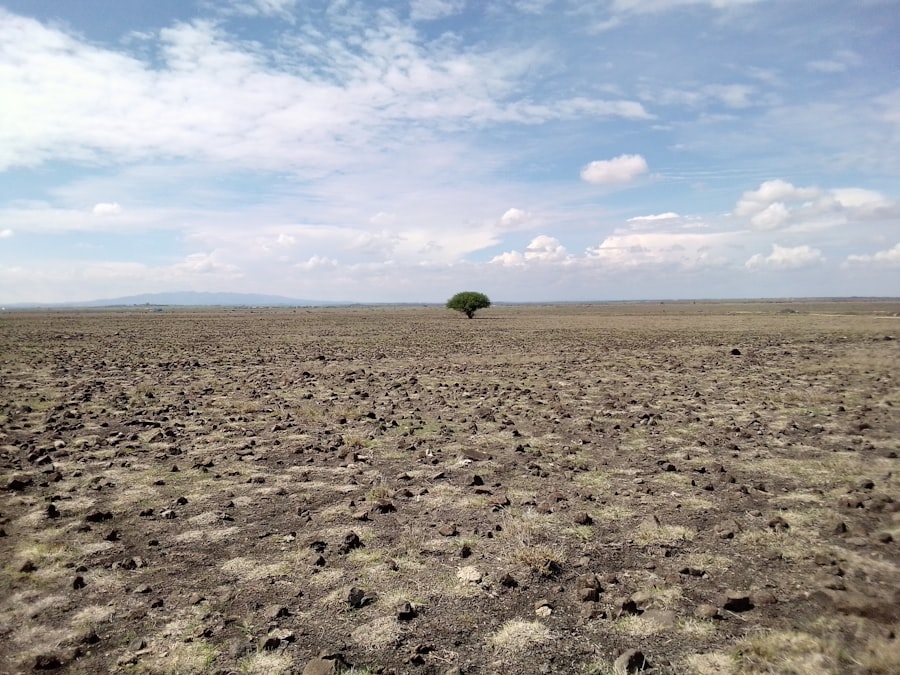
Recent technological advancements have significantly enhanced the ability of researchers to unearth evidence of ancient droughts. Innovations in geospatial analysis allow archaeologists to map ancient landscapes with unprecedented accuracy, revealing hidden features such as ancient riverbeds or irrigation systems that may have been obscured for centuries. Geographic Information Systems (GIS) enable researchers to analyze spatial relationships between archaeological sites and environmental data, facilitating a deeper understanding of how ancient peoples interacted with their surroundings during periods of drought.
Additionally, advancements in dating techniques have improved the precision with which researchers can establish timelines for past climatic events. Radiocarbon dating and dendrochronology (the study of tree rings) provide critical data points that help correlate archaeological findings with known periods of drought. These technologies not only enhance the accuracy of historical reconstructions but also allow for more nuanced interpretations of how different cultures responded to environmental stressors over time.
Role of Climate Change in Ancient Droughts
Climate change plays a pivotal role in understanding ancient droughts, as it provides context for the fluctuations in weather patterns that affected past civilizations. Research indicates that many ancient societies experienced significant climatic shifts due to natural variability in Earth’s climate system. These shifts often manifested as prolonged dry periods that could last for years or even decades, profoundly impacting agricultural productivity and water availability.
The study of paleoclimate data—derived from ice cores, sediment layers, and other geological records—has revealed patterns of climate variability that coincide with known periods of societal upheaval. For instance, evidence suggests that the decline of several ancient civilizations was linked to abrupt climate changes that led to severe drought conditions. By examining these historical precedents within the framework of current climate change trends, researchers can better understand the potential risks facing modern societies as they grapple with increasingly erratic weather patterns.
Resilience Strategies of Ancient Civilizations during Droughts
Ancient civilizations developed a range of resilience strategies to cope with the challenges posed by droughts. These strategies often involved innovative agricultural practices designed to maximize water efficiency and minimize risk. For example, some cultures implemented advanced irrigation systems that allowed them to divert water from rivers or lakes to sustain crops during dry spells.
Others practiced crop rotation or diversified their agricultural output to include drought-resistant species that could thrive under adverse conditions. Social organization also played a crucial role in enhancing resilience during periods of drought. Many societies established communal storage systems for grain or other essential resources, allowing them to buffer against short-term shortages caused by environmental stressors.
Additionally, cultural practices such as ritualistic rain dances or offerings to deities were often employed as a means of seeking divine intervention during times of crisis. These strategies reflect a deep understanding of their environment and an adaptive capacity that enabled many ancient civilizations to endure even the harshest conditions.
Cultural and Social Implications of Ancient Droughts
The cultural and social implications of ancient droughts were profound, influencing everything from religious beliefs to social hierarchies. In many societies, drought was perceived not merely as a natural phenomenon but as a manifestation of divine displeasure or cosmic imbalance.
Such cultural responses highlight how environmental challenges were woven into the fabric of societal identity and belief systems. Socially, droughts could exacerbate existing inequalities within communities. Access to water resources often determined power dynamics; those who controlled irrigation systems or water sources held significant influence over agricultural production and food distribution.
In times of scarcity, marginalized groups might suffer disproportionately from food shortages or displacement, leading to social unrest or conflict. The archaeological record provides evidence of these dynamics through changes in settlement patterns and material culture that reflect shifting power relations during periods of environmental stress.
Preservation of Archaeological Evidence of Ancient Droughts
Preserving archaeological evidence related to ancient droughts is essential for future research and understanding human history in relation to climate change. However, this preservation is increasingly threatened by modern development, climate change itself, and natural erosion processes. Archaeologists advocate for protective measures that safeguard vulnerable sites from destruction while promoting public awareness about their significance.
Efforts to preserve these sites often involve collaboration between governments, local communities, and academic institutions. Initiatives may include establishing protected areas around significant archaeological sites or implementing sustainable tourism practices that minimize environmental impact while educating visitors about the importance of preserving cultural heritage. By fostering a sense of stewardship among local populations, researchers hope to ensure that future generations can continue to learn from the lessons embedded within these ancient landscapes.
Future Research and Implications for Modern Society
The future research agenda surrounding ancient droughts holds significant implications for modern society as it grapples with its own environmental challenges. As climate change continues to alter weather patterns globally, understanding how past civilizations adapted—or failed to adapt—to similar conditions can inform contemporary strategies for resilience and sustainability. Researchers are increasingly focused on interdisciplinary approaches that integrate archaeology with climate science, anthropology, and sociology to develop comprehensive models for understanding human-environment interactions.
Moreover, engaging with indigenous knowledge systems can provide valuable insights into sustainable practices honed over generations in response to local environmental conditions. By learning from both historical precedents and contemporary indigenous practices, modern societies may find pathways toward more sustainable resource management strategies that prioritize ecological balance alongside human needs. Ultimately, the study of ancient droughts not only enriches our understanding of history but also equips us with critical knowledge for navigating an uncertain future shaped by climate change.
Recent archaeological studies have uncovered compelling evidence of ancient droughts that significantly impacted early civilizations. These findings are crucial in understanding how past societies adapted to extreme climate conditions. For those interested in exploring this topic further, an article on Real Lore and Order delves into the intricate relationship between ancient communities and their changing environments, providing a comprehensive analysis of how these societies managed to survive and thrive despite the challenges posed by prolonged periods of drought.
WATCH THIS! 😕They Buried the Truth: How Ancient Elites Hid a Climate Collapse.
FAQs
What is archaeological evidence of ancient drought?
Archaeological evidence of ancient drought refers to the physical remains and artifacts discovered by archaeologists that indicate periods of prolonged dryness and water scarcity in ancient civilizations.
What types of archaeological evidence can indicate ancient drought?
Archaeological evidence of ancient drought can include the discovery of abandoned settlements, changes in agricultural practices, the presence of water storage systems, and the study of ancient pollen and plant remains.
How do archaeologists use evidence of ancient drought to understand past civilizations?
Archaeologists use evidence of ancient drought to understand how past civilizations coped with and adapted to periods of water scarcity. This can provide insights into the resilience and resourcefulness of ancient societies, as well as the impact of environmental changes on human societies.
What can archaeological evidence of ancient drought tell us about climate change?
Archaeological evidence of ancient drought can provide valuable information about past climate change and its impact on human societies. By studying how ancient civilizations responded to drought, researchers can gain a better understanding of the long-term effects of climate change on human populations.
How does the study of ancient drought contribute to our understanding of modern climate change?
Studying ancient drought can help researchers identify patterns and trends in climate change, which can inform our understanding of current and future climate change. By understanding how past civilizations coped with drought, we can learn valuable lessons for managing and adapting to modern climate challenges.