
Trepanation, one of the oldest known surgical practices, has a rich and complex history that dates back thousands of years. Archaeological evidence suggests that this procedure was performed as early as the Neolithic period, around 6500 BCE. Early humans, driven by a desire to alleviate ailments or perhaps to release evil spirits, utilized rudimentary tools to create openings in the skull.
These ancient practitioners likely believed that trepanation could cure various conditions, from headaches to mental disorders. The practice was not limited to one region; it appeared independently in various cultures across the globe, indicating a shared human inclination towards surgical intervention. As civilizations evolved, so did the understanding and techniques associated with trepanation.
Ancient texts from cultures such as the Greeks and Romans reveal that trepanation was often performed by skilled healers who had a rudimentary understanding of anatomy and the human body. The Greeks, for instance, documented their surgical methods in texts attributed to Hippocrates, who recognized the potential benefits of trepanation for treating head injuries and other ailments. This historical context highlights how trepanation was not merely a primitive act but rather a significant medical practice that laid the groundwork for future surgical advancements.
Key Takeaways
- Trepanation has a long history dating back to ancient civilizations, with evidence of the practice found in various regions around the world.
- The purpose of trepanation was often medical, spiritual, or a combination of both, and the techniques used varied depending on the culture and time period.
- Ancient civilizations such as the Inca, Maya, and Egyptian cultures practiced trepanation, with evidence of the procedure found in archaeological discoveries.
- Trepanation was practiced in different cultures and regions, with variations in techniques, tools, and beliefs surrounding the procedure.
- The success and survival rates of trepanation patients varied, with some cases showing evidence of healing and others indicating potential complications.
The Purpose and Techniques of Trepanation
The purposes behind trepanation varied widely across different cultures and time periods. In many cases, it was believed to be a remedy for physical ailments such as epilepsy, migraines, and head injuries. The act of drilling or scraping away a portion of the skull was thought to relieve pressure on the brain or expel harmful spirits believed to cause illness.
In some societies, trepanation was also performed as a ritualistic act, symbolizing a rite of passage or a means of connecting with the spiritual realm. This multifaceted approach to trepanation underscores its significance beyond mere medical intervention. The techniques employed in trepanation evolved over time, reflecting advancements in tools and surgical knowledge.
Early practitioners used simple instruments made from stone or metal to create openings in the skull. These methods varied from scraping to drilling, depending on the desired outcome and the tools available. In some cultures, trepanation was performed using a technique known as “trephining,” where a circular piece of bone was removed from the skull.
This method allowed for greater precision and reduced the risk of complications. As surgical practices advanced, so did the understanding of anatomy, leading to more refined techniques that improved patient outcomes.
Evidence of Trepanation in Ancient Civilizations
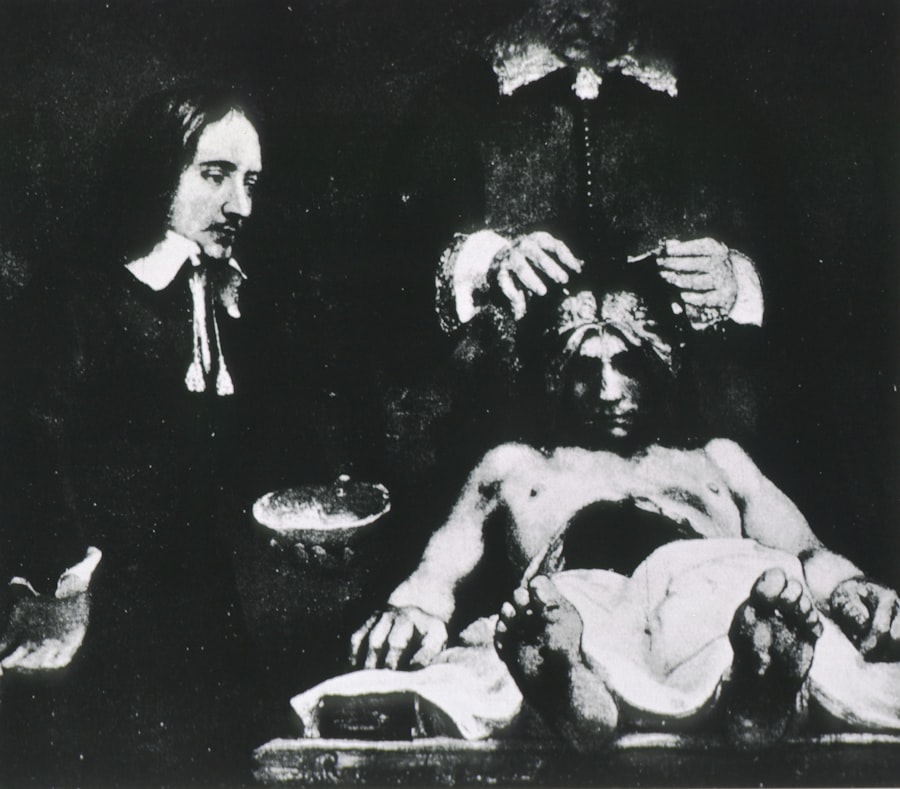
Evidence of trepanation can be found in numerous ancient civilizations, showcasing its widespread acceptance and practice. In prehistoric Europe, particularly in regions such as France and Spain, archaeologists have uncovered skulls with clear signs of trepanation. These findings suggest that early humans engaged in this practice as a means of addressing health issues or perhaps even as part of burial rituals.
The presence of healed skulls indicates that many individuals survived the procedure, further emphasizing its significance in ancient medical practices. In addition to Europe, trepanation was also prevalent in ancient South America, particularly among the Inca civilization. Archaeological discoveries in Peru have revealed numerous skulls with trepanation marks, indicating that this practice was common among their population.
The Incas believed that trepanation could cure ailments and enhance mental clarity, reflecting their sophisticated understanding of health and wellness. The evidence from these ancient civilizations illustrates not only the prevalence of trepanation but also its cultural significance across different societies.
Trepanation in Different Cultures and Regions
| Culture/Region | Frequency of Trepanation | Tools Used | Purpose |
|---|---|---|---|
| Ancient Egypt | Common practice | Obsidian blades | Relieve pressure from head injuries |
| Ancient Peru | Widespread | Drills made of copper | Religious or spiritual reasons |
| Mayan Civilization | Common among elite | Sharpened stones | Religious rituals and healing |
| Tibetan Culture | Rarely practiced | Iron instruments | Believed to release evil spirits |
Trepanation has been documented in various cultures around the world, each with its unique beliefs and practices surrounding the procedure. In Africa, for instance, certain tribes practiced trepanation as part of traditional healing rituals. It was often performed by shamans or healers who believed that opening the skull could release malevolent spirits or restore balance to an individual’s life.
This cultural perspective highlights how trepanation was intertwined with spiritual beliefs and societal norms. In contrast, ancient Chinese medicine approached trepanation from a different angle. While acupuncture and herbal remedies were more commonly used for healing, there are records indicating that trepanation was occasionally employed for severe head injuries or conditions deemed beyond the scope of traditional treatments.
This divergence in practices illustrates how cultural beliefs shaped medical interventions and how trepanation adapted to fit within various healing paradigms.
The Medical and Spiritual Beliefs Surrounding Trepanation
The medical and spiritual beliefs surrounding trepanation were often intertwined, reflecting a holistic understanding of health in ancient societies. Many cultures viewed the human body as a vessel influenced by both physical and spiritual forces. Consequently, trepanation was seen not only as a surgical procedure but also as a means of addressing spiritual imbalances.
Healers believed that by creating an opening in the skull, they could release trapped spirits or alleviate spiritual afflictions that manifested as physical ailments. In some cultures, trepanation was performed during specific rituals or ceremonies aimed at invoking divine intervention or healing powers. For example, among certain indigenous tribes in South America, trepanation was part of elaborate rites designed to connect individuals with their ancestors or deities.
This spiritual dimension added depth to the practice, transforming it into a sacred act rather than merely a medical procedure. Such beliefs underscore the complexity of trepanation as a practice that transcended simple surgical intervention.
The Tools and Instruments Used in Trepanation

The tools and instruments used in trepanation have evolved significantly over time, reflecting advancements in technology and surgical knowledge. In ancient times, practitioners relied on rudimentary tools made from stone or metal to perform the procedure. These early instruments included sharpened stones or metal blades that were used to scrape or drill into the skull.
The lack of precision in these tools often resulted in complications; however, many individuals still survived the procedure due to their resilience and the body’s ability to heal. As civilizations progressed, so did the sophistication of surgical instruments used for trepanation. By the time of the Greeks and Romans, more refined tools were developed, including specialized saws and drills designed specifically for cranial surgery.
These advancements allowed for greater precision and reduced the risk of infection or complications during the procedure. The evolution of these instruments not only improved patient outcomes but also marked a significant step forward in the field of surgery as a whole.
The Success and Survival Rates of Trepanation Patients
The success and survival rates of patients who underwent trepanation varied widely depending on several factors, including the skill of the practitioner, the condition being treated, and the overall health of the individual. Archaeological evidence suggests that many individuals who underwent trepanation survived the procedure, as indicated by healed skulls found at excavation sites. This survival rate challenges modern perceptions of ancient medical practices as purely barbaric; instead, it highlights a level of skill and understanding among early surgeons.
However, it is essential to recognize that not all cases resulted in positive outcomes. Complications such as infection or excessive blood loss could lead to severe consequences for patients undergoing trepanation. The lack of sterile techniques and advanced medical knowledge at the time meant that some individuals faced significant risks during and after the procedure.
Despite these challenges, many ancient cultures continued to practice trepanation due to its perceived benefits and successes.
The Evolution of Surgical Techniques and Practices
The evolution of surgical techniques over time has been profoundly influenced by practices like trepanation. As societies advanced and medical knowledge expanded, so too did surgical methods. Trepanation served as a foundational practice that paved the way for more complex surgical interventions.
The lessons learned from early cranial surgeries informed later developments in surgery, leading to innovations such as anesthesia and antiseptic techniques. By the Middle Ages and into the Renaissance period, surgery began to emerge as a respected profession rather than a task relegated to barbers or untrained individuals. The study of anatomy became more rigorous during this time, leading to improved surgical techniques that prioritized patient safety and outcomes.
Trepanation’s historical significance lies not only in its immediate effects but also in its role as a catalyst for advancements in surgical practices that continue to shape modern medicine.
The Cultural and Societal Impacts of Trepanation
Trepanation’s cultural and societal impacts extend far beyond its medical implications; it reflects broader beliefs about health, spirituality, and community well-being. In many societies where trepanation was practiced, it served as a communal act that reinforced social bonds among individuals undergoing treatment. The shared experience of surgery often fostered a sense of solidarity within communities, highlighting how health practices can shape social dynamics.
Moreover, trepanation’s prevalence across diverse cultures underscores its role in shaping collective identities. For some societies, undergoing trepanation became a rite of passage or a symbol of resilience against adversity. This cultural significance contributed to its continued practice despite evolving medical knowledge and changing societal norms regarding health care.
Modern-Day Research and Studies on Trepanation
In recent years, modern research has revisited trepanation with renewed interest from both medical historians and neuroscientists alike. Studies have sought to understand the historical context of this ancient practice while also exploring its potential applications in contemporary medicine. Some researchers have examined how trepanation may have been used to treat conditions like traumatic brain injuries or neurological disorders, drawing parallels between ancient practices and modern surgical interventions.
Additionally, modern imaging techniques have allowed scientists to analyze ancient skulls with greater precision than ever before. These studies have provided valuable insights into the techniques used by ancient practitioners and have shed light on patient outcomes following trepanation. By bridging historical practices with contemporary research methodologies, scholars aim to gain a deeper understanding of how ancient medical interventions can inform current approaches to neurosurgery.
Ethical and Moral Considerations Surrounding Trepanation
The ethical and moral considerations surrounding trepanation are complex and multifaceted. While it is essential to acknowledge its historical significance as an early form of medical intervention, contemporary perspectives raise questions about consent, patient autonomy, and potential harm associated with such procedures. Modern medicine emphasizes informed consent and ethical standards that prioritize patient safety; however, these principles were often absent in ancient practices.
Furthermore, discussions surrounding trepanation prompt broader reflections on how societies define health and illness. The historical context reveals that what was once considered a legitimate medical practice may now be viewed through a critical lens that questions its efficacy and ethical implications.
In conclusion, trepanation stands as a testament to humanity’s enduring quest for understanding health and healing throughout history. Its multifaceted nature—encompassing medical practices, cultural beliefs, and societal impacts—offers valuable insights into how ancient civilizations approached health care challenges. As modern research continues to unravel the complexities surrounding this ancient practice, it serves as a reminder of our shared human experience in seeking solutions for suffering across time and cultures.
In recent years, the study of ancient surgical practices has unveiled fascinating insights into early medical techniques, particularly the practice of trepanation. This ancient procedure, which involved drilling or scraping a hole into the human skull, is one of the earliest forms of surgery known to humanity. Evidence of trepanation has been found in various archaeological sites around the world, indicating its widespread use across different cultures and time periods. For those interested in exploring more about ancient medical practices and their historical contexts, a related article can be found on Real Lore and Order’s website. You can read more about these intriguing discoveries by visiting this article.
WATCH THIS! 👀 History Is Hiding 50 Impossible Inventions
FAQs
What is trepanation?
Trepanation is a surgical procedure in which a hole is drilled or scraped into the human skull, exposing the dura mater to treat health problems related to intracranial diseases.
What is the evidence of ancient trepanation surgery?
Evidence of ancient trepanation surgery has been found in archaeological sites around the world, including Europe, Africa, and South America. These findings date back thousands of years, indicating that trepanation was practiced in various ancient cultures.
Why did ancient people perform trepanation surgery?
The reasons for ancient trepanation surgery are not fully understood, but it is believed that it was performed to treat a variety of health issues, including head injuries, headaches, and possibly even spiritual or ritualistic purposes.
How was trepanation surgery performed in ancient times?
In ancient times, trepanation surgery was performed using primitive tools such as flint or obsidian blades to cut into the skull. Some evidence suggests that the procedure may have been carried out with some form of anesthesia or sedation.
What can we learn from ancient trepanation surgery?
Studying ancient trepanation surgery can provide insights into the medical practices and beliefs of ancient cultures, as well as the potential medical conditions they were attempting to treat. It also sheds light on the remarkable surgical skills of ancient people.