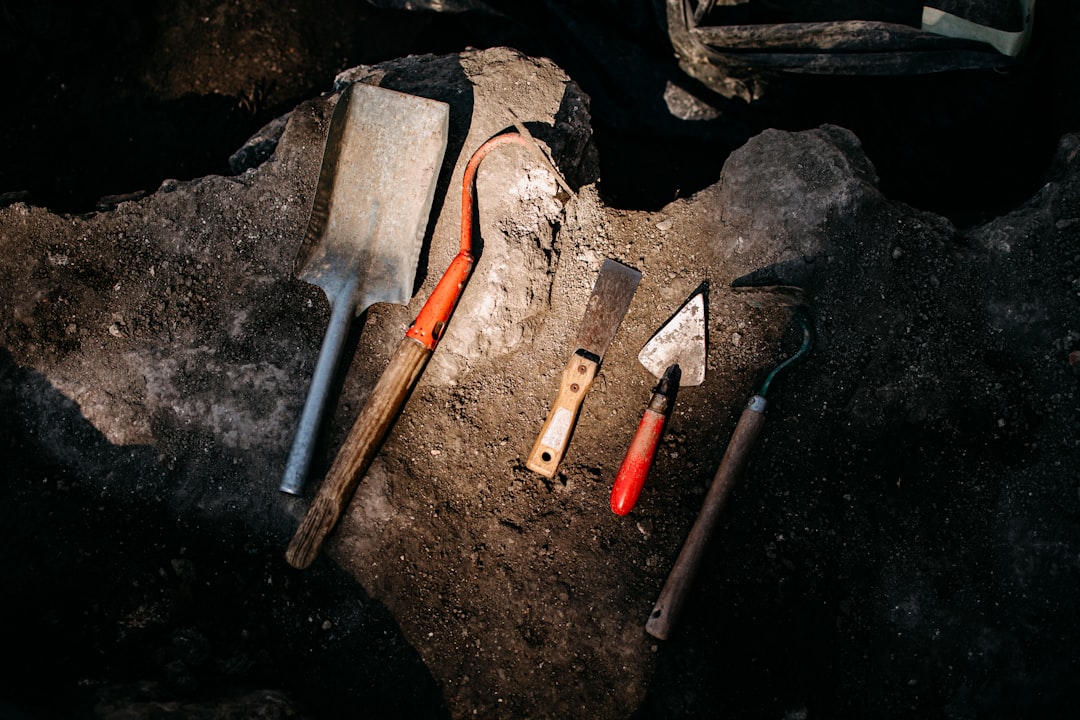
The annals of archaeology generally present a cohesive narrative of human development, a carefully constructed edifice of evolving technologies and cultures. However, when exploring the fringes of established understanding, one encounters a perplexing phenomenon: “impossible artifacts.” These objects, often unearthed in geological strata or contextual settings that contradict their apparent sophistication, challenge conventional timelines and raise fundamental questions about the linearity of human progress. This article delves into the realm of forbidden archaeology, examining several such enigmas that invite scrutiny and demand a re-evaluation of prevailing historical paradigms.
The term “out of place artifact,” often abbreviated as Oopart, refers to an object of historical, archaeological, or paleontological interest found in a very unusual or impossible context. This context might be a geological stratum that predates the known existence of sentient life capable of creating such an object, or a technological level far exceeding that attributed to the era in which it was supposedly made.
Challenging Conventional Chronologies
One of the primary implications of Ooparts lies in their potential to disrupt established chronologies. If an intricate metal object is discovered in a coal seam millions of years old, it necessitates a radical re-thinking of when humanity developed metallurgy, or even when intelligent life first appeared on Earth. This collision of artifact and context creates a profound dissonance for conventional archaeological thought.
The Limits of Interpretation
The scientific community frequently approaches Ooparts with a degree of skepticism, often attributing them to misidentification, natural formations mimicking artificial objects, or even outright hoaxes. While caution is certainly warranted, the sheer volume and compelling nature of some of these finds suggest that a blanket dismissal may be premature and ultimately hinder a more comprehensive understanding of our past.
Forbidden archaeology often delves into the realm of impossible artifacts that challenge our understanding of history and human civilization. A related article that explores these intriguing discoveries can be found at Real Lore and Order, where various artifacts are examined that suggest advanced technologies or civilizations may have existed long before recorded history. This article provides a fascinating perspective on how these artifacts could reshape our understanding of the past.
Enigmas of Pre-Cambrian and Paleozoic Eras
Perhaps the most challenging Ooparts are those ascribed to geological eras when complex life, let alone intelligent life, was supposedly absent from Earth. These objects force a fundamental re-evaluation of deep time and the origins of technological achievement.
The Klerksdorp Spheres
Discovered in pyrophyllite deposits near Ottosdal, South Africa, the Klerksdorp Spheres are small, metallic objects, some with parallel grooves running around their equator. What makes them remarkable is their age: the deposits they originate from are dated to approximately 2.8 billion years old – a time before even multicellular life truly emerged.
Natural Formations vs. Manufactured Objects
Geologists largely interpret these spheres as concretions, naturally occurring geological formations. They suggest that the concentric grooves might be a result of the layering of sedimentary material or the process of diagenesis. However, proponents of the Oopart theory highlight the unusual precision of the grooves, arguing that they appear too regular and uniform to be purely natural. They point to instances where the spheres reportedly rotate perfectly on some axis, a characteristic difficult to explain through natural geological processes.
The Dorchester Pot
In 1851, during blasting operations near Dorchester, Massachusetts, a metallic pot-like object was reportedly found embedded in solid rock, 15 feet below the surface. The rock was identified as Puddingstone, a conglomerate dating to the Cambrian era, conservatively estimated at 570 million years old. The object itself was described as bell-shaped, made of a zinc and silver alloy, and intricately inlaid with silver.
A Case of Misidentification or Fabrication?
Critics argue that the Dorchester Pot could be a much more recent artifact that somehow fell into a crevice or was accidentally embedded in a later geological disturbance. However, the original accounts describe it as deeply encased, requiring considerable force to extract. Without the object itself available for modern analysis, its authenticity remains a subject of persistent debate, a tantalizing whisper from an impossibly distant past.
Artifacts from the Mesozoic and Cenozoic Eras

Moving forward in geological time, the Mesozoic and early Cenozoic eras also yield their own collection of puzzling artifacts, challenging the idea that humans are a relatively recent phenomenon on Earth.
The Coso Artifact
In 1961, during a rock collecting expedition in the Coso Mountains of California, Wallace Lane, Mike Mikesell, and Virginia Maxey discovered a geode-like object. When cut open, it revealed what appeared to be a perfectly symmetrical, cylindrical object composed of ceramic or porcelain, with a metal shaft running through its core, reminiscent of a spark plug. The surrounding geode was estimated to be around 500,000 years old.
A Geode’s Enigma
The age of the surrounding material places the Coso Artifact within the early to mid-Pleistocene epoch, long before modern humans are believed to have developed such sophisticated technology. While skeptics suggest it could be a highly unusual modern spark plug encased in a rapidly forming concretion (a challenging geological explanation), proponents of its Oopart status highlight the precise engineering and composition that seems to demand an intelligent creator. The lack of comprehensive scientific study on the object, which mysteriously disappeared after its initial public viewing, only deepens the mystery.
The Iron Nail in Kingoodie Quarry
In 1844, a Mr. David Brewster reported the discovery of an iron nail embedded within a block of sandstone from the Kingoodie Quarry in Scotland. The sandstone formation is dated to the Devonian period, a staggering 360 to 410 million years ago. The nail was described as having a sharp point and a distinct head, appearing entirely artificial.
The Weight of Geological Context
The Kingoodie Nail presents a direct challenge to the understanding of both metalworking and the presence of intelligent life during the Devonian. Iron metallurgy is a relatively recent human innovation, dating back only a few millennia. To find such an object within 400-million-year-old rock represents a chasm of improbability. While some suggest geological anomalies or later contamination, the initial reports emphasize its deep embedding within the solid rock, demanding a more robust explanation than mere happenstance.
Challenges to Explanations and Interpretations
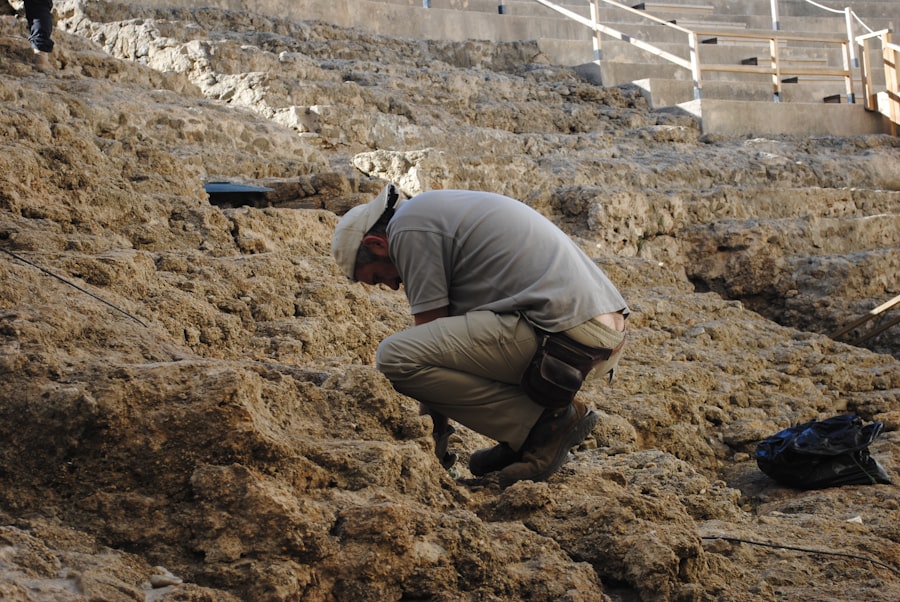
The presence of Ooparts often forces proponents and skeptics alike to confront the limitations of current understanding and the biases inherent in scientific inquiry.
The Problem of Premise
A significant hurdle in the study of Ooparts is the inherent premise of established archaeology: that human civilization, as we define it, is relatively young and developed linearly. Objects that defy this premise are often met with resistance, sometimes bordering on outright dismissal, rather than thorough investigation. It’s akin to trying to fit a square peg into a round hole; when the Peg won’t fit, one tends to question the peg, not the hole.
The Role of Fabrication and Misidentification
It is crucial to acknowledge that some purported Ooparts have been definitively proven to be hoaxes or misidentifications. The ‘Ginsberg Giant’ skull, for instance, turned out to be a natural rock formation. Similarly, fossilized “human footprints” in ancient strata have frequently been reclassified as natural erosional features or animal tracks. This history of debunking often casts a long shadow over genuinely perplexing finds.
The Need for Rigorous Investigation
However, the possibility of misidentification should not automatically lead to the dismissal of all such discoveries. Each Oopart demands rigorous, independent scientific analysis, employing modern dating techniques, material composition analysis, and geological verification. The absence of such comprehensive studies for many of these objects leaves a void of unanswered questions.
Forbidden archaeology often brings to light the concept of impossible artifacts, which challenge our understanding of history and human civilization. A fascinating exploration of this topic can be found in an article that delves into various discoveries that seem to defy conventional archaeological wisdom. To learn more about these intriguing findings, you can read the article here: explore the connections between ancient artifacts and the mysteries they present.
Alternative Perspectives on Our Past
| Artifact Name | Location Found | Estimated Age | Description | Why Considered Impossible |
|---|---|---|---|---|
| Antikythera Mechanism | Antikythera, Greece | Circa 100 BC | An ancient analog computer used to predict astronomical positions and eclipses. | Complex gear technology not thought to exist in that era. |
| Baghdad Battery | Near Baghdad, Iraq | Circa 250 BC – 250 AD | Clay jar with copper cylinder and iron rod, possibly used as a galvanic cell. | Suggests knowledge of electricity long before modern discovery. |
| London Hammer | London, Texas, USA | Estimated millions of years old (controversial) | Hammer embedded in rock formation, allegedly predating human tool use. | Tool found in geological strata predating humans. |
| Dropa Stones | Baian-Kara-Ula Mountains, China | Approximately 12,000 years old | Discs with spiral grooves and inscriptions, claimed to be extraterrestrial origin. | Advanced inscriptions and unknown origin challenge historical timelines. |
| Shroud of Turin | Turin, Italy | Believed to be from 1st century AD | Linen cloth bearing the image of a man, claimed to be Jesus Christ. | Image formation method remains unexplained by science. |
If Ooparts are indeed genuine, their implications are far-reaching, necessitating a radical rethinking of Earth’s history and the potential for advanced civilizations beyond our current understanding.
Pre-Adamic Civilizations
One speculative hypothesis posits the existence of highly advanced civilizations that predated modern humanity, perhaps even millions of years ago. These civilizations might have risen and fallen, leaving behind only the most durable remnants of their technology, which are occasionally unearthed as Ooparts. This idea, while anathema to mainstream archaeology, offers a framework for understanding objects that otherwise seem inexplicable.
Cycles of Civilization
This perspective often incorporates the concept of cyclical history, where civilizations rise, reach a technological apex, and then decline or are destroyed by cataclysmic events, only for the cycle to repeat. In this view, Ooparts are not anomalies, but rather echoes of forgotten ages, fragments of a grander, more complex tapestry of technological development on Earth.
Extraterrestrial Influence
Another, even more speculative, interpretation suggests that some Ooparts may be evidence of extraterrestrial visitation or even colonization in Earth’s distant past. If advanced alien entities visited our planet, they might have left behind artifacts that defy terrestrial explanation. Such objects would represent a profound challenge to both archaeological and cosmological understanding.
The Limits of Evidence
It is important to emphasize that while these alternative perspectives offer potential explanations for Ooparts, they often lack the definitive, empirical evidence required for scientific acceptance. They serve as thought experiments, prompting us to consider the limitations of our current models and to remain open to the possibility that the past is far more complex and unexpected than we currently perceive.
Conclusion: The Unwritten Chapters
The exploration of “impossible artifacts” is not an attempt to discredit established archaeology, but rather an invitation for introspection and open-minded inquiry. These enigmatic objects, whether eventually explained by conventional means or found to genuinely challenge our historical narratives, serve a vital purpose. They act as intellectual grit, irritating the smooth surface of accepted knowledge and prompting new questions, new hypotheses, and ultimately, a deeper, more nuanced understanding of Earth’s long and mysterious past.
The journey into forbidden archaeology is a venture into the unknown, a recognition that the past, like a vast ocean, holds depths we have yet to plumb and wonders we are only beginning to glimpse. It is a testament to the fact that our understanding of history is not a finished book, but a work in progress, with many unwritten chapters awaiting discovery. As you encounter these “impossible” artifacts, consider them not as aberrations, but as calls to explore the fascinating, the inexplicable, and the truly extraordinary.
SHOCKING: 50 Artifacts That Prove History Was Erased
FAQs
What is forbidden archaeology?
Forbidden archaeology refers to the study of artifacts and evidence that challenge conventional historical and archaeological timelines. It often involves findings that suggest advanced civilizations or technologies existed far earlier than mainstream science accepts.
What are impossible artifacts?
Impossible artifacts are objects discovered in archaeological contexts that appear to be technologically advanced or out of place for the time period in which they were found. These artifacts sometimes seem to contradict established historical knowledge.
Are forbidden archaeology and impossible artifacts accepted by mainstream science?
Most mainstream archaeologists and scientists remain skeptical of forbidden archaeology claims and impossible artifacts. They often attribute such findings to misinterpretation, hoaxes, or natural phenomena rather than evidence of advanced ancient civilizations.
Can impossible artifacts change our understanding of history?
If verified through rigorous scientific methods, impossible artifacts could potentially alter our understanding of human history and technological development. However, such claims require substantial evidence and peer-reviewed research to be accepted.
Where can I learn more about forbidden archaeology and impossible artifacts?
You can explore academic journals, books by reputable archaeologists, and credible documentaries on archaeology. It is important to critically evaluate sources and distinguish between speculative theories and evidence-based research.