
The human past is a tapestry woven with threads both vibrant and faded, with entire sections lost to the annals of time. While popular culture often conjures images of intrepid adventurers discovering hidden cities, the reality of unearthing lost civilizations is a meticulous and often painstaking process, reliant on the diligent work of archaeologists. This article will explore the diverse archaeological evidence that allows scholars to reconstruct and understand societies that have vanished from the historical record, offering a glimpse into the methodologies and interpretations employed in this fascinating field.
The disappearance of a civilization is not a singular event but a complex process, often driven by a confluence of factors. Climate change, environmental degradation, warfare, political instability, disease, and economic collapse can all contribute to the decline and eventual abandonment of once-thriving communities. The subsequent centuries, even millennia, then act as a slow eraser, burying physical evidence under layers of earth, vegetation, and the debris of later human activity. For archaeologists, this presents both a challenge and an opportunity: to read the faint echoes left behind and piece together a coherent narrative.
Natural Processes of Burial and Preservation
Over time, natural forces such as sedimentation, volcanic eruptions, and even the slow creep of glacial ice can effectively entomb ancient sites. This burial, while obscuring evidence, often acts as a critical preservative. Organic materials, particularly susceptible to decay in surface environments, can survive for millennia when deprived of oxygen and protected from fluctuating temperatures. For instance, the bog bodies of Northern Europe, perfectly preserved individuals from the Iron Age, offer invaluable insights into ancient attire, diet, and even causes of death, thanks to the anaerobic and acidic conditions of peat bogs. Similarly, volcanic ash from eruptions like that of Vesuvius in 79 CE, while tragically ending lives, encased Pompeii and Herculaneum in a protective shell, preserving an intimate snapshot of Roman life.
Anthropogenic Contributions to Concealment
Human activity itself can unknowingly contribute to the concealment of earlier civilizations. Later settlements often build directly atop preceding ones, compacting and burying older structures beneath new foundations. This phenomenon, known as tell formation, is particularly prominent in the Middle East, where centuries of occupation on the same site create mounds of accumulated debris. Each layer within a tell represents a distinct phase of occupation, a vertical timeline waiting to be meticulously excavated. The constant re-use and rebuilding, while erasing some evidence, also creates a stratigraphic record, allowing archaeologists to trace cultural shifts and technological advancements over vast stretches of time.
Recent discoveries in the field of archaeology have shed light on the remnants of lost civilizations, revealing intricate details about their cultures and lifestyles. For an in-depth exploration of these findings, you can read the article on archaeological evidence of lost civilizations at Real Lore and Order. This resource offers a comprehensive look at how modern techniques are uncovering the mysteries of ancient societies that once thrived and then vanished from history.
Decoding the Material Record
The material record, the tangible remnants of past human activity, forms the bedrock of archaeological investigation. Every artifact, every structural remnant, every trace of human modification to the landscape, holds potential information. The challenge lies not just in finding these items, but in understanding their context and interpreting their meaning.
Architecture and Urban Planning
The layout of a city, the materials used in its construction, and the stylistic elements of its buildings reveal profound insights into a civilization’s social structure, religious beliefs, technological capabilities, and economic organization. The monumental architecture of the Maya, with their towering pyramids and elaborate ceremonial centers, speaks volumes about their sophisticated understanding of astronomy and their complex religious cosmology. The grid-like urban planning of many Roman cities, with their aqueducts and public baths, highlights their engineering prowess and their emphasis on public services. Even the humble dwellings of ancient peoples, when analyzed in aggregate, can offer clues about family structures, population density, and daily life. The presence of defensive walls, for instance, suggests periods of conflict or a perceived need for protection, while the arrangement of houses around a central plaza might indicate a communal or hierarchical social structure.
Artifacts and Technology
Artifacts, broadly defined as any object modified or created by humans, are direct windows into the past. Pottery sherds, tools, weaponry, jewelry, and ritual objects all contribute to our understanding of ancient societies. The evolution of tool technologies, from crude stone implements to intricately carved and polished artifacts, reflects advancing cognitive abilities and problem-solving skills. The presence of specialized workshops and mass-produced goods can indicate a complex division of labor and a sophisticated economy. Tracing the origin of raw materials used in artifact production, through techniques like petrographic analysis or isotopic dating, can shed light on trade networks and economic relationships between different cultures. For example, the discovery of obsidian tools in a region hundreds of kilometers from any natural obsidian source provides compelling evidence of long-distance trade.
Art and Symbolism
Artistic expressions, from cave paintings to elaborate sculptures, serve not only as aesthetic objects but also as vital communicative tools. They often convey religious beliefs, social hierarchies, historical events, and mythological narratives. The intricate hieroglyphs of ancient Egypt, deciphered through the meticulous work of linguists and archaeologists, opened up a vast trove of historical and religious texts, offering unparalleled insights into their worldview. The symbolism embedded in ancient art, whether it be the fertility goddesses of the Neolithic period or the heroic narratives depicted on Greek pottery, speaks to the cultural values and concerns of a lost civilization. Interpreting these symbols requires a deep understanding of the cultural context in which they were created, often relying on comparative studies with contemporary or historically related cultures.
Environmental and Biological Traces
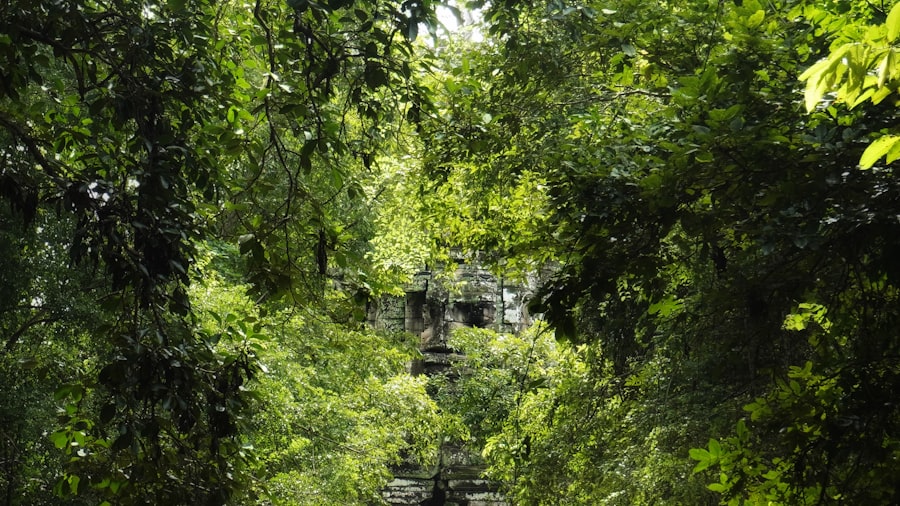
Beyond the tangible remains of human construction and creation, the environment itself holds crucial clues about lost civilizations. The interaction between human societies and their natural surroundings leaves indelible imprints that can be read by archaeologists.
Paleobotany and Paleozoology
The study of ancient plant remains (paleobotany) and animal remains (paleozoology) provides invaluable information about past diets, agricultural practices, environmental conditions, and the impact of human activity on ecosystems. Pollen analysis, for instance, can reconstruct ancient vegetation patterns and identify periods of deforestation or agricultural expansion. The discovery of specific crop residues, like domesticated grains or legumes, points to sophisticated agricultural techniques and sedentary lifestyles. Faunal remains, from butchered bones at a settlement site to entire animal skeletons found in refuse pits, tell us about hunting strategies, animal domestication, and dietary preferences. The presence of particular species can also indicate the prevailing climate and habitat at the time of occupation. For instance, the discovery of marine shells far inland suggests past sea-level changes or extensive trade networks.
Geoarchaeology and Landscape Modification
Geoarchaeology, the application of geological concepts and techniques to archaeological problems, helps in understanding site formation processes, past environments, and human-landscape interactions. Changes in soil composition, sedimentation rates, and the presence of ancient water channels can reveal past agricultural practices, irrigation systems, and the impact of human settlements on erosion and land use. The discovery of ancient terracing on hillsides, for example, is direct evidence of intensive agricultural practices designed to maximize arable land. Similarly, the study of ancient coastlines and river courses can reveal how civilizations adapted to or were impacted by shifting environmental conditions, such as rising sea levels or changing river dynamics. The construction of canals, levees, and artificial islands also represents significant landscape modification, providing evidence of large-scale cooperative labor and advanced engineering skills.
Unraveling the Narrative: Dating and Interpretation
Once archaeological evidence is unearthed, the crucial steps of dating and interpretation begin. Without a temporal framework, artifacts and structures remain isolated fragments; their true significance emerges only when placed within a historical sequence.
Absolute and Relative Dating Techniques
Archaeologists employ a variety of dating techniques to establish the age of sites and artifacts. Relative dating methods, such as stratigraphy (the principle that in undisturbed sequences, older layers are below younger ones) and seriation (ordering artifacts based on stylistic changes over time), establish a chronological sequence without providing a specific calendar date. Absolute dating techniques, conversely, provide a specific numerical age. Radiocarbon dating, based on the decay of carbon-14 isotopes in organic materials, is widely used for samples up to approximately 50,000 years old. Dendrochronology, the study of tree rings, can provide highly precise dates for wooden artifacts and structures. Other methods include potassium-argon dating for volcanic rocks (useful for very ancient sites), thermoluminescence dating for heated materials like pottery, and archaeomagnetic dating, which uses shifts in the Earth’s magnetic field. The combination and cross-referencing of multiple dating methods enhance the accuracy and reliability of chronological reconstructions.
Interpretation and Reconstruction
The ultimate goal of archaeological excavation is not merely to recover objects, but to interpret them within their cultural context and reconstruct the lives and societies of past peoples. This requires a multidisciplinary approach, drawing on insights from anthropology, history, sociology, and even cognitive sciences. Archaeologists engage in a constant process of hypothesis testing, analyzing patterns in the material record, and comparing findings with ethnographic accounts of similar societies. The reconstruction of social hierarchies might involve analyzing differences in burial goods or house sizes. Understanding subsistence strategies might involve combining faunal and floral evidence with tool analysis. The identification of widespread trading networks requires evidence of exotic materials and standardized weights and measures. It is a process akin to detective work, where seemingly disparate clues are meticulously assembled to paint a comprehensive picture of a vanished world. The ability to articulate this narrative, to bring the lost civilization back to life for contemporary audiences, is the culmination of years of dedicated research and painstaking excavation. Understanding the nuances of ancient symbol systems, the complexities of their social structures, and the motivations behind their monumental constructions allows us to appreciate the rich tapestry of human experience and gain a deeper understanding of our shared heritage. In essence, archaeology serves as humanity’s collective memory, continually seeking to recover and interpret the forgotten chapters of our story.
STOP: Why They Erased 50 Impossible Inventions From Your Textbooks
FAQs
What is meant by “lost civilizations” in archaeology?
Lost civilizations refer to ancient societies that once thrived but have since disappeared or become extinct, often leaving behind ruins, artifacts, and other archaeological evidence that help researchers understand their culture and history.
What types of archaeological evidence are used to identify lost civilizations?
Archaeologists use various types of evidence including ruins of buildings, tools, pottery, inscriptions, burial sites, and artifacts to identify and study lost civilizations.
How do archaeologists date the remains of lost civilizations?
Archaeologists use dating methods such as radiocarbon dating, dendrochronology (tree-ring dating), and stratigraphy to determine the age of artifacts and remains associated with lost civilizations.
Can lost civilizations be completely unknown before archaeological discovery?
Yes, some lost civilizations were unknown to modern history until archaeological excavations uncovered their existence through material remains and artifacts.
What are some famous examples of lost civilizations discovered through archaeology?
Famous examples include the Indus Valley Civilization, the Maya civilization, the city of Troy, and the ancient city of Machu Picchu, all of which were studied extensively through archaeological evidence.