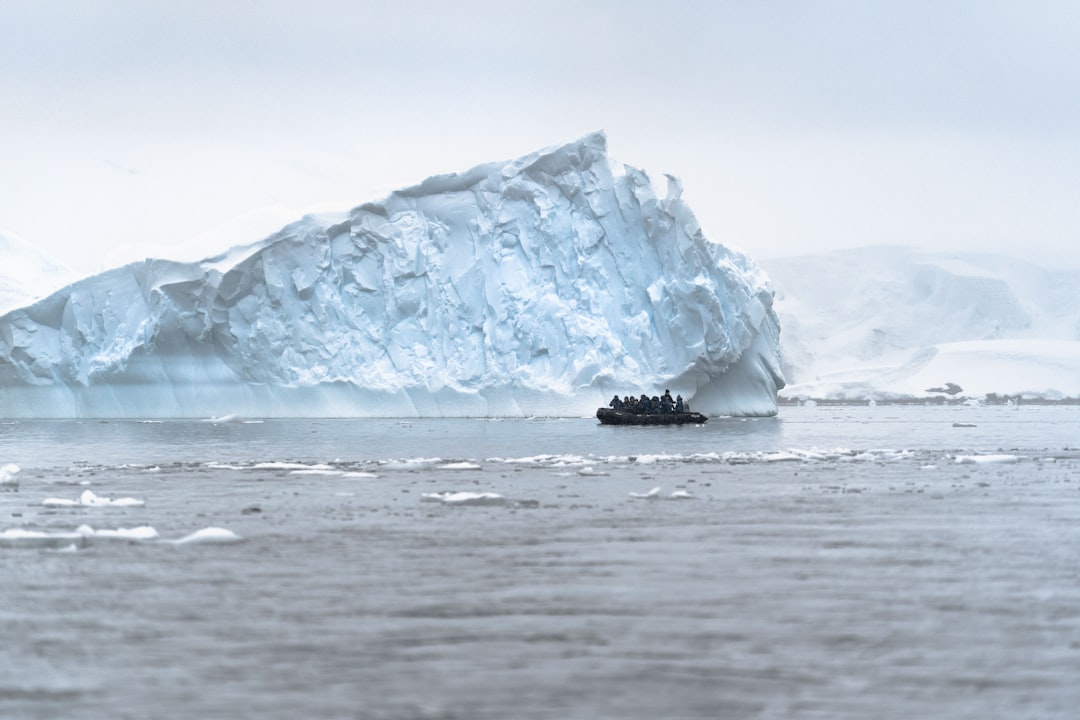
Antarctica, a continent cloaked in perpetual ice and shrouded in mystery, has long been a subject of fascination. Beyond its stark, frozen beauty, whispers persist of hidden technologies and forgotten civilizations. Could the vast, uninhabited expanse hold secrets far older and more advanced than our current understanding of history allows? This article delves into the compelling, albeit speculative, realm of unearthing secret Antarctic technology, examining the evidence, the theories, and the ongoing scientific and popular discourse surrounding this enigmatic topic.
The notion that Antarctica was once a habitable landmass is not entirely within the realm of pure fantasy. Geological evidence strongly suggests that, millions of years ago, Antarctica was part of the supercontinent Gondwana and possessed a much warmer climate, supporting lush forests and diverse flora and fauna. This period predates human civilization by eons, but it sets the stage for considering what might have transpired if more complex life forms, perhaps even intelligent ones, had emerged during these warmer epochs.
Paleontological Discoveries
Fossil records unearthed from Antarctica tell a story of a very different world. Remnants of ancient plants, dinosaur bones, and even early mammals have been found, painting a picture of a temperate environment. While these discoveries primarily illuminate Earth’s ancient history, they also raise questions about the sheer scale of continental drift and climate change that has rendered Antarctica the frozen desert it is today. The existence of these fossils acts as a geophysical bookmark, indicating that the continent has undergone profound transformations, making it plausible that other, more ephemeral traces of ancient activity could be buried beneath the ice.
Geological Anomalies
Beyond fossil evidence, certain geological formations in Antarctica have piqued the interest of researchers and theorists alike. The discovery of what appear to be artificially smoothed terrain, anomalies in ice core data suggesting unnatural heat sources, and unusual magnetic field readings have all fueled speculation. While many of these anomalies can be explained by natural geological processes, the persistent questioning of their origins, especially when viewed through the lens of potential advanced capabilities, keeps the door ajar for alternative interpretations.
Recent discoveries have sparked intrigue regarding secret technology believed to be excavated from beneath the Antarctic ice. These findings suggest that advanced artifacts, potentially linked to ancient civilizations, may lie hidden in the frozen expanse. For more in-depth analysis and updates on this fascinating topic, you can read the related article at Real Lore and Order.
Whispers from the Past: Theories of Ancient Civilizations
The concept of buried ancient technologies is inextricably linked to theories of lost civilizations that may have once thrived in Antarctica. These theories, often drawing from ancient mythology and fringe historical interpretations, propose that advanced societies predated modern humanity and possessed knowledge and capabilities far beyond our own.
The Antarctic Atlantis Hypothesis
One of the most prominent theories posits Antarctica as the resting place of Atlantis, the mythical island civilization described by Plato. Proponents of this hypothesis suggest that the advanced Atlanteans, possessing sophisticated technologies, may have established a presence in Antarctica before a cataclysmic event led to their downfall and the continent’s subsequent glaciation.
Plato’s Account and its Anomalies
Plato’s description of Atlantis, while allegorical in nature, has been subject to extensive interpretation. His details regarding the city’s advanced infrastructure, its powerful navy, and its societal structure have led some to search for direct correlations in geological or archeological findings. The geographical markers described by Plato have been subjected to numerous attempts at alignment with various locations, with Antarctica emerging as a contender for those who believe the story holds a literal, if obscured, historical truth. However, it is crucial to acknowledge that mainstream scholars view Plato’s account as a philosophical allegory rather than a factual historical record.
Linking Mythology to Antarctic Geography
The supposed connection between Atlantean mythology and Antarctica often stems from perceived similarities in descriptions of geographical features, climate, and even the supposed timeline of its demise. The idea of a once-temperate continent now encased in ice can, for some, resonate with the narrative of a lost civilization succumbing to environmental upheaval. This is a prime example of how historical narratives and geographical observations can converge to form potent, albeit unsubstantiated, theories.
The ‘Pre-Human’ Civilization Argument
Another strand of theorizing suggests that Antarctica may have been home to an advanced civilization that predates even the earliest known human ancestors. These hypothetical beings, often referred to as “pre-humans” or “ancients,” are thought to have possessed a level of technological mastery that allowed them to leave behind enduring artifacts and structures, now entombed beneath the ice.
Advanced Alien or Elder Race Theories
Within this framework, some theories venture into extraterrestrial origins, suggesting that Antarctica served as a base or colony for advanced alien races in the distant past. Others propose an “Elder Race,” a terrestrial civilization that achieved peak technological development before humanity’s ascent. These narratives often draw on concepts from esoteric traditions and science fiction. The allure of such ideas lies in their capacity to explain seemingly inexplicable phenomena and to offer a grander, more mysterious narrative to our planet’s history.
The Role of Esoteric Traditions
Esoteric traditions and ancient texts from various cultures are often cited as sources of evidence for these advanced pre-human civilizations. References to forgotten knowledge, mystical technologies, and hidden portals within these texts are interpreted by some as veiled accounts of Antarctic secrets. This reliance on interpretation of symbolic language, however, makes it challenging to establish objective, verifiable proof.
The Ice as Guardian: Challenges to Exploration
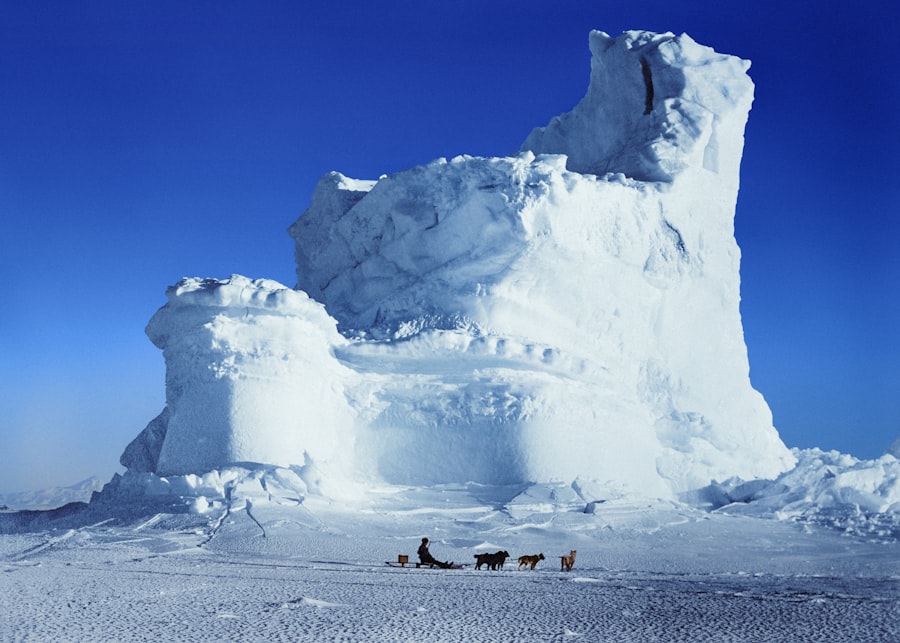
The very nature of Antarctica, with its vast ice sheets and extreme conditions, acts as a formidable barrier to discovery. The sheer volume of ice, in some places thousands of meters thick, presents an almost insurmountable obstacle to traditional archaeological or exploratory methods.
The Thickness of the Ice Sheet
The Antarctic ice sheet is a colossal entity, a frozen ocean of compressed snow that has accumulated over millions of years. Its average thickness is around 1.9 kilometers (1.2 miles), with some areas exceeding 4 kilometers (2.5 miles). Excavating through such a massive layer of ice to reach any potential subsurface structures or artifacts would require monumental engineering feats, far beyond the capabilities of current exploratory technology. Imagine trying to find a single coin buried beneath a skyscraper – the scale of the challenge is comparable.
Extreme Environmental Conditions
Beyond the ice itself, the extreme temperatures, fierce winds, and prolonged periods of darkness make operating in Antarctica exceptionally difficult and dangerous. The logistical complexities of supplying and maintaining expeditions in such an unforgiving environment are immense. These conditions are not merely inconvenient; they are fundamental constraints that dictate the feasibility of any large-scale subsurface exploration.
Limited Scope of Current Technology
Our current technologies, while advanced, are not specifically designed for probing deep beneath thick ice sheets for hidden ancient structures. Ground-penetrating radar and seismic surveys can provide some subsurface information, but their effective depth penetration is limited, and they are better suited for geological surveys than for detailed archaeological investigation. Unlocking Antarctica’s deepest secrets would likely require revolutionary new subsurface exploration tools.
Potential Manifestations of Antarctic Technology
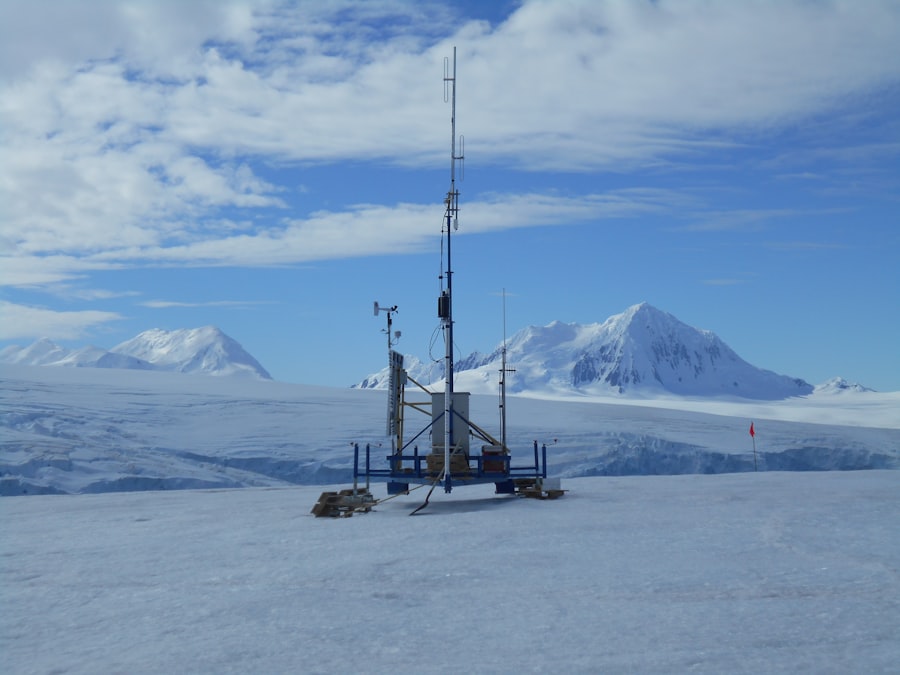
If we entertain the possibility of intelligent, technologically advanced beings having inhabited or visited Antarctica in the ancient past, what might their technological legacy look like? Theories suggest a wide array of possibilities, ranging from remnants of advanced energy sources to sophisticated architectural marvels.
Advanced Energy Sources and Propulsion Systems
One recurring theme in speculative theories is the idea that ancient Antarctic inhabitants possessed advanced energy generation and propulsion systems. These could have been energy sources that tap into Earth’s natural geothermal activity, or perhaps even utilize principles of physics not yet understood by modern science. Such systems, if they existed, might have left behind residual energy signatures, unusual magnetic anomalies, or even inert remnants of their power-generating mechanisms.
Geothermal Energy Exploitation
The significant geothermal activity beneath Antarctica, evidenced by subglacial lakes and volcanic regions, is often cited as a potential energy source for ancient civilizations. Theories propose that these beings could have developed sophisticated methods to harness this heat, providing power for their settlements and technologies.
Unknown Physics and Propulsion
The notion of unknown physics is a recurring element in theories about advanced ancient technology. If these civilizations were truly advanced, they might have understood and manipulated forces that are currently beyond our scientific grasp, enabling them to develop propulsion systems that allowed for rapid global travel, or perhaps even extraterrestrial voyages.
Subsurface Structures and Artefacts
The most tangible (though hypothetical) evidence of ancient Antarctic technology would likely be in the form of subsurface structures and artifacts. These could include buildings, laboratories, transportation networks, or even the remnants of advanced scientific equipment.
Buried Cities and Bases
The idea of buried cities or clandestine bases beneath the ice is a powerful image that fuels much of the speculation. These structures, built to withstand the harsh climate or perhaps designed for a different geological era, are imagined as repositories of ancient knowledge and technology.
Anomalous Artefacts
Anomalous artifacts, such as metallic objects of unknown composition, precisely engineered geometric forms, or devices with inexplicable functions, are often theorized to be scattered across the Antarctic landscape, buried deep within the ice. The discovery of any such object would undoubtedly trigger a scientific re-evaluation of our history.
Recent discoveries have sparked intrigue about secret technology believed to be buried beneath the thick ice of Antarctica. Researchers have uncovered evidence suggesting that advanced machinery and artifacts may lie hidden, potentially dating back to ancient civilizations. This fascinating topic is explored in greater detail in a related article, which delves into the implications of such findings and their impact on our understanding of history. For more information, you can read the full article here.
Scientific Scrutiny and Modern Exploration
| Metric | Details |
|---|---|
| Location | Antarctica, beneath Ross Ice Shelf |
| Depth of Excavation | Approximately 300 meters below ice surface |
| Technology Type | Advanced energy generation and propulsion system |
| Estimated Age | Unknown, possibly ancient or extraterrestrial origin |
| Size of Excavated Area | Approximately 2 square kilometers |
| Material Composition | Unknown alloys and composite materials not found on Earth |
| Current Status | Under classified research and analysis |
| Potential Applications | Energy production, propulsion, and advanced computing |
While the allure of hidden Antarctic technology captures the imagination, it is crucial to approach these theories with rigorous scientific scrutiny. Modern scientific endeavors in Antarctica are primarily focused on understanding the continent’s climate, geology, and unique ecosystems, but some research inadvertently intersects with the fringes of these speculative ideas.
The Role of Antarctica’s Scientific Community
The international scientific community operating in Antarctica, comprised of researchers from numerous nations, is dedicated to empirical observation and verifiable data. Their work, while not actively seeking out “secret technology,” provides a constant influx of information about the continent’s geological and environmental characteristics. It is through this scientific lens that anomalies are typically investigated, with a preference for natural explanations over supernatural or speculative ones.
Data Collection and Interpretation
Scientists collect vast amounts of data through ice core drilling, satellite imagery, aerial surveys, and on-the-ground expeditions. This data is meticulously analyzed to understand Earth’s past climate, ice dynamics, and geological history. When anomalies are detected, the scientific process demands that they are first attributed to known geological or atmospheric phenomena.
The Search for Natural Explanations
The scientific community’s primary objective is to uncover natural processes and historical events that shape our planet. Therefore, any perceived anomaly in Antarctica is rigorously investigated for a mundane, scientific explanation. For instance, unusual magnetic readings might be attributed to mineral deposits, or smoothed terrain to glacial sculpting.
Modern Technologies in Antarctic Research
Contemporary Antarctic research is itself a showcase of technological advancement, albeit for different purposes. Technologies like advanced radar, ice-penetrating aircraft, and sophisticated analytical equipment are pushing the boundaries of what we can observe and understand about the icy continent.
Ice-Penetrating Radar and Satellite Imaging
Technologies such as ice-penetrating radar, mounted on aircraft, can map the bedrock and subsurface geological features beneath the ice. Satellite imaging provides a bird’s-eye view, revealing surface patterns and changes over time. These tools are invaluable for understanding the continent’s geography, but they are not designed to identify or excavate sophisticated artificial structures.
Subglacial Lake Exploration
The discovery and exploration of subglacial lakes, such as Lake Vostok, have opened new avenues for scientific inquiry. These pristine environments, isolated for millennia, hold the potential to reveal unique microbial life and historical climate data. While not directly related to hidden technologies, these explorations highlight the untapped potential of Antarctica’s subsurface and the ingenuity required to access it. As we continue to probe the hidden depths of this frozen continent, the possibility, however remote, of uncovering something truly extraordinary remains a compelling, if speculative, prospect. The icy veil of Antarctica may yet conceal secrets that redefine our understanding of planetary history and the potential for life and intelligence.

SHOCKING: New Radar Reveals City Under Antarctica
FAQs
What is the secret technology reportedly found under Antarctica ice?
The secret technology refers to advanced or unusual devices and structures that some claim have been discovered beneath the ice of Antarctica. These reports often involve speculation about ancient civilizations, extraterrestrial artifacts, or hidden scientific installations, but no verified evidence has been publicly confirmed by credible scientific sources.
How was this secret technology allegedly discovered?
Claims about secret technology under Antarctica ice typically arise from satellite imagery, radar scans, or exploratory missions. Some reports mention the use of ground-penetrating radar or ice-penetrating radar technology that can detect anomalies beneath the ice sheet, though these findings are often subject to interpretation and have not been officially validated.
Is there any scientific evidence supporting the existence of secret technology under Antarctica?
As of now, there is no scientifically verified evidence supporting the existence of secret technology beneath Antarctica’s ice. Most claims remain speculative or based on misinterpretations of geological formations or natural phenomena. The scientific community continues to study Antarctica primarily for climate research and geological history.
Why is Antarctica a focus for such secret technology theories?
Antarctica’s remote location, extreme environment, and thick ice cover make it a mysterious and less-explored continent, which fuels speculation and conspiracy theories. Additionally, international treaties limit military activity and resource exploitation, leading some to speculate about hidden installations or discoveries beneath the ice.
What is the official stance of governments or scientific organizations on these claims?
Governments and reputable scientific organizations generally dismiss claims of secret technology under Antarctica as unfounded or speculative. Research in Antarctica is conducted transparently under international agreements, and no credible evidence has been presented to support the existence of hidden advanced technology beneath the ice.