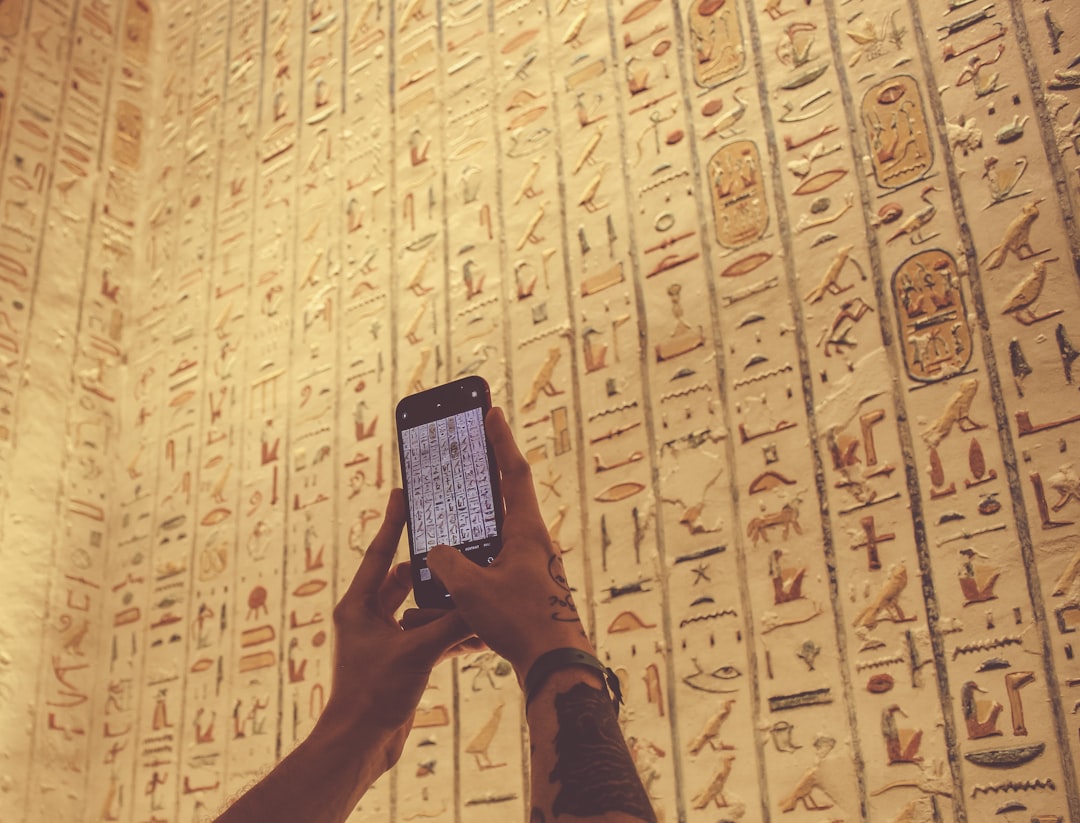
Ancient artifacts serve as tangible links to the past, offering glimpses into the lives, beliefs, and technologies of civilizations long gone. These remnants of history are not merely objects; they are stories waiting to be told, each one encapsulating the essence of its time. From intricate pottery to monumental structures, ancient artifacts provide invaluable insights into the cultural, social, and technological advancements of humanity.
They spark curiosity and wonder, inviting scholars and enthusiasts alike to delve deeper into the mysteries of our ancestors. The allure of ancient artifacts lies in their ability to challenge modern understanding.
As researchers continue to study these enigmatic items, they often uncover new layers of meaning and significance. The exploration of ancient artifacts is not just an academic pursuit; it is a journey into the heart of human history, revealing the complexities and achievements of those who came before.
Key Takeaways
- Ancient artifacts hold mysterious and unexplained secrets that continue to baffle researchers and historians.
- The Antikythera Mechanism is an ancient computer that challenges our understanding of ancient technology and astronomy.
- The Baghdad Battery suggests that ancient civilizations may have had a more advanced understanding of electricity than previously thought.
- The Voynich Manuscript remains an enigma, with its unknown language and mysterious illustrations defying translation.
- The Nazca Lines in Peru are intricate geometric shapes that continue to puzzle scientists with their purpose and creation.
The Antikythera Mechanism: A Mysterious Ancient Computer
Among the most fascinating ancient artifacts is the Antikythera Mechanism, often referred to as the world’s first analog computer. Discovered in a shipwreck off the coast of Antikythera, Greece, in 1901, this intricate device dates back to around 150-100 BCE. Composed of a complex system of gears and dials, it was designed to predict astronomical positions and eclipses for calendrical and astrological purposes.
The sophistication of the Antikythera Mechanism has led many historians to marvel at the advanced technological capabilities of the ancient Greeks. The mechanism’s construction is a testament to the ingenuity of its creators. It features over thirty gears, meticulously crafted from bronze, and is housed in a wooden frame that has largely deteriorated over time.
Researchers have spent decades attempting to fully understand its function and significance, employing modern imaging techniques to reveal hidden inscriptions and components. The Antikythera Mechanism not only challenges preconceived notions about ancient technology but also raises intriguing questions about the knowledge exchange between civilizations in antiquity.
The Baghdad Battery: A Shocking Ancient Power Source
Another captivating artifact is the Baghdad Battery, a curious object that has sparked debate among historians and archaeologists regarding its purpose. Discovered in Iraq in the 1930s, this artifact consists of a clay jar containing a copper cylinder and an iron rod. Some researchers propose that it may have been used as a simple galvanic cell, capable of producing a small electric charge.
If true, this would suggest that ancient civilizations possessed a rudimentary understanding of electricity long before it was formally discovered in modern times. The implications of the Baghdad Battery extend beyond its potential use as a power source. It raises questions about the technological capabilities of ancient societies and their understanding of natural phenomena.
While some skeptics argue that the battery’s intended use remains speculative, others believe it could have been employed for electroplating or therapeutic purposes. Regardless of its actual function, the Baghdad Battery remains a symbol of the mysteries that continue to surround ancient technology.
The Voynich Manuscript: An Untranslated Ancient Text
| Aspect | Details |
|---|---|
| Origin | Unknown |
| Language | Unidentified script and unknown language |
| Contents | Illustrations of plants, astronomical diagrams, and undecipherable text |
| Age | Carbon-dated to the early 15th century |
| Location | Housed at the Beinecke Rare Book & Manuscript Library at Yale University |
The Voynich Manuscript stands as one of history’s most perplexing texts, written in an unknown script that has baffled linguists and cryptographers for centuries. Discovered in 1912 by rare book dealer Wilfrid Voynich, this illustrated manuscript is filled with bizarre drawings and diagrams that depict plants, astronomical charts, and human figures engaged in strange activities. Despite numerous attempts to decode its contents, the manuscript remains an enigma, leading some to speculate about its origins and purpose.
Scholars have proposed various theories regarding the Voynich Manuscript’s creation, ranging from it being an elaborate hoax to a genuine work of scientific knowledge lost to time. Its unique illustrations suggest a deep understanding of botany and astronomy, yet no known language or cipher has successfully unlocked its secrets. The manuscript’s allure lies not only in its mysterious text but also in its ability to captivate the imagination, prompting questions about what knowledge may have been lost or obscured throughout history.
The Nazca Lines: Mysterious Geometric Shapes in Peru
In the arid plains of southern Peru lie the Nazca Lines, a series of enormous geoglyphs etched into the desert floor.
Created by the Nazca culture between 500 BCE and 500 CE, these lines have puzzled researchers for decades regarding their purpose and method of construction.
Theories abound regarding the significance of the Nazca Lines. Some suggest they served as astronomical calendars or religious pathways for rituals, while others propose they were created for aerial visibility, intended for deities above. The sheer scale and precision of these geoglyphs raise questions about the technological capabilities and cultural motivations of the Nazca people.
As modern technology allows for more detailed study, researchers continue to uncover new insights into this remarkable feat of ancient engineering.
The Piri Reis Map: A Controversial Ancient World Map

The Piri Reis Map is another artifact that has ignited debate among historians and cartographers alike. Created in 1513 by Ottoman admiral Piri Reis, this world map is notable for its detailed depiction of parts of Europe, Africa, and South America. What makes it particularly controversial is its inclusion of features that suggest knowledge of lands not officially discovered by Europeans at that time, leading some to speculate about lost ancient civilizations or advanced maritime navigation techniques.
The map’s accuracy in portraying coastlines and geographical features has intrigued scholars for centuries. Some believe it may have been based on earlier maps created by explorers who ventured into uncharted territories long before Columbus set sail. The Piri Reis Map challenges conventional narratives about exploration and discovery during the Age of Sail, prompting discussions about how knowledge was shared across cultures and time periods.
The Stone Spheres of Costa Rica: Ancient Perfectly Shaped Spheres
In the jungles of Costa Rica lie hundreds of stone spheres, known as “Las Bolas,” which have captivated archaeologists and visitors alike with their perfect roundness and mysterious origins. Ranging in size from a few inches to over eight feet in diameter, these spheres are believed to have been created by pre-Columbian cultures between 500 CE and 1500 CE. Their purpose remains uncertain; however, they are thought to have held significant cultural or ceremonial value.
The craftsmanship involved in creating these spheres is remarkable, as they exhibit a level of precision that suggests advanced stoneworking techniques. Some theories propose that they were used as markers for territorial boundaries or as symbols of power among elite groups. Despite extensive research, many questions remain unanswered about how these spheres were transported and arranged throughout the region.
The Stone Spheres continue to be a source of fascination for those seeking to understand the complexities of ancient societies in Central America.
The Shroud of Turin: A Controversial Relic of Jesus Christ
The Shroud of Turin is perhaps one of the most famous relics associated with Christianity, believed by many to be the burial cloth of Jesus Christ. This linen cloth bears a faint image of a man who appears to have suffered crucifixion wounds similar to those described in biblical accounts. Its authenticity has been hotly debated for centuries, with some claiming it is a genuine artifact from the time of Christ while others argue it is a medieval forgery.
Scientific examinations have yielded mixed results regarding the Shroud’s age and origin. Radiocarbon dating conducted in 1988 suggested it was created between 1260 and 1390 CE; however, proponents of its authenticity argue that contamination or repair work may have skewed these results. The Shroud’s enigmatic image continues to inspire both faith and skepticism, serving as a focal point for discussions about religious relics and their significance in understanding historical events.
The London Hammer: An Anomaly in Ancient Rock
The London Hammer is an intriguing artifact that has sparked controversy within both scientific and creationist communities. Discovered in 1936 embedded within a rock formation in London, Texas, this iron hammer appears to date back to an era far earlier than its presumed creation date based on geological context—approximately 400 million years ago according to some estimates. This anomaly raises questions about human existence during prehistoric times.
Critics argue that the hammer’s presence within such ancient rock could be attributed to natural processes or geological anomalies rather than evidence of advanced human civilization existing millions of years ago. Nevertheless, proponents maintain that it challenges established timelines regarding human history and evolution. The London Hammer serves as a reminder that even seemingly straightforward discoveries can lead to profound debates about our understanding of history.
The Dendera Light: Ancient Egyptian Electricity?
The Dendera Light is another artifact that has captured imaginations with its implications regarding ancient technology. Found within the Hathor Temple at Dendera in Egypt, this relief depicts what some interpret as an electric light bulb held by figures resembling ancient Egyptians. This interpretation has led to speculation about whether ancient Egyptians possessed knowledge of electricity or advanced lighting techniques long before modern science.
Skeptics argue that these interpretations are misreadings of symbolic imagery rather than evidence of actual technology. They contend that such depictions are more likely representations of religious beliefs or mythological concepts rather than practical inventions. Regardless of its true meaning, the Dendera Light continues to inspire curiosity about what ancient civilizations may have known about natural phenomena and their potential applications.
Unraveling the Mysteries of Unexplained Ancient Artifacts
The exploration of ancient artifacts reveals not only the ingenuity and creativity of past civilizations but also highlights humanity’s enduring quest for knowledge and understanding. Each artifact tells a story—one that transcends time and invites inquiry into our shared history. From advanced technologies like the Antikythera Mechanism to enigmatic texts like the Voynich Manuscript, these remnants challenge modern perceptions while igniting curiosity about what remains undiscovered.
As researchers continue to investigate these artifacts with modern techniques and interdisciplinary approaches, new insights emerge that deepen our appreciation for ancient cultures’ complexities. The mysteries surrounding these objects remind us that history is not merely a linear narrative but rather a tapestry woven from countless threads—each representing unique experiences and perspectives from those who came before us. In unraveling these mysteries, humanity takes another step toward understanding its own place within the continuum of time.
Unexplained ancient artifacts have long fascinated historians and archaeologists, sparking debates and theories about their origins and purposes. One intriguing article that delves into this topic can be found on Real Lore and Order, a site dedicated to exploring historical mysteries and legends. The article discusses various enigmatic artifacts that have been discovered around the world, offering insights into their potential significance and the mysteries they pose to modern science. For a deeper exploration of these fascinating relics, you can read more about them on the Real Lore and Order website by visiting this link.
WATCH THIS 🤯Ancient Tech That Should Not Exist
FAQs
What are unexplained ancient artifacts?
Unexplained ancient artifacts are objects from ancient times that have been discovered and studied by archaeologists, but whose purpose, origin, or method of creation remains a mystery.
What are some examples of unexplained ancient artifacts?
Examples of unexplained ancient artifacts include the Antikythera Mechanism, the Baghdad Battery, the Voynich Manuscript, the Piri Reis Map, and the Nazca Lines.
Why are these artifacts considered unexplained?
These artifacts are considered unexplained because they often display advanced technological or artistic capabilities that seem out of place for the time period in which they were created. Additionally, their purpose or function is not immediately apparent based on current knowledge.
What are some theories about the origins of these artifacts?
There are various theories about the origins of unexplained ancient artifacts, ranging from ancient alien intervention to lost civilizations with advanced knowledge and technology. Some researchers also suggest that these artifacts may simply be misunderstood or misinterpreted by modern scholars.
How do archaeologists and historians study unexplained ancient artifacts?
Archaeologists and historians study unexplained ancient artifacts using a combination of scientific analysis, comparative research, and interdisciplinary collaboration. They may use techniques such as carbon dating, material analysis, and historical context to try to unravel the mysteries surrounding these artifacts.
What is the significance of studying unexplained ancient artifacts?
Studying unexplained ancient artifacts can provide valuable insights into the technological, cultural, and artistic achievements of ancient civilizations. It can also challenge our understanding of history and prompt new questions and avenues of research.