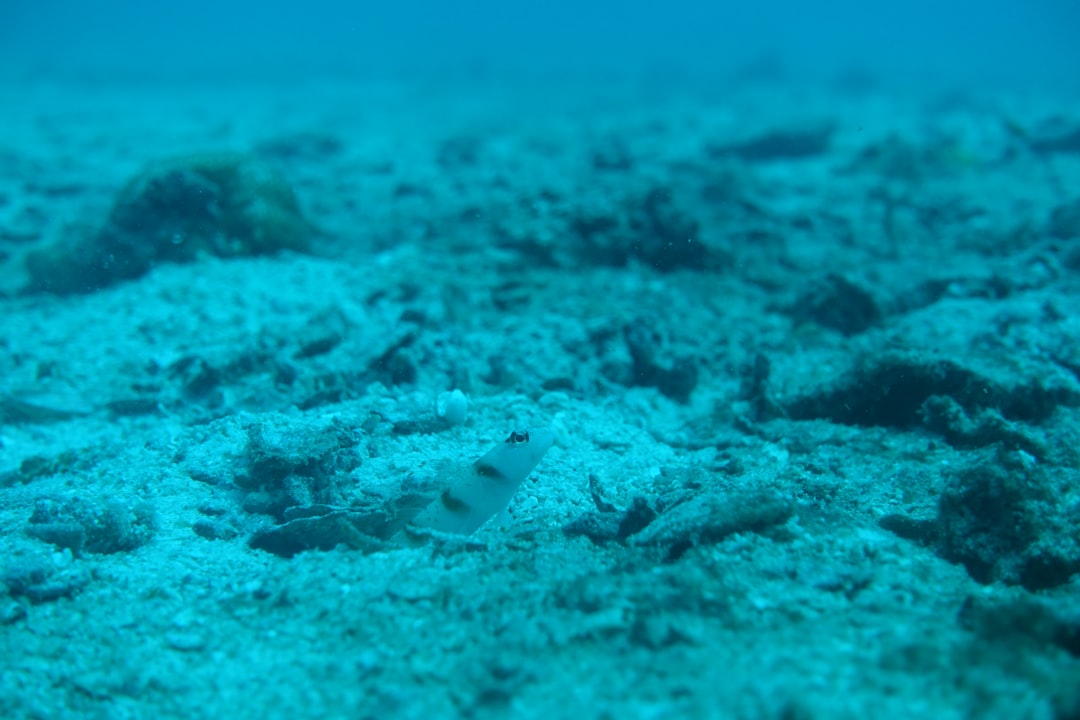
The ocean floor, a realm shrouded in mystery even now, continues to yield phenomena that defy immediate explanation. Vast and largely unexplored, it remains a frontier where the familiar rules of Earthly understanding are frequently challenged. What lies beneath the crushing pressures and perpetual darkness has, for centuries, been a subject of speculation and awe. Modern exploration, equipped with increasingly sophisticated technology, is not just confirming the vastness of this subaquatic world but also presenting evidence of its enigmatic past and even its present inhabitants that leave scientists and the public alike pondering the depths of the unknown. These are not tales of mythical krakens or Atlantis, but rather concrete discoveries, documented through sonar, submersible footage, and direct observation, that present puzzles for which definitive answers are still being sought.
Beneath the waves, formations that appear to bear the hallmarks of artificial construction, or at least highly unusual geological processes, have been encountered. These underwater anomalies, often detected through advances in sonar mapping, invite comparison to submerged ruins or megalithic sites, though their true origins remain subjects of intense scientific debate.
Yonaguni Monument: A Submerged Enigma
Perhaps the most frequently cited example is the Yonaguni Monument, located off the coast of Yonaguni Island in Japan. This massive undersea formation, resembling a stepped pyramid or platform, features what appear to be carved right angles, flat surfaces, and tool marks. Discovered by local diving enthusiasts in the early 1980s, it has sparked considerable debate between geologists and archaeologists.
Geological Interpretation: Natural Erosion and Fracturing
One prevailing scientific explanation posits that the Yonaguni Monument is a purely natural geological feature. Proponents of this view suggest that the formation is the result of tectonic activity and subsequent erosion. Sedimentary rock layers, subjected to immense pressure and movement, could have fractured and eroded in a way that mimics man-made structures. The “steps” could be natural bedding planes or joint systems, and the “flat surfaces” are simply the result of differential weathering. The sheer scale and apparent regularity, however, have led some to question if simple erosion alone can account for such symmetry.
Archaeological Hypothesis: Submerged Ancient Civilization
Conversely, the striking resemblance to man-made structures has fueled speculation that the Yonaguni Monument is the remnant of a submerged ancient civilization. Proponents of this theory point to the distinct characteristics that they argue are too precise to be coincidental natural formations. The large, flat faces, right-angled corners, and the apparent presence of what could be interpreted as pathways or staircases are presented as evidence of intelligent design. The idea that a civilization might have existed in this region in the distant past and been subsequently submerged due to sea-level rise or seismic events is a tantalizing, albeit currently unsubstantiated, possibility. The lack of definitive artifacts or inscriptions directly associated with the monument, however, presents a significant hurdle for this interpretation.
The Baltic Sea Anomaly: A Mysterious Object
Another well-documented anomaly that has captured public imagination is the “Baltic Sea Anomaly.” Discovered in 2011 by the Swedish diving team Ocean X, this large, circular object resting on the seabed in the Gulf of Bothnia has defied easy categorization. Sonar images reveal a distinctive, roughly circular shape, approximately 60 meters in diameter, with unusual features including what appear to be steps and a circular indentation.
Sonar Imaging and Initial Speculation
The initial sonar scans presented a puzzling image. The object’s distinct geometric form, contrasted with the surrounding rugged topography, immediately set it apart. Various theories quickly emerged, ranging from a sunken World War II artifact, such as a mine or a discarded piece of military equipment, to unusual geological formations, and even more speculative ideas. The team’s subsequent dives, however, provided more detailed visual information, which, while revealing more about the object’s texture and composition, did little to resolve its nature definitively.
Scientific Analysis: Basalt Formation or Unknown?
While definitive analysis remains elusive, some geologists suggest the anomaly could be a natural rock formation. They point to the possibility of glacial erratics, large rocks deposited by glaciers during the last Ice Age, or even an unusual type of volcanic rock formation. The textured surface could be the result of erosion or biological processes. However, the object’s seemingly unnatural symmetry and the presence of features reminiscent of construction continue to fuel debate and encourage further investigation. The lack of metallic signatures or clear man-made debris has made simple “sunken hardware” explanations difficult to confirm.
Exploring the mysteries of the ocean floor has led to numerous unexplained finds that continue to baffle researchers and enthusiasts alike. One intriguing article that delves into some of these enigmatic discoveries is available at this link. From ancient shipwrecks to bizarre underwater formations, the depths of the sea hold secrets that challenge our understanding of history and nature.
Prehistoric Undeniable Presence: Submerged Landscapes and Artifacts
The geological record and archaeological discoveries increasingly point to a past where sea levels were significantly lower, thus exposing landmasses that are now submerged. This has led to the discovery of ancient human activity and even entire settlements found on the ocean floor, presenting a challenging timeline for human migration and development.
Submerged Mesolithic Habitation Sites
Evidence of prehistoric human habitation beneath the waves is no longer a fringe theory but a growing area of archaeological research. In several locations around the world, underwater archaeologists have identified sites that were once dry land and would have been inhabited by Mesolithic peoples. These discoveries are like finding an unopened diary from a forgotten era, offering glimpses into lives lived when coastlines were far from their present-day extents.
Doggerland: The Lost Continent of the North Sea
Perhaps the most significant example is Doggerland, a vast land bridge that once connected Britain to continental Europe across what is now the North Sea. As the ice sheets retreated after the last Glacial Period, sea levels rose, gradually inundating this rich hunting and foraging ground. Archaeological finds on the North Sea floor
FAQs

What are some common unexplained finds discovered at the bottom of the sea?
Unexplained finds at the bottom of the sea often include mysterious shipwrecks, unusual geological formations, ancient artifacts, and unidentified submerged objects. These discoveries sometimes challenge current historical and scientific understanding.
How are unexplained underwater discoveries typically investigated?
Investigations usually involve underwater exploration using submersibles, remotely operated vehicles (ROVs), sonar mapping, and scuba diving. Experts from fields such as marine archaeology, geology, and oceanography analyze the findings to determine their origin and significance.
Why do many unexplained finds remain a mystery despite modern technology?
Many underwater sites are difficult to access due to depth, pressure, and environmental conditions. Additionally, limited visibility, deterioration over time, and incomplete historical records can hinder definitive explanations of these finds.
Have any unexplained underwater discoveries led to new scientific insights?
Yes, some discoveries have expanded knowledge about ancient civilizations, climate change, and marine ecosystems. For example, submerged structures have provided evidence of past sea level changes and human activity in prehistoric times.
Are there any famous unexplained finds at the bottom of the sea?
Famous examples include the Baltic Sea Anomaly, the Yonaguni Monument near Japan, and various mysterious shipwrecks like the Antikythera shipwreck. These finds continue to attract scientific interest and public curiosity due to their enigmatic nature.