The Antikythera mechanism, a complex analog device recovered from a Roman-era shipwreck off the coast of the Greek island of Antikythera, represents a profound enigma that has captivated scholars and scientists for over a century. Discovered in 1901 by sponge divers, this artifact, believed to have originated in the Hellenistic period, is far more than just an ancient relic; it is a testament to an astonishing level of technological sophistication that challenges conventional understanding of ancient Greek capabilities. The intricate gears and dials suggest a purpose far beyond simple timekeeping, hinting at a sophisticated astronomical calculator. Unraveling its secrets has been a painstaking process, akin to assembling a cosmic jigsaw puzzle with missing pieces, offering glimpses into the intellectual prowess of a civilization that continues to inspire awe.
The initial encounter with the Antikythera mechanism was not one of immediate recognition. The artifact, found amidst the debris of a ship that sank around 70-60 BCE, was heavily corroded and fragmented. Among the treasures of pottery, statues, and coins, lay several bronze fragments, initially dismissed as lumps of corroded metal. It was only with careful preservation and examination by archaeologist Valerios Stais in 1902 that the intricate internal structure became apparent. The discovery of what appeared to be gears within the corroded mass was met with considerable skepticism. The prevailing view of ancient technology at the time placed it in a significantly less advanced developmental stage. The presence of such complex mechanical components, predating similar known mechanisms by over a millennium, was simply unprecedented. It was as if finding a modern smartphone buried alongside a Bronze Age settlement – an anomaly that demanded rigorous investigation and a re-evaluation of historical timelines.
The Shipwreck Context
The Antikythera shipwreck itself provides crucial context for the artifact’s study. Located at a depth of approximately 45 meters, the wreck is believed to have been a Roman merchant vessel, possibly carrying booty from Greece to Rome. The ship’s cargo was diverse, including marble statues, amphorae, and other valuable items. The mechanism, nestled among these goods, suggests it was a prized possession, perhaps owned by a wealthy individual or intended as a significant gift. The precise origin of the mechanism, whether it was manufactured in Greece or a Roman possession en route, remains a subject of scholarly debate. The dating of the shipwreck, primarily through numismatic evidence (coins), generally places the sinking in the mid-first century BCE, providing a critical timeframe for the mechanism’s creation.
Early Attempts at Reconstruction
The early attempts to understand the Antikythera mechanism were hampered by its deteriorated state. The fragments were brittle, and the intricate interconnections of the gears were obscured by corrosion and encrustation. Researchers like Derek de Solla Price, a historian of science, played a pivotal role in the mid-20th century. Using X-ray technology, he was able to peer through the corroded layers and reveal the hidden gears. Price’s seminal work, “Gears from the Greeks,” published in Scientific American in 1959, was a turning point. He proposed that the mechanism was an astronomical computer, capable of predicting celestial positions. His hypothesis, though groundbreaking, was met with some initial resistance, as it painted a picture of ancient engineering far more advanced than previously assumed.
Recent discoveries have shed light on the ancient Greek computer mystery, particularly focusing on the Antikythera mechanism, which was used to predict astronomical positions and eclipses. This fascinating artifact, often considered the world’s first analog computer, has intrigued researchers for decades. For a deeper dive into this topic and the latest findings surrounding the Antikythera mechanism, you can read the related article at this link.
Deciphering the Gears: A Glimpse into Ancient Astronomy
The most striking feature of the Antikythera mechanism is its intricate array of bronze gears. These gears, meticulously crafted and interlocking with remarkable precision, are the heart of its computational power. The number of distinct gears and their specific tooth counts are crucial to understanding its function. Each gear train was designed to replicate a specific celestial cycle or phenomenon, a mechanical manifestation of the mathematical models developed by ancient Greek astronomers. The complexity suggests a deep understanding of mathematics, particularly geometry and arithmetic, and a remarkable ability to translate abstract concepts into tangible engineering solutions.
The Gear Trains and Their Functions
Researchers have identified over 30 individual gears within the mechanism. These gears are arranged in complex trains, each designed to perform a specific calculation. One prominent gear train, for instance, is believed to have tracked the position of the sun and moon in their respective cycles. Another set of gears likely predicted lunar eclipses and perhaps even solar eclipses, a feat that would have required a sophisticated understanding of celestial mechanics. The mechanism also appears to have incorporated a metonic cycle, a period of 235 lunar months which is very close to 19 solar years. This cycle, known since antiquity, suggests the device was used to synchronize lunar and solar calendars.
The Lunar Dial and Its Significance
A crucial component of the mechanism is its lunar dial. This dial is thought to have displayed the phase of the moon and its position in the zodiac. The intricate gearing responsible for this accurately accounted for the Moon’s elliptical orbit, a correction not precisely understood in Western astronomy until much later. This level of detail points to an astronomical knowledge base that was both extensive and remarkably precise. The inclusion of such sophisticated lunar tracking highlights the importance of the moon in ancient Greek culture, for both calendrical purposes and perhaps for religious or navigational reasons.
The Metonic Cycle’s Role
The presence of the metonic cycle in the Antikythera mechanism is particularly noteworthy. This 19-year cycle was recognized by the Babylonian astronomer Meton of Athens in the 5th century BCE. The mechanism’s ability to represent this cycle underscores its function as a sophisticated calendrical device. By integrating solar and lunar reckoning, it would have enabled users to harmonize different timekeeping systems, a critical task for agricultural planning, religious festivals, and civic organization in the ancient world.
The Solar Dial: Predicting the Sun’s Path
The solar dial, though less well-preserved than the lunar dial, is also believed to have played a significant role. It likely indicated the position of the sun in the zodiac signs, allowing for the prediction of solstices and equinoxes. The inclusion of this solar component alongside the lunar dial emphasizes the mechanism’s overarching goal: to provide a comprehensive astronomical overview, linking Earthly timekeeping with celestial movements.
Unraveling the Inscriptions: A Rosetta Stone of Greek Knowledge

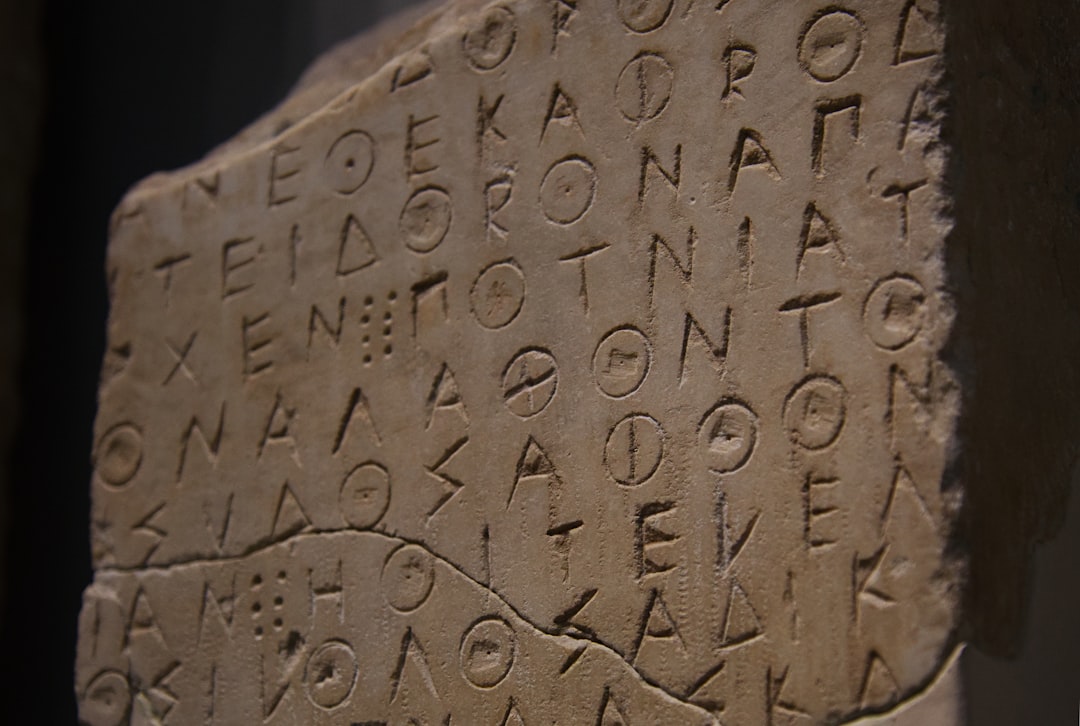
Beyond the mechanical marvel, the Antikythera mechanism is adorned with a series of inscriptions. These inscriptions, when deciphered, provide invaluable clues to the device’s purpose, its construction, and the scientific knowledge of its creators. For decades, these Greek characters, inscribed on the mechanism’s surfaces and on internal plates, served as a cryptic language that scholars worked to translate. Each legible word and symbol acts as a key, unlocking further layers of understanding about this ancient marvel.
The Epigraphers’ Challenge
Deciphering the inscriptions presented a formidable challenge. The text is often fragmentary, worn by centuries of immersion in saltwater, and written in a script that can be difficult to interpret. Epigraphers, specialists in ancient inscriptions, have painstakingly pieced together these fragments, applying their knowledge of ancient Greek paleography and lexicography. The task is akin to assembling a vast mosaic where many tiles are missing or damaged, requiring an intuitive understanding of the overall picture to fill in the gaps.
Key Information Revealed
The inscriptions have revealed a wealth of information. They name celestial bodies, astronomical terms, and likely refer to the cycles and predictions the mechanism was designed to perform. For example, some inscriptions appear to correspond to the names of the zodiac constellations, further solidifying the mechanism’s astronomical function. The presence of betting odds for the Olympic Games has also been found on some fragments, suggesting a connection to athletic events and potentially even popular entertainment of the time. This unexpected detail hints at the multifaceted role the mechanism may have played in ancient life.
The “Calendar Dial” and Its Clues
Specific inscriptions point to the existence of a “Calendar Dial,” which likely displayed a systematic arrangement of dates and associated astronomical information. The names of months and festivals are also mentioned, providing insights into the socio-cultural context in which the mechanism was used. This calendar function was likely not merely informational but also practical, guiding agricultural practices and religious observances.
The “Bridges” and Their Significance
The “bridges” of the Antikythera mechanism, raised plates bearing inscriptions, are particularly informative. These often contain detailed explanations of the various functions and cycles represented by the gears. They act as a user manual, albeit one written in an ancient tongue, explaining the complex calculations. The discovery and decipherment of these bridges have been crucial in moving beyond mere speculation about the mechanism’s purpose to a more concrete understanding of its operational principles.
Reconstructing the Mechanism: A Triumph of Modern Technology
The journey to understand the Antikythera mechanism has been a protracted one, marked by periods of intense research and significant technological advancements. The advent of non-invasive imaging techniques has been instrumental in revealing the internal workings of this fragile artifact without causing further damage. These modern tools have allowed researchers to visualize the hidden gears and inscriptions, effectively turning back time to observe the mechanism in its functional glory.
X-ray and CT Scanning
The use of X-ray and computed tomography (CT) scanning has been revolutionary. These technologies allow scientists to create detailed 3D models of the mechanism’s internal structure, viewing layers of gears and inscriptions that would otherwise remain concealed. CT scans, in particular, have provided an unprecedented level of detail, enabling researchers to reconstruct the exact placement and interaction of each gear. This is akin to having a transparent view of a complex clockwork, allowing for precise measurement and analysis of every moving part.
3D Printing and Functional Replicas
Armed with the data from these scans, researchers have been able to create highly accurate 3D printed replicas of the Antikythera mechanism. These functional models are not just for display; they are essential tools for testing hypotheses and understanding how the original device operated. By manually turning the gears of these replicas, scientists can verify the predicted astronomical cycles and gain a visceral understanding of the ingenuity involved in its creation. Building these replicas is like breathing life back into an ancient ghost, allowing us to witness its intended functions firsthand.
The Antikythera Mechanism Research Project
The ongoing Antikythera Mechanism Research Project, an international collaboration involving leading scientists and archaeologists, has been instrumental in pushing the boundaries of our understanding. Through shared expertise and advanced technology, this project has continuously unearthed new revelations about the artifact. Their work has not only illuminated the mechanism itself but also the broader scientific and technological landscape of the Hellenistic world.
The ‘Go Cyclos’ and ‘Go Epykloi’ Inscriptions
Recent findings from this project have revealed more inscriptions, including terms like “Go Cyclos” and “Go Epykloi,” which are believed to refer to chariot races, possibly indicating the mechanism’s use in predicting outcomes or tracking the progress of races during the Olympic Games. This adds another dimension to the artifact, suggesting its role extended beyond purely scientific or calendrical applications to potentially include aspects of public life and entertainment.
Recent discoveries have shed light on the ancient Greek computer mystery, particularly focusing on the Antikythera mechanism, which has long puzzled historians and scientists alike. This intricate device, believed to date back to around 150-100 BC, was used to predict astronomical positions and eclipses for calendrical and astrological purposes. For those interested in delving deeper into this fascinating topic, a related article can be found at Real Lore and Order, where the complexities of this ancient technology are explored in detail.
The Legacy of a Lost Genius: Rediscovering Hellenistic Engineering
| Metric | Value | Description |
|---|---|---|
| Artifact Name | Antikythera Mechanism | Ancient Greek analog computer used to predict astronomical positions |
| Discovery Year | 1901 | Year the mechanism was found in a shipwreck off Antikythera island |
| Estimated Construction Date | circa 100 BCE | Approximate time when the mechanism was built |
| Number of Gears | 30+ | Complex gear system used for astronomical calculations |
| Functions | Solar & Lunar Cycles, Eclipses, Zodiac Positions | Capabilities of the mechanism in predicting celestial events |
| Material | Bronze | Primary material used in the construction of the mechanism |
| Significance | World’s oldest known analog computer | Represents advanced ancient Greek technology and engineering |
| Recent Research Breakthrough | 3D X-ray Imaging & Computer Modeling | Techniques used to decode the mechanism’s functions and inscriptions |
The Antikythera mechanism stands as a powerful symbol of a lost era of advanced engineering and scientific understanding. Its existence forces a reassessment of what we thought we knew about the capabilities of ancient Greek civilization. It suggests that the technological development might not have been a linear progression, but rather one with periods of remarkable, and perhaps even lost, sophistication. The mechanism is a tantalizing glimpse into a world that, in some respects, was far more advanced than previously imagined.
Challenging the Medieval Dark Ages Paradigm
For a long time, the period following the fall of the Roman Empire was termed the “Dark Ages,” implying a decline in intellectual and technological progress. The Antikythera mechanism, however, predates this period and demonstrates a level of mechanical complexity that was not replicated for centuries. It effectively pushes back the timeline for sophisticated geared mechanisms, highlighting that the “lights” of innovation were burning brightly in the Hellenistic world.
The “Lost” Science of the Greeks
The mechanism fuels speculation about other “lost” sciences and technologies that might have existed in the ancient world but were not preserved. The sophistication of its design suggests a deep theoretical underpinning, a body of knowledge that may have been lost to successive generations through conquest, natural disaster, or simply the decline of specialized scholarship. It is a poignant reminder that knowledge can be fragile and susceptible to disappearance.
Implications for Our Understanding of History
The Antikythera mechanism is not just an archaeological curiosity; it is a historical artifact with profound implications. It encourages us to approach ancient history with a more nuanced perspective, recognizing the potential for advanced knowledge and technological achievement where we might have previously assumed simplicity. It prompts us to ask, what other marvels lie undiscovered, waiting to rewrite our understanding of the past? The mechanism acts as a beacon, illuminating the vast, unexplored territories of ancient intellectual achievement.

STOP: Why They Erased 50 Impossible Inventions From Your Textbooks
FAQs
What is the ancient Greek computer?
The ancient Greek computer, also known as the Antikythera mechanism, is an ancient analog device used to predict astronomical positions and eclipses for calendrical and astrological purposes. It dates back to around 100 BCE.
How was the mystery of the ancient Greek computer solved?
The mystery was solved through modern imaging techniques such as X-ray tomography and 3D modeling, which revealed the complex internal gears and inscriptions. These studies showed it was a sophisticated mechanical calculator.
What was the purpose of the Antikythera mechanism?
The device was used to track the cycles of the Solar System, including the movements of the Sun, Moon, and possibly the planets. It helped ancient Greeks predict eclipses and understand astronomical cycles.
Where was the ancient Greek computer discovered?
The Antikythera mechanism was discovered in 1901 in a shipwreck off the coast of the Greek island Antikythera. It was found among other artifacts in the wreckage.
Why is the Antikythera mechanism significant?
It is significant because it demonstrates that ancient Greeks had advanced knowledge of astronomy and mechanical engineering far earlier than previously thought. It is considered the world’s first known analog computer.