
The Great Pyramid of Giza, a monumental testament to ancient Egyptian engineering and ambition, has long held secrets within its colossal stone edifice. For millennia, its solid form has presented an impassive facade, its internal structure largely mapped, yet whispers of concealed spaces persisted, fueling speculation and scholarly inquiry. However, a revolution in non-destructive investigation has begun to peel back the layers of this enduring mystery. Muon scanning, a technique borrowed from particle physics, is proving to be a powerful key, unlocking previously inaccessible chambers and offering a tantalizing glimpse into the pyramid’s hidden architecture.
The Great Pyramid of Giza, also known as the Pyramid of Khufu, stands as the oldest and largest of the three pyramids on the Giza Plateau, and indeed, the oldest of the Seven Wonders of the Ancient World. Constructed as a tomb for the Pharaoh Khufu, it is estimated to have been completed around 2560 BCE. Its sheer scale is staggering; originally standing at 146.7 meters (481 feet), it is composed of an estimated 2.3 million stone blocks, each weighing an average of 2.5 tons. Its construction remains a subject of intense debate, with various theories proposed regarding the methods employed by the ancient Egyptians.
The Quest for Hidden Spaces: A Historical Perspective
The allure of hidden chambers within the Great Pyramid is not a modern phenomenon. For centuries, explorers and archaeologists have theorized about the existence of rooms beyond those already discovered, such as the King’s Chamber, the Queen’s Chamber, and the Grand Gallery.
Early Explorations and Their Limitations
Early attempts to understand the pyramid’s interior were often intrusive. Excavations, though groundbreaking for their time, chipped away at the edifice and, critically, could not penetrate solid rock or densely packed masonry. The technology of the past was a blunt instrument against the pyramid’s formidable density.
The Dawn of Non-Destructive Testing
The 20th century saw the emergence of non-destructive testing (NDT) methods, offering a more refined approach. Techniques like radiography and infrared thermography were employed, but these often had limitations in terms of penetration depth and resolution when dealing with the immense scale and material composition of the Great Pyramid. They were akin to trying to see through a thick fog with a weak flashlight.
Recent advancements in the exploration of the Great Pyramid of Giza have revealed intriguing possibilities regarding hidden chambers, thanks to innovative muon scanning technology. This non-invasive method allows researchers to detect voids within the pyramid’s structure by measuring the cosmic particles known as muons. For a deeper understanding of these groundbreaking findings and their implications for Egyptology, you can read more in the related article on the topic at Real Lore and Order.
Introducing Muon Scanning: A Particle Physics Detective
Muon scanning represents a paradigm shift in subterranean and hidden structure detection. It harnesses the power of cosmic rays, specifically muons, which are naturally occurring subatomic particles that rain down upon the Earth’s surface constantly.
The Nature of Muons
Muons are elementary particles, similar to electrons but much heavier. They are created high in the Earth’s atmosphere when cosmic rays collide with air molecules. These muons travel at nearly the speed of light and possess the remarkable ability to penetrate significant amounts of matter without significant absorption or scattering. This characteristic makes them ideal probes for dense structures like pyramids.
Muon Flux and Interaction with Matter
The constant flux of muons provides a continuous stream of illuminating particles. As these muons pass through rock and stone, their trajectory and energy are slightly altered. The degree of this alteration is dependent on the density and thickness of the material they traverse. Denser materials will cause more muons to scatter or lose energy, while less dense areas will allow more muons to pass through unimpeded.
The Principle of Muon Tomography
Muon scanning, or muon tomography, operates on the principle of using these naturally occurring muons to create a three-dimensional image of the internal structure of an object. It’s like using X-rays, but with a far more potent and readily available “light source” directly from the cosmos.
Detector Placement and Data Acquisition
Specialized detectors are placed around or within the structure being investigated. These detectors are designed to record the trajectory and energy of incoming and outgoing muons. By comparing the number of muons that enter a given volume with the number that exit, scientists can infer the density variations within that volume.
Reconstructing the Internal Image
Sophisticated algorithms are then used to process the vast amounts of data collected by the detectors. This data is essentially a map of muon interactions, and by analyzing these interactions, scientists can construct a tomographic image that reveals the presence of voids, chambers, and varying densities within the object.
The ScanPyramids Project: Pioneering Muon Investigations
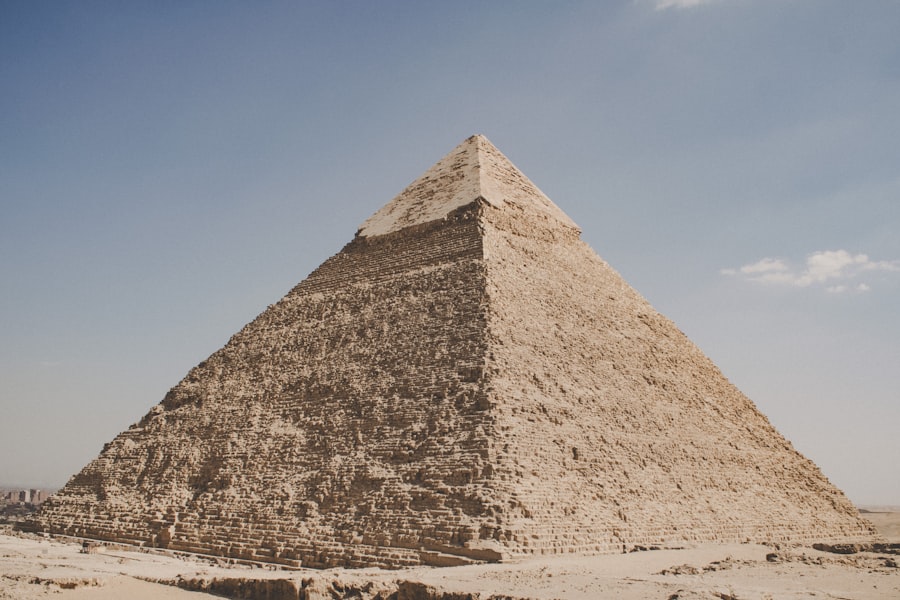
The application of muon scanning to the Great Pyramid has been spearheaded by the ScanPyramids project, an international collaboration of scientists and researchers. This ambitious undertaking has deployed cutting-edge technology to probe the pyramid’s interior with unprecedented precision.
The Genesis of ScanPyramids
Recognizing the limitations of previous investigative methods, the ScanPyramids project was initiated with the explicit goal of using advanced NDT techniques, including muon scanning, to search for hidden voids within the Great Pyramid and other ancient monuments.
Collaboration and Expertise
The project brings together expertise from various fields, including particle physics, archaeology, Egyptology, and engineering, fostering a multidisciplinary approach to unraveling the pyramid’s secrets. This fusion of knowledge is critical for both the technical execution of the scans and the interpretation of the findings.
Deployment of Muon Detectors
The successful implementation of muon scanning requires careful planning and deployment of sensitive detectors. These devices are designed to operate for extended periods in challenging environments.
Types of Detectors Used
The ScanPyramids project has utilized different types of muon detectors, including plastics scintillators and cosmic-ray muon detectors (CRMDs). These devices are capable of precisely tracking the path of muons.
Strategic Placement for Optimal Coverage
Detectors were strategically placed at different locations around the base and within accessible passages of the Great Pyramid. This placement was crucial for achieving comprehensive coverage of the internal volume and for triangulating the location of any detected anomalies.
Discovering the “Big Void”: A Monumental Breakthrough
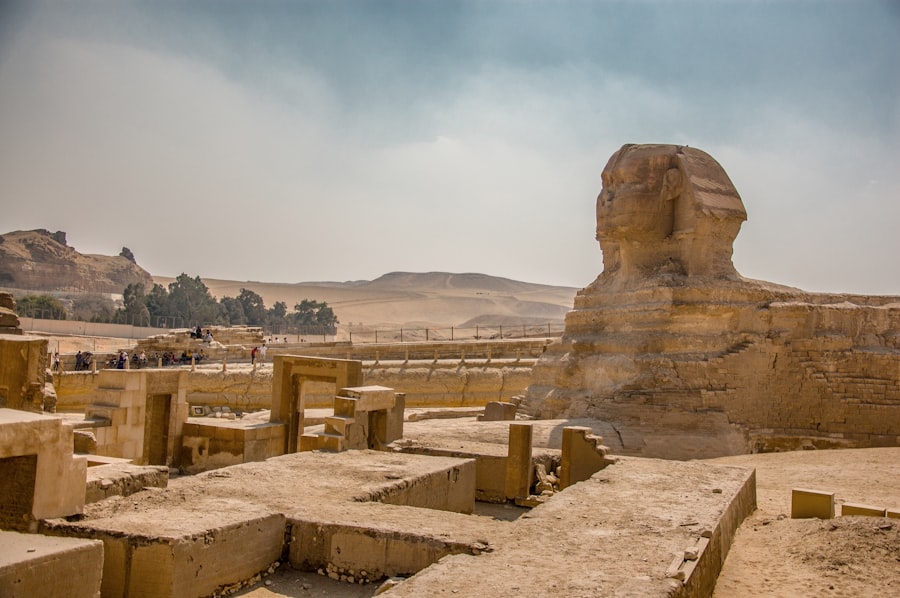
The most significant discovery to emerge from the ScanPyramids project using muon scanning is the identification of a substantial, previously unknown void within the Great Pyramid. This finding has reignited scholarly interest and opened new avenues for research.
Initial Anomalies and the “Big Void”
During the initial phases of muon scanning, researchers observed unexpected patterns in the muon flux. These anomalies suggested the presence of areas with lower density than the surrounding limestone and granite.
Corroboration with Infrared and Camera Data
The anomalies detected through muon scanning were further investigated and corroborated by other NDT methods, such as infrared thermography and small camera probes inserted through existing crevices. This multi-pronged approach significantly increased the confidence in the existence and nature of the void.
Characterizing the Discovered Chamber
While the exact purpose and contents of the “Big Void” remain a subject of ongoing investigation, its dimensions and location have been partially determined.
Dimensions and Location
The void, tentatively named the “Big Void” or “ScanPyramids Big Void,” is estimated to be at least 30 meters (98 feet) long and has a cross-section similar to that of the Grand Gallery. It is located above the Grand Gallery, running parallel to it.
Implications for Pyramid Construction
The existence of such a large, previously unknown internal space raises profound questions about the construction techniques employed by the ancient Egyptians. It suggests a level of planning and execution that goes beyond the currently understood internal layout.
Recent advancements in muon scanning technology have revealed intriguing possibilities regarding hidden chambers within the Great Pyramid of Giza. These scans, which utilize cosmic rays to detect voids in the structure, have sparked significant interest among archaeologists and historians alike. For those looking to delve deeper into this fascinating topic, a related article provides further insights into the implications of these discoveries and the ongoing research efforts. You can read more about it in this detailed exploration.
Future Prospects and the Ongoing Scientific Dialogue
| Metric | Value | Unit | Description |
|---|---|---|---|
| Number of Hidden Chambers Detected | 2 | chambers | New voids identified behind the pyramid’s walls using muon tomography |
| Muon Detection Sensitivity | 99.7 | % | Accuracy of muon detection in scanning the pyramid structure |
| Scan Duration | 2 | years | Time taken to complete the muon scan of the Great Pyramid |
| Scan Resolution | 10 | cm | Spatial resolution of the muon imaging inside the pyramid |
| Muon Flux | 10,000 | muons/m²/min | Average muon flux used for imaging the pyramid |
| Depth of Hidden Chambers | 30 | meters | Approximate depth of the newly discovered voids inside the pyramid |
The discovery of the “Big Void” is not an endpoint but rather a compelling new beginning for understanding the Great Pyramid. Muon scanning continues to be a vital tool, promising further revelations.
Further Refinement of Muon Tomography
Advancements in detector technology and data processing algorithms are continually improving the resolution and accuracy of muon tomography. This will allow for even more detailed mapping of the pyramid’s internal structure.
Enhancing Resolution and Depth Penetration
Future iterations of muon scanning may provide greater detail about the internal composition and any potential contents of discovered voids. The ability to detect finer variations in density will be crucial.
Investigating Other Ancient Structures
The success of muon scanning at the Great Pyramid has opened doors for similar investigations at other ancient monuments worldwide. The technique is a powerful, non-invasive tool for understanding structures that have remained opaque to traditional methods.
Archaeological Applications Beyond Giza
From the pyramids of Mexico to ancient subterranean cities, muon scanning offers a promising new avenue for exploration, potentially revealing hidden temples, tombs, and forgotten architectural features.
The Interplay of Science and Archaeology
The Great Pyramid, once a silent sentinel of the past, is now speaking through the language of subatomic particles. Muon scanning is not just about finding voids; it is about a profound dialogue between the scientific community and the enduring legacy of ancient civilizations, a dialogue that promises to illuminate our understanding of human ingenuity and history. The secrets it holds are slowly, but surely, being coaxed out of the stone by the invisible hand of cosmic rays.

WATCH NOW ▶️ WARNING: The Giza Muon Scans Just Changed Everything
FAQs
What are muon scans and how are they used to explore the Great Pyramid?
Muon scans utilize cosmic-ray muons, which are subatomic particles that can penetrate dense materials. By detecting variations in muon absorption within the Great Pyramid, researchers can identify hidden chambers or voids without invasive excavation.
Have muon scans revealed any hidden chambers inside the Great Pyramid?
Yes, muon scan studies have detected previously unknown voids or cavities within the Great Pyramid, suggesting the presence of hidden chambers or structural features that were not accessible or visible before.
Why is the discovery of hidden chambers in the Great Pyramid significant?
Finding hidden chambers can provide new insights into the construction techniques, purpose, and history of the Great Pyramid. It may also help archaeologists understand more about ancient Egyptian culture and burial practices.
Are muon scans safe and non-destructive for archaeological sites?
Yes, muon scanning is a non-invasive and non-destructive technique. It allows researchers to study the internal structure of large monuments like the Great Pyramid without causing any damage.
What are the limitations of using muon scans in pyramid exploration?
While muon scans can detect voids and density differences, they cannot provide detailed images or identify the contents of hidden chambers. Further investigation using complementary methods is often required to fully understand the findings.