
The concept of differential gearing can be traced back to the ingenuity of ancient Greek engineers and mathematicians, who laid the groundwork for many mechanical innovations. While the precise origins remain somewhat obscured by the passage of time, it is widely believed that the principles of differential gearing began to emerge around the 3rd century BCE. This period was marked by a flourishing of intellectual pursuits, particularly in the realms of mathematics and engineering.
Figures such as Archimedes and Hero of Alexandria were pivotal in exploring mechanical devices that would later incorporate differential gearing principles. The earliest known applications of differential gearing can be linked to the development of various machines, including water-lifting devices and early forms of vehicles. The Greeks were fascinated by the mechanics of motion and sought to create devices that could enhance efficiency and functionality.
The differential gear, which allows for varying rotational speeds between two outputs, was a significant advancement that enabled more complex machinery to operate smoothly. This innovation not only showcased the Greeks’ understanding of mechanics but also their ability to apply mathematical concepts to solve practical problems.
Key Takeaways
- Differential gearing in ancient Greece was a crucial technological innovation that revolutionized engineering and inventions.
- The mathematical principles behind ancient Greek differential gearing were based on the understanding of ratios and proportions.
- Ancient Greek differential gearing had a significant impact on daily life, engineering, and inventions, contributing to the advancement of society.
- The influence of ancient Greek differential gearing on modern technology is evident in various contemporary engineering applications.
- The legacy of ancient Greek differential gearing continues to inspire research and exploration, with archaeological discoveries shedding light on its significance.
The Role of Differential Gearing in Ancient Greek Technology
Differential gearing played a crucial role in the technological advancements of ancient Greece, particularly in the construction of complex machines. One notable application was in the design of cranes and hoisting devices, which relied on differential gears to lift heavy loads with greater ease. By allowing for different rotational speeds, these gears enabled operators to control the movement of heavy objects more precisely, thereby enhancing safety and efficiency on construction sites.
Moreover, differential gearing was instrumental in the development of early vehicles, such as chariots and carts. The ability to navigate uneven terrain became significantly easier with the incorporation of differential gears, which allowed for smoother turns and better handling. This innovation not only improved transportation but also facilitated trade and communication across regions, contributing to the economic prosperity of ancient Greek society.
The integration of differential gearing into various technologies exemplified the Greeks’ remarkable ability to blend theoretical knowledge with practical application.
The Mathematical Principles Behind Ancient Greek Differential Gearing
The mathematical principles underlying differential gearing are rooted in geometry and mechanics, areas in which ancient Greek scholars excelled. The Greeks had a profound understanding of ratios and proportions, which were essential for designing gears that could function effectively together. By employing these mathematical concepts, they were able to create systems where the input and output speeds could be manipulated to achieve desired results.
One of the key mathematical insights involved understanding how different gear sizes could interact with one another. The Greeks recognized that by varying the diameters of gears, they could control the speed at which each gear turned. This principle is fundamental to differential gearing, as it allows for one wheel to rotate faster than another while still being connected.
Such mathematical reasoning not only facilitated advancements in mechanical design but also laid the groundwork for future developments in engineering and physics.
The Impact of Differential Gearing on Ancient Greek Engineering and Inventions
| Aspect | Impact |
|---|---|
| Development of machinery | Enabled the creation of complex machines such as water mills and cranes |
| Advancement in transportation | Facilitated the development of wheeled vehicles and improved efficiency |
| Enhancement of construction techniques | Allowed for the construction of large structures and improved building methods |
| Impact on scientific knowledge | Contributed to the understanding of mechanics and physics in ancient Greece |
The impact of differential gearing on ancient Greek engineering was profound, leading to a wave of innovations that transformed various fields. One significant area was in the realm of astronomy, where differential gears were utilized in devices like astrolabes and orreries. These instruments required precise movements to track celestial bodies, and the incorporation of differential gearing allowed for smoother adjustments and more accurate readings.
In addition to astronomy, differential gearing influenced the design of various military machines, such as catapults and siege engines. These devices required intricate mechanisms to function effectively during warfare, and the ability to control movement through differential gears provided a tactical advantage. The Greeks’ mastery of this technology not only showcased their engineering prowess but also played a crucial role in shaping military strategies during their time.
The Evolution of Differential Gearing in Ancient Greek Society
As ancient Greek society evolved, so too did the applications and understanding of differential gearing. Initially confined to specific technological applications, the principles behind differential gears began to permeate various aspects of daily life and industry. Craftsmen and engineers started to experiment with these mechanisms, leading to a broader range of inventions that utilized differential gearing principles.
The evolution of this technology also mirrored changes in societal needs and priorities. As trade expanded and urban centers grew, there was an increasing demand for more efficient machinery in agriculture, transportation, and construction. Differential gearing became a vital component in meeting these demands, allowing for greater productivity and innovation across multiple sectors.
This evolution not only reflects the adaptability of ancient Greek engineers but also highlights how technology can shape societal development.
The Cultural Significance of Differential Gearing in Ancient Greece
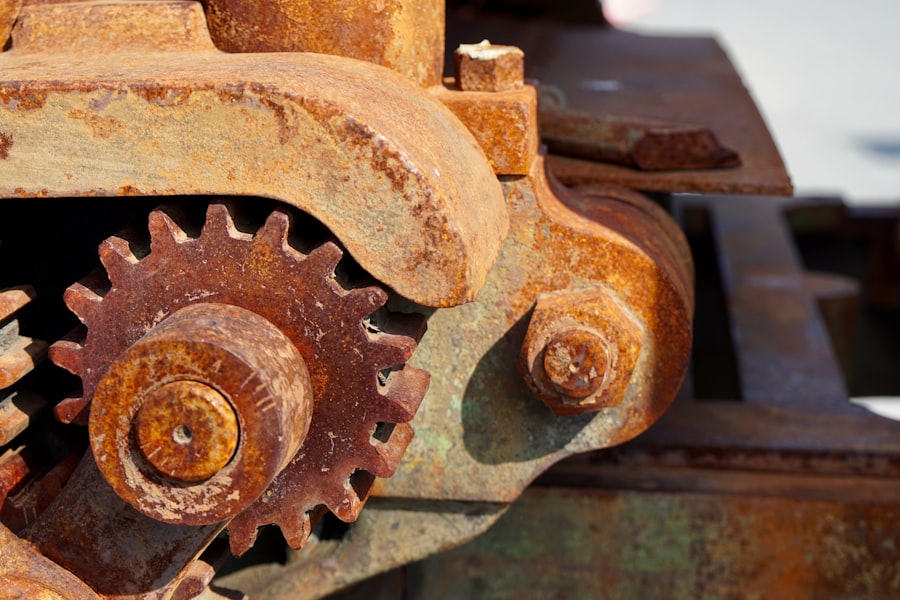
Differential gearing held cultural significance beyond its practical applications; it symbolized the intersection of art, science, and philosophy that characterized ancient Greek civilization. The Greeks viewed technology as an extension of their intellectual pursuits, believing that understanding mechanics was essential to comprehending the natural world. This belief fostered a culture that celebrated innovation and encouraged exploration in various fields.
Moreover, differential gearing became emblematic of the Greeks’ quest for knowledge and mastery over their environment. It represented their ability to harness natural forces through ingenuity and creativity. As such, it was not merely a mechanical advancement but a reflection of their philosophical ideals—an embodiment of their desire to understand and manipulate the world around them.
The Practical Applications of Differential Gearing in Ancient Greek Daily Life
In daily life, differential gearing found practical applications that enhanced various aspects of existence for ancient Greeks. One notable example was in agriculture, where farmers utilized water-lifting devices equipped with differential gears to irrigate their fields more efficiently. These machines allowed for better control over water flow, ensuring crops received adequate hydration without excessive labor.
Additionally, differential gearing played a role in domestic life through its incorporation into household tools and devices. For instance, early milling machines used differential gears to grind grain more effectively, reducing the time and effort required for food preparation. Such innovations not only improved productivity but also contributed to a higher quality of life for many individuals within ancient Greek society.
The Influence of Ancient Greek Differential Gearing on Modern Technology
The influence of ancient Greek differential gearing extends far beyond its time, laying foundational principles that continue to resonate in modern technology. Many contemporary machines—ranging from automobiles to industrial equipment—rely on similar mechanical principles that were first explored by ancient engineers. The concept of allowing different rotational speeds between connected components remains a cornerstone in modern engineering design.
Furthermore, the mathematical insights developed by ancient Greeks have been instrumental in advancing fields such as robotics and automation. As technology continues to evolve, the legacy of differential gearing serves as a reminder of how ancient innovations can inform contemporary practices. The seamless integration of these principles into modern machinery underscores the enduring impact of ancient Greek ingenuity on today’s technological landscape.
The Legacy of Ancient Greek Differential Gearing in Contemporary Engineering
The legacy of ancient Greek differential gearing is evident in contemporary engineering practices that prioritize efficiency and precision. Modern engineers often draw inspiration from historical designs when developing new technologies or improving existing systems. The principles established by ancient Greeks continue to inform best practices in gear design, mechanical systems, and even robotics.
Moreover, educational institutions around the world recognize the importance of teaching these foundational concepts in engineering curricula. By studying ancient Greek innovations like differential gearing, students gain insight into the evolution of technology and its relevance today. This legacy not only honors the achievements of ancient civilizations but also fosters a deeper appreciation for the interconnectedness of knowledge across time.
The Archaeological Discoveries Shedding Light on Ancient Greek Differential Gearing
Archaeological discoveries have played a pivotal role in illuminating the history and significance of differential gearing in ancient Greece. Artifacts such as gears from ancient machinery have been unearthed at various sites, providing tangible evidence of their use and sophistication. Notable finds include remnants from ancient water mills and other mechanical devices that showcase advanced engineering techniques.
These discoveries have sparked renewed interest among historians and engineers alike, prompting further research into how these technologies were developed and utilized. By analyzing these artifacts, scholars can reconstruct aspects of daily life in ancient Greece while gaining insights into the technological capabilities that existed during that era. Such archaeological endeavors continue to enrich our understanding of how differential gearing shaped both practical applications and broader societal developments.
The Future of Research and Exploration into Ancient Greek Differential Gearing
The future of research into ancient Greek differential gearing holds great promise as scholars continue to explore its implications across various disciplines. Advances in technology allow for more sophisticated analyses of archaeological finds, enabling researchers to uncover details that were previously inaccessible. As interdisciplinary approaches become more prevalent, collaborations between historians, engineers, and mathematicians may yield new insights into this fascinating aspect of ancient technology.
Moreover, ongoing interest in sustainable practices may lead to renewed exploration into how ancient technologies can inform modern solutions. By studying differential gearing’s efficiency and effectiveness within historical contexts, researchers may uncover valuable lessons applicable to contemporary challenges in engineering and resource management. As investigations into this area progress, they will undoubtedly contribute to a richer understanding of both ancient innovations and their relevance today.
Differential gearing, a fascinating mechanical innovation, has roots that can be traced back to ancient Greece, where early inventors explored the principles of gear systems. For a deeper understanding of the historical context and significance of such inventions, you can read more in this related article on the topic at Real Lore and Order. This resource provides insights into the technological advancements of ancient civilizations and their impact on modern engineering.
WATCH THIS! Why 99% of History Is Wrong (The Ooparts That Prove It)
FAQs
What is differential gearing in ancient Greece?
Differential gearing in ancient Greece refers to the use of a system of gears and axles to allow a vehicle’s wheels to rotate at different speeds while maintaining power from the engine. This technology was used in various mechanical devices, including chariots and other wheeled vehicles.
How was differential gearing used in ancient Greece?
Differential gearing in ancient Greece was primarily used in chariots and other wheeled vehicles to allow for smooth and efficient turning. The system allowed the inner and outer wheels to rotate at different speeds when the vehicle turned, preventing skidding and improving maneuverability.
What materials were used to create differential gearing in ancient Greece?
The materials used to create differential gearing in ancient Greece included bronze, iron, and other metals that were available during that time period. These materials were crafted and assembled by skilled artisans and craftsmen to create the intricate gears and axles needed for the differential gearing system.
What impact did differential gearing have on ancient Greek technology?
The development of differential gearing in ancient Greece had a significant impact on the technology of the time, particularly in the field of transportation. It allowed for more efficient and maneuverable wheeled vehicles, which in turn had implications for trade, warfare, and the overall development of ancient Greek society.