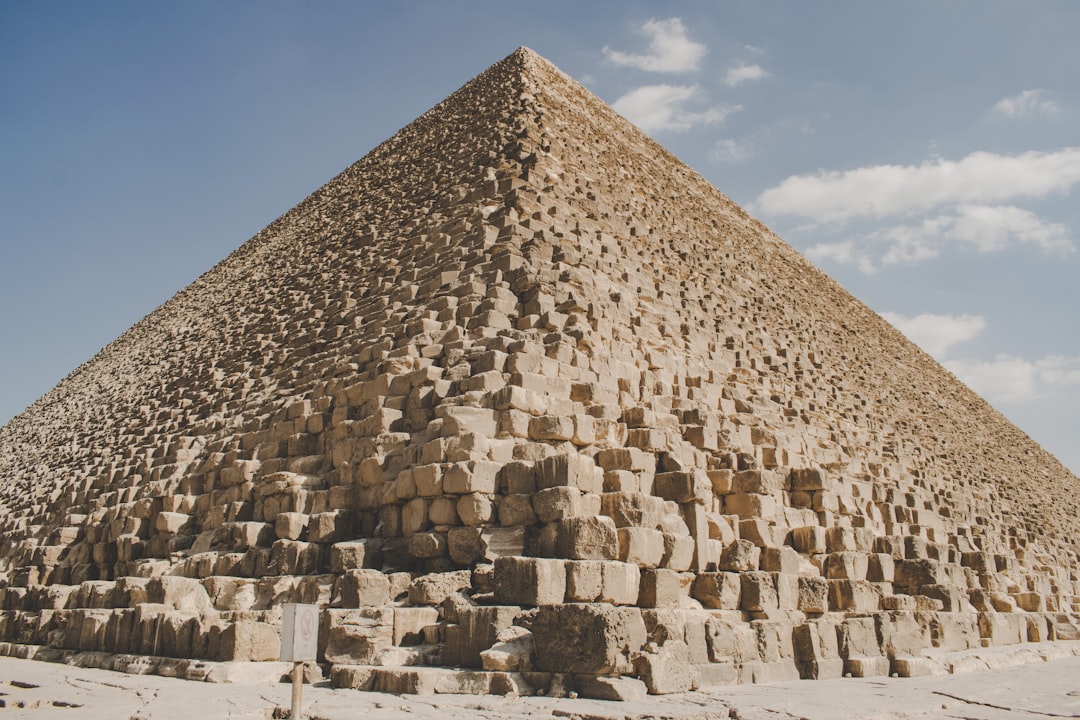
The Great Pyramid of Giza, a colossal monument that has stood sentinel over the Egyptian desert for millennia, continues to hold its secrets close. While its imposing silhouette has captivated imaginations for centuries, the inner workings of this ancient architectural marvel have remained largely a mystery. Recent advancements in muon scanning technology, however, have begun to peel back the layers of this enigmatic structure, offering unprecedented insights into its hidden chambers. This article delves into the groundbreaking “Big Void” Muon Scan project, a pivotal endeavor that has brought scientists closer than ever to understanding the Great Pyramid’s interior architecture.
The Great Pyramid of Giza, also known as the Pyramid of Khufu, is the oldest and largest of the three pyramids in the Giza pyramid complex. Constructed during the Fourth Dynasty of the Old Kingdom, it is estimated to have been completed around 2560 BC. For over 3,800 years, it was the tallest man-made structure in the world, a testament to the engineering prowess of the ancient Egyptians. Its sheer scale and the precision with which its stones were laid have fueled centuries of speculation about its purpose, construction methods, and, crucially, its internal layout.
Echoes of the Past: Early Explorations and Discoveries
The quest to understand the Great Pyramid’s interior began with early explorers, often driven by a desire for treasure but laying the groundwork for scientific inquiry. Explorers like Giovanni Battista Belzoni in the early 19th century, with his arduous and forceful entry into the pyramid, revealed access to what are now known as the King’s Chamber and the Queen’s Chamber. These early penetrations, while crude by modern standards, were crucial in identifying the primary internal features and sparking further curiosity about what else might lie hidden within the massive stone structure.
The Nature of the Unknown: Unanswered Questions
Despite these early discoveries, the Great Pyramid has consistently offered up more questions than answers. The precise purpose of certain chambers, the methods employed in their construction with such immense precision, and the possibility of undiscovered voids or passages have remained tantalizing subjects of debate among archaeologists, historians, and physicists. The sheer mass of the pyramid, estimated to contain around 2.3 million stone blocks, makes direct physical exploration an incredibly challenging and often destructive undertaking. This inherent difficulty has necessitated the development of non-invasive methods to probe the pyramid’s secrets.
Recent advancements in archaeological techniques have led to the discovery of a significant void within the Great Pyramid of Giza, as revealed by a muon scanning project. This groundbreaking finding has sparked interest and debate among historians and scientists alike, as it could provide new insights into the construction and purpose of this ancient marvel. For further information on this topic, you can read a related article at Real Lore and Order, which delves into the implications of this discovery and its potential impact on our understanding of ancient Egyptian architecture.
The Cosmic Key: Understanding Muon Tomography
Muon tomography represents a revolutionary leap in our ability to “see” inside massive structures without physically disturbing them. Just as a doctor uses X-rays to peer into the human body, muon tomography uses naturally occurring cosmic ray muons to image the density variations within large objects. This technique, akin to a cosmic-ray powered ultrasound for ancient monuments, offers a unique and powerful tool for archaeological exploration.
Cosmic Rays: Nature’s Own Probe
Muons are subatomic particles created when cosmic rays—high-energy particles from outer space—collide with the Earth’s atmosphere. These muons rain down on the Earth’s surface continuously, passing through matter with remarkable ease. Billions of muons strike every square meter of the planet each day. While they can penetrate significant depths of material, their trajectory and energy can be measured.
The Physics of Detection: How Muons Reveal Secrets
The principle behind muon tomography relies on the fact that muons lose energy as they pass through denser materials. By placing muon detectors at the base or sides of a structure like the Great Pyramid and measuring the number and direction of muons that pass through, scientists can create a three-dimensional image of the interior. Areas that are less dense will allow more muons to pass through unimpeded, while denser areas will absorb or scatter more muons. This difference in muon flux creates a distinctive “shadow” or “map” of the internal structure, similar to how an X-ray reveals different tissues within the body based on their density.
Advantages of Muon Tomography for Archaeology
The non-invasive nature of muon tomography is its paramount advantage when applied to fragile or historically significant sites like the Great Pyramid. Unlike drilling or excavation, which can cause irreparable damage, muon scanning is purely observational. Furthermore, it can penetrate the immense stone mass of the pyramid, a feat that would be impossible for traditional imaging techniques like radiography or ultrasound. This allows for the detection of voids, cavities, and density variations that might otherwise remain hidden, holding the key to understanding the pyramid’s construction and potential internal features.
The Big Void Project: A New Era of Discovery
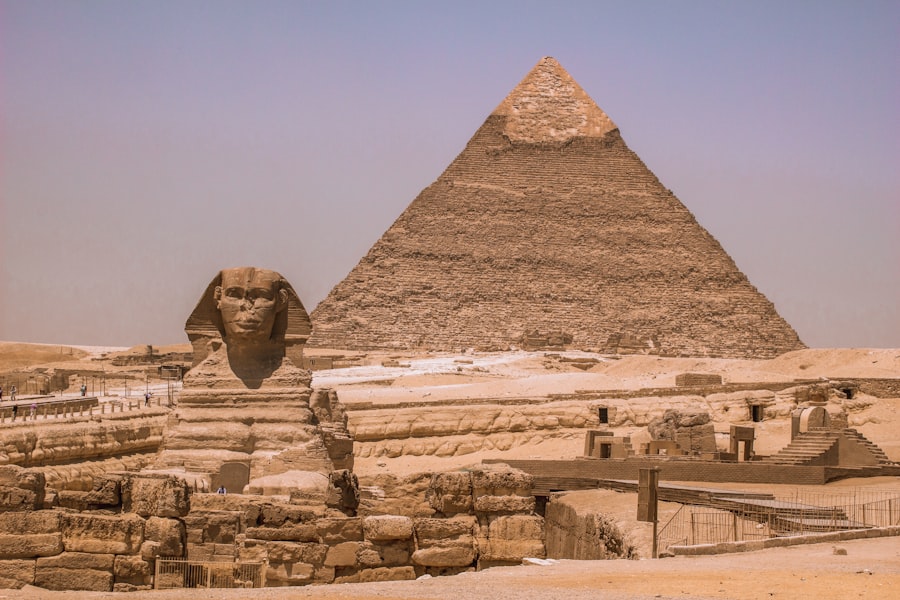
The “Big Void” project, initiated by the ScanPyramids initiative, was a direct application of muon tomography to the Great Pyramid of Giza. This ambitious undertaking aimed to go beyond previous exploratory efforts and systematically map the pyramid’s interior with unprecedented detail, searching specifically for any anomalies or hidden spaces. The scale of the operation was as grand as the pyramid itself, reflecting the magnitude of the potential discoveries.
Genesis of the ScanPyramids Initiative
The ScanPyramids initiative was launched in 2015, bringing together a multidisciplinary team of scientists from Egypt, France, Japan, and North America. Their overarching goal was to use cutting-edge technologies, with a particular focus on muon scanning, to explore the inner structure of the Great Pyramid and potentially discover new chambers or passages. The project was driven by the philosophical notion that even the most thoroughly studied ancient monuments might still harbor secrets, waiting to be unveiled by the right scientific lens.
Deployment of Advanced Detectors
The success of the Big Void project hinged on the sophisticated muon detectors employed. These detectors, often referred to as “muon telescopes,” are designed to accurately track the paths of individual muons. They are essentially sensitive instruments that record the precise moment a muon passes through them and the direction from which it came. Varieties of such detectors, including scintillators and spark chambers, were deployed strategically around and within the pyramid. These instruments are the eyes and ears of the operation, meticulously collecting data from the constant cosmic barrage.
Data Collection and Analysis: A Herculean Task
The process of data collection for the Big Void project was a marathon rather than a sprint. Muons are constantly showering the pyramid, but the detection of enough muons to create a statistically significant image of deeply buried voids takes time. Detectors were left in place for months, sometimes over a year, accumulating data. The sheer volume of data generated by these instruments was immense, requiring powerful computing resources and sophisticated algorithms for processing and analysis. This analytical phase resembled piecing together a cosmic jigsaw puzzle, where each muon detection was a tiny clue.
Unveiling the “Big Void”: A Significant Discovery

The culmination of the Big Void project was the announcement of a truly remarkable discovery: the identification of a large, previously unknown void within the Great Pyramid. This finding sent ripples of excitement through the scientific and archaeological communities, representing a tangible step forward in understanding the pyramid’s internal architecture.
The Shape and Size of the Anomaly
The detected void, officially named the “ScanPyramids Big Void,” was found located above the Grand Gallery, a prominent internal passage within the pyramid. Initial scans suggested a substantial void, with dimensions estimated to be at least 30 meters (98 feet) in length. Its existence was inferred from a significant deficit in the number of muons passing through that specific region of the pyramid. Imagine shining a flashlight through a block of cheese; the light would pass through more easily where there are holes. Similarly, fewer muons made it through the dense stone when encountering this void.
Locating the Void: Above the Grand Gallery
The precise location of the Big Void, situated above the already known Grand Gallery, was particularly intriguing to researchers. This positioning suggested it was not a randomly formed cavity but likely a deliberate architectural feature. The Grand Gallery itself is a marvel of engineering, a steeply sloping passageway leading to the King’s Chamber. The presence of another significant space directly above it hinted at a more complex internal design than previously understood.
Confirmatory Techniques: Building Consensus
While muon tomography provided strong evidence, the scientific community prioritizes robust findings. To confirm the existence and nature of the Big Void, the ScanPyramids team employed other non-invasive techniques. These included infrared thermography, which can detect subtle temperature differences on the pyramid’s surface that might indicate internal anomalies, and miniature robotic cameras that were later inserted into small fissures to visually inspect the void. These complementary methods acted as independent witnesses, corroborating the initial muon scan data and solidifying the discovery.
Recent discoveries surrounding the Great Pyramid of Giza have sparked significant interest, particularly with the revelation of a large void detected through muon scanning technology. This groundbreaking research has opened new avenues for understanding the pyramid’s construction and purpose. For those looking to delve deeper into the implications of these findings, an insightful article can be found here, which explores the historical context and potential significance of the void within the pyramid.
Implications and Future Research: The Road Ahead
| Metric | Value | Description |
|---|---|---|
| Void Length | 30 meters | Estimated length of the newly discovered large void inside the Great Pyramid |
| Void Location | Above Grand Gallery | Position of the void relative to known internal structures |
| Detection Method | Muon Tomography | Technique used to scan and detect the void using cosmic-ray muons |
| Scan Duration | 2 years | Time period over which muon data was collected |
| Research Team | ScanPyramids Project | Group responsible for conducting the muon scan |
| Void Width | Unknown | Exact width of the void has not been determined yet |
| Significance | First major internal void discovered since 19th century | Importance of the discovery in Egyptology and archaeology |
The discovery of the Big Void is not an end in itself but a significant new beginning for research into the Great Pyramid. It opens up a wealth of new questions and provides a tangible target for further investigation, shedding light on the complex intentions of the pyramid builders. The implications extend beyond the pyramid itself, influencing our understanding of ancient construction techniques and the very human drive to create enduring monumental structures.
Reconceptualizing Pyramid Architecture
The existence of the Big Void forces a re-evaluation of the previously held understanding of the Great Pyramid’s internal architecture. It suggests that the pyramid’s design was potentially more intricate and perhaps served purposes not yet fully understood. Was the void intended as a structural element, a means to manage weight or stress within the colossal structure? Or did it serve a symbolic or ceremonial purpose, a hidden sacred space? The answer to these questions will undoubtedly reshape archaeological interpretations.
Methodological Advancements and Future Scans
The success of the Big Void project has validated and refined the applications of muon tomography in archaeology. The experience gained will inform future non-invasive investigations of other ancient sites, both within Egypt and worldwide. It is likely that further, more detailed muon scans of the Great Pyramid will be conducted, perhaps employing even more sensitive detectors or different scanning strategies to gain a clearer picture of the void and its characteristics, aiming to map its full extent with even greater precision.
The Eternal Quest for Knowledge
The Great Pyramid, in its enduring silence, continues to inspire awe and curiosity. The Big Void Muon Scan project represents a triumph of modern scientific ingenuity applied to an ancient enigma. It serves as a powerful reminder that even the most seemingly understood historical marvels can still hold profound secrets, waiting for the right tools—and the right questions—to unlock them. The quest to understand this colossal monument is an ongoing journey, and the Big Void is a significant milestone on that path, a beacon illuminating the path to further discovery. As scientists continue to probe its depths, the Great Pyramid promises to reveal more of its ancient narrative, further enriching our understanding of human history and achievement.
SHOCKING: 50 Artifacts That Prove History Was Erased
FAQs
What is the Great Pyramid Big Void discovered by muon scans?
The Great Pyramid Big Void is a large, previously unknown empty space detected inside the Great Pyramid of Giza using muon tomography, a technique that uses cosmic-ray muons to scan the internal structure of large objects.
How does muon scanning work to detect voids in pyramids?
Muon scanning detects variations in the density of materials by measuring the absorption of cosmic-ray muons as they pass through the structure. Areas with less dense material, such as voids, allow more muons to pass through, revealing hidden chambers or cavities.
When was the Big Void inside the Great Pyramid discovered?
The Big Void was discovered in 2017 by an international team of scientists using muon tomography as part of the ScanPyramids project.
What is the size and location of the Big Void in the Great Pyramid?
The Big Void is estimated to be at least 30 meters (about 98 feet) long and is located above the Grand Gallery inside the Great Pyramid, but its exact shape and purpose remain unknown.
What are the possible explanations for the purpose of the Big Void?
Researchers have proposed several hypotheses, including that the void could be a hidden chamber, a structural relieving space to reduce weight on lower chambers, or an unknown architectural feature, but no definitive conclusion has been reached yet.