
Throughout history, humanity has been captivated by the remnants of ancient civilizations, often referred to as enigmatic artifacts. These objects, ranging from intricate jewelry to monumental structures, serve as tangible links to the past, offering glimpses into the lives, beliefs, and technologies of those who came before. Each artifact carries with it a story, a mystery waiting to be unraveled.
The allure of these items lies not only in their aesthetic appeal but also in the questions they pose about human history and cultural evolution. As scholars and enthusiasts alike delve into the study of these artifacts, they uncover layers of meaning that challenge preconceived notions about ancient societies. The significance of enigmatic artifacts extends beyond mere curiosity; they are crucial for understanding the complexities of human development.
Each discovery can reshape historical narratives, providing insights into trade routes, social structures, and technological advancements. As archaeologists and historians work tirelessly to piece together the puzzle of our past, they rely on a variety of methods and disciplines to interpret these artifacts. The journey of discovery is ongoing, as new findings continue to emerge, revealing the rich tapestry of human existence across millennia.
Key Takeaways
- Enigmatic artifacts hold the key to unlocking ancient mysteries and understanding past civilizations.
- Archaeology plays a crucial role in uncovering and interpreting enigmatic artifacts, providing valuable insights into ancient cultures.
- Scientific techniques such as X-ray fluorescence and electron microscopy are used to analyze the composition and structure of enigmatic artifacts.
- Radiocarbon dating is a powerful tool for determining the age of ancient artifacts and understanding the timeline of human history.
- The study of ancient writing systems helps unravel the language and communication of past civilizations, shedding light on their beliefs and customs.
The Role of Archaeology in Uncovering Ancient Mysteries
Archaeology plays a pivotal role in the exploration and understanding of enigmatic artifacts. This scientific discipline involves the systematic study of human history through the excavation and analysis of material remains. Archaeologists meticulously excavate sites, often employing advanced techniques to ensure that even the smallest fragments are preserved for study.
Each layer of soil can tell a story, and through careful excavation, archaeologists can reconstruct past environments and cultural practices. The process is not merely about unearthing objects; it is about contextualizing them within the broader narrative of human history. Moreover, archaeology serves as a bridge between the past and present, allowing contemporary society to connect with its roots.
The artifacts unearthed during archaeological digs provide invaluable insights into ancient technologies, social hierarchies, and belief systems. By studying these remnants, archaeologists can challenge existing historical narratives and offer new interpretations that reflect a more nuanced understanding of ancient cultures. The discipline is constantly evolving, incorporating new technologies and methodologies that enhance the ability to uncover and interpret these enigmatic artifacts.
Scientific Techniques Used to Analyze Enigmatic Artifacts
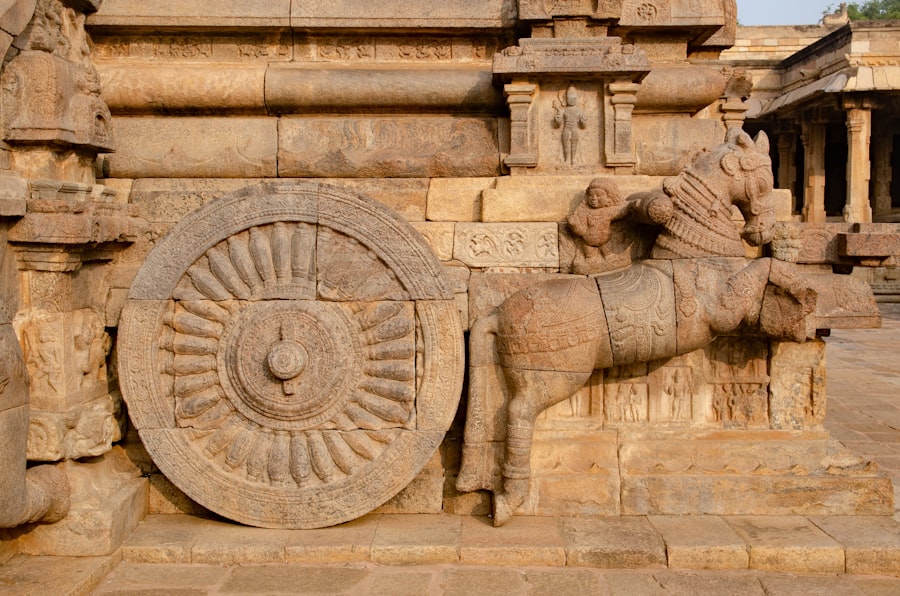
The analysis of enigmatic artifacts has been revolutionized by the integration of scientific techniques into archaeological practice. These methods allow researchers to gain deeper insights into the materials, manufacturing processes, and cultural significance of ancient objects. For instance, techniques such as X-ray fluorescence (XRF) and scanning electron microscopy (SEM) enable scientists to analyze the elemental composition of artifacts without causing damage.
This non-invasive approach provides critical information about the materials used by ancient artisans and can reveal trade networks and technological advancements. In addition to material analysis, scientific techniques also extend to dating methods that help establish a timeline for when artifacts were created. Techniques such as thermoluminescence dating and optically stimulated luminescence (OSL) allow researchers to determine when certain materials were last exposed to heat or light, providing a chronological framework for understanding their historical context.
By combining these scientific methods with traditional archaeological practices, researchers can create a more comprehensive picture of ancient societies and their enigmatic artifacts.
The Use of Radiocarbon Dating in Dating Ancient Artifacts
| Artifact | Age (years) | Location |
|---|---|---|
| Stone tools | 10,000-50,000 | Various locations worldwide |
| Cave paintings | 10,000-40,000 | Europe, Asia, Africa |
| Pottery | 10,000-20,000 | Various locations worldwide |
| Textiles | 3,000-5,000 | South America, Middle East |
Radiocarbon dating has emerged as one of the most significant tools in archaeology for dating organic materials up to about 50,000 years old. This technique relies on measuring the decay of carbon-14 isotopes in organic matter, such as wood, bone, or textiles.
By measuring the remaining carbon-14 in a sample, scientists can estimate when the organism died, providing a date for the associated artifacts. The application of radiocarbon dating has transformed archaeological timelines and has been instrumental in establishing chronological frameworks for various cultures. For instance, it has helped pinpoint the timing of significant events such as agricultural development or the rise and fall of civilizations.
However, while radiocarbon dating is invaluable, it is not without limitations; factors such as contamination or variations in atmospheric carbon levels can affect results. Therefore, archaeologists often use radiocarbon dating in conjunction with other dating methods to corroborate findings and build a more accurate historical narrative.
Unraveling the Mysteries of Ancient Writing Systems
The study of ancient writing systems presents another fascinating avenue for understanding enigmatic artifacts. Writing is one of humanity’s most significant achievements, serving as a means of communication and record-keeping that transcends time. However, many ancient scripts remain undeciphered or only partially understood, posing challenges for researchers seeking to unlock their secrets.
The Rosetta Stone is a prime example; its inscriptions in three scripts allowed scholars to finally decode Egyptian hieroglyphs after centuries of mystery. Deciphering ancient writing systems requires not only linguistic expertise but also an understanding of the cultural context in which they were created. Each script reflects the values, beliefs, and practices of its society.
For instance, cuneiform writing from Mesopotamia provides insights into early administrative practices and trade networks. As researchers continue to analyze inscriptions on various artifacts—from clay tablets to monumental inscriptions—they contribute to a growing body of knowledge that illuminates the complexities of ancient civilizations.
The Secrets of Ancient Metalworking Techniques

Ancient metalworking techniques represent another intriguing aspect of enigmatic artifacts that reveal much about technological advancements in past societies. The ability to manipulate metals such as gold, silver, copper, and bronze marked significant milestones in human history. These techniques not only reflect artistic expression but also indicate advancements in trade and resource management.
Artifacts such as tools, weapons, and decorative items provide evidence of the skills possessed by ancient metalworkers. Through experimental archaeology—where modern artisans replicate ancient techniques—researchers have gained insights into how metals were extracted, shaped, and alloyed in antiquity. For example, understanding how bronze was created through alloying copper with tin has shed light on trade relationships between different regions that supplied these materials.
Additionally, examining wear patterns on tools can reveal how they were used in daily life or specialized tasks. As scholars continue to explore ancient metalworking techniques, they uncover stories that highlight human ingenuity and adaptability throughout history.
Deciphering the Purpose of Mysterious Ancient Tools and Implements
The purpose behind many ancient tools and implements remains shrouded in mystery, prompting researchers to engage in extensive analysis and speculation. These artifacts often raise questions about their functionality and significance within their respective cultures. For instance, stone tools found at archaeological sites may have served various purposes—hunting, food preparation, or crafting other tools—yet determining their exact use can be challenging without contextual evidence.
To decipher the purpose of these enigmatic tools, archaeologists employ a multidisciplinary approach that includes experimental archaeology and ethnographic studies. By replicating ancient tools and observing their effectiveness in various tasks, researchers can gain insights into how these implements were utilized in daily life. Additionally, comparisons with contemporary indigenous practices can provide valuable context for understanding ancient technologies.
Ultimately, unraveling the purpose behind these tools contributes to a broader understanding of human adaptation and innovation throughout history.
The Role of Genetics in Understanding Ancient Human Populations
Genetics has emerged as a powerful tool in unraveling the mysteries surrounding ancient human populations. Advances in DNA analysis have allowed researchers to trace lineage and migration patterns over thousands of years. By extracting genetic material from ancient remains—such as bones or teeth—scientists can reconstruct population histories and understand how different groups interacted with one another.
The study of ancient genomes has revealed surprising connections between populations that were previously thought to be isolated. For example, genetic evidence has shown that early humans migrated out of Africa in multiple waves, leading to complex interactions with Neanderthals and other hominin species. This genetic data complements archaeological findings by providing a biological perspective on cultural exchanges and adaptations over time.
As researchers continue to analyze ancient DNA, they contribute to a more comprehensive understanding of human evolution and migration.
The Study of Ancient Pottery and Ceramics
Ancient pottery and ceramics are among the most ubiquitous artifacts found at archaeological sites worldwide. These items not only serve practical purposes—such as storage or cooking—but also offer insights into cultural practices and artistic expression. The styles, shapes, and decorations found on pottery can reveal information about trade relationships, social status, and even religious beliefs within ancient societies.
The study of pottery involves meticulous analysis of both form and function. Archaeologists examine vessel shapes to determine their intended use while also analyzing decorative motifs for cultural significance. Additionally, technological advancements have enabled researchers to conduct chemical analyses on pottery shards to identify clay sources or trace trade routes between communities.
Through this multifaceted approach, the study of ancient pottery contributes significantly to understanding daily life in past civilizations.
The Enigma of Ancient Structures and Architecture
The architectural achievements of ancient civilizations stand as monumental testaments to human ingenuity and creativity. From the pyramids of Egypt to the ziggurats of Mesopotamia, these structures often evoke awe and wonder while simultaneously posing questions about their construction methods and purposes. The enigma surrounding these architectural marvels invites exploration into the social organization, technological capabilities, and cultural values that shaped their creation.
Archaeological investigations into ancient structures often involve detailed surveys and excavations that reveal construction techniques and materials used by builders. For instance, studies on the Great Wall of China have uncovered insights into its construction phases over centuries while also highlighting its role as a symbol of unity against external threats. Similarly, examining ruins from ancient cities can provide clues about urban planning and societal organization within those communities.
As researchers continue to explore these architectural enigmas, they contribute valuable knowledge about human achievement throughout history.
The Ongoing Quest to Unlock Ancient Mysteries
The quest to unlock the mysteries surrounding enigmatic artifacts is an ongoing journey that captivates scholars and enthusiasts alike. As new discoveries emerge through archaeological excavations and scientific advancements, our understanding of ancient civilizations continues to evolve. Each artifact unearthed adds another piece to the intricate puzzle of human history—a testament to our shared heritage.
The interdisciplinary nature of this exploration underscores the importance of collaboration among archaeologists, historians, scientists, and linguists in piecing together narratives from the past. As technology advances further—enabling more precise analyses and interpretations—the potential for new revelations remains vast. Ultimately, the study of enigmatic artifacts not only enriches our knowledge but also fosters a deeper appreciation for the complexities of human existence across time and space.
The exploration of ancient mysteries often intertwines with scientific inquiry, shedding light on the enigmatic past of human civilization. For those intrigued by the intersection of archaeology and science, a fascinating article can be found at this link, which delves into the methodologies used to uncover the secrets of ancient artifacts and structures.
WATCH THIS! Why 99% of History Is Wrong (The Ooparts That Prove It)
FAQs
What are some examples of ancient mysteries?
Some examples of ancient mysteries include the construction of the pyramids in Egypt, the Nazca lines in Peru, Stonehenge in England, and the Moai statues on Easter Island.
What is the science behind the construction of the pyramids?
The construction of the pyramids is still a subject of debate among archaeologists and historians. Some theories suggest that the ancient Egyptians used ramps, levers, and pulleys to move and lift the massive stone blocks into place. Others propose that they may have used a combination of ramps and a counterweight system.
How were the Nazca lines created?
The Nazca lines are a series of large geoglyphs in the Nazca Desert in Peru. The most widely accepted theory is that the lines were created by removing the reddish-brown iron oxide-coated pebbles that cover the surface of the Nazca desert, revealing the lighter-colored earth underneath. This created the contrast needed for the lines to be visible from above.
What is the purpose of Stonehenge?
The purpose of Stonehenge is still not fully understood, but it is believed to have served as a ceremonial or religious site. Some theories suggest that it was used for astronomical observations or as a burial site.
How were the Moai statues on Easter Island transported and erected?
The transportation and erection of the Moai statues on Easter Island is a subject of ongoing research and debate. One theory suggests that the statues were moved using a combination of ropes, sledges, and manpower. Another theory proposes that the statues were “walked” into position using a rocking motion.