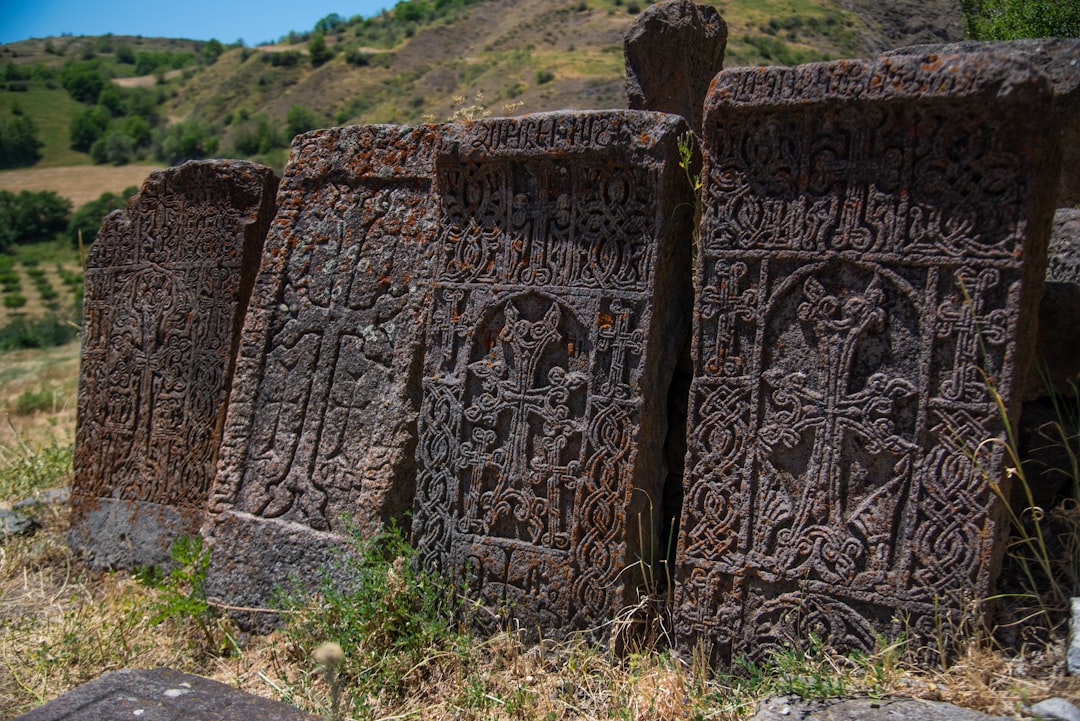
The Ethiopian stelae fields, particularly the monumental ones at Aksum, represent a testament to ancient engineering prowess and cultural significance. These towering monoliths, carved from single blocks of stone, have captivated historians, archaeologists, and engineers for centuries. Among the myriad questions surrounding their construction, one stands paramount: how were these colossal stones raised from their quarries and set upright? This article delves into the intricate “lift calculus” that likely underpinned these feats, exploring the engineering principles and practical challenges faced by the ancient Aksumites.
The ancient city of Aksum, situated in what is now northern Ethiopia, served as the capital of a powerful kingdom that flourished from the 1st to the 7th centuries CE. A defining characteristic of Aksumite civilization is its elaborate funerary architecture, epitomized by the towering stelae.
Architectural Significance
These stelae are not merely decorative elements; they functioned as markers for elaborate underground tombs of Aksumite royalty and nobility. The scale and precision of their carving and erection reflect the advanced organizational capabilities and skilled craftsmanship of the Aksumite people.
Types and Sizes
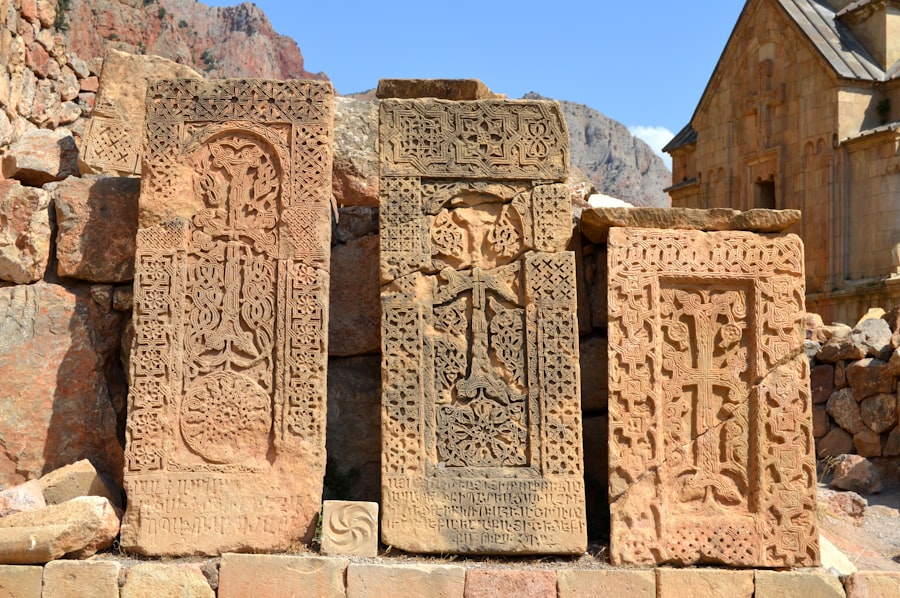
The Aksumite stelae display a range of sizes and complexities. The earliest examples are relatively small and unadorned. However, over time, their size increased dramatically, culminating in the “Great Stele” (Stele No. 1) which, if successfully erected, would have stood over 33 meters tall and weighed an estimated 520 tons. Other notable examples include Stele No. 2, standing at 24 meters and weighing around 160 tons, and Stele No. 3, which is 18.5 meters tall. The monumental stelae are typically carved to resemble multi-story buildings, complete with faux windows and doors, showcasing the advanced aesthetic and architectural ambitions of their creators.
Material Sourcing
The granite and syenite used for the monumental Aksumite stelae were quarried from sites located several kilometers from the city itself. This distance introduced a formidable logistical challenge: not only did the stones need to be extracted, but they also had to be transported to their final destination. The quarries reveal evidence of wedge marks and other extraction techniques, suggesting a painstaking process of detaching these massive blocks from the bedrock.
The Ethiopian stelae field, renowned for its impressive ancient monuments, has been the subject of various studies exploring their historical and architectural significance. A related article that delves into the intricate calculations involved in lifting and positioning these monumental structures can be found at Real Lore and Order. This resource provides valuable insights into the engineering techniques employed by ancient civilizations, shedding light on the remarkable achievements of the people who created these iconic stelae.
The Transport Conundrum: Moving Mountains of Stone
Once quarried, the colossal stelae had to be moved across challenging terrain. This phase of the project presented its own unique set of engineering puzzles.
Overcoming Friction
The primary challenge in transporting such immense weights is overcoming the force of friction. Imagine dragging a small car across the ground; now amplify that experience by several hundred tons.
Sledges and Rollers
Archaeological evidence and ethnographic comparisons with traditional methods suggest the use of wooden sledges. These heavy-duty platforms would have supported the stelae, spreading their weight and allowing for movement. To further reduce friction, logs or rollers would have been placed beneath the sledges. As the sledge moved forward, rollers at the rear would be continually moved to the front, creating a rolling track. This method, akin to a human conveyor belt, would have required a large workforce and careful coordination.
Lubrication and Surfacing
To further minimize friction, it is plausible that the path along the transport route was prepared. This could have involved leveling the ground, laying down timbers, or even lubricating the path with substances like mud or wet clay. The efficiency of the transport system would have been directly proportional to the reduction of friction.
Workforce and Logistics
Moving a multi-hundred-ton stone over several kilometers would have required an immense human effort. Estimates for the workforce needed to transport the largest stelae range from hundreds to thousands of individuals.
Supervisory and Organizational Structures
Such large-scale endeavors necessitate sophisticated organizational structures. A hierarchy of overseers, engineers, and laborers would have been essential for coordinating the pulling, pushing, and repositioning of rollers. The rhythmic chants and synchronized movements often associated with ancient monumental construction would have served not only to maintain morale but also to ensure uniform effort and prevent accidents.
Ramp Construction
Where the terrain was uneven or required changes in elevation, temporary earthen or stone ramps would have been constructed. These ramps, designed with gentle slopes to avoid excessive strain on the workforce, would have been demolished after the stelae passed, leaving little trace for modern archaeologists.
The Apex of Engineering: Erecting the Stelae
The final, and perhaps most impressive, stage of the stelae project was their erection. This required a profound understanding of mechanics, leverage, and controlled application of force. This is where the core of the “lift calculus” becomes most apparent.
The Fulcrum and Lever Principle
At the heart of the erection process lies the fundamental principle of the lever. Imagine a seesaw; a small force applied at a great distance from the pivot point can lift a much larger weight on the other side. This principle would have been scaled up dramatically for the stelae.
Earth Ramps and Pits
The most widely accepted theory for stelae erection involves a combination of earth ramps and carefully dug pits. A large pit, roughly the size and depth of the stela’s base, would have been excavated. The stela would then be slid horizontally or semi-horizontally towards this pit, its base positioned over the intended foundation.
Tilting and Lifting Mechanisms
As the base of the stela was eased into the pit, the upper end would have been progressively elevated. This elevation could have been achieved through various means:
- Wedge-Lever System: Large wooden levers, positioned beneath the stela, would have been progressively raised using smaller wedges driven underneath them. This slow, incremental lift would have gradually tilted the stela upwards.
- Earth Ramp Augmentation: As the stela tilted, an earthen ramp would have been built up behind it, providing additional support and acting as a fulcrum. The incline of this ramp would have determined the initial angle of elevation.
- Rope and Pulley Systems (Theoretical): While direct archaeological evidence for complex pulley systems is scarce in Aksum, the principle would have been understood. However, the sheer tensile strength required for ropes to lift hundreds of tons makes their primary lifting role less probable than mechanical leverage. Nevertheless, ropes would have been crucial for stabilization and controlled movement.
Counterweights and Balance
Maintaining balance throughout the erection process was paramount. An uncontrolled shift could lead to catastrophic failure, damaging the stela and injuring the workforce.
Counter-Forces and Guy Ropes
As the stela was tilted, ropes would have been attached to its upper end, possibly anchored to large stones or firmly rooted trees, to act as guy ropes. These ropes would have served to stabilize the stela, preventing uncontrolled falling and guiding its ascent. The tension in these ropes would need to be carefully managed to counteract the gravitational pull.
Lever Placement and Pivot Points
The engineers would have had to meticulously calculate the optimal placement of fulcrums and levers to maximize mechanical advantage. Miscalculating these points could lead to wasted effort or structural failure of the wooden components. The construction sequence would have been a continuous cycle of lifting, propping, and repositioning.
The Lift Calculus: Quantifying Ancient Engineering
The “lift calculus” refers to the set of calculations and estimations necessary to successfully execute these monumental tasks. While the Aksumites did not possess modern mathematical notation, their practical experience and intuitive understanding of physics would have guided their endeavors.
Force and Pressure Distribution
Consider the forces at play during both transport and erection. The weight of the stela is distributed over its surface in contact with the ground or the supporting structures.
Ground Bearing Capacity
When transporting, the ground beneath the stela and its supports must be capable of bearing the immense pressure. If the ground was too soft, the stela would sink, rendering movement impossible. This necessitates careful route planning and, potentially, ground reinforcement.
Structural Integrity of Lifting Elements
During erection, the wooden levers, wedges, and ropes would have been subjected to enormous stresses. The Aksumite engineers would have needed to assess the strength of available timber and fibrous materials to ensure they would not splinter or snap under the load. This trial-and-error process over generations would have led to an empirical understanding of material science.
Angle of Repose and Stability
The angle at which the stela could be safely rested against an earth ramp or propped without toppling is crucial. This “angle of repose” would have been a key consideration in designing the erection sequence.
Progressive Tilting
The erection process was not a single lift but a series of controlled, incremental tilts. Each stage would have involved assessing the stability of the partially raised stela and reinforcing its support before proceeding to the next increment. Imagine the process as building a complex structure one brick at a time, but with each “brick” being an adjustment of support and leverage.
Center of Gravity Shifts
As the stela is raised, its center of gravity shifts. The engineers would have needed to understand how this shift affected stability and how to apply counter-forces to maintain equilibrium. This intuitive understanding of mechanics is a hallmark of skilled engineers throughout history. The ultimate goal was to move the center of gravity directly over the stela’s final resting point within the foundation pit.
The Ethiopian stelae field, known for its monumental stone structures, has captivated researchers and historians alike, particularly in the context of ancient engineering and architectural practices. A fascinating article that delves deeper into the mathematical principles behind the construction of these stelae can be found at this link. By exploring the lift calculus used in their creation, the article sheds light on the ingenuity of the civilizations that built these impressive monuments, revealing how they overcame significant challenges in their design and execution.
The Human Element: Organization and Innovation
| Metric | Description | Value | Unit |
|---|---|---|---|
| Number of Stelae | Total count of standing stelae in the field | 123 | pieces |
| Average Height | Mean height of the stelae measured | 5.2 | meters |
| Average Weight | Estimated average weight per stele | 12.5 | tons |
| Lift Force Required | Calculated force needed to lift an average stele | 122.5 | kN |
| Material Density | Density of the stone used in stelae | 2.7 | g/cm³ |
| Estimated Volume | Average volume of a single stele | 4.6 | m³ |
| Field Area | Total area covered by the stelae field | 1.2 | km² |
Beyond the purely mechanical aspects, the successful construction of the Aksumite stelae relied heavily on human organization, ingenuity, and perseverance.
Skilled Labor and Craftsmanship
The carving of these monumental stelae, with their intricate architectural details, required highly skilled stonemasons. Their ability to work with precision on such a massive scale suggests a long tradition of craftsmanship.
Tools and Techniques
The quarrying and carving employed iron tools, including chisels and hammers. The smooth, polished surfaces of some stelae also suggest abrasive materials were used for finishing. The exact nature of these tools and the methods employed for achieving such fine detail on hard granite remain subjects of ongoing research.
Dedication and Vision
The sheer scale of the Aksumite stelae projects speaks volumes about the dedication and ambition of the civilization. These weren’t mere utilitarian structures; they were expressions of power, belief, and an enduring legacy.
Generations of Knowledge Transfer
The knowledge required to quarry, transport, and erect such monoliths would have been accumulated over generations. This institutional knowledge, passed down through apprenticeship and practical experience, represents an invaluable component of the “lift calculus.” It’s akin to a living, evolving textbook passed from master to apprentice, each generation adding to the collective understanding.
Religious and Political Drivers
The monumental stelae were intrinsically linked to the religious beliefs and political aspirations of the Aksumite kingdom. The perceived divine mandate of the rulers and the desire to project power and prestige would have provided significant motivation for undertaking such arduous projects.
In conclusion, the construction of the Aksumite stelae was a multidisciplinary feat, combining advanced quarrying techniques, ingenious transport solutions, and a profound understanding of mechanics and leverage in their erection. The “lift calculus” was not a formal mathematical treatise but an empirical body of knowledge, refined through experience, observation, and innovation. These silent giants continue to stand as enduring symbols of ancient Aksumite engineering brilliance, a testament to the power of human ingenuity to shape the landscape on a monumental scale.
SHOCKING: 50 Artifacts That Prove History Was Erased
FAQs
What is the Ethiopian Stelae Field?
The Ethiopian Stelae Field is an archaeological site located in the Tigray region of northern Ethiopia. It is known for its large collection of ancient stone stelae, which are tall, carved monuments believed to date back to the pre-Aksumite and Aksumite periods.
What is the significance of the stelae found in the Ethiopian Stelae Field?
The stelae are significant because they provide insight into the ancient civilizations of Ethiopia, particularly the Aksumite Kingdom. They are thought to have been used as grave markers or monuments commemorating important individuals or events, and they showcase the advanced stone-carving skills of the time.
What does “lift calculus” refer to in the context of the Ethiopian Stelae Field?
In this context, “lift calculus” likely refers to the engineering and mathematical methods used to understand or replicate the techniques ancient builders used to lift and erect the massive stone stelae. It involves calculations related to weight, leverage, and mechanical advantage.
How were the stelae in the Ethiopian Stelae Field constructed and erected?
The stelae were carved from single blocks of granite or other hard stone, often weighing several tons. Ancient builders used a combination of tools and techniques, including chiseling and possibly wooden levers, ramps, and ropes, to carve, transport, and erect these massive monuments.
Why is studying the lift calculus important for understanding the Ethiopian Stelae Field?
Studying lift calculus helps archaeologists and engineers understand the technological capabilities of ancient Ethiopian societies. It sheds light on how they managed to move and erect such large stones without modern machinery, providing valuable information about their engineering knowledge and cultural practices.