
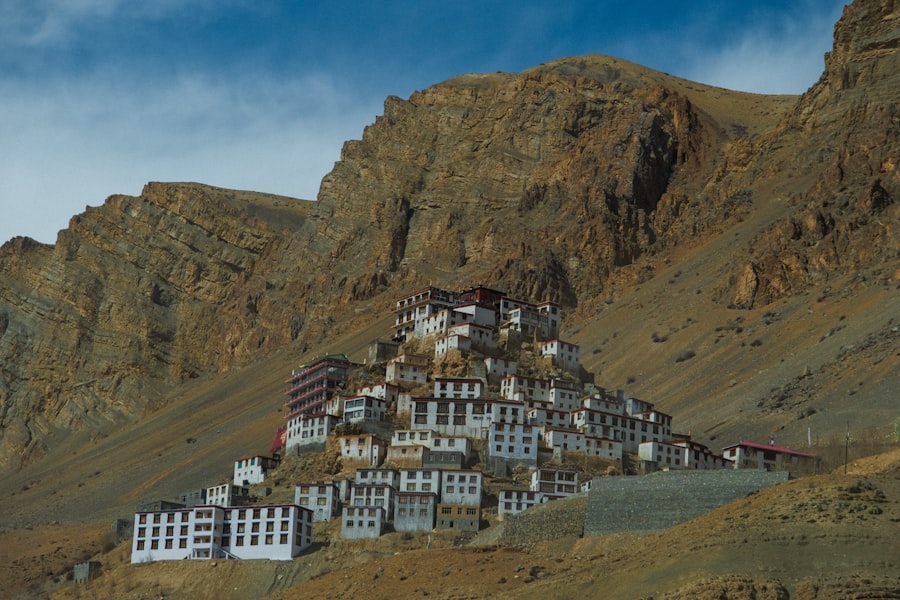
The Tibetan Plateau, often referred to as the “Roof of the World,” presents one of Earth’s most challenging environments for human habitation. At an average elevation exceeding 4,500 meters (14,800 feet), oxygen levels are approximately 40% lower than at sea level. For centuries, scientists and explorers have pondered how indigenous populations, particularly Tibetans, thrive in conditions that would induce severe altitude sickness and chronic health problems in lowlanders. This article delves into the fascinating genetic adaptations that have allowed Tibetans to flourish in such an extreme hypoxic environment.
Life at high altitude imposes significant physiological stressors on the human body. The primary challenge is hypoxia, a deficiency in the amount of oxygen reaching the tissues.
Immediate Physiological Responses to High Altitude
When an unacclimated individual ascends to high altitude, a cascade of physiological responses is triggered. These are generally adaptive in the short term but can become detrimental if prolonged.
Hyperventilation
The most immediate response is an increase in breathing rate and depth, known as hyperventilation. This reflex aims to increase the amount of oxygen taken into the lungs, thereby partially compensating for the lower partial pressure of oxygen in the atmosphere.
Increased Red Blood Cell Production
Over a period of days to weeks, the kidneys release erythropoietin (EPO), a hormone that stimulates the bone marrow to produce more red blood cells (erythrocytosis). More red blood cells mean a greater capacity to transport oxygen from the lungs to the tissues. While beneficial up to a point, excessive erythrocytosis can lead to increased blood viscosity, placing strain on the cardiovascular system and increasing the risk of blood clots.
Pulmonary Artery Vasoconstriction
Another characteristic response is pulmonary artery vasoconstriction, where the blood vessels in the lungs constrict to direct blood flow towards better-oxygenated areas. In persistent hypoxia, this can lead to pulmonary hypertension, a dangerous elevation of blood pressure within the pulmonary arteries.
Long-Term Health Consequences for Lowlanders
For lowlanders who reside at high altitudes without proper genetic adaptations, these physiological responses can evolve into chronic health issues.
Chronic Mountain Sickness (CMS)
CMS, also known as Monge’s disease, is a debilitating condition characterized by excessive erythrocytosis, severe headaches, dizziness, fatigue, and difficulty sleeping. It is a stark reminder that the body’s initial attempts at acclimatization can become pathogenic in the absence of specific evolutionary advantages.
Elevated Risk of Cardiovascular Disease
The increased blood viscosity and pulmonary hypertension associated with sustained high-altitude residence in lowlanders elevate the risk of cardiovascular complications, including heart failure and stroke.
Recent studies have shed light on the unique genetic adaptations of Tibetan populations, particularly their remarkable ability to thrive in high-altitude environments with low oxygen levels. This fascinating topic is explored in detail in the article “Tibetan Genes: Thriving in Thin Air,” which discusses the scientific findings related to these genetic traits and their implications for human evolution. For more insights, you can read the full article here: Tibetan Genes: Thriving in Thin Air.
Unpacking the Tibetan Genetic Blueprint
In stark contrast to lowlanders, Tibetans exhibit unique physiological traits that allow them to efficiently utilize oxygen in their low-oxygen environment without suffering the ill effects seen in unacclimated individuals. These remarkable adaptations are rooted in their genetic makeup, a testament to natural selection acting over thousands of years.
The EPAS1 Gene: A High-Altitude Maestro
Perhaps the most significant genetic discovery related to Tibetan altitude adaptation is the role of the EPAS1 gene. Often dubbed the “superathlete gene,” its evolutionary significance is profound.
EPAS1 and Hypoxia-Inducible Factor (HIF) Pathway
EPAS1 encodes for a subunit of the hypoxia-inducible factor (HIF) complex, a master regulator of the body’s response to low oxygen. The HIF pathway controls a wide array of genes involved in oxygen homeostasis, including those for erythropoietin production, angiogenesis (formation of new blood vessels), and glycolysis (cellular energy production). In lowlanders, HIF activity increases significantly at high altitude, leading to the aforementioned physiological responses.
Tibetan EPAS1 Variants and Their Effects
Tibetan populations possess specific variants of EPAS1 that lead to a reduced HIF response compared to lowlanders at the same altitude. This counterintuitive adaptation is key. Instead of excessively increasing red blood cell production, Tibetans maintain normal or only slightly elevated hemoglobin levels. This avoids the dangerous consequences of polycythemia (excessive red blood cells) seen in lowlanders, such as increased blood viscosity and pulmonary hypertension.
Hypothesized Mechanism of Action
The exact mechanism by which Tibetan EPAS1 variants achieve this dampened HIF response is still under active investigation. Current hypotheses suggest that these variants may lead to a more efficient oxygen utilization at the cellular level, negating the need for an overproduction of red blood cells. It’s like having a more fuel-efficient engine that doesn’t need a larger fuel tank.
EGLN1: The HIF Pathway’s Regulatory Partner
Another crucial gene implicated in Tibetan adaptation is EGLN1. This gene encodes an enzyme that plays a critical role in the degradation of the HIF-alpha subunit.
EGLN1’s Role in Oxygen Sensing
EGLN1 acts as an oxygen sensor. Under normal oxygen conditions, it tags HIF-alpha for degradation, preventing unchecked HIF activity. In hypoxic conditions, EGLN1‘s activity diminishes, allowing HIF-alpha to accumulate and activate its target genes.
Tibetan EGLN1 Variants and Their Impact
Similar to EPAS1, Tibetans exhibit unique EGLN1 variants that contribute to their distinctive high-altitude physiology. These variants are believed to finely tune the HIF pathway, ensuring an optimal response to hypoxia without overshooting. This delicate balance prevents the detrimental effects observed in lowlanders, such as excessive vasoconstriction and erythrocytosis.
SUMOylation: A Novel Regulatory Mechanism
Recent research has begun to shed light on how post-translational modifications, such as SUMOylation, interact with these key genes to regulate the HIF pathway.
Small Ubiquitin-like Modifier (SUMO) Proteins
SUMOylation involves the covalent attachment of small ubiquitin-like modifier (SUMO) proteins to target proteins. This modification can alter protein activity, stability, and localization, thereby playing a crucial role in various cellular processes.
SUMOylation and Tibetan Adaptation
Emerging evidence suggests that SUMOylation patterns associated with EPAS1 and EGLN1 in Tibetans may contribute to their efficient oxygen utilization. This complex interplay at the molecular level highlights the sophistication of their genetic adaptations, moving beyond simple gene sequence variations to include intricate regulatory mechanisms.
Physiological Manifestations of Genetic Adaptation
The genetic variants in EPAS1 and EGLN1 translate into tangible physiological differences that define Tibetan adaptation to high altitude. These adaptations represent a superior strategy compared to the lowlander “acclimatization” response.
Enhanced Pulmonary Vasodilation
Unlike lowlanders who experience pulmonary vasoconstriction at high altitude, Tibetans exhibit remarkable pulmonary vasodilation. Their pulmonary arteries remain relatively relaxed, allowing for more efficient blood flow through the lungs and better oxygen uptake. This avoids the strain on the heart associated with pulmonary hypertension.
Efficient Oxygen Utilization at the Cellular Level
Tibetans also demonstrate enhanced oxygen utilization at the cellular level. This means their cells can extract and use oxygen more effectively from the blood, reducing the overall demand for oxygen. This is akin to a car with a highly efficient engine that maximizes every drop of fuel, needing less in total.
Increased Mitochondrial Density and Function
Some studies suggest that Tibetans may have a higher density of mitochondria, the “powerhouses” of the cell, and more efficient mitochondrial function. This allows for greater ATP (cellular energy) production with less oxygen.
Altered Glucose Metabolism
There is also evidence for altered glucose metabolism in Tibetans, shifting towards pathways that may be more oxygen-efficient. This metabolic rewiring contributes to their overall ability to sustain energy production in hypoxic conditions.
Absence of Excessive Erythrocytosis
Perhaps the most defining physiological characteristic of Tibetans is their ability to maintain relatively normal hemoglobin and hematocrit levels at high altitude, avoiding the pathological erythrocytosis seen in lowlanders. This prevents the increased blood viscosity and associated cardiovascular risks.
A Glimpse into the History of Tibetan Genes

The lineage of Tibetan high-altitude adaptations offers a compelling narrative of human evolution driven by environmental pressures. The origins of these genetic traits can be traced back thousands of years.
Denisovan Ancestry and Introgression
One of the most intriguing aspects of Tibetan genetic adaptation is the discovery that the EPAS1 variant prevalent in Tibetans likely originated from an ancient hominin relative, the Denisovans.
Genetic Legacy of Archaic Hominins
Genetic studies have shown that a significant portion of the Tibetan EPAS1 allele shares remarkable similarity with the EPAS1 sequence found in the Denisovan genome. This suggests a process known as adaptive introgression, where beneficial genes from archaic hominins were passed into the modern human gene pool.
Timeline of Adaptation
It is estimated that this introgression event occurred thousands of years ago, possibly after modern humans migrated into Asia and interbred with Denisovans. Subsequently, under the intense selective pressure of the high-altitude Tibetan Plateau, this Denisovan EPAS1 variant conferred a significant survival advantage, quickly spreading throughout the Tibetan population. This demonstrates the power of natural selection to rapidly fix advantageous traits within a population.
The Tibetan Migration Story
Understanding the genetic adaptations of Tibetans also requires appreciating their migratory history.
Early Settlements on the Plateau
Archaeological evidence suggests that human settlement on the Tibetan Plateau dates back at least 30,000 to 40,000 years. However, sustained, widespread habitation at very high altitudes (above 4,000 meters) appears to have become more common in the last 6,000 to 10,000 years.
Selective Pressures and Genetic Bottlenecks
During these periods of high-altitude residency, individuals carrying advantageous genetic variants for hypoxia tolerance would have had a higher survival rate and reproductive success. Over successive generations, these advantageous alleles became more frequent in the population, a classic example of directional selection. Genetic bottlenecks, where population sizes were small, might have also accelerated the fixation of these beneficial genes.
Recent studies have shed light on the fascinating adaptations of Tibetan populations, particularly regarding their unique genetic traits that enable them to thrive in high-altitude environments with thin air. These findings have sparked interest in understanding how genetics play a crucial role in human adaptation to extreme conditions. For a deeper exploration of this topic, you can read a related article that delves into the intricate relationship between Tibetan genes and their remarkable resilience. Discover more about this captivating subject in the article found here.
Broader Implications and Future Research
| Metric | Value | Description |
|---|---|---|
| EPAS1 Gene Variant Frequency | 87% | Percentage of Tibetans carrying the EPAS1 gene variant linked to high-altitude adaptation |
| Hemoglobin Levels | ~15 g/dL | Average hemoglobin concentration in Tibetans, lower than typical high-altitude populations |
| Oxygen Saturation | 90-95% | Blood oxygen saturation levels in Tibetan highlanders at altitudes above 4,000 meters |
| Altitude of Tibetan Plateau | 4,500 meters | Average elevation where Tibetan populations have adapted genetically |
| Time of Genetic Adaptation | ~3,000 years | Estimated time since Tibetans developed genetic adaptations to thin air |
| Other Key Genes | PRKAA1, EGLN1 | Additional genes involved in hypoxia response and adaptation in Tibetans |
The study of Tibetan genetics extends beyond a fascinating case of human adaptation; it offers profound insights into human physiology and potential therapeutic applications.
Understanding Hypoxic Diseases
By unraveling the mechanisms behind Tibetan high-altitude adaptation, scientists gain a deeper understanding of how the human body responds to hypoxia. This knowledge can be invaluable for developing new treatments for a range of hypoxic diseases, such as stroke, heart attack, and chronic obstructive pulmonary disease (COPD), where oxygen deprivation is a critical factor.
Developing Novel Therapeutic Strategies
Targeting the HIF pathway, for instance, based on the insights gleaned from Tibetan EPAS1 and EGLN1 variants, could lead to novel drugs that modulate oxygen sensing and utilization in patients with hypoxic conditions. Imagine a therapy that helps damaged tissues operate more efficiently with less oxygen, much like how Tibetans thrive.
Insights into Human Evolutionary History
The discovery of Denisovan introgression into the Tibetan genome underscores the complex and often overlooked role of archaic hominins in shaping modern human genetic diversity. It illustrates that evolution is not a perfectly linear progression but rather a tapestry woven with contributions from various ancestral threads.
Re-evaluating Human Migration Models
Such findings necessitate a re-evaluation of previous models of human migration and interbreeding, highlighting the dynamic nature of human evolutionary history across different continents.
Challenges and Ethical Considerations
As with any genetic research involving indigenous populations, careful consideration of ethical implications is paramount.
Community Engagement and Consent
Ensuring informed consent, respecting cultural sensitivities, and engaging Tibetan communities in the research process are crucial. The benefits of such research should ideally extend back to the communities themselves.
Avoiding Genetic Determinism and Misinterpretation
It is also important to avoid genetic determinism, which oversimplifies the complex interplay of genes, environment, and lifestyle. While genes play a significant role, environment and individual variations also contribute to overall health and adaptation. The narrative should always emphasize the factual, scientific discoveries rather than stray into generalizations or stereotypes.
In conclusion, the Tibetan people stand as a living testament to humanity’s remarkable capacity for adaptation. Their genetic blueprint, particularly the variants in EPAS1 and EGLN1, represents a masterclass in evolutionary engineering, allowing them to not merely survive but thrive in one of the planet’s most oxygen-poor environments. Studying their unique physiology provides not only a window into the past — tracing the vestiges of ancient hominin interactions — but also a roadmap for future biomedical advancements, offering hope for individuals struggling with oxygen-depriving illnesses worldwide.
FAQs
What genetic adaptations help Tibetans survive in high-altitude environments?
Tibetans have unique genetic adaptations, such as variations in the EPAS1 gene, which help them efficiently use oxygen in thin air. These adaptations allow them to thrive at high altitudes with low oxygen levels without suffering from chronic mountain sickness.
How does the EPAS1 gene affect Tibetan physiology?
The EPAS1 gene regulates the body’s response to hypoxia (low oxygen). In Tibetans, specific variants of this gene reduce the production of red blood cells, preventing excessive blood thickening and improving oxygen delivery in high-altitude conditions.
Why is studying Tibetan genes important for science?
Studying Tibetan genes provides insights into human adaptation to extreme environments, helps understand hypoxia-related diseases, and may lead to medical advances in treating conditions like anemia, stroke, and heart disease.
How long have Tibetans lived at high altitudes?
Genetic and archaeological evidence suggests that Tibetans have inhabited the Tibetan Plateau for at least 25,000 to 30,000 years, allowing natural selection to favor genetic traits suited for high-altitude living.
Are Tibetan genetic adaptations unique compared to other high-altitude populations?
Yes, Tibetan adaptations differ from those of other high-altitude populations like Andeans or Ethiopians. For example, Tibetans have lower hemoglobin levels despite hypoxia, whereas Andeans typically have higher hemoglobin concentrations, indicating different evolutionary solutions to thin air challenges.