Throughout history, the evolution of warfare has been marked by the development of increasingly sophisticated and often unimaginable weapons. These instruments of war not only reflect the ingenuity of their creators but also the brutal realities of conflict. From ancient civilizations to more modern times, various cultures have devised weapons that defy conventional understanding, showcasing both creativity and a relentless pursuit of dominance on the battlefield.
This exploration into unthinkable historical weapons reveals how these extraordinary tools shaped the course of history and influenced military strategies across different eras. The fascination with these weapons lies not only in their design and functionality but also in the stories they tell about the societies that wielded them. Each weapon serves as a testament to the technological advancements of its time, as well as the cultural values and beliefs that drove their creation.
By examining these remarkable instruments of war, one can gain insight into the minds of those who crafted them and the impact they had on warfare and society as a whole. The following sections delve into some of the most extraordinary weapons from history, each with its own unique characteristics and legacy.
Key Takeaways
- Unthinkable historical weapons have played a significant role in shaping warfare throughout history.
- The Greek Fire was an ancient flamethrower that struck fear into the hearts of enemies.
- War elephants were massive and unstoppable forces on the battlefield, instilling terror in opposing armies.
- The Chinese Fire Lance was a primitive flamethrower that utilized gunpowder to launch flames at enemies.
- The Ballista was a giant crossbow of ancient warfare, capable of launching projectiles with great force and accuracy.
The Greek Fire: An Ancient Flamethrower
One of the most enigmatic weapons of antiquity, Greek Fire was a formidable incendiary weapon used by the Byzantine Empire. Its exact composition remains a mystery, but it is widely believed to have been a mixture of substances such as naphtha, quicklime, and sulfur. This potent concoction could ignite upon contact with water, making it particularly devastating during naval battles.
The Byzantines deployed Greek Fire from specially designed siphons, which allowed them to project flames onto enemy ships, creating chaos and destruction on the high seas. The psychological impact of Greek Fire was as significant as its physical destruction. Enemies were often paralyzed by fear at the sight of the flames, which seemed to defy nature by burning even on water.
This weapon not only secured numerous victories for the Byzantine navy but also contributed to the empire’s reputation as a formidable power in the Mediterranean. The legacy of Greek Fire endures in modern discussions about chemical warfare and incendiary devices, highlighting its role as a precursor to contemporary military technology.
The War Elephant: A Massive and Unstoppable Force
War elephants were among the most awe-inspiring sights on ancient battlefields, symbolizing both power and terror. Used by various civilizations, including the Indian Maurya Empire and Carthaginian forces under Hannibal, these massive creatures were trained for combat and equipped with armor and weaponry. Their sheer size and strength made them an unstoppable force, capable of trampling infantry and instilling fear in enemy ranks.
The psychological advantage provided by war elephants was often as crucial as their physical prowess. The strategic use of war elephants extended beyond mere brute force; they were also employed to disrupt enemy formations and create chaos among opposing troops. Their presence could turn the tide of battle, as soldiers often found it difficult to maintain composure in the face of such colossal beasts.
However, despite their effectiveness, war elephants also posed challenges for their handlers, requiring extensive training and care. As warfare evolved, so too did tactics surrounding these magnificent animals, leading to their eventual decline in favor of more advanced military technologies.
The Chinese Fire Lance: A Primitive Flamethrower
| Aspect | Details |
|---|---|
| Origin | China |
| Time Period | 10th century |
| Weapon Type | Primitive Flamethrower |
| Materials | Bamboo tube, gunpowder, shrapnel |
| Usage | Used in warfare |
| Effectiveness | Effective against infantry and wooden structures |
Emerging during the Tang Dynasty, the Chinese fire lance represented an early form of gunpowder weaponry that combined elements of both firearms and flamethrowers.
The fire lance was primarily used in close combat situations, allowing soldiers to unleash a devastating burst of fire upon their enemies while maintaining mobility on the battlefield.
The fire lance’s significance lies not only in its destructive capabilities but also in its role as a precursor to more advanced gunpowder weapons that would later dominate warfare. Its development marked a pivotal moment in military history, showcasing the potential of gunpowder as a transformative force in combat. As armies began to recognize the advantages offered by such weapons, they laid the groundwork for future innovations that would change the face of warfare forever.
The Ballista: A Giant Crossbow of Ancient Warfare
The ballista was an ancient siege weapon that functioned much like a giant crossbow, capable of launching large projectiles over considerable distances. Originating from Greek engineering, this formidable device was used extensively by both Roman and Byzantine armies during sieges and battles. The ballista’s design allowed for remarkable accuracy and power, making it an essential tool for breaching fortifications or targeting enemy troops from afar.
Constructed from wood and powered by twisted sinew or springs, ballistae could hurl stones or bolts weighing several pounds with incredible force. Their ability to strike targets at long range made them invaluable during sieges, where they could damage walls or disrupt enemy formations before an assault began. The ballista’s influence can still be seen in modern artillery designs, underscoring its lasting impact on military engineering and tactics throughout history.
The Macuahuitl: A Deadly Aztec Sword
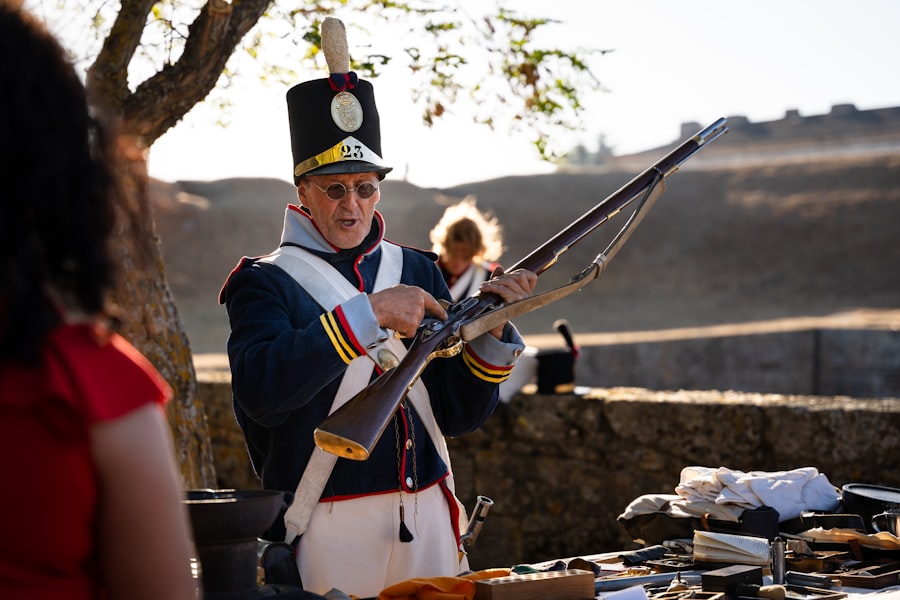
The macuahuitl was a unique weapon wielded by the Aztecs, characterized by its wooden structure embedded with sharp obsidian blades along its edges. This formidable sword was not only a symbol of Aztec craftsmanship but also a lethal instrument in close combat. The macuahuitl’s design allowed for powerful slashing attacks that could inflict severe wounds on opponents, making it a favored weapon among Aztec warriors.
What set the macuahuitl apart from other swords was its combination of weight and cutting power. The obsidian blades were capable of producing clean cuts that could sever limbs with ease, while the wooden body provided durability and balance. In battle, Aztec warriors wielded this weapon with skill and precision, demonstrating their martial prowess.
The macuahuitl remains an enduring symbol of Aztec culture and warfare, representing both their ingenuity in weapon design and their fierce spirit in battle.
The Greek Polybolos: A Repeating Ballista
The polybolos was an ingenious invention that revolutionized siege warfare in ancient Greece. This repeating ballista allowed for multiple shots to be fired in quick succession without requiring extensive reloading time. By utilizing a system of levers and pulleys, the polybolos could launch projectiles at a rapid pace, providing armies with a significant advantage during sieges or open battles.
The design of the polybolos showcased the advanced engineering skills of its creators, reflecting a deep understanding of mechanics and physics. Its ability to deliver sustained firepower made it a formidable asset on the battlefield, capable of overwhelming enemy defenses with a relentless barrage of projectiles. The polybolos paved the way for future developments in artillery technology, influencing subsequent designs that would continue to evolve throughout history.
The Urumi: A Flexible and Lethal Indian Sword
The urumi is a unique weapon originating from India, characterized by its flexible blade that resembles a whip or sword-like structure. This remarkable weapon requires exceptional skill to wield effectively, as its flexibility allows for rapid strikes that can confuse opponents while delivering lethal blows. Traditionally made from steel or iron, the urumi is often adorned with intricate designs that reflect its cultural significance.
Wielding an urumi demands extensive training and practice; its unpredictable movements can be both an advantage and a challenge for its user. In skilled hands, it can be used to deliver swift cuts and thrusts from various angles, making it difficult for opponents to defend against. The urumi’s distinctive design highlights the diversity of weaponry found in different cultures and serves as a testament to India’s rich martial heritage.
The Trebuchet: A Powerful Siege Weapon
The trebuchet stands out as one of the most effective siege weapons developed during medieval times. Utilizing gravitational potential energy to launch heavy projectiles over great distances, this massive contraption could hurl stones or incendiary devices at enemy fortifications with devastating accuracy. Its design featured a long arm pivoting on a fulcrum, allowing for impressive leverage that translated into immense striking power.
Trebuchets played a crucial role in siege warfare during the Middle Ages, enabling armies to breach walls that would otherwise be impenetrable. Their ability to launch projectiles weighing hundreds of pounds made them indispensable during prolonged sieges, where patience and precision were paramount. The legacy of the trebuchet endures in modern engineering principles, showcasing how ancient innovations continue to influence contemporary designs in various fields.
The Katana: A Masterpiece of Japanese Swordsmithing
The katana is perhaps one of the most iconic swords in history, renowned for its elegance and lethal efficiency. Crafted through a meticulous process involving folding steel multiple times to create a strong yet flexible blade, the katana embodies centuries of Japanese swordsmithing tradition. Its distinctive curved shape allows for swift cuts and precise thrusts, making it an ideal weapon for samurai warriors.
Beyond its functionality as a weapon, the katana holds deep cultural significance in Japan. It symbolizes honor, discipline, and mastery—qualities highly valued within samurai culture. The artistry involved in crafting each katana elevates it beyond mere weaponry; it is regarded as a work of art that reflects the skill and dedication of its maker.
Today, katanas are celebrated not only for their historical importance but also for their enduring legacy in martial arts and popular culture.
The Legacy of Unthinkable Historical Weapons
The exploration of unthinkable historical weapons reveals a rich tapestry woven from innovation, culture, and conflict throughout human history. Each weapon discussed serves as a reminder of humanity’s relentless pursuit of power and dominance on the battlefield while also reflecting the ingenuity that has driven technological advancements over time. From Greek Fire’s terrifying flames to the elegance of the katana, these weapons have left indelible marks on history.
As societies continue to evolve and adapt to new challenges, the lessons learned from these historical weapons remain relevant today. They remind us not only of our capacity for destruction but also our ability to innovate and create tools that can shape our world—whether for war or peace. The legacy of these unthinkable historical weapons endures as a testament to human creativity and resilience in the face of adversity.
In exploring the fascinating world of historical weapons that shouldn’t exist, one can delve into the intricacies of their design and the contexts in which they were used. A related article that provides further insight into this topic can be found at this link. It discusses various weapons throughout history that defy conventional understanding, shedding light on their unique characteristics and the reasons behind their existence.
WATCH THIS! 15 Ancient Weapons That BROKE History (And Were Hidden)
FAQs
What are historical weapons that shouldn’t exist?
Historical weapons that shouldn’t exist are those that were designed with the sole purpose of causing mass destruction and suffering. These weapons often had devastating effects on both soldiers and civilians and were considered inhumane even during the time they were used.
What are some examples of historical weapons that shouldn’t exist?
Examples of historical weapons that shouldn’t exist include chemical weapons such as mustard gas and nerve agents, biological weapons such as plague-infected corpses and smallpox-infected blankets, and nuclear weapons such as the atomic bombs dropped on Hiroshima and Nagasaki.
Why are these weapons considered inhumane?
These weapons are considered inhumane because they cause indiscriminate and widespread suffering, often affecting civilians and non-combatants. They also have long-lasting and devastating effects on the environment and can cause irreparable harm to future generations.
Have there been efforts to ban these weapons?
Yes, there have been international efforts to ban these weapons. The Geneva Protocol of 1925 prohibited the use of chemical and biological weapons in warfare, and the Treaty on the Non-Proliferation of Nuclear Weapons (NPT) aims to prevent the spread of nuclear weapons and promote disarmament.
Are there still concerns about the use of these weapons today?
Yes, there are still concerns about the use of these weapons today. Despite international treaties and conventions, there have been instances of the use of chemical weapons in conflicts, and the threat of nuclear proliferation remains a global concern. Efforts to prevent the use and spread of these weapons continue to be a priority for the international community.