
As you delve into the annals of history, you may find yourself captivated by the remarkable achievements of advanced ancient civilizations. These societies, which flourished thousands of years ago, laid the groundwork for many aspects of modern life. From the intricate social structures of the Sumerians to the philosophical musings of the Greeks, these civilizations were not merely primitive societies; they were complex entities that demonstrated a profound understanding of governance, technology, and culture.
You might wonder how these ancient peoples managed to create such sophisticated systems and what lessons we can draw from their experiences today. The allure of advanced ancient civilizations lies not only in their accomplishments but also in the mysteries that surround them. As you explore their histories, you will encounter questions that challenge your understanding of human development.
How did societies like the Maya and the Indus Valley civilization achieve such remarkable advancements without the modern conveniences we take for granted? What drove their innovations, and what ultimately led to their decline? By examining these civilizations, you can gain insights into the resilience and adaptability of humanity, as well as the cyclical nature of progress and regression.
Key Takeaways
- Advanced ancient civilizations exhibited remarkable technological and architectural achievements that continue to intrigue researchers.
- Their cultural, artistic, and spiritual practices reveal complex social and religious systems.
- Agricultural and environmental methods used by these civilizations demonstrate sustainable practices ahead of their time.
- Scientific, mathematical, and economic innovations laid foundational knowledge influencing modern society.
- The legacy of these civilizations persists today, shaping contemporary culture, technology, and governance.
The Mystery of Advanced Ancient Civilizations
The enigma surrounding advanced ancient civilizations is a topic that has fascinated historians and archaeologists alike. You may find yourself pondering how societies that existed millennia ago could possess knowledge and skills that seem almost unfathomable today. The sheer scale of their achievements raises questions about the extent of their understanding of science, engineering, and governance.
For instance, how did the Egyptians construct the pyramids with such precision? What methods did the Mesopotamians employ to develop one of the earliest forms of writing? These mysteries invite you to explore the depths of human ingenuity and creativity.
As you investigate further, you will discover that many advanced ancient civilizations left behind artifacts and texts that provide tantalizing clues about their lives. However, much remains shrouded in mystery. The disappearance of the Maya civilization, for example, continues to baffle researchers.
Was it environmental degradation, warfare, or a combination of factors that led to their decline? By engaging with these questions, you can appreciate the complexities of historical narratives and recognize that our understanding is often incomplete. The mysteries of these civilizations serve as a reminder that history is not just a collection of facts but a dynamic tapestry woven from countless threads of human experience.
Uncovering the Technological Advancements of Ancient Civilizations
When you think about technological advancements, your mind may immediately jump to modern inventions like smartphones or artificial intelligence. However, ancient civilizations were pioneers in their own right, developing technologies that laid the foundation for future innovations. As you explore this aspect of their history, you will uncover remarkable achievements in various fields, including agriculture, engineering, and medicine.
For instance, the invention of irrigation systems by the Sumerians revolutionized agriculture and allowed for surplus food production, which in turn supported population growth and urbanization. You might also be intrigued by the engineering feats accomplished by ancient civilizations. The Romans, for example, mastered the art of constructing aqueducts that transported water over long distances, showcasing their understanding of hydraulics and materials.
Similarly, the Chinese developed advanced metallurgy techniques that enabled them to create strong tools and weapons. These technological advancements not only improved daily life but also facilitated trade and communication between different cultures. By examining these innovations, you can gain a deeper appreciation for the ingenuity of our ancestors and how their contributions continue to influence our world today.
The Architectural Wonders of Ancient Civilizations
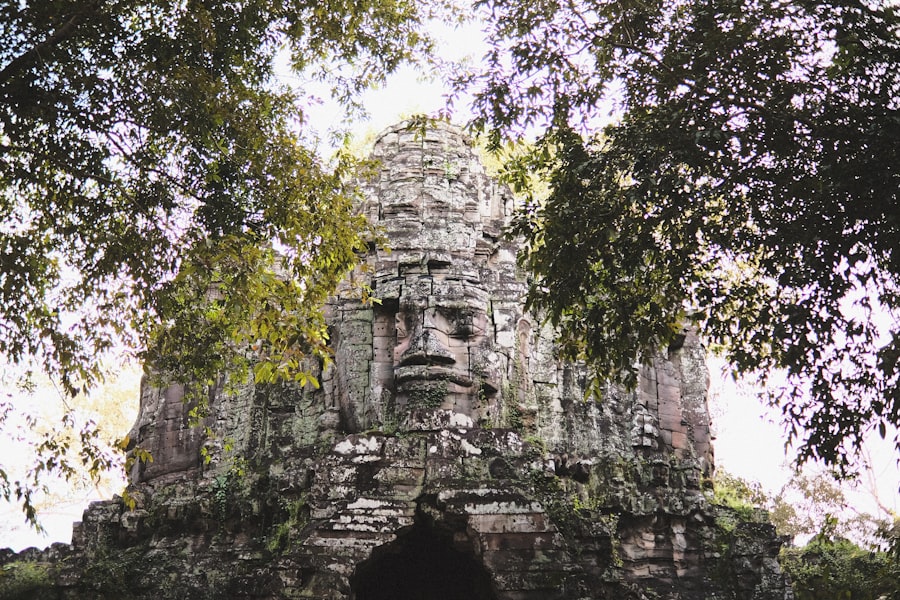
As you journey through history, you cannot overlook the architectural wonders that advanced ancient civilizations left behind. These structures are not merely buildings; they are testaments to human creativity and ambition. From the majestic pyramids of Egypt to the intricate temples of Angkor Wat in Cambodia, each architectural marvel tells a story about the society that created it.
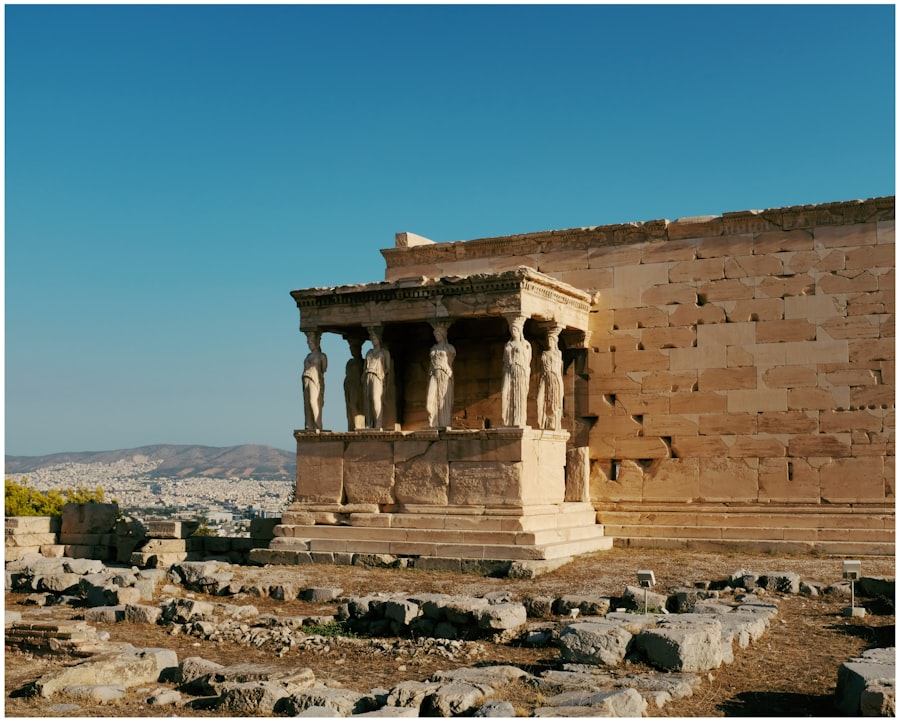
You may find yourself awestruck by the sheer scale and precision of these constructions, which often required advanced knowledge of mathematics and engineering. The architectural achievements of ancient civilizations also reflect their cultural values and beliefs. For instance, the Parthenon in Athens was not just a temple dedicated to Athena; it symbolized the power and democracy of ancient Greece.
Similarly, the ziggurats of Mesopotamia served as both religious centers and administrative hubs, illustrating the interconnectedness of spirituality and governance in those societies. As you explore these architectural wonders, you will come to understand how they served as focal points for community life and how they continue to inspire awe in people around the world.
The Cultural and Artistic Achievements of Advanced Ancient Civilizations
| Ancient Civilization | Advanced Technology or Achievement | Estimated Time Period | Significance |
|---|---|---|---|
| Ancient Egypt | Precision stone cutting and construction of pyramids | c. 3100 BCE – 30 BCE | Demonstrated advanced engineering and architectural skills |
| Indus Valley Civilization | Urban planning with grid layouts and sophisticated drainage systems | c. 3300 BCE – 1300 BCE | Showed early examples of city planning and sanitation |
| Ancient Mesopotamia | Development of writing (cuneiform) and early mathematics | c. 3500 BCE – 539 BCE | Laid foundations for written communication and numerical systems |
| Ancient China (Shang Dynasty) | Advanced bronze casting and early use of oracle bones | c. 1600 BCE – 1046 BCE | Indicated early metallurgy and record-keeping techniques |
| Olmec Civilization | Creation of colossal stone heads and early writing systems | c. 1500 BCE – 400 BCE | Suggested complex social organization and symbolic communication |
| Ancient Greece | Foundations of Western philosophy, science, and democracy | c. 800 BCE – 146 BCE | Influenced modern political and scientific thought |
| Ancient Rome | Advanced engineering: aqueducts, roads, and concrete construction | c. 753 BCE – 476 CE | Enabled large-scale urbanization and infrastructure development |
The cultural and artistic achievements of advanced ancient civilizations are another area where you can find inspiration and insight. Art was not merely a form of expression; it was deeply intertwined with religion, politics, and daily life. As you examine artifacts such as pottery, sculptures, and paintings, you will discover how these works reflect the values and beliefs of their creators.
For example, ancient Egyptian art often depicted scenes from the afterlife, emphasizing their beliefs in immortality and divine judgment. Moreover, literature from ancient civilizations provides a window into their thoughts and philosophies. The Epic of Gilgamesh from Mesopotamia is one of the earliest known works of literature, exploring themes of friendship, mortality, and the quest for knowledge.
Similarly, Greek tragedies and comedies offer insights into human nature and societal norms. By engaging with these cultural artifacts, you can gain a deeper understanding of how ancient peoples viewed themselves and their place in the world.
The Agricultural and Environmental Practices of Ancient Civilizations
Agriculture was a cornerstone of advanced ancient civilizations, enabling them to sustain large populations and develop complex societies. As you explore this aspect of their lives, you will uncover innovative practices that allowed them to thrive in diverse environments. The development of crop rotation by ancient farmers improved soil fertility and increased yields, while techniques such as terrace farming enabled communities in mountainous regions to cultivate land effectively.
You may also find it fascinating how these civilizations interacted with their environments. The Maya practiced slash-and-burn agriculture but also developed sophisticated methods for managing water resources in their tropical landscapes. Similarly, the ancient Egyptians relied on the annual flooding of the Nile River to enrich their fields with nutrient-rich silt.
These practices highlight not only their agricultural ingenuity but also their deep connection to the natural world. By studying these environmental practices, you can gain insights into sustainable living that resonate even today.
The Political and Social Structures of Advanced Ancient Civilizations
The political and social structures of advanced ancient civilizations were often complex and multifaceted. As you delve into this topic, you will discover how power was distributed among different classes and how governance evolved over time.
These varying systems reflect different approaches to governance and social organization. You might also be intrigued by how social hierarchies influenced daily life in these civilizations. In many cases, a small elite held significant power while the majority worked as farmers or laborers.
However, there were also instances where social mobility was possible through merit or achievement. By examining these political and social structures, you can gain a deeper understanding of how they shaped individual lives and collective identities within these societies.
The Scientific and Mathematical Knowledge of Ancient Civilizations
The scientific and mathematical knowledge possessed by advanced ancient civilizations is another area ripe for exploration. You may be surprised to learn that many foundational concepts in mathematics originated in these societies. The Babylonians developed a base-60 number system that is still used today for measuring time and angles.
Meanwhile, ancient Egyptians utilized geometry for land surveying and construction purposes. In addition to mathematics, ancient civilizations made significant strides in various scientific fields such as astronomy and medicine. The Mayans created an intricate calendar system based on celestial observations, while Hippocrates laid the groundwork for modern medicine with his emphasis on observation and ethics in healthcare.
As you study these advancements, you will come to appreciate how they contributed to humanity’s understanding of the natural world and laid the groundwork for future discoveries.
The Spiritual and Religious Beliefs of Advanced Ancient Civilizations
Spirituality and religion played pivotal roles in shaping advanced ancient civilizations. As you explore this aspect of their lives, you will encounter a rich tapestry of beliefs that influenced everything from governance to daily rituals. Many societies worshipped a pantheon of gods who represented various aspects of life—fertility, war, wisdom—reflecting their understanding of the world around them.
You may find it fascinating how religious practices were often intertwined with political authority. In Egypt, pharaohs were considered divine figures who maintained order through their connection to the gods. Similarly, in Mesopotamia, priests held significant power as intermediaries between deities and people.
By examining these spiritual beliefs and practices, you can gain insights into how they shaped cultural identities and provided frameworks for understanding existence.
The Trade and Economic Systems of Ancient Civilizations
Trade was a vital component of advanced ancient civilizations, facilitating cultural exchange and economic growth. As you explore this topic, you will discover how trade networks connected distant regions and allowed for the exchange of goods such as spices, textiles, metals, and ideas. The Silk Road is perhaps one of the most famous trade routes that linked East Asia with Europe, enabling not only commerce but also cultural interactions.
You might also be intrigued by how economic systems evolved within these civilizations. Some societies operated on barter systems while others developed currency as a medium for exchange. The rise of markets and trade centers fostered urbanization and contributed to social stratification as wealth became concentrated among merchants and traders.
By studying these economic systems, you can gain insights into how they shaped societal dynamics and influenced relationships between different cultures.
The Legacy of Advanced Ancient Civilizations in Modern Society
As you reflect on advanced ancient civilizations, it becomes clear that their legacies continue to resonate in modern society. Many principles established by these societies—such as democracy from Greece or legal codes from Mesopotamia—remain foundational to contemporary governance systems.
Moreover, as you navigate today’s globalized world, you may recognize echoes of ancient trade routes in modern commerce or see parallels between historical social structures and current societal dynamics. By studying these legacies, you can appreciate not only where we have come from but also how we can learn from past successes and failures as we navigate our own complex world today. In conclusion, your exploration into advanced ancient civilizations reveals a rich tapestry woven from human ingenuity, creativity, resilience, and complexity.
Each civilization offers unique insights into our shared history while reminding us that our journey is part of an ongoing narrative shaped by those who came before us.
Recent discoveries have shed light on ancient civilizations that were far more advanced than previously believed. For an in-depth exploration of this topic, you can read the article on ancient technologies and innovations at this link. The findings challenge long-held assumptions about the capabilities of early societies, revealing sophisticated engineering, architecture, and social organization that continue to influence modern culture.
WATCH THIS! 🔍 Archaeologists REFUSE to Explain This Ancient Machine
FAQs
What evidence suggests ancient civilizations were more advanced than previously thought?
Archaeological discoveries such as sophisticated architectural structures, advanced metallurgy, intricate artwork, and early forms of writing indicate that ancient civilizations possessed higher levels of technological and cultural development than once believed.
Which ancient civilizations are considered more advanced based on recent findings?
Civilizations such as the Egyptians, Mesopotamians, Indus Valley people, Mayans, and the ancient Chinese have all shown evidence of advanced knowledge in areas like engineering, astronomy, mathematics, and urban planning.
How did ancient civilizations achieve advanced engineering feats?
They utilized innovative techniques such as precise stone cutting, complex irrigation systems, and early forms of machinery, often based on empirical knowledge and trial-and-error methods passed down through generations.
What role did ancient knowledge of astronomy play in their advancement?
Many ancient civilizations developed detailed astronomical observations that informed their calendars, agricultural practices, and religious ceremonies, demonstrating a sophisticated understanding of celestial movements.
Are there any modern technologies inspired by ancient civilizations?
Yes, modern engineering, architecture, and agricultural techniques have been influenced by ancient innovations such as aqueducts, road systems, and early forms of writing and record-keeping.
How do recent discoveries change our understanding of human history?
They challenge the traditional timeline of technological and cultural development, showing that complex societies with advanced knowledge existed earlier and in more diverse locations than previously recognized.
What methods do researchers use to study ancient civilizations?
Researchers employ archaeology, carbon dating, satellite imagery, linguistic analysis, and experimental archaeology to uncover and interpret artifacts and structures from ancient times.
Can ancient civilizations’ advancements be linked to modern scientific principles?
Many ancient techniques and observations align with modern scientific principles, such as geometry, physics, and astronomy, indicating a foundational understanding that contributed to later scientific developments.