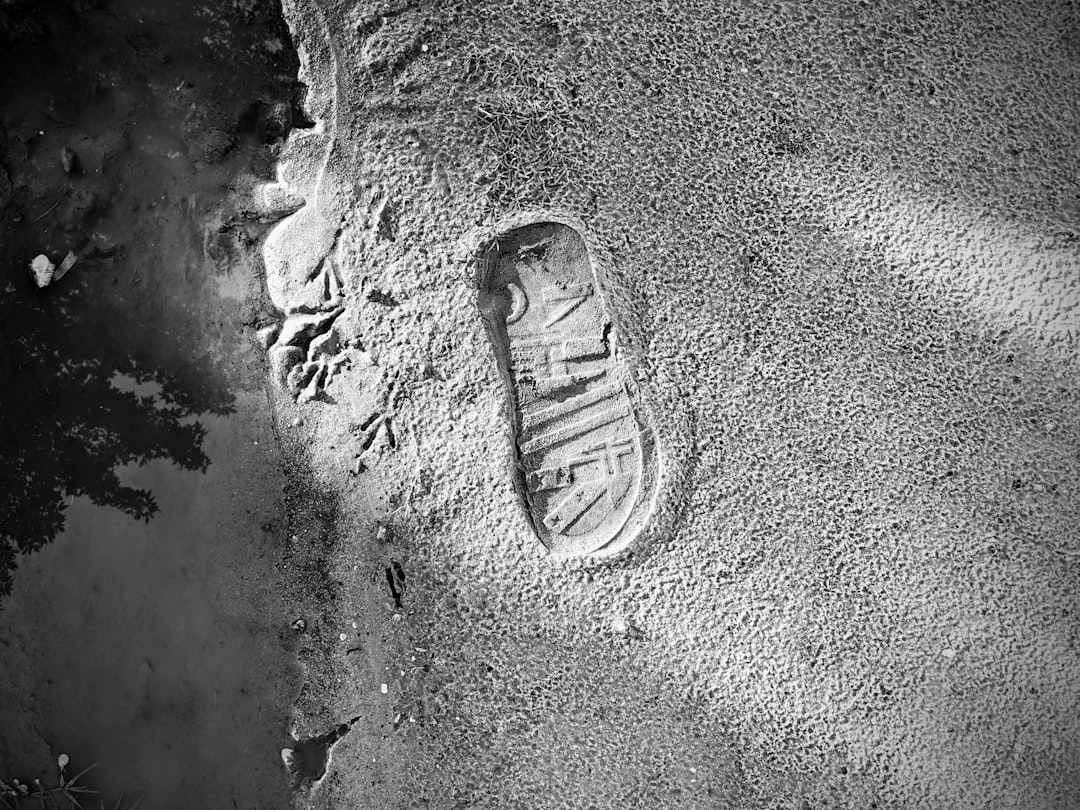
The discovery of 23,000-year-old footprints in New Mexico has captivated the scientific community and the public alike, offering a tangible glimpse into a distant past. A compelling documentary, “Footprints of Time,” delves into this extraordinary find, weaving together scientific investigation, historical context, and the profound implications of these ancient impressions. The film navigates the meticulous research undertaken to verify the age and origin of the footprints, presenting a narrative that is both intellectually stimulating and emotionally resonant.
The documentary begins by setting the scene for the remarkable discovery, transporting viewers to the White Sands National Park in New Mexico. It was here, amidst the vast expanse of gypsum dunes, that park rangers and researchers stumbled upon an anomaly that would rewrite chapters of early human history in North America. The sheer number and clarity of the footprints were astonishing, hinting at a significant human presence during the Pleistocene epoch, a period far earlier than many had previously accepted.
The Serendipitous Encounter
“Footprints of Time” meticulously details the moments leading up to the discovery. The narrative unfolds with a sense of awe and disbelief as early observers initially grappled with what they were seeing. The film emphasizes how the unique environmental conditions of White Sands – the specific type of sand, the water saturation, and the subsequent burial and preservation by subsequent sand deposition – played a crucial role in safeguarding these delicate imprints for millennia. The initial exploration and the gradual realization of the immense age of these tracks form the opening act of the documentary’s scientific detective story.
The Promise of a Lost World
The immediate intrigue surrounding the footprints stemmed from their potential to answer long-standing questions about the peopling of the Americas. For decades, the prevailing scientific consensus pointed towards a later migration across the Bering Land Bridge, around 13,000 years ago. The presence of these 23,000-year-old footprints suggested a much earlier arrival, challenging established timelines and igniting a fervent desire among archaeologists and paleoanthropologists to understand who these individuals were and how they came to be in North America so long ago.
The recent documentary showcasing 23,000-year-old footprints has sparked significant interest in ancient human history and migration patterns. For those intrigued by the mysteries of our planet’s past, a related article explores the enigmatic landmass beneath the Antarctic ice, which may hold clues to understanding early human life and environmental changes. You can read more about this fascinating topic in the article available at this link.
The Scientific Rigor: Verifying the Age and Authenticity
A significant portion of “Footprints of Time” is dedicated to the rigorous scientific process involved in dating and verifying the 23,000-year-old footprints. The film showcases the state-of-the-art techniques employed by researchers, highlighting the interdisciplinary nature of this scientific endeavor. It’s not just about finding the footprints; it’s about proving their age with irrefutable evidence.
Radiocarbon Dating and Luminescence Dating: The Pillars of Evidence
The documentary explains, in an accessible manner, the two primary methods used to date the footprints: radiocarbon dating and optically stimulated luminescence (OSL) dating. The film features interviews with the scientists who conducted these analyses, explaining the principles behind each technique. Radiocarbon dating, for instance, involves analyzing the carbon isotopes within organic material found within or around the footprints, providing an age estimate based on the decay rate of carbon-14. OSL dating, on the other hand, measures the accumulated dose of natural radiation in the quartz and feldspar grains within the sediment layers surrounding the footprints, offering another crucial layer of temporal confirmation. The film visually represents these scientific processes, making complex methodologies understandable to a broad audience.
The Role of Paleobotany and Palynology
“Footprints of Time” also explores how other scientific disciplines contribute to the authentication of the footprints. Paleobotanists analyze ancient plant remains found in association with the tracks, providing insights into the flora of the region at that time. Palynologists study fossilized pollen grains, offering further clues about the paleoenvironment and the types of vegetation that would have supported human and animal life. The convergence of evidence from these various fields strengthens the case for the authenticity and age of the footprints, creating a compelling scientific argument.
The Geological Context: Understanding the Landscape
The film emphasizes the importance of understanding the geological context of the White Sands. The gypsum dunes are not static; they are constantly shifting and evolving. Researchers meticulously studied the layers of sediment in which the footprints were found, understanding how ancient water bodies and subsequent sand deposition created the ideal conditions for preservation. This detailed geological analysis is crucial in demonstrating that the footprints were not a more recent addition to an older layer or a misinterpretation of natural formations.
Who Were These Ancient Striders? Insights into Early Human Life
Beyond the sheer age of the footprints, “Footprints of Time” seeks to answer the burning question: who were these ancient individuals? The documentary draws upon the visual evidence of the footprints themselves and the broader archaeological context to paint a picture of life in North America 23,000 years ago. It’s a journey of reconstruction, piecing together fragments of information to understand the lives of people who walked this land at the dawn of human presence in the continent.
Size, Age, and Group Dynamics: Reading the Tracks
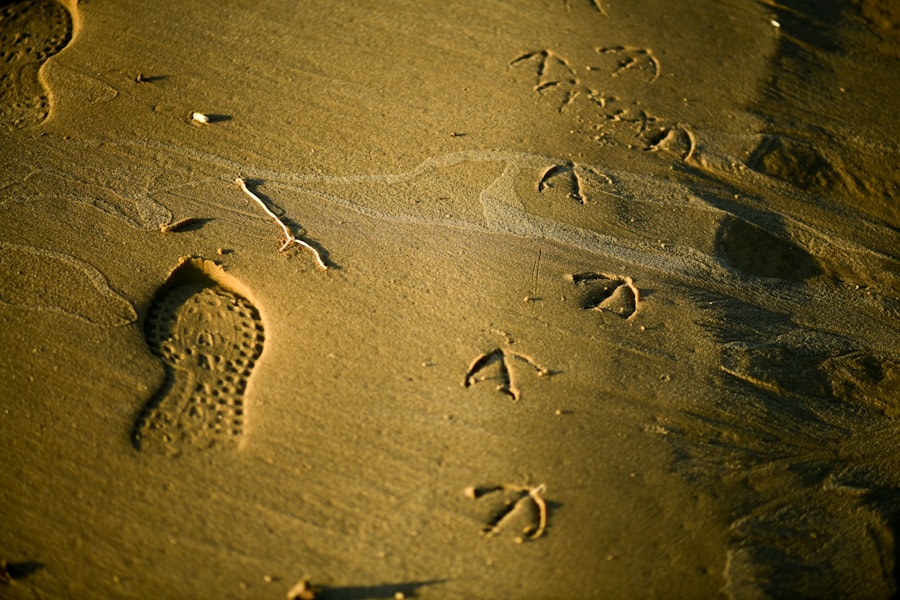
The film delves into the details of the footprints, analyzing their size, depth, and stride length. Researchers can infer the approximate age and sex of the individuals who made them, identifying prints likely left by children, adolescents, and adults. The presence of multiple sets of footprints, often overlapping or running parallel, provides tantalizing hints about group dynamics. Were they families? Hunting parties? Nomadic bands on the move? The documentary explores these possibilities, allowing viewers to imagine these ancient human interactions.
The Paleoenvironment: A World Different from Today
“Footprints of Time” immerses the audience in the paleoenvironment of White Sands during the late Pleistocene. The documentary uses CGI and expert reconstructions to illustrate what the landscape might have looked like 23,000 years ago. It was likely a wetter, more vegetated environment, possibly with lakes and rivers that attracted both humans and megafauna. Understanding the ecosystem is crucial to understanding the survival strategies of these early inhabitants.
Diet and Lifestyle: Glimpses of Daily Existence
While direct evidence of diet and specific cultural practices is limited to what can be inferred from the footprints and their context, the documentary discusses potential scenarios. The presence of large mammals like mammoths and mastodons in North America during this period suggests that these could have been a food source for early humans. The film also touches upon the potential for nomadic lifestyles, with groups following animal herds or seeking out seasonal resources.
Implications for North American Prehistory: A Paradigm Shift
The discovery of the 23,000-year-old footprints at White Sands has profound implications for our understanding of North American prehistory. “Footprints of Time” dedicates a significant portion to exploring these broader impacts, illustrating how this find necessitates a re-evaluation of established timelines and migration theories. It’s a story of scientific discovery forcing a paradigm shift.
Challenging the Beringia Theory
The documentary prominently features the debate surrounding the Bering Land Bridge migration theory. For years, this has been the dominant model for how humans populated the Americas. The White Sands footprints, however, strongly suggest that humans were present in North America thousands of years before the generally accepted timeline for the opening of the Bering Land Bridge. The film explores alternative migration routes and hypotheses that are gaining traction in light of this new evidence.
The Clovis First Model Overturned?
The documentary also addresses the “Clovis First” model, which proposed that the Clovis culture, dating back about 13,500 years, represented the first widespread human presence in the Americas. The 23,000-year-old footprints definitively predate the Clovis culture, unequivocally demonstrating that humans were in North America for a considerable period before the emergence of this well-known archaeological complex. This forces a radical rethinking of the trajectory of human settlement in the continent.
A More Complex Migration Narrative
“Footprints of Time” argues that the White Sands discovery points towards a more complex and multi-phased migration into the Americas. It suggests that early humans may have arrived via multiple routes and at different times, with some groups potentially reaching the continent much earlier than previously believed. The film encourages a more nuanced and open-minded approach to understanding this ancient chapter of human history.
The recent documentary showcasing 23,000-year-old footprints has sparked significant interest in ancient human history and our connection to the past. This fascinating exploration of early human life not only highlights the remarkable preservation of these footprints but also raises questions about the environmental changes that have occurred since then. For those interested in understanding how current global crises, such as the disappearance of countries due to climate change, relate to our historical journey, a related article can provide valuable insights. You can read more about this pressing issue in the article on disappearing countries here.
The Enduring Legacy: What These Footprints Tell Us About Ourselves
| Metrics | Data |
|---|---|
| Age of footprints | 23,000 years old |
| Location | White Sands National Park, New Mexico |
| Discovery | 2018 |
| Researcher | David Bustos |
| Documentary Title | Footprints in the Sand: The White Sands Story |
“Footprints of Time” concludes by reflecting on the enduring legacy of the 23,000-year-old footprints and what they ultimately tell us about humanity. The film shifts from the purely scientific to the philosophical, contemplating the profound connection we have to our ancestors and the shared human experience across vast stretches of time.
A Tangible Connection to Our Past
The documentary emphasizes the emotional impact of seeing such direct evidence of ancient human presence. These are not abstract theories; they are literal impressions left by people who lived, breathed, and walked the same earth we do today. The footprints serve as a powerful, tangible connection to our distant ancestors, fostering a sense of wonder and humility.
The Resilience and Adaptability of Humans
The existence of these footprints highlights the incredible resilience and adaptability of early humans. To have journeyed to and survived in a new continent, thousands of years ago, speaks volumes about their resourcefulness, their ability to innovate, and their innate drive to explore. The film uses this discovery as a testament to the enduring human spirit.
Inspiring Future Exploration and Understanding
Ultimately, “Footprints of Time” aims to inspire continued exploration and a deeper understanding of our shared human story. The documentary encourages viewers to look at the world around them with a sense of curiosity and to appreciate the ongoing efforts of scientists to unravel the mysteries of our past. The 23,000-year-old footprints are not just a scientific curiosity; they are a profound reminder of where we came from and the long and incredible journey humanity has taken. The film leaves a lasting impression, a sense of awe for the ancient world and a renewed appreciation for the ongoing quest for knowledge.

These Footprints Could Rewrite the Story of the First Americans
FAQs
What is the significance of the 23,000 year old footprints documentary?
The documentary showcases the discovery of ancient footprints in the White Sands National Park in New Mexico, which are believed to be around 23,000 years old. This discovery challenges previous understanding of when humans first arrived in the Americas.
Who made the discovery of the 23,000 year old footprints?
The discovery was made by a team of researchers led by David Bustos, a paleontologist at the White Sands National Park. The team used ground-penetrating radar and other advanced techniques to uncover the ancient footprints.
What do the 23,000 year old footprints reveal about early human migration?
The footprints provide evidence that humans were present in the Americas much earlier than previously thought. This challenges the long-held belief that humans first arrived in the Americas around 13,000 years ago via a land bridge that connected Siberia and Alaska.
How were the 23,000 year old footprints preserved for so long?
The footprints were preserved in the White Sands National Park due to the unique environmental conditions. The area is known for its gypsum sand dunes, which helped to capture and preserve the footprints over thousands of years.
What can we learn from the 23,000 year old footprints documentary?
The documentary sheds light on the early human history in the Americas and challenges existing theories about human migration. It also highlights the importance of continued research and exploration in uncovering new insights about our ancient past.