
- Optimized Inventory Management: The Foundation of Always-Available Products
The modern supply chain’s ability to orchestrate precise inventory levels is a silent, yet powerful, driver of abundance. It’s a complex dance between predicting demand, managing stock on hand, and ensuring timely replenishment, all aimed at a single goal: having the right product, in the right place, at the right time, without the waste of overstock. Gone are the days of massive warehouses filled with speculative excess. Today’s supply chains leverage sophisticated forecasting models, real-time data analytics, and dynamic reorder points to maintain an optimal balance. This meticulous approach directly fuels abundance by ensuring consumers can consistently find and purchase goods, fostering a sense of reliability and satisfaction that underpins economic prosperity.
The Predictive Power of Data Analytics
At the heart of optimized inventory management lies advanced data analytics. Supply chain professionals now have access to an unprecedented volume of information, from historical sales data and market trends to weather patterns and social media sentiment. By applying sophisticated algorithms, businesses can predict demand with remarkable accuracy, down to specific SKUs and geographic locations. This predictive power allows for proactive adjustments to production schedules and inventory allocations, minimizing both stockouts and the costly burden of excess inventory. For consumers, this translates into a world where their desired products are almost always available, even for niche or seasonal items. The illusion of infinite choice is, in large part, thanks to these data-driven inventory strategies.
Supply chains play a crucial role in creating abundance by efficiently managing the flow of goods and services, ensuring that products are available to meet consumer demand. This intricate network not only enhances accessibility but also contributes to economic stability. For further insights on how financial systems can be affected by external factors, you may find the article on surviving economic uncertainties particularly informative. It discusses various strategies to navigate financial challenges, which can be linked to the broader implications of supply chain dynamics. You can read more about it here: Surviving a Dollar Crash: Financial Tips for Uncertain Times.
Just-In-Time (JIT) and Just-In-Case (JIC) Strategies: A Synergistic Approach
The evolution of inventory management has seen the refinement of strategies like Just-In-Time (JIT) and Just-In-Case (JIC). While JIT, famously pioneered by Toyota, emphasizes minimizing inventory by receiving goods only as they are needed in the production process, modern supply chains often incorporate JIC elements strategically. This might involve maintaining safety stock for critical components or high-demand items, especially in the face of potential disruptions. The abundance we experience is not solely due to ruthless efficiency; it’s also a testament to the intelligent deployment of these complementary strategies. By buffering against unpredictable events, JIC ensures that supply chains can continue to deliver, even when facing unforeseen challenges, thereby preserving the feeling of consistent availability.
The Role of Warehouse Management Systems (WMS)
The physical manifestation of optimized inventory is in the efficient operation of warehouses. Modern Warehouse Management Systems (WMS) are the unsung heroes, providing the technological backbone for meticulous stock tracking, efficient put-away and picking, and dynamic slotting. These systems use barcode scanning, RFID technology, and sophisticated algorithms to ensure that every item is accounted for, its location is known, and it can be retrieved swiftly when needed. An efficient WMS dramatically reduces errors, minimizes lost inventory, and speeds up the order fulfillment process. This operational excellence directly contributes to abundance by ensuring that products ordered are actually available and can be dispatched without delay, reinforcing the consumer’s expectation of prompt delivery.
Vendor-Managed Inventory (VMI) and Collaborative Planning
Extending the concept of optimized inventory beyond a single company’s walls, Vendor-Managed Inventory (VMI) and collaborative planning initiatives play a crucial role. In a VMI arrangement, the supplier takes responsibility for managing the inventory levels at the customer’s location, based on agreed-upon parameters and shared data. This fosters a deeper level of trust and efficiency, as the supplier has a direct incentive to ensure the customer never runs out of stock. Collaborative planning, forecasting, and replenishment (CPFR) takes this a step further, involving joint efforts between trading partners to align on demand forecasts and replenishment plans. This shared vision and proactive collaboration break down silos, allowing for a more agile and responsive supply chain that can consistently deliver on consumer needs, thereby engendering abundance.
- Enhanced Accessibility and Distribution Networks: Bringing Goods to Your Doorstep
The sheer reach and sophistication of modern distribution networks are fundamental to the abundance consumers enjoy. Supply chains have evolved from local marketplaces to globalized behemoths, capable of transporting goods across continents with speed and reliability. This intricate web of logistics, encompassing transportation, warehousing, and last-mile delivery, ensures that products are not just produced but are also readily available to virtually anyone, anywhere. The ability to order an item online and have it arrive within days, or even hours, is a direct consequence of highly optimized and pervasive distribution systems, a hallmark of contemporary supply chain prowess.
Supply chains play a crucial role in creating abundance by efficiently connecting producers and consumers across the globe. This intricate network not only facilitates the flow of goods but also enhances accessibility and reduces costs, ultimately benefiting everyone involved. For a deeper understanding of how interconnected systems can reshape our perceptions and realities, you might find the article on rewriting history particularly enlightening, as it explores the impact of various networks on societal structures.
The Power of Global Transportation Hubs
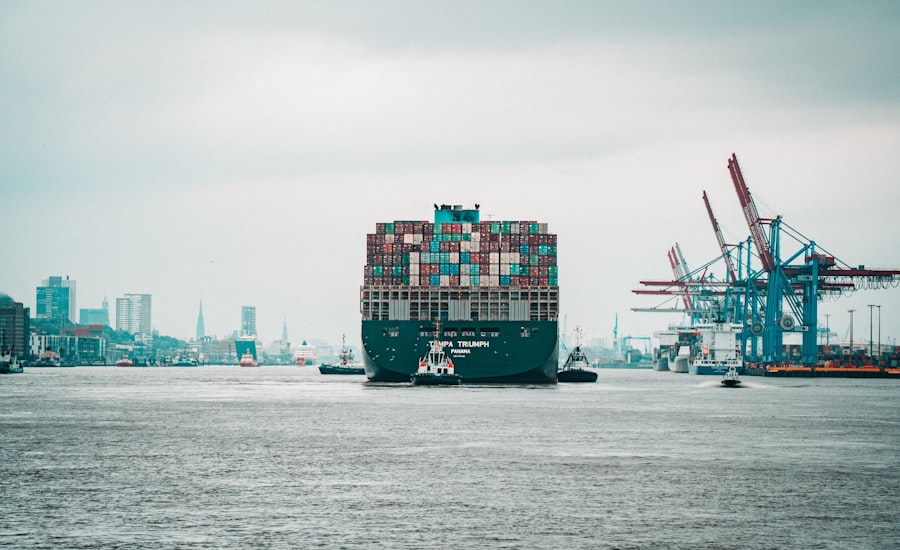
At the macro level, the existence of strategically located global transportation hubs – major ports, airports, and rail yards – acts as critical nodes in the supply chain. These hubs are designed for efficient transfer of goods between different modes of transport, minimizing transit times and costs. Their capacity to handle massive volumes of cargo means that products manufactured on one side of the world can be seamlessly integrated into the supply chains of another. This interconnectedness fuels abundance by facilitating the flow of diverse goods, making a vast array of products accessible to consumers regardless of their geographical location. The variety on store shelves and online catalogs is a direct reflection of the efficiency of these global arteries.
Sophisticated Warehousing and Fulfillment Centers
Beyond the initial transportation links, the network of warehouses and fulfillment centers is where the magic of accessibility truly happens. These facilities are no longer just storage depots; they are highly automated and optimized hubs for order processing, kitting, and distribution. Modern fulfillment centers employ robotics, artificial intelligence, and advanced sorting systems to pick and pack orders with incredible speed and accuracy. The proliferation of these centers, strategically placed to serve major population centers, drastically reduces the distance and time required to get products to consumers. This localized approach to distribution is a key factor in the perceived abundance of immediate availability.
The Revolution of E-commerce Logistics
The meteoric rise of e-commerce has fundamentally reshaped distribution networks, pushing the boundaries of accessibility. Online retailers have invested heavily in building sophisticated logistics infrastructure, enabling them to fulfill millions of orders daily. This includes developing specialized e-commerce fulfillment centers, optimizing last-mile delivery through partnerships with courier services and in-house fleets, and embracing technologies that provide customers with real-time tracking and delivery estimates. The convenience and speed offered by e-commerce logistics have made a vast catalog of products instantly accessible from the comfort of one’s home, a form of abundance previously unimaginable.
The Strategic Importance of Last-Mile Delivery
The “last mile” of delivery, the crucial segment from a distribution center to the customer’s doorstep, is where accessibility is truly put to the test. Supply chains have become increasingly focused on optimizing this final leg, employing a variety of strategies to ensure timely and cost-effective delivery. This includes the use of micro-fulfillment centers in urban areas, the deployment of specialized delivery vehicles, and the integration of gig economy drivers to increase flexibility and capacity. The success of last-mile delivery directly impacts consumer perception of abundance; a product that arrives quickly and reliably reinforces the idea that goods are readily available on demand. Innovations in this area, such as same-day or even sub-hour delivery windows for certain items, are powerful manifestations of supply chain efficiency translating into tangible abundance.
- Cost Efficiencies and Economies of Scale: Making Products Affordable
The relentless pursuit of efficiency within supply chains is a primary driver of the abundance of affordable goods. Through strategic sourcing, optimized production methods, and sophisticated logistics, businesses can significantly reduce the cost of bringing products to market. These cost savings are then often passed on to consumers in the form of lower prices, making a wider range of products accessible to a larger segment of the population. The ability to produce goods in high volumes, leveraging economies of scale and automation, is a cornerstone of this affordability, ensuring that desirable items are not exclusive luxuries but accessible necessities.
Strategic Sourcing and Global Procurement
At the upstream end of the supply chain, strategic sourcing plays a pivotal role in cost reduction. Companies meticulously analyze global markets to identify suppliers who can provide raw materials, components, and finished goods at the most competitive prices, without compromising on quality. This often involves negotiating bulk purchase agreements, forming long-term partnerships, and diversifying supplier bases to mitigate risks. The ability to access materials from around the world, often at lower production costs, directly translates into lower manufacturing expenses, a critical factor in making a wide array of products affordable for consumers. This global procurement network is a silent force behind the seemingly endless variety of affordable goods available.
Economies of Scale in Manufacturing
The principle of economies of scale is a fundamental economic concept that supply chains masterfully exploit. By producing goods in large volumes, manufacturers can spread the fixed costs of production (machinery, labor, R&D) over a greater number of units. This dramatically lowers the per-unit cost of production. Advanced automation, highly efficient assembly lines, and the specialization of labor within large-scale manufacturing operations all contribute to this phenomenon. The abundance we experience in mass-produced items, from consumer electronics to everyday apparel, is a direct consequence of manufacturers’ ability to achieve significant economies of scale, making these products accessible to a broad consumer base.
Lean Manufacturing and Process Optimization
Beyond sheer volume, the adoption of lean manufacturing principles and continuous process optimization is crucial for driving down costs. Lean methodologies focus on eliminating waste in all its forms – overproduction, waiting, transportation, inventory, motion, over-processing, and defects. By streamlining production processes, reducing unnecessary steps, and improving workflow, manufacturers can significantly enhance efficiency and reduce operational costs. This commitment to continuous improvement means that production costs are constantly being re-evaluated and optimized, leading to more affordable products for consumers. The pursuit of lean operations is a silent, ongoing effort to make goods cheaper to produce and therefore more accessible.
Efficient Logistics and Reduced Transportation Costs
The cost of moving goods from their point of origin to the point of sale is a significant component of a product’s final price. Supply chains employ a variety of strategies to minimize these transportation costs, thereby contributing to product affordability. This includes optimizing shipping routes, consolidating shipments to fill entire containers, utilizing multimodal transportation for greater efficiency, and negotiating favorable rates with shipping carriers. Technological advancements, such as real-time tracking and route optimization software, further enhance efficiency and reduce fuel consumption and transit times. Lower logistics costs directly translate into lower prices for consumers, expanding the range of goods they can afford. The abundance of relatively low-cost goods is intrinsically linked to the efficient and cost-effective movement of products across vast distances.
- Risk Mitigation and Resilience: Ensuring Continuous Availability
While abundance often conjures images of plentiful goods, a crucial, often overlooked, aspect of supply chain contribution is its ability to mitigate risks and build resilience. In a world prone to natural disasters, geopolitical instability, and economic shocks, it is the robust and adaptable nature of modern supply chains that ensures the continued availability of products. Building redundancy, diversifying sourcing, and implementing contingency plans are not just about operational efficiency; they are about guaranteeing that the flow of goods remains uninterrupted, thereby preserving the perceived abundance even in turbulent times.
Diversified Sourcing Strategies
A key strategy for supply chain resilience is diversification of sourcing. Instead of relying on a single supplier or region for critical components or raw materials, companies now often maintain multiple suppliers across different geographic locations. This reduces the vulnerability to localized disruptions. If a natural disaster strikes one region or a geopolitical event impacts a specific country, the supply chain can pivot to alternative sources, minimizing the impact on production and ensuring continued product availability. This strategic diversification is a silent guardian against shortages, maintaining the consistent flow of goods that consumers expect and rely upon.
Robust Contingency Planning and Business Continuity
Effective supply chains are not reactive; they are proactive in their approach to risk. This involves developing comprehensive contingency plans and robust business continuity strategies. These plans outline actions to be taken in the event of various disruptive scenarios, from equipment failures and labor disputes to pandemics and cyber-attacks. By pre-emptively identifying potential challenges and outlining clear response protocols, companies can minimize downtime and maintain operations. This foresight and preparedness are essential for preserving abundance during crises, ensuring that essential goods remain accessible when they are needed most.
Supply Chain Visibility and Real-Time Monitoring
In today’s complex global network, visibility is paramount to resilience. Modern supply chains invest in technologies that provide real-time visibility into every stage of the process, from the movement of raw materials to the status of finished goods in transit. This transparency allows for early detection of potential disruptions. If a shipment is delayed, a production line encounters an issue, or a supplier faces an unexpected problem, supply chain managers are alerted immediately. This enables them to take swift corrective action, reroute materials, or activate contingency plans, thereby preventing widespread shortages and maintaining the ongoing availability of products.
Building Redundancy and Flexibility
Resilience also involves building a degree of redundancy and flexibility into the supply chain. This might mean having backup production facilities, maintaining strategic inventory buffers for critical items, or designing supply chains that can quickly adapt to changing demand or supply conditions. While lean principles aim to minimize excess, a resilient supply chain understands the strategic value of carefully managed redundancy. This flexibility allows the chain to absorb shocks and adapt to unforeseen circumstances, ensuring that the stream of products continues to flow, even when disruptions occur. This inherent adaptability is what underpins the sustained perception of abundance.
- Innovation and New Product Introduction: Expanding the Realm of Possibility
Supply chains are not merely conduits for existing goods; they are instrumental in bringing new and innovative products to market, thereby expanding the very definition of abundance. The ability of a supply chain to efficiently and effectively integrate new materials, technologies, and manufacturing processes is what allows businesses to conceive, develop, and scale the production of groundbreaking items. This continuous cycle of innovation, facilitated by agile and adaptable supply chains, ensures that consumer choice and access to novel solutions are constantly growing.
Collaborative Product Development and Prototyping
The introduction of new products often begins with a collaborative approach to design and prototyping. Supply chains facilitate this by connecting design teams with material suppliers and manufacturers early in the development process. Access to a diverse range of advanced materials, specialized manufacturing capabilities, and expert knowledge from supply chain partners allows for rapid iteration and testing of new product concepts. This allows for the efficient development of prototypes and the swift identification of potential production challenges, accelerating the path from idea to market-ready product and enriching the landscape of available goods.
Scalability of Production for Emerging Technologies
As new technologies emerge, the ability of supply chains to rapidly scale production becomes critical. Whether it’s the latest in renewable energy components, advanced medical devices, or cutting-edge consumer electronics, the supply chain must be able to ramp up manufacturing capacity to meet demand. This requires tight coordination with component suppliers, investment in specialized manufacturing equipment, and the development of robust quality control processes. The successful scaling of production for these innovations directly leads to their wider availability and affordability, transforming them from niche curiosities into mainstream products, thereby expanding abundance.
The Role of Research and Development (R&D) Integration
Supply chains are increasingly integrated with research and development efforts. This means that R&D teams work closely with supply chain experts to ensure that new products are designed with manufacturability, cost-effectiveness, and scalability in mind. This cross-functional collaboration prevents costly redesigns and delays later in the product lifecycle. By aligning R&D with the realities and capabilities of the supply chain, companies can bring innovative products to market faster and more efficiently, contributing to a continuous expansion of the types of goods and services available to consumers.
Enabling the Circular Economy and Sustainable Products
Furthermore, supply chains are at the forefront of enabling the development and widespread availability of sustainable products and the transition to a circular economy. This involves the sourcing of recycled or renewable materials, the design of products for disassembly and reuse, and the establishment of reverse logistics networks for product take-back and refurbishment. As these practices become more sophisticated and widespread, they contribute to a different, yet equally important, form of abundance: the abundance of environmentally responsible choices and products that minimize waste and maximize resource utilization. The growing availability of sustainable alternatives is a direct testament to the evolving capabilities of supply chains.
- Customer-Centric Fulfillment and Personalization: Tailoring Abundance
Ultimately, the success of a supply chain in driving abundance is measured by its ability to delight the end consumer. Modern supply chains are increasingly shifting towards a customer-centric approach, where fulfillment processes are tailored to individual needs and preferences. This means not just delivering a product, but delivering it in a way that enhances the customer experience, fosters loyalty, and ultimately, makes the concept of abundance feel even more personal and impactful.
Personalized Product Offerings and Customization
The ability to offer personalized products and customization options is a direct outcome of sophisticated supply chain capabilities. Technologies like 3D printing, digital manufacturing, and advanced order management systems allow for the rapid production of bespoke items. Whether it’s a custom-designed piece of furniture, personalized athletic wear, or a precisely tailored pharmaceutical prescription, the supply chain can now accommodate individual specifications. This capability transforms abundance from a matter of quantity to a matter of individualized choice and tailored solutions.
Enhanced Post-Purchase Services and Support
Abundance extends beyond the initial purchase; it encompasses the entire customer journey. Supply chains are increasingly responsible for managing post-purchase services, such as returns, repairs, and customer support. Efficient reverse logistics networks and streamlined service operations ensure that customers can easily return unwanted items or receive timely support for their purchases. This focus on the complete customer lifecycle reinforces the value proposition of availability and convenience, contributing to an overall sense of abundance and satisfaction.
Real-Time Tracking and Proactive Communication
Transparency and proactive communication are cornerstones of customer-centric fulfillment. Consumers expect to know the status of their orders from the moment they click “buy” until the package is delivered. Supply chains leverage technology to provide real-time tracking information, delivery estimates, and proactive updates on potential delays. This level of visibility empowers customers and reduces anxiety, making the entire purchasing process smoother and more predictable. The reassurance of knowing exactly where one’s order is contributes significantly to the feeling of a reliable and abundant supply of goods.
The Rise of Subscription Services and Anticipatory Fulfillment
The burgeoning popularity of subscription services is another testament to supply chains’ ability to deliver a personalized and consistent form of abundance. For many consumers, regular deliveries of essential goods, curated boxes of products, or access to on-demand services provide a continuous and convenient stream of items. This often involves anticipatory fulfillment, where the supply chain learns customer preferences and proactively prepares and ships products before they are even explicitly reordered. This seamless and personalized approach to replenishment makes abundance feel effortless and integrated into daily life. The ability of supply chains to manage these complex recurring fulfillment models unlocks a new dimension of consistent availability tailored to individual needs.

The Black Layer That Shouldn’t Exist
FAQs
What is a supply chain?
A supply chain is a network of organizations, people, activities, information, and resources involved in moving a product or service from supplier to customer.
How do supply chains create abundance?
Supply chains create abundance by efficiently and effectively managing the flow of goods and services, allowing for a wide variety of products to be available to consumers in large quantities.
What are the key components of a supply chain?
The key components of a supply chain include suppliers, manufacturers, distributors, retailers, and customers. Additionally, information, transportation, and inventory management are crucial components of a supply chain.
What role does technology play in supply chains?
Technology plays a significant role in supply chains by enabling better communication, tracking and monitoring of goods, optimizing inventory management, and improving overall efficiency and productivity.
How do supply chains impact the global economy?
Supply chains have a major impact on the global economy by facilitating international trade, creating jobs, and driving economic growth. They also contribute to the interconnectedness of the global marketplace.