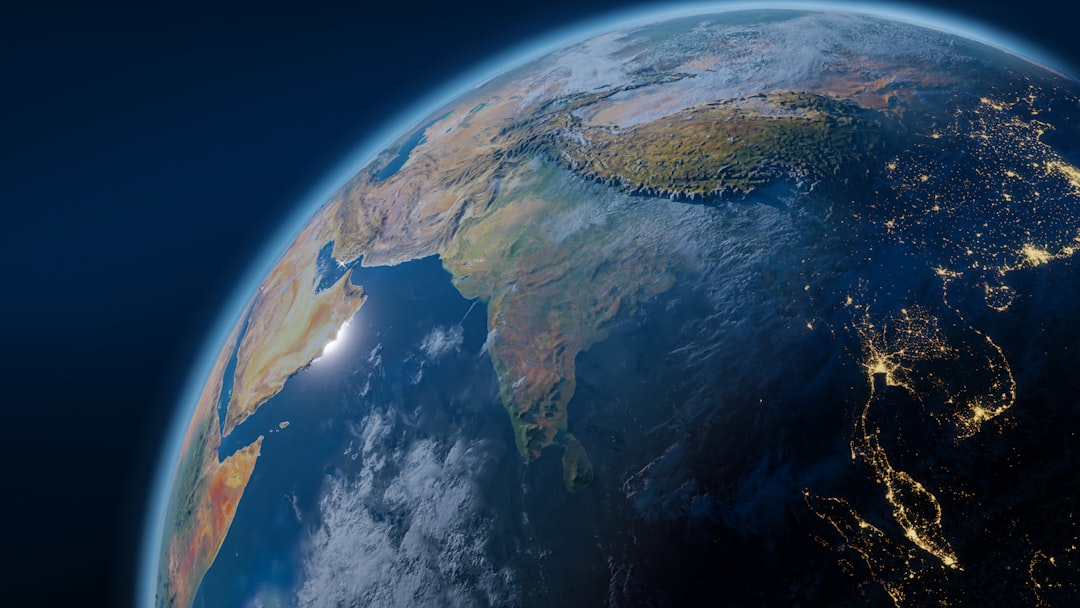
The Earth, a vibrant sphere teeming with life, is a constant source of awe and intrigue. Its intricate systems, from the deepest oceans to the highest mountains, have evolved over billions of years, creating a dynamic and interconnected planet. Unraveling the wonders of Earth science offers a profound understanding of our home, revealing the forces that shape its landscapes, fuel its life, and hold the keys to our future.
At the heart of Earth’s dynamic nature lies the theory of plate tectonics, a revolutionary concept that transformed our understanding of geology. This theory explains the large-scale motion of Earth’s lithosphere, the rigid outer shell, which is broken into a series of tectonic plates. These plates, like colossal rafts, float and move upon the semi-fluid asthenosphere beneath them, driven by the immense heat generated within the Earth’s interior.
The Driving Force: Mantle Convection
The engine powering plate tectonics is mantle convection. Deep within the Earth, radioactive decay and residual heat from the planet’s formation create plumes of molten rock that rise towards the surface. As these plumes reach the base of the lithosphere, they spread out horizontally, carrying heat and causing the overlying plates to move. Cooler, denser material then sinks back down, creating a continuous cycle of circulation that drives the plates’ relentless journey across the globe. This slow, inexorable movement, measured in centimeters per year, is responsible for many of Earth’s most dramatic geological features and phenomena.
The Boundaries That Shape Continents and Oceans
The interactions between these tectonic plates at their boundaries are the architects of our planet’s surface. There are three primary types of plate boundaries, each with its unique set of geological consequences:
Divergent Boundaries: The Birthplaces of New Crust
At divergent boundaries, plates move apart, allowing molten rock from the mantle to rise and fill the gap. This process, known as seafloor spreading, is most evident in the mid-ocean ridges, such as the Mid-Atlantic Ridge, where new oceanic crust is continuously generated. As magma erupts and cools, it forms new volcanic rock, pushing older crust away and widening the ocean basins. This process also occurs on land, forming rift valleys that can eventually evolve into new oceans, as seen in the East African Rift Valley.
Convergent Boundaries: Where Plates Collide and New Landforms Emerge
When tectonic plates collide, the geological consequences are often dramatic. The outcome depends on the types of plates involved:
Oceanic-Continental Convergence: The Realm of Subduction Zones
When an oceanic plate collides with a continental plate, the denser oceanic plate is forced beneath the lighter continental plate in a process called subduction. This creates deep ocean trenches and triggers volcanic activity along the edge of the continent as the subducting plate melts and rises to the surface. The Andes Mountains, a colossal mountain range rimming the western edge of South America, are a prime example of the majestic and powerful landscapes formed by oceanic-continental convergence. Earthquakes are also a common occurrence in these zones, releasing immense energy as the plates grind against each other.
Oceanic-Oceanic Convergence: The Formation of Island Arcs
When two oceanic plates converge, one plate subducts beneath the other, leading to the formation of volcanic island arcs. These chains of islands, such as the Mariana Islands in the western Pacific Ocean, are essentially underwater volcanoes that have grown to emerge above sea level. The volcanic activity associated with island arcs contributes to the formation of new land and can create stunning, albeit often volatile, environments.
Continental-Continental Convergence: The Majestic Uplift of Continents
The collision of two continental plates is a less dense affair. Since neither plate is dense enough to subduct significantly, the immense forces of collision cause the crust to buckle, fold, and uplift, creating the world’s most impressive mountain ranges. The Himalayas, the result of the collision between the Indian and Eurasian plates, are a testament to the sheer power of continental-continental convergence, continuously rising and reshaping the landscape.
Transform Boundaries: The Grinding Motion of Plates
At transform boundaries, plates slide past each other horizontally. There is no creation or destruction of crust, but the friction and stress generated as the plates move can lead to significant earthquakes. The San Andreas Fault in California, a classic example of a transform boundary, is a region where the Pacific Plate is sliding northward past the North American Plate, a motion that has shaped the landscape and poses a constant seismic threat.
In the realm of Earth science, understanding the complexities of our planet’s geography is essential, and a fascinating article that delves into this topic is available at this link. It explores the enigmatic Queen Maud Land coastline and unravels the Piri Reis mystery, shedding light on historical cartography and its implications for modern Earth science. For more insights, you can read the article here: Exploring the Enigmatic Queen Maud Land Coastline: Unraveling the Piri Reis Mystery.
The Breath of Our Planet: Atmospheric Science
The atmosphere, a blanket of gases surrounding Earth, is far more than just the air we breathe. It is a complex and dynamic system that regulates our planet’s temperature, shields us from harmful radiation, and drives weather patterns that shape our lives. Atmospheric science delves into the intricate workings of this vital envelope, uncovering the processes that govern climate and weather.
The Layers of the Sky: From Troposphere to Exosphere
The atmosphere is not a uniform entity but is divided into distinct layers, each with unique characteristics:
The Troposphere: Our Weather Makers
This is the lowest layer, extending from Earth’s surface up to about 10-15 kilometers. It is where all our weather occurs – clouds form, rain falls, and winds blow. Temperatures generally decrease with altitude in the troposphere.
The Stratosphere: The Ozone Shield
Above the troposphere lies the stratosphere, extending to about 50 kilometers. This layer is characterized by a temperature inversion, meaning temperatures increase with altitude. This is due to the presence of the ozone layer, which absorbs a significant portion of the Sun’s ultraviolet (UV) radiation, protecting life on Earth.
The Mesosphere: The Zone of Meteors
The mesosphere, extending to about 85 kilometers, is where most meteors burn up upon entering Earth’s atmosphere, creating the phenomenon of shooting stars. Temperatures here can drop dramatically, reaching the coldest points in the atmosphere.
The Thermosphere: The Realm of Satellites
The thermosphere, extending to about 600 kilometers, is a very thin layer where temperatures can become extremely high due to absorption of high-energy solar radiation. However, because the air is so thin, it would not feel hot to us. This is where many satellites orbit Earth.
The Exosphere: The Final Frontier
The outermost layer, the exosphere, gradually fades into outer space. It is composed of extremely rarefied gases and is the final boundary between Earth’s atmosphere and the vacuum of space.
The Dance of Air and Water: Weather and Climate
Weather and climate are intimately linked, representing the atmospheric conditions over short and long timescales, respectively.
Understanding Weather Phenomena: From Thunderstorms to Hurricanes
Atmospheric scientists study a vast array of weather phenomena, seeking to understand their formation, evolution, and impact. This includes investigations into:
Thunderstorms: The Power of Convection
The rapid upward movement of warm, moist air (convection) within the troposphere drives the formation of towering cumulonimbus clouds, the hallmark of thunderstorms. These storms are characterized by lightning, thunder, heavy rainfall, and sometimes hail and strong winds.
Tornadoes: The Vortex of Destruction
When atmospheric conditions are just right, particularly in supercell thunderstorms, rotating updrafts can intensify and stretch vertically, leading to the formation of tornadoes. These violently rotating columns of air can cause immense destruction in their path.
Hurricanes and Typhoons: The Giants of the Tropics
In tropical regions, the convergence of warm ocean waters and specific atmospheric conditions can lead to the development of large-scale rotating storms known as hurricanes (in the Atlantic and Northeast Pacific) or typhoons (in the Northwest Pacific). These powerful systems draw energy from the ocean’s heat and can unleash devastating winds, torrential rain, and storm surges.
The Long View: Climate Change and Its Drivers
Climate refers to the long-term average weather patterns of a region or the planet as a whole. Understanding climate is crucial for predicting future environmental conditions and addressing challenges like climate change.
The Greenhouse Effect: A Natural Necessity and a Growing Concern
The greenhouse effect is a natural process that warms Earth’s surface. Certain gases in the atmosphere, like carbon dioxide and methane, trap some of the Sun’s heat, preventing it from escaping back into space. While essential for maintaining a habitable temperature, the increased concentration of these greenhouse gases, primarily due to human activities like burning fossil fuels, is leading to an accelerated warming of the planet.
Measuring Climate Change: Data and Models
Scientists collect vast amounts of data from various sources, including weather stations, satellites, and ocean buoys, to monitor changes in temperature, precipitation, sea level, and ice cover. Sophisticated climate models are then used to simulate and predict future climate scenarios, helping us understand the potential impacts of ongoing climate change.
The Lifeblood of Our Planet: Hydrology and Oceanography

Water, in its various forms, is fundamental to life on Earth. Hydrology focuses on the study of water on land, including its distribution, movement, and quality, while oceanography explores the vast and complex world of our oceans.
The Water Cycle: A Continuous Journey
The water cycle, also known as the hydrologic cycle, is a continuous process of water evaporation, transpiration, condensation, precipitation, and runoff, ensuring a constant supply of fresh water across the globe.
Evaporation and Transpiration: Water’s Ascent
Evaporation is the process by which liquid water turns into water vapor and rises into the atmosphere, primarily from oceans, lakes, and rivers. Transpiration is the release of water vapor from plants into the atmosphere.
Condensation and Precipitation: Water’s Return
As water vapor rises and cools, it condenses into tiny water droplets or ice crystals, forming clouds. When these droplets or crystals become heavy enough, they fall back to Earth as precipitation in the form of rain, snow, sleet, or hail.
Runoff and Groundwater: Water’s Journey on and Beneath the Surface
Precipitation that does not evaporate or transpire flows over the land as surface runoff, collecting in streams, rivers, and lakes. Some water also infiltrates into the ground, becoming groundwater, which can be stored in aquifers for long periods.
The Oceans: Vast Reservoirs of Life and Climate Influence
Oceans cover over 70% of Earth’s surface and play a critical role in regulating global climate, supporting diverse ecosystems, and providing essential resources.
Ocean Currents: The Global Conveyor Belt
Ocean currents are large-scale movements of seawater, driven by a combination of wind, temperature, and salinity differences. These currents act like a global conveyor belt, transporting heat, nutrients, and marine organisms around the world, significantly influencing regional and global climate patterns. The Gulf Stream, for example, moderates the climate of Western Europe.
Marine Ecosystems: Biodiversity in the Deep
Oceans are home to an astonishing diversity of life, from microscopic plankton to the largest whales. Marine ecosystems, such as coral reefs, kelp forests, and the deep-sea trenches, are complex and interconnected webs of life, each with its unique inhabitants and ecological roles.
The Impact of Human Activities on Water Resources
Human activities, including pollution, over-extraction, and climate change, are placing immense pressure on both freshwater and marine resources. Understanding these impacts is crucial for sustainable water management and the preservation of aquatic ecosystems.
The Building Blocks of Our Planet: Mineralogy and Petrology

Minerals are the naturally occurring, inorganic solids that make up rocks, and petrology is the study of rocks. These fundamental components of Earth’s crust provide insights into the planet’s history, composition, and the processes that have shaped it.
The Diversity of Minerals: From Quartz to Diamonds
Minerals are defined by their unique chemical composition and crystal structure. This leads to an incredible diversity of minerals, each with distinct physical and chemical properties.
Identifying Minerals: Physical Properties
Geologists identify minerals based on a range of physical properties, including:
Hardness: Mohs Scale of Hardness
This scale ranks minerals based on their resistance to scratching, with diamond being the hardest (10) and talc the softest (1). This property is useful for distinguishing between different mineral samples.
Color and Streak: Visual Clues
While a mineral’s color can be variable, its streak – the color of its powdered form – is often a more consistent and diagnostic property.
Luster and Cleavage: The Way Light Reflects and Breaks
Luster describes how light reflects off the surface of a mineral, while cleavage refers to the tendency of a mineral to break along specific flat planes due to its internal atomic structure.
The Genesis of Minerals: Formation Processes
Minerals form through various geological processes:
Crystallization from Magma: The Birth of Igneous Minerals
When molten rock (magma or lava) cools and solidifies, atoms arrange themselves into orderly crystal structures, forming igneous minerals. The rate of cooling influences the size of the crystals.
Precipitation from Water: The Formation of Sedimentary Minerals
Minerals can also precipitate out of water solutions. For example, salt deposits form when water evaporates, leaving behind dissolved minerals.
Metamorphism: Transformation Under Pressure and Heat
Minerals can also be transformed into new minerals when rocks are subjected to intense heat and pressure deep within the Earth, a process known as metamorphism.
The Rock Cycle: A Continuous Transformation
Rocks are not static entities but are constantly undergoing transformation through the rock cycle, a continuous process of creation, destruction, and recycling.
Igneous Rocks: Born from Fire
Igneous rocks are formed from the cooling and solidification of molten rock. Intrusive igneous rocks, like granite, cool slowly beneath the surface, resulting in larger crystals. Extrusive igneous rocks, like basalt, cool rapidly at the surface, forming finer-grained textures.
Sedimentary Rocks: Layers of Time
Sedimentary rocks are formed from the accumulation and cementation of mineral and organic particles, called sediment. These rocks often preserve evidence of past environments, such as fossils. Examples include sandstone, shale, and limestone.
Metamorphic Rocks: Changed by Heat and Pressure
Metamorphic rocks are formed when existing igneous, sedimentary, or even other metamorphic rocks are subjected to intense heat, pressure, or chemical reactions, causing their mineral composition and texture to change. Marble, formed from limestone, and schist, derived from shale, are common examples.
In the realm of Earth science, understanding the impact of industrial growth on the environment is crucial. A recent article discusses how Mexico is emerging as a significant manufacturing hub, which raises important questions about sustainability and resource management. For a deeper insight into this topic, you can explore the article on Mexico’s manufacturing landscape here. This connection between industrial development and environmental science highlights the need for responsible practices in the face of rapid economic changes.
The Living Earth: Paleontology and Ecology
| Topic | Explanation |
|---|---|
| Plate Tectonics | The theory that Earth’s outer shell is divided into several plates that glide over the mantle. |
| Rock Cycle | The process by which rocks are formed, altered, destroyed, and reformed through geological processes. |
| Weathering and Erosion | The processes that break down and carry away rocks and soil, leading to landscape changes. |
| Climate Change | The long-term alteration of temperature and typical weather patterns in a place. |
Earth science is not solely about the inanimate aspects of our planet; it also encompasses the study of life, both past and present. Paleontology unravels the history of life through the fossil record, while ecology investigates the intricate relationships between living organisms and their environments.
The Fossil Record: A Window into Earth’s Past
Fossils, the preserved remains or traces of ancient organisms, are invaluable to paleontologists. They provide direct evidence of life’s evolution, extinct species, and past environmental conditions.
Types of Fossils: Preserving Life’s Imprints
Fossils can take many forms:
Body Fossils: Direct Preservation
These fossils consist of the actual remains of organisms, such as bones, shells, teeth, or even fossilized plants. Preservation often occurs when organisms are rapidly buried in sediment, preventing decomposition.
Trace Fossils: Evidence of Activity
Trace fossils are not the direct remains of an organism but rather evidence of their past activity. This includes footprints, burrows, nests, and fossilized feces (coprolites). They offer insights into an organism’s behavior and lifestyle.
Interpreting the Past: What Fossils Tell Us
The study of fossils allows scientists to:
Reconstruct Evolutionary Histories
By examining fossils from different geological time periods, paleontologists can trace the evolutionary pathways of life, identifying the ancestors of modern species and understanding the processes of adaptation and diversification.
Understand Past Environments
The types of fossils found in a particular rock layer can provide clues about the ancient environment. For example, the presence of marine fossils indicates that the area was once submerged under water.
Date Geological Strata
Certain fossils, known as index fossils, are found in specific geological periods and can be used to date rock layers and correlate rock formations across different regions.
Ecology: The Interconnectedness of Life
Ecology explores the complex web of interactions between living organisms and their physical environment. This field is crucial for understanding how ecosystems function, the impact of human activities on biodiversity, and the challenges of conservation.
Ecosystems: Communities in Action
An ecosystem is a community of living organisms (biotic factors) interacting with their non-living environment (abiotic factors).
Biotic Factors: The Living Components
These include all living things within an ecosystem, such as plants, animals, fungi, and microorganisms. Their interactions include competition for resources, predation, and symbiosis.
Abiotic Factors: The Non-Living Elements
These are the physical and chemical aspects of the environment, such as sunlight, temperature, water, soil, and nutrients. They significantly influence the types of organisms that can survive and thrive in a particular ecosystem.
Biodiversity and Its Importance
Biodiversity refers to the variety of life on Earth at all its levels, from genes to ecosystems. It is essential for ecosystem stability, resilience, and the provision of vital ecosystem services, such as clean air and water, pollination, and climate regulation.
Conservation and Sustainable Practices
Understanding the delicate balance of ecosystems and the threats posed by habitat destruction, pollution, and climate change drives conservation efforts. The goal is to protect biodiversity and ensure the long-term health of our planet’s natural systems, promoting sustainable practices that meet human needs without compromising the ability of future generations to meet their own.
In conclusion, Earth science is a vast and multifaceted discipline that reveals the interconnectedness of our planet’s systems. From the deep forces shaping its continents to the atmospheric ballet that dictates our weather, and the life that has evolved over eons, each branch of Earth science contributes to a holistic understanding of our dynamic home. By unraveling these wonders, humanity gains not only knowledge but also the critical insight necessary for responsible stewardship of the Earth and its precious resources.

When the Mediterranean Became a Desert | The Messinian Salinity Crisis Explained
FAQs
What is Earth science?
Earth science is the study of the Earth and its processes, including the atmosphere, hydrosphere, geosphere, and biosphere. It encompasses a wide range of scientific disciplines, such as geology, meteorology, oceanography, and environmental science.
What are the main branches of Earth science?
The main branches of Earth science include geology, meteorology, oceanography, and environmental science. Geology focuses on the study of the Earth’s solid materials and processes, while meteorology deals with the study of the atmosphere and weather. Oceanography is the study of the oceans and marine life, and environmental science focuses on the interactions between humans and the environment.
How does Earth science impact our daily lives?
Earth science impacts our daily lives in numerous ways. It helps us understand and predict natural disasters such as earthquakes, tsunamis, and hurricanes. It also plays a crucial role in managing natural resources, understanding climate change, and protecting the environment.
What are some key concepts in Earth science?
Some key concepts in Earth science include plate tectonics, the water cycle, the rock cycle, and the greenhouse effect. Plate tectonics explains the movement of the Earth’s lithosphere, while the water cycle describes the movement of water through the atmosphere, hydrosphere, and geosphere. The rock cycle illustrates the processes through which rocks are formed, altered, and recycled, and the greenhouse effect explains how certain gases trap heat in the Earth’s atmosphere.
How can we contribute to the field of Earth science?
There are several ways to contribute to the field of Earth science. Individuals can pursue careers in Earth science-related fields, participate in citizen science projects, support environmental conservation efforts, and stay informed about current environmental issues. Additionally, promoting sustainable practices and reducing our environmental impact can also contribute to the advancement of Earth science.