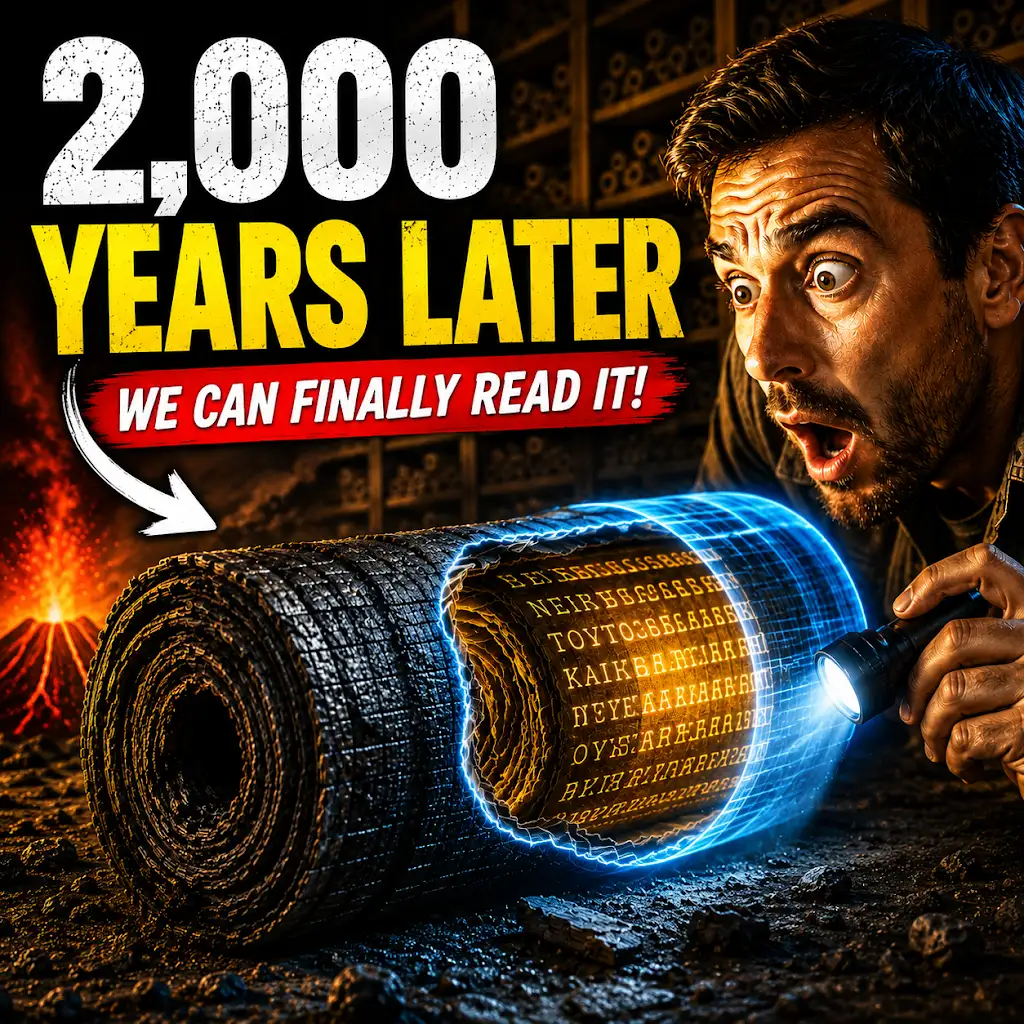
The faint scent of dust, an aroma as ancient as the papyrus itself, clung to the air in the hushed laboratory. For centuries, the Herculaneum papyri, charred and brittle remnants of a once-vibrant library, had lain in tantalizing obscurity. Recovered from the volcanic ash that entombed the Roman city of Herculaneum during the eruption of Mount Vesuvius in 79 AD, these scrolls presented an almost insurmountable challenge to scholars. Their delicate nature, fused by intense heat and time, rendered traditional unrolling techniques impossible, risking the complete destruction of their contents. Yet, with the advent of cutting-edge artificial intelligence, humanity has taken a monumental leap towards unlocking the secrets held within these 2,000-year-old fragments, heralding a new era of classical scholarship.
The story of the Herculaneum papyri is one of both disaster and remarkable preservation. Buried under layers of volcanic material, the city of Herculaneum, unlike its more famous neighbor Pompeii, was not merely covered by ash but by a pyroclastic flow – a superheated current of gas and volcanic debris. This intense heat caused the papyrus scrolls to carbonize, effectively baking them into solid blocks. While this process destroyed the organic structure of the papyrus, it also, paradoxically, preserved the ink inscriptions within. However, this preservation came at a steep price: the scrolls became incredibly fragile, almost glass-like in their brittleness.
Early Attempts at Decipherment
The initial excavations of Herculaneum in the 18th century unearthed thousands of these scrolls. Early attempts to decipher them were fraught with difficulty. The most common method involved painstakingly trying to unroll the scrolls, a process that often resulted in their disintegration. When segments did reveal readable text, it was often fragmented and incomplete, requiring extensive linguistic and historical expertise to interpret. Despite these challenges, a significant portion of the collection has been cataloged, revealing a treasure trove of philosophical, literary, and scientific works from the ancient world, many of which are otherwise lost to history.
The Philodemus Project: A Turning Point
One of the most significant early efforts to understand these texts was the Philodemus Project, an international collaboration focused on deciphering and translating the scrolls attributed to the Epicurean philosopher Philodemus of Gadara. This project, while achieving remarkable results through meticulous manual work and specialized imaging techniques, highlighted the sheer scale of the challenge. The sheer volume of the papyri meant that even with dedicated teams, the process of decipherment would take centuries, if not millennia. It was in this context of a seemingly insurmountable task that the potential of artificial intelligence began to emerge.
The Dawn of AI-Powered Decipherment
The breakthrough in deciphering the Herculaneum papyri did not come from a single eureka moment, but from a confluence of technological advancements, particularly in the field of artificial intelligence and advanced imaging. The idea of employing AI to analyze complex, damaged texts was ambitious, but the potential rewards – reclaiming lost knowledge – were immense. Researchers began to explore how machine learning algorithms could be trained to recognize patterns in the faint traces of ink, patterns that were often invisible to the naked eye or traditional imaging methods.
Machine Learning and Pattern Recognition
At its core, the AI approach relies on sophisticated machine learning algorithms. These algorithms are trained on vast datasets, learning to identify specific features and patterns. In the case of the Herculaneum papyri, this involved training the AI to recognize the unique characteristics of ancient ink on carbonized papyrus. This includes variations in ink density, subtle color differences, and the characteristic way the ink has seeped into the damaged fibers. The AI is essentially taught to “see” what the human eye struggles to perceive.
Segmentation and Ink Detection
A crucial step in the AI-powered decipherment process is the ability to accurately segment the papyrus into individual letters and words. The carbonization process often fuses the papyrus fibers, making it difficult to distinguish between individual characters. AI algorithms, particularly those employing deep learning techniques like convolutional neural networks (CNNs), excel at this type of image segmentation. They can learn to identify the boundaries of ink strokes even when they are blurred or fragmented, effectively separating the textual information from the damaged background.
The “Virtual Unrolling” Concept
The AI doesn’t physically unroll the scrolls, which remains a highly destructive process. Instead, it performs a kind of “virtual unrolling” through advanced imaging and computational analysis. High-resolution scans, often utilizing X-ray or infrared imaging, capture subtle variations in density and composition. The AI then analyzes these scans, reconstructing the likely original layout and identifying areas where ink is present. This computational reconstruction allows researchers to view the text in a more organized and readable format, without the physical risk to the artifact.
The “Volcanic Victory” Project and its AI
The most significant recent success in AI-powered decipherment is attributed to the “Volcanic Victory” project, a collaborative effort that has pushed the boundaries of what was thought possible. This project brought together a multidisciplinary team of computer scientists, papyrologists, and classical scholars, united by the common goal of unlocking the hidden narratives within the Herculaneum scrolls. Their work has demonstrated the transformative power of AI in this specialized field.
The Role of Trace Ink Detection
The core of the “Volcanic Victory” project’s success lies in its ability to detect “trace ink” – the faint remnants of ink that are almost imperceptible to human vision. The AI algorithms were trained to identify subtle variations in the carbonized papyrus that indicate the presence of ink. This involves analyzing the texture, density, and reflectivity of the material at a microscopic level. The AI can differentiate between naturally occurring irregularities in the papyrus and the deliberate application of ink.
Deep Learning for Character Recognition
Once the trace ink is identified and segmented, the next challenge is to recognize the individual characters. Here, deep learning models, specifically recurrent neural networks (RNNs) and transformer networks, play a vital role. These models are adept at processing sequential data, making them ideal for deciphering text. They can learn the intricacies of ancient Greek and Latin script, even when characters are distorted, incomplete, or overlapping. The AI essentially learns to predict the most likely character based on the surrounding ink patterns and its training on existing ancient texts.
The Breakthrough: Reading Previously Unreadable Sections
The “Volcanic Victory” project achieved a monumental breakthrough by successfully reading significant portions of papyrus scrolls that had previously been deemed unreadable. This included segments of philosophical texts that offered new insights into ancient thought and potentially revolutionary perspectives on topics such as ethics, metaphysics, and the nature of reality. The ability to access these lost texts has already begun to reshape our understanding of classical antiquity.
The Implications for Historical and Literary Studies
The successful application of AI to deciphering the Herculaneum papyri is not merely a technical achievement; it carries profound implications for the fields of historical and literary studies. For centuries, scholars have grappled with the limitations imposed by lost texts and the challenges of reconstructing ancient narratives from fragmented evidence. AI offers a powerful new tool to overcome these limitations, opening up previously inaccessible avenues of research.
Reclaiming Lost Philosophical Works
The Herculaneum papyri are particularly rich in philosophical texts, many of which are not found in other surviving sources. The ability to read these lost works allows scholars to gain a more comprehensive understanding of ancient philosophical schools, their debates, and their evolution. This includes potentially discovering new doctrines, alternative interpretations of existing theories, and the intellectual contributions of philosophers whose works have been entirely lost to time. The AI’s ability to decipher previously illegible sections means that entire schools of thought, or significant contributions within known schools, could be resurrected.
Expanding Our Understanding of Ancient Literature
Beyond philosophy, the scrolls also contain literary works, including poetry, drama, and historical accounts. The decipherment of these texts can shed new light on the literary landscape of the Roman world, revealing new authors, genres, and stylistic innovations. It can also provide us with a more nuanced understanding of the reception and influence of known literary works. The rediscovery of even a single lost play or epic poem would be a literary event of immense significance.
Bridging Gaps in Historical Narratives
The historical texts found within the Herculaneum papyri offer firsthand accounts and perspectives on events and societies of the Roman period. The AI’s ability to unlock these hidden narratives can help to fill gaps in our existing historical knowledge, providing new details about political events, social structures, economic practices, and daily life in the ancient world. This can lead to a more accurate and comprehensive understanding of Roman history and its broader impact on Western civilization.
Future Prospects and Challenges
The success of AI in deciphering the Herculaneum papyri is a promising indicator of future possibilities, but it also presents new challenges and avenues for development. The technology is still evolving, and the sheer volume of remaining unread papyri means that the work is far from over. Continued innovation and collaboration will be crucial in the years to come.
Continued Advancement of AI Algorithms
The algorithms employed in the “Volcanic Victory” project are state-of-the-art, but the field of AI is constantly advancing. Future iterations of these algorithms will likely be even more sophisticated, capable of handling even greater levels of damage and ambiguity in the papyri. Research into new forms of neural networks, natural language processing techniques, and advanced image recognition will undoubtedly lead to further improvements in decipherment accuracy and speed.
The Need for Interdisciplinary Collaboration
The success of the “Volcanic Victory” project underscores the critical importance of interdisciplinary collaboration. Computer scientists and AI experts must continue to work hand-in-hand with papyrologists, linguists, and historians. This ensures that the AI is trained on relevant data, that its outputs are interpreted accurately within their historical and linguistic context, and that the scientific advancements are guided by scholarly needs and priorities.
Ethical Considerations and Preservation Efforts
As AI becomes more adept at deciphering these fragile artifacts, ethical considerations regarding their handling and preservation become paramount. While AI offers a non-destructive method for accessing their content, the physical scrolls themselves remain incredibly vulnerable. Continued investment in advanced preservation techniques, secure storage, and responsible access for researchers will be essential. The goal is not just to read the past, but to ensure its continued existence for future generations. The digital reconstruction of the texts, made possible by AI, also raises questions about digital ownership and accessibility of this recovered knowledge.
The Herculaneum papyri, once silent witnesses to the destructive power of nature, are now speaking once more, their ancient voices amplified by the ingenuity of artificial intelligence. This groundbreaking achievement is not just a triumph of technology; it is a profound testament to humanity’s enduring quest for knowledge, a quest that continues to uncover the treasures of our collective past, enriching our understanding of ourselves and the world we inhabit.