
The Whispers of the Desert: AI’s New Gaze on the Nazca Lines
The arid plains of the Nazca Desert in southern Peru hold an enduring enigma. For centuries, the colossal geoglyphs etched into the earth by the ancient Nazca civilization have captivated scholars and the public alike. These intricate designs, depicting animals, plants, and geometric shapes, are so vast they can only be fully appreciated from high above. While traditional archaeological methods have painstakingly unveiled some of these wonders, the sheer scale of the Nazca landscape and the subtle nature of many of the figures have meant that countless others likely lie hidden, waiting to be discovered. Now, a revolutionary new approach, spearheaded by artificial intelligence, is poised to dramatically accelerate this process. AI algorithms, trained on vast datasets of satellite imagery and archaeological knowledge, are beginning to “see” the desert in ways previously unimaginable, flagging potential new Nazca geoglyphs with unprecedented accuracy and efficiency. This marks a pivotal moment in our understanding of this enigmatic culture, promising to unveil a wealth of previously unknown information about their beliefs, practices, and their profound connection to the land.
The history of Nazca discovery is a testament to human curiosity and technological advancement. Early aerial surveys, particularly those conducted by pilots in the early 20th century, were instrumental in revealing the true nature and scale of these ancient earthworks. Subsequent generations of archaeologists, armed with increasingly sophisticated mapping techniques and photographic equipment, have meticulously documented and studied the known geoglyphs, leading to a rich body of research. However, the vastness of the desert, estimated to span over 1,700 square kilometers, presents a significant challenge. Many figures are faint, partially eroded, or situated in less accessible areas, making their detection a laborious and often serendipitous process. The dream of a comprehensive catalog of Nazca geoglyphs has always been hampered by the sheer immensity of the task. AI, with its capacity for rapid pattern recognition across enormous datasets, offers a powerful new tool to overcome these limitations. By analyzing satellite imagery at a scale and speed far beyond human capability, these algorithms can identify subtle anomalies and recurring patterns that might indicate the presence of a geoglyph, guiding human researchers to promising new sites for further investigation.
The Analytical Powerhouse: How AI Processes Desert Landscapes
The application of artificial intelligence to the Nazca geoglyphs is not a matter of simply feeding images into a computer. It involves a sophisticated multi-stage process that leverages machine learning and computer vision techniques. At its core, the AI is trained to recognize specific visual characteristics that define a Nazca geoglyph. This includes identifying linear features, changes in soil color and texture indicative of disturbed earth, and the characteristic styles and proportions of known Nazca figures. The initial phase involves preparing a massive dataset of high-resolution satellite imagery of the Nazca region. This imagery is then meticulously annotated by archaeologists, who label existing geoglyphs and their key features. This labeled data serves as the “training ground” for the AI. Different machine learning models, such as Convolutional Neural Networks (CNNs), are particularly well-suited for image analysis. These networks are designed to automatically learn hierarchical representations of visual features, from simple edges and corners to complex shapes and textures.
Feature Extraction and Pattern Recognition
Once trained, the AI begins its search across the unannotated satellite imagery. The process involves several key steps. First, feature extraction is performed, where the algorithm identifies salient visual elements within the imagery. This might include detecting subtle differences in vegetation cover, variations in the reflectivity of the soil surface, or the presence of straight lines or curves that deviate from the natural topography. Subsequently, pattern recognition algorithms come into play. These algorithms look for combinations of extracted features that are consistent with known Nazca geoglyph characteristics. For instance, the AI might identify a series of interconnected lines forming a serpentine shape, or a distinct arrangement of lighter-colored stones that corresponds to the outline of a known animal figure. The AI is not just looking for isolated features; it’s trained to understand the context and spatial relationships between these features, mirroring the way a human archaeologist would interpret the landscape.
Candidate Generation and Verification
The output of this automated analysis is a list of “candidate boxes.” These are areas within the satellite imagery that the AI has flagged as having a high probability of containing a Nazca geoglyph. It is crucial to understand that these are not definitive discoveries. The AI acts as a highly efficient filter, narrowing down the vast search area to a manageable number of promising locations. The next critical step involves human verification. Archaeologists and researchers then meticulously examine these flagged candidate boxes. They use their expertise to assess whether the identified features are indeed man-made geoglyphs or natural geological formations. This often involves comparing the candidate with known Nazca iconography, considering the surrounding topography, and, if possible, conducting ground-based surveys. This iterative process of AI flagging and human validation is essential for ensuring the accuracy and reliability of the discoveries. The AI’s role is to augment human capabilities, not to replace them, leading to a more efficient and comprehensive approach to archaeological exploration.
In recent discussions surrounding the intriguing Nazca candidate boxes, researchers have drawn parallels to the properties of ancient materials, such as the Egyptian blue pigment. This pigment, known for its vibrant hue and historical significance, has been the subject of various studies that explore its composition and applications in art and architecture. For more insights into the fascinating characteristics of Egyptian blue, you can read the article here: Unveiling the Properties of Egyptian Blue Pigment.
Beyond the Familiar: New Forms and Untold Stories
The AI-driven exploration of the Nazca Desert is already yielding exciting results, pushing the boundaries of our understanding of this ancient culture. While the iconic figures like the hummingbird, spider, and monkey have long been central to Nazca studies, the new AI-flagged candidates suggest a broader and perhaps more complex artistic and symbolic repertoire than previously appreciated. These newly identified potential geoglyphs are not always direct repetitions of the well-known motifs. Instead, they sometimes present variations, novel forms, or a greater emphasis on abstract geometric patterns. This suggests a dynamic and evolving artistic tradition within the Nazca civilization, capable of innovation and exploration. The discovery of new figures, especially those that deviate from established typologies, opens up avenues for re-evaluating existing hypotheses about the purpose and meaning of these colossal artworks.
Unveiling Novel Iconography
One of the most significant outcomes of AI-assisted discovery is the identification of entirely new iconographic elements. Researchers are encountering potential geoglyphs that do not neatly fit into the existing catalog of known Nazca creatures or symbols. These could include less anthropomorphic or zoomorphic figures, perhaps representing abstract concepts, deities, or natural phenomena that were important to the Nazca people but have not been previously documented in such large-scale form. The analysis of these novel forms requires a multidisciplinary approach, drawing on comparative mythology, ethnography, and environmental studies to decipher their potential meanings. The sheer volume of potential discoveries means that a re-evaluation of established interpretations is not only possible but necessary. Each new flagged area represents a puzzle piece that could fundamentally alter our understanding of the Nazca worldview.
Recent discoveries regarding AI-flagged Nazca candidate boxes have sparked significant interest in the intersection of technology and archaeology. These findings highlight how advanced algorithms can assist researchers in identifying potential sites of historical importance. For those interested in understanding the broader implications of environmental changes on archaeological sites, an insightful article discusses the impact of rising sea levels and extreme weather on cultural heritage. You can read more about it in this related article.
Geometric Complexity and Potential Astronomical Alignments
Beyond representational figures, the AI is also highlighting a greater prevalence of complex geometric patterns. These might include intricate lattices, spirals, or large-scale arrangements of lines and shapes that lack immediate representational meaning. The Nazca people were known for their sophisticated understanding of geometry and their potential astronomical observations. These new geometric discoveries could offer further evidence of this, potentially serving as calendrical markers, astronomical observatories, or even complex symbolic representations of cosmic order. The precise alignment of these geometric designs with celestial events, such as solstices or equinoxes, is a key area of investigation. AI’s ability to analyze large-scale patterns and identify precise alignments in the data could prove invaluable in uncovering these hidden astronomical connections, potentially revealing a deeper level of scientific knowledge within the Nazca culture. The exploration of these geometric wonders promises to shed light on their understanding of the cosmos and their place within it.
Regional Variations and Cultural Connectivity
As AI continues to scan the vast Nazca landscape, it is also beginning to reveal potential regional variations in geoglyph styles and motifs. Certain areas might show a higher concentration of specific types of figures, or distinct stylistic differences that could indicate localized traditions or the influence of different social groups. This could lead to a more nuanced understanding of the social and political organization of the Nazca civilization, potentially revealing evidence of distinct communities or even interregional interactions. The identification of these variations is crucial for moving beyond a monolithic view of Nazca culture and appreciating its internal diversity. Furthermore, by comparing newly discovered geoglyphs with those found in neighboring regions, researchers may uncover evidence of cultural exchange and influence, painting a richer picture of the ancient Andean world. The AI’s broad scan offers the potential to map these cultural landscapes with unprecedented detail, revealing a more interconnected ancient Peru.
The Human Element: Archaeologists and AI as Partners

The integration of artificial intelligence into archaeological research is not about replacing human expertise but rather about augmenting it. The process of discovering and interpreting the Nazca geoglyphs remains a fundamentally human endeavor, with archaeologists and researchers playing a vital role in every stage. AI acts as an invaluable tool, dramatically increasing the efficiency and scope of the search, but it is the human mind that brings context, critical thinking, and the ability to discern meaning. This partnership between humans and machines represents a new frontier in archaeological exploration, promising to unlock secrets that might otherwise remain buried beneath the desert sands for generations to come. The delicate dance between algorithmic analysis and human intuition is the key to unlocking the full potential of these AI-driven discoveries.
Guiding the Ground Teams: From Pixels to Pedras
The AI-generated “candidate boxes” serve as precise navigational guides for human archaeologists. Instead of embarking on vast, potentially fruitless expeditions across the desert, ground teams can now focus their efforts on specific, high-probability locations identified by the AI. This significantly optimizes resource allocation, saving time, money, and effort. Once on the ground, archaeologists use their extensive knowledge of the Nazca culture, their understanding of excavation techniques, and their keen observational skills to verify the AI’s findings. They examine the soil, the arrangement of stones, and the subtle topographical anomalies that the AI has flagged. This direct interaction with the potential geoglyphs allows for a deeper understanding of their construction, materials, and immediate context. The transition from digital pixels on a screen to tangible archaeological evidence on the ground is a critical and exciting part of the discovery process.
Interpretation and Contextualization: The Archaeologist’s Crucial Role
Once a potential geoglyph is confirmed as man-made, the archaeologist’s role shifts to interpretation. The AI can identify a shape, but it cannot imbue it with meaning. This is where human expertise becomes indispensable. Archaeologists draw upon their knowledge of Nazca iconography, religious beliefs, social structures, and astronomical practices to understand what these newly discovered figures might have represented. They consider their size, orientation, proximity to other geoglyphs or settlements, and any associated artifacts found nearby. This contextualization is what transforms a flagged anomaly into a meaningful discovery. The AI can identify a pattern, but it is the archaeologist who can weave that pattern into the larger tapestry of Nazca history and culture, generating hypotheses and advancing our understanding of this enigmatic civilization. This collaborative approach ensures that discoveries are not merely cataloged but are deeply understood.
The Ethical Dimensions of AI in Archaeology
The increasing reliance on AI in archaeological discovery also brings with it important ethical considerations. Archaeologists must ensure that the algorithms used are transparent and unbiased, and that the data used for training is representative and ethically sourced. Furthermore, the preservation of these newly discovered sites is paramount. As AI becomes more adept at identifying sensitive areas, responsible management plans need to be in place to protect them from damage, whether accidental or intentional. The excitement of discovery must be tempered with a commitment to the long-term stewardship of these invaluable cultural heritage sites. The ethical framework surrounding AI in archaeology is still evolving, and it is crucial for researchers to engage in ongoing dialogue and establish best practices to ensure that this powerful technology is used responsibly and for the benefit of both scientific inquiry and cultural preservation.
Future Horizons: Expanding the AI Gaze
The application of artificial intelligence to the Nazca geoglyphs is still in its nascent stages, and the potential for future discoveries is immense. As AI technology continues to advance and as more data becomes available, the scope and sophistication of these analyses will undoubtedly increase. This promises to unlock even deeper layers of understanding about the Nazca civilization and their extraordinary achievements. The current success is just the beginning of a transformative era in archaeological exploration, one where the whispers of the desert can be heard with greater clarity than ever before. The ongoing development of AI tools and techniques will undoubtedly push the boundaries of what we can learn from these ancient landscapes.
Enhancing Algorithmic Sophistication
Future developments in AI will likely see the creation of more sophisticated algorithms capable of identifying even subtler geoglyphs and distinguishing them more effectively from natural formations. This could involve incorporating additional data sources, such as ground-penetrating radar or thermal imaging, into the AI’s analytical framework. Furthermore, advancements in natural language processing could enable AI to analyze existing archaeological texts and historical records, cross-referencing them with visual data to generate more informed interpretations. The ability of AI to learn and adapt over time means that its effectiveness will only grow as it encounters and analyzes more data, constantly refining its ability to “see” the past. The continuous improvement of these analytical tools will lead to a more comprehensive and nuanced understanding of the Nazca legacy.
The Potential for Global Applications
While the focus has been on the Nazca Desert, the principles and technologies employed in this project have the potential to revolutionize archaeological discovery worldwide. From identifying ancient settlements in dense rainforests to uncovering submerged civilizations, AI can be adapted to analyze diverse landscapes and uncover hidden heritage. This could lead to a global resurgence in archaeological exploration, revealing the lost stories and forgotten peoples of countless cultures. The success in Nazca serves as a powerful proof-of-concept, demonstrating the transformative power of AI in archaeological research. The lessons learned here can be applied to similar challenges in other regions, fostering a new era of global archaeological discovery. The application of AI in this field is not limited by geography; its potential to illuminate the human past is truly universal.
A New Chapter in Understanding Ancient Peru
The AI-flagged Nazca candidate boxes represent not just new discoveries, but the dawn of a new era in understanding ancient Peru. By accelerating the process of identification and offering fresh perspectives on previously unknown figures, AI is empowering archaeologists to reconstruct a more complete and nuanced picture of the Nazca civilization. This technology is allowing us to move beyond speculation and towards evidence-based understanding, revealing the ingenuity, artistry, and deep spiritual connections of a people who left an indelible mark on the landscape. The desert, once a silent keeper of secrets, is now beginning to share its stories, guided by the intelligent gaze of artificial intelligence, and interpreted by the enduring wisdom of human curiosity. The ongoing partnership between human intellect and artificial intelligence promises to unveil the full breadth of this remarkable ancient culture, ushering in a profound and exciting new chapter in our understanding of the Andean past.
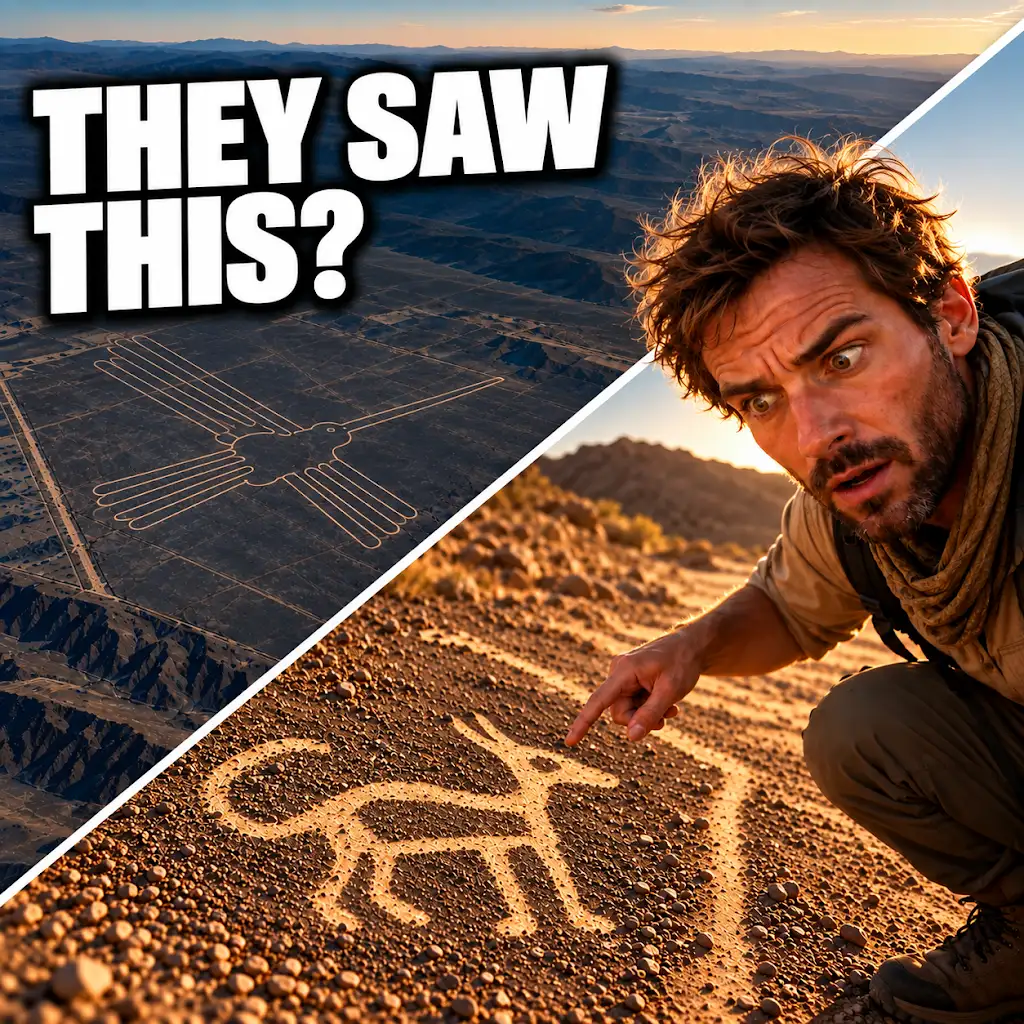
AI Found New Nazca Drawings—Could People See Them from the Ground?
FAQs
What are Nazca candidate boxes?
Nazca candidate boxes are mysterious geometric shapes found in the Nazca Desert in Peru. They are believed to have been created by the ancient Nazca people between 500 BC and 500 AD.
What is AI flagging in relation to Nazca candidate boxes?
AI flagging refers to the use of artificial intelligence technology to identify and analyze patterns or anomalies in the Nazca candidate boxes. This technology can help researchers better understand the purpose and significance of these ancient geoglyphs.
How are AI algorithms used to study Nazca candidate boxes?
AI algorithms are used to process large amounts of data collected from aerial surveys and satellite imagery of the Nazca Desert. These algorithms can detect subtle patterns and variations in the candidate boxes that may not be visible to the naked eye.
What have researchers discovered through AI analysis of Nazca candidate boxes?
Researchers have discovered new candidate boxes and variations in existing ones through AI analysis. This has led to new insights into the design and layout of the geoglyphs, as well as potential connections to astronomical events or religious practices of the Nazca people.
Why are Nazca candidate boxes significant?
The Nazca candidate boxes are significant because they are part of the larger Nazca Lines, a UNESCO World Heritage Site. These geoglyphs are considered one of the most important archaeological sites in the world and have puzzled researchers for decades due to their size, complexity, and purpose.