
The echoes of early American history are often shrouded in myth and conjecture, particularly when it comes to the pivotal figures who bridged the chasm between indigenous peoples and European colonists. Among these, Pocahontas stands as an enduring, albeit often misunderstood, icon. For centuries, her story has been filtered through a lens of romanticized legend, obscuring the complexities of her life and her true lineage. Recent scholarly endeavors, however, are beginning to unravel these historical knots, offering fresh perspectives on Pocahontas’s heritage and shedding new light on the intricate cultural tapestry of the Powhatan Confederacy. This exploration delves into these groundbreaking insights, seeking to move beyond popular narratives and embrace a more nuanced understanding of this remarkable woman and her origins.
Unearthing the Powhatan World
The early 17th century marked a period of unprecedented contact and conflict between the English settlers of Jamestown and the indigenous inhabitants of the region, collectively known as the Powhatan. Understanding Pocahontas’s origins necessitates a deep dive into the social, political, and familial structures of the Powhatan people, a complex network of Algonquian-speaking tribes united under the paramount chief, Powhatan. Far from a monolithic entity, the Confederacy was a dynamic and sophisticated society with its own intricate laws, spiritual beliefs, and methods of governance. The prevailing colonial accounts, often written from a biased European perspective, frequently painted a simplistic and often dehumanizing picture of the indigenous populations, making it challenging to glean accurate information about their internal workings. Modern archaeological findings and a re-examination of indigenous oral traditions, where accessible, are instrumental in painting a more authentic portrait of this vibrant world.
The Role of Chief Powhatan
Chief Powhatan, whose birth name was Wahunsenacawh, was not merely a chieftain but a sagacious leader who commanded respect and allegiance from at least thirty distinct tribes. His power was built not on brute force alone, but on a shrewd understanding of diplomacy, alliances, and the strategic use of resources. He inherited a position of influence and expanded it significantly through astute political maneuvering and the assimilation of conquered tribes. His relationships with his many children, including his favorite daughter Matoaka – known to the English as Pocahontas – were central to maintaining his authority and ensuring the continuity of his legacy. The English perception of Powhatan as a singular, almost kingly figure, while containing a kernel of truth in his paramount authority, failed to capture the intricate web of familial obligations and tribal autonomies that characterized his rule. His interactions with the colonists were not simply those of a hostile warrior but of a calculating leader assessing a new and potentially disruptive force in his domain.
The Extended Kinship Networks
The concept of family within the Powhatan Confederacy extended far beyond the nuclear unit. Kinship was traced through matrilineal lines, meaning that lineage and inheritance were passed down through the mother. This is a crucial point often overlooked by historians relying solely on European patriarchal understandings of family. A child’s maternal uncle, for instance, often held significant authority and responsibility within the extended family structure. Pocahontas, as the daughter of Chief Powhatan, was therefore a woman of considerable status, not just through her father’s position but through her maternal lineage as well. This understanding of kinship is vital for interpreting her interactions with the English, as it sheds light on the alliances and obligations that shaped her life and her movements. The arrival of the English disrupted these established networks, forcing the Powhatan to adapt and strategize in unprecedented ways.
In exploring the complexities of American origins, the story of Pocahontas stands out as a significant narrative that intertwines with themes of cultural exchange and colonialism. For those interested in delving deeper into historical mysteries, a related article discusses the intriguing Piri Reis map and its implications for understanding lost civilizations. You can read more about this fascinating topic in the article titled “Uncovering the Lost Civilization: Piri Reis Map Theory” at this link.
Re-evaluating Pocahontas’s Identity and Name
The name “Pocahontas” itself has become synonymous with the romanticized figure. However, scholarly research suggests that “Pocahontas” was not her birth name but a descriptive moniker, possibly meaning “playful one” or “mischievous one,” hinting at a vivacious personality in her youth. Her true birth name, Matoaka, meaning “limber between two,” suggests a deeper symbolic meaning, perhaps related to her connection between two worlds or her role as a peacemaker. This linguistic nuance is more than mere trivia; it underscores the tendency of the English to impose their own interpretations and labels onto indigenous individuals and cultures, often stripping them of their authentic identities. The re-discovery and acceptance of her true name, Matoaka, is a significant step in reclaiming her indigenous heritage and understanding her as a woman of substance rather than a caricature.
The Significance of Matoaka
The name Matoaka carries considerable weight within the context of Powhatan society. While the exact meaning and implications are still debated, the prevailing interpretations suggest a name that reflected her potential or her character within her community. For young women of high status, names could be bestowed based on significant life events, spiritual connections, or aspirations. The fact that she was known by this name within her own people before her interactions with the English highlights her rootedness in their culture. It is through this name that she should be understood, not through the colonial moniker that has largely defined her in popular memory. The consistent use of “Pocahontas” by the colonists, even when potentially aware of her birth name, speaks to their efforts to categorize and simplify individuals within their own frames of reference.
Colonial Misinterpretations and Naming Conventions
The English colonists, accustomed to their own rigid naming conventions and social hierarchies, frequently struggled to comprehend or accurately represent the nuances of Powhatan culture. They often assigned names, titles, and roles to indigenous individuals that aligned with their own European expectations, leading to significant misunderstandings. For instance, the title “chief” itself was a simplification of the multifaceted leadership roles within the Powhatan Confederacy. Similarly, the designation of “princess” applied to Pocahontas by the English was an attempt to fit her into a European feudal system, failing to acknowledge the matrilineal and more complex hereditary lines of succession and status within her society. This pattern of misinterpretation extends to her very name, where the English adopted a nickname and elevated it, inadvertently erasing the significance of her given name, Matoaka.
Beyond the Jamestown Myth: Pocahontas’s True Role
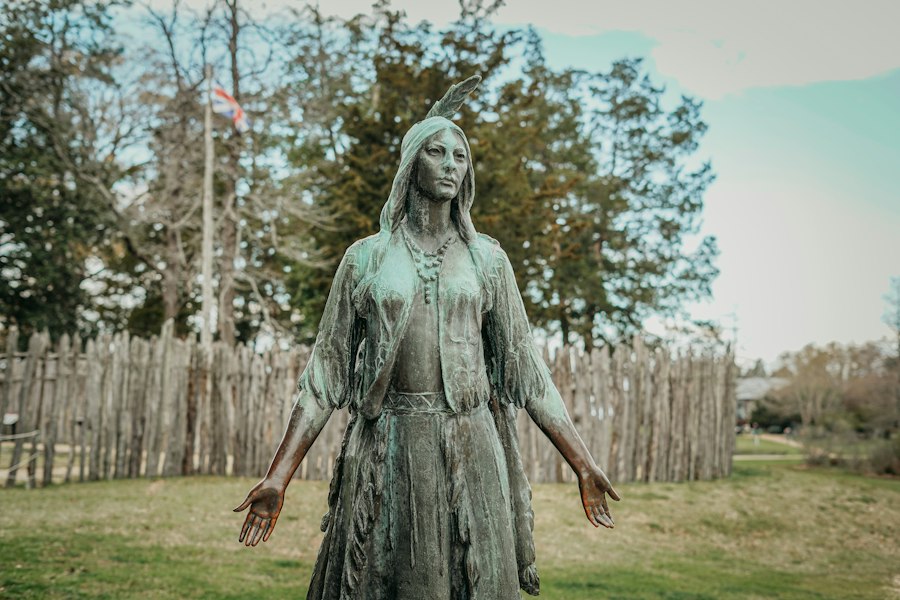
The popular narrative of Pocahontas saving Captain John Smith from execution is a foundational element of her legend, yet its historical accuracy is widely debated by scholars. While Smith himself recounted the incident, many historians believe it may have been a misunderstanding of an indigenous ceremony or a dramatized embellishment to enhance his own heroic persona. Regardless of the literal truth of the rescue, this story has profoundly shaped how Pocahontas is perceived. More importantly, new insights are emerging that highlight her actual roles within the Powhatan Confederacy and her interactions with the English, which were far more strategic and less romantic than often portrayed. She was a young woman of significant standing, likely used as a diplomatic tool and an intermediary by her father, Chief Powhatan, in his complex dealings with the burgeoning English settlement.
The “Princess” vs. the Diplomat
The notion of Pocahontas as a “princess” in the European sense is a colonial construct. She was, however, undoubtedly a person of high status within the Powhatan social hierarchy. Her repeated visits to the Jamestown settlement, often accompanied by her people, were likely not acts of idle curiosity but calculated diplomatic overtures by Chief Powhatan. She served as a vital link, a point of contact and potential negotiation, between her father and the increasingly intrusive English. Her youth and perceived innocence may have been seen by Powhatan as a way to foster a sense of trust and de-escalate tensions, or perhaps to gauge the intentions of the newcomers. The English, in turn, saw her as a valuable asset, a way to gain favor and intelligence from the paramount chief.
Inter-Cultural Exchange and Captivity
Pocahontas’s eventual marriage to John Rolfe, an English tobacco planter, is another pivotal moment often framed within a romantic narrative of cross-cultural love. However, the circumstances surrounding this union are far more complex. Pocahontas was, by this point, effectively a captive of the English, taken during a period of escalating conflict. Her marriage to Rolfe, while possibly involving genuine affection, was undoubtedly a political maneuver on both sides. For the English, it was a means to secure peace and consolidate their hold on the territory. For Pocahontas and her people, it represented a complex set of compromises, a continuation of an uneasy alliance, and a potential means of survival in a rapidly changing world. The journey to England with Rolfe, while a testament to her resilience, was also a period of significant cultural displacement and exposure to a world vastly different from her own.
Unraveling the Matrilineal Threads of Descent
Perhaps the most significant recent advancements in understanding Pocahontas’s heritage lie in the meticulous genealogical research that has traced her lineage through her mother, her maternal grandmother, and further back into the intricate kinship networks of the Powhatan. These efforts move beyond the paternalistic focus of much historical inquiry and embrace the matrilineal realities of Powhatan society. By piecing together scattered historical records, indigenous oral traditions where preserved, and archaeological evidence, scholars are now able to connect Pocahontas to specific lines of descent within prominent Powhatan families, revealing her place within the broader political and social landscape of her time. This has profound implications for understanding her status, her influence, and the continuity of indigenous leadership.
Tracing Ancestry Through the Maternal Line
The identification of Pocahontas’s mother as Naamun, a member of the powerful Werowocomoco clan, is a critical breakthrough. This connection places Pocahontas directly within a lineage of significant leadership and influence. Her maternal grandmother, and potentially great-grandmother, were also women of standing, suggesting a dynastic continuity that was disrupted by the arrival of the English. This matrilineal tracing allows for a more accurate understanding of her elevated status and the importance of her familial connections, which were paramount in Powhatan society for maintaining alliances and political stability. It also helps to explain why Chief Powhatan might have placed such importance on his daughter’s interactions with the colonists; she was not merely his child, but a representative of a powerful maternal line.
The Legacy of Descendants
The impact of these genealogical discoveries extends beyond Pocahontas herself. By clearly establishing her maternal lineage, researchers are also shedding light on the descendants who carried her heritage forward. While the direct bloodline through her son Thomas Rolfe has long been recognized, a deeper understanding of her maternal ancestry reveals a broader network of kinship and influence that persisted through generations. This is crucial for challenging the notion that indigenous cultures were simply eradicated or assimilated without a trace. Instead, it highlights the enduring resilience of these communities and the ways in which their heritage, even in altered forms, continued to shape the American experience. The ongoing research into her extended family underscores the continuous flow of indigenous identity and its complex integration into the broader narrative of American origins.
The story of Pocahontas, a Native American woman who played a crucial role in early American history, has often been explored in various contexts, including her impact on cultural exchanges between Indigenous peoples and European settlers. For those interested in understanding the broader implications of American origins and the complexities of historical narratives, a related article discusses the influence of private companies on military space infrastructure, shedding light on how modern developments continue to shape our understanding of American identity. You can read more about this intriguing connection in the article here.
The Enduring Significance of Pocahontas’s Story
| Metric | Data | Description |
|---|---|---|
| Historical Figure | Pocahontas | Native American woman notable for her association with the colonial settlement at Jamestown, Virginia |
| Tribe | Powhatan | Pocahontas was a member of the Powhatan tribal nation |
| Birth Year | c. 1596 | Estimated year of birth |
| Death Year | 1617 | Year of death in England |
| Marriage | John Rolfe | English settler who married Pocahontas, helping establish peace |
| Significance | Peace and cultural bridge | Known for fostering peace between Native Americans and English settlers |
| Legacy | American folklore and history | Symbol of Native American and colonial relations |
The contemporary understanding of Pocahontas, bolstered by these new insights, moves away from the simplistic myths and romanticized notions that have long dominated popular culture. Instead, it presents a more complex and compelling portrait of a young woman navigating a period of immense upheaval and cultural collision. Her story, when viewed through the lens of her true heritage and the intricate workings of the Powhatan Confederacy, becomes a powerful testament to indigenous resilience, diplomatic maneuvering, and the enduring strength of familial and societal structures in the face of colonial expansion. The ongoing scholarly pursuit of her origins serves not only to correct historical inaccuracies but also to honor a pivotal figure in American history, ensuring her legacy is understood with the depth and respect she deserves.
Moving Beyond the Mythological Lens
The journey from a one-dimensional, often damsel-in-distress archetype to a multifaceted historical figure is a crucial evolution in our understanding of Pocahontas. The persistent allure of the rescue myth, while deeply embedded in the American consciousness, has served to obscure the more significant aspects of her life and her agency within her own cultural context. By embracing the findings of contemporary scholarship, which emphasizes her role as Matoaka, a woman of high status and diplomatic importance within the Powhatan Confederacy, we can begin to appreciate her true significance. This shift requires a conscious effort to move beyond the ingrained narratives and engage with historical evidence in a more critical and nuanced manner, recognizing the limitations and biases inherent in early colonial accounts.
A Symbol of Intertwined Histories
Pocahontas’s story, in its re-evaluated form, stands as a potent symbol of the complex and often fraught intersection of indigenous and European histories in North America. She was a bridge, a point of contact, and a player in the early stages of a relationship that would forever alter the continent. Her heritage, when understood through the intricate tapestry of Powhatan society and the matrilineal lines of descent, reveals a depth and complexity that far surpasses the simplistic tales of colonial romance. The ongoing work to uncover and understand her origins is not merely an academic exercise; it is a vital step in reclaiming and reinterpreting a crucial chapter of American history, one that acknowledges the enduring presence and profound influence of indigenous peoples on the very fabric of the nation.

DNA Challenged This Family’s Pocahontas Ancestry Claim
FAQs
Who was Pocahontas?
Pocahontas was a Native American woman belonging to the Powhatan tribe in Virginia. She is known for her association with the English settlers of Jamestown and for her role in facilitating relations between the Native Americans and the colonists.
What is the significance of Pocahontas in American history?
Pocahontas is significant in American history for her efforts to promote peace and understanding between the Native Americans and the English settlers. Her actions helped to establish a period of relative harmony during the early years of colonization.
How did Pocahontas become involved with the English settlers?
Pocahontas became involved with the English settlers when she formed a bond with Captain John Smith, one of the leaders of the Jamestown colony. She is said to have saved his life when he was captured by her tribe, and their relationship played a key role in the early interactions between the two groups.
What is the controversy surrounding Pocahontas and her story?
There is controversy surrounding the story of Pocahontas, as some historians believe that her interactions with the English settlers may have been exaggerated or romanticized over time. Additionally, there are differing accounts of her life and the true nature of her relationship with John Smith.
How has the story of Pocahontas been portrayed in popular culture?
The story of Pocahontas has been portrayed in various forms of popular culture, including films, books, and plays. One of the most well-known adaptations is Disney’s animated film “Pocahontas,” which presents a fictionalized version of her life and relationship with John Smith.